Loading...
J. B. M. Hertzog vs Suchinda Kraprayoon
J. B. M. Hertzog leads by 19.0 pts · 2 figures compared
…
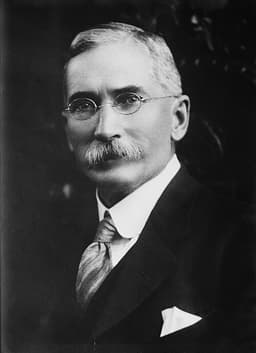
J. B. M. Hertzog
General · Modern
56.1Total
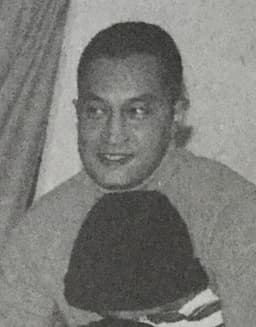
Suchinda Kraprayoon
General · Modern
37.1Total
Basic Information
Born
1866
1933
Died
1942
—
Era
Modern
Modern
Nationality
South Africa
Thailand
Occupation
General
General
Civilization
Other
Eastern
Score Comparison
Military (10%)
25.0
10.2
Political (20%)
60.0
27.9
Influence (20%)
56.7
47.1
Legacy (20%)
50.0
37.5
Leadership (15%)
79.8
45.0
Strategy (15%)
60.0
39.6
TOTAL
56.1
37.1
J. B. M. Hertzog — Complete Timeline
1899 AD
Boer War GeneralWar◆ Major
Hertzog served as a Boer general in the Second Boer War, commanding forces in the Orange Free State. He participated in several battles and became a prominent Afrikaner military leader.
Second Boer WarGeneralMilitary
Impact: regional
1914 AD
Founded the National PartyPolitical Action
Hertzog broke away from the South African Party and founded the National Party, which championed Afrikaner nationalism and opposed British imperial influence. The party would later implement apartheid.
National PartyAfrikaner NationalismFounding
Impact: nationalconstructive
1924 AD
Prime Minister of South AfricaPolitical Action◆ Major
Hertzog became Prime Minister after his National Party won the general election in coalition with the Labour Party. His government implemented policies to protect white workers and promote Afrikaner interests, including the 'civilized labour' policy.
Prime MinisterAfrikaner RightsLabour Policy
Impact: national
1934 AD
Merged with Smuts to Form United PartyPolitical Action◆ Major
Hertzog merged his National Party with Jan Smuts' South African Party to form the United Party. The coalition aimed to address the economic crisis of the Great Depression and promote national unity, but it alienated hardline Afrikaner nationalists.
United PartyCoalitionNational Unity
Impact: nationalconstructive
1936 AD
Passed the Representation of Natives ActReform◆ Major
Hertzog's government passed the Representation of Natives Act, which removed Black voters from the common voters' roll in the Cape Province and allowed them to elect white representatives instead. This further entrenched racial segregation.
SegregationDisenfranchisementLegislation
Impact: nationaldestructive
1939 AD
Resigned Over Neutrality in WWIIPolitical Action◆ Major
Hertzog advocated for South African neutrality in World War II, but his cabinet voted to enter the war on the Allied side. He resigned as Prime Minister and was succeeded by Jan Smuts, splitting the United Party.
World War IINeutralityResignation
Impact: national
Suchinda Kraprayoon — Complete Timeline
1991 AD
Leadership of the 1991 Thai Coup d'ÉtatPolitical Action◆ Major
General Suchinda Kraprayoon led the National Peace Keeping Council in a bloodless coup that overthrew Prime Minister Chatichai Choonhavan. The coup was justified by claims of corruption and political instability, establishing a military junta.
CoupMilitary JuntaPower Seizure
Impact: nationaldestructive
1992 AD
Appointment as Prime MinisterPolitical Action◆ Major
After a general election, Suchinda was appointed Prime Minister despite not being an elected MP. His appointment sparked widespread protests, as it was seen as a continuation of military rule and a violation of democratic principles.
Prime MinisterControversyMilitary Rule
Impact: nationaldestructive
Black May 1992 Uprising and ResignationPolitical Action
Massive pro-democracy protests in Bangkok, led by Chamlong Srimuang, demanded Suchinda's resignation. The military crackdown resulted in dozens of deaths. King Bhumibol intervened, leading to Suchinda's resignation and the restoration of civilian government.
UprisingBlack MayResignation
Impact: nationaltragic
Expert Analysis
J. B. M. Hertzog vs Suchinda Kraprayoon
# The General Who Couldn’t Let Go, and the General Who Wouldn’t Stay
On a sweltering May morning in 1992, Bangkok erupted. Thousands of protesters, many in white shirts and carrying flowers, surged toward Government House. They were demanding the resignation of General Suchinda Kraprayoon, a man who had seized power in a coup the year before and then, against all promises, made himself prime minister. A few blocks away, in the halls of power, Suchinda sat in his office, a soldier accustomed to obedience, unable to grasp why his country would not accept him.
Half a world away and nearly a century earlier, another general faced a different kind of crossroads. In 1939, James Barry Munnik Hertzog, the Prime Minister of South Africa, stood before his cabinet and argued for neutrality in a war that was engulfing Europe. He had been a Boer general, a man who had fought the British to a standstill. Now, he watched his own cabinet vote to join the Allies against Germany. Hertzog did not order tanks into the streets. He resigned.
Two generals. Two prime ministers. Two paths that diverged so sharply they illuminate the deepest questions about power, legitimacy, and the soldier’s place in a democracy.
Origins
Suchinda Kraprayoon was born in 1933 in a Thailand still ruled by an absolute monarchy that had fallen only a year earlier. He grew up in a military-dominated society where the army saw itself as the guardian of the nation, intervening whenever civilian politicians made a mess of things. He attended the Chulachomklao Royal Military Academy, an institution that bred loyalty not just to the king but to the institution itself. In Thailand, the coup was not a rupture; it was a ritual.
Hertzog, born in 1866 in the Cape Colony, came of age in a world of Boer republics and British imperialism. His father was a farmer, his people the descendants of Dutch settlers who had trekked into the interior to escape British rule. For Hertzog, the enemy was clear from the start: the British Empire, which had swallowed his people’s independence. He studied law in the Netherlands, but his heart remained on the veld. When the Second Boer War broke out in 1899, he became a general, leading commandos in a guerrilla war that frustrated the world’s mightiest empire.
Rise to Power
Suchinda’s rise was a study in institutional ladder-climbing. He served in the Korean War, then rose through the ranks of the Thai army. By 1991, he was commander-in-chief of the army, a position that in Thailand carried more weight than any elected office. On February 23, 1991, he led the National Peace Keeping Council in a bloodless coup, overthrowing Prime Minister Chatichai Choonhavan. The coup was popular at first—Chatichai was corrupt—but Suchinda promised he would not become prime minister. He promised.
Hertzog’s rise was ideological. After the Boer War, he entered politics, advocating for Afrikaner rights and language equality. In 1914, he broke from the South African Party to found the National Party, a movement that channeled the bitterness of a defeated people. It was a gamble that paid off. In 1924, his National Party won the general election, and Hertzog became Prime Minister of South Africa.
Leadership & Governance
Here, the two generals diverged completely. Suchinda’s governance was a soldier’s rule: top-down, impatient with debate, and ultimately brittle. When he accepted the prime ministership in April 1992 after a rigged election, he believed his military credentials entitled him to lead. But Thailand had changed. A middle class had emerged, educated and connected. They saw Suchinda not as a savior but as a usurper. The protests that became “Black May” were not just about him; they were about the idea that a general could simply appoint himself ruler.
Hertzog governed as a politician, not a commander. He passed laws that favored Afrikaners, including the 1936 Representation of Natives Act that removed Black voters from the common roll. It was a deeply unjust law, but it was passed through parliament, not by decree. In 1934, he even merged his National Party with Jan Smuts’ South African Party to form the United Party, a grand coalition meant to stabilize the country during the Great Depression. Hertzog knew that to govern, he had to compromise.
Triumph & Tragedy
Hertzog’s greatest triumph was also his deepest tragedy. In 1939, as World War II began, he argued that South Africa should remain neutral. He remembered the Boer War, the concentration camps, the British burning of farms. For him, this was a European war, not an African one. But his cabinet voted against him, 8 to 7. He resigned, and with him went the dream of a unified Afrikaner-led South Africa. He died in 1942, a broken man, watching his people drift toward the extremism of the apartheid era.
Suchinda’s tragedy was swift and public. In May 1992, the protests swelled to hundreds of thousands. The military crackdown killed dozens, perhaps hundreds, in the streets of Bangkok. The king intervened, summoning Suchinda and protest leader Chamlong Srimuang to a televised meeting. Suchinda bowed, resigned, and fled the country. His rule lasted barely two months.
Character & Destiny
Suchinda was a man who believed in order. He could not understand that legitimacy cannot be seized; it must be earned. His personality was that of a career soldier: disciplined, hierarchical, and blind to the currents of democracy. He saw protest as chaos, not as the voice of the people.
Hertzog was a man of principle, but his principles were narrow. He fought for Afrikaner rights while ignoring the rights of Black South Africans. He was a democrat for his own people, an autocrat for others. His tragedy was that his vision of justice was tribal, not universal.
Legacy
Today, Suchinda is a footnote in Thai history, a cautionary tale about military overreach. His legacy is the lesson that in modern Thailand, a general cannot simply crown himself prime minister. The 1997 constitution, drafted in the wake of Black May, was an attempt to lock the military out of politics. It did not last, but the memory of Suchinda’s fall endures.
Hertzog’s legacy is more complicated. He is remembered as a founder of Afrikaner nationalism, a man who gave his people a voice. But that voice was built on the silencing of others. His statues have been defaced, his name debated. He was a general who knew when to leave power, but not how to build a just society.
Conclusion
Two generals, two nations, two very different ends. Suchinda held power by force and lost it in weeks. Hertzog held power by election and lost it in a vote. One could not let go; the other would not stay. Their stories remind us that the soldier’s greatest test is not winning battles, but knowing when to lay down the sword and trust the people. In Thailand, that lesson came with blood. In South Africa, it came with a resignation letter. Both left a mark—and both left a warning.
Rankings
🥇
J. B. M. HertzogLeader
Mil: 25.0Pol: 60.0Inf: 56.7
56.1
🥈
Suchinda Kraprayoon
Mil: 10.2Pol: 27.9Inf: 47.1
37.1
+19.0 behind
How This Comparison Works
Algorithm
Each figure is scored on 6 dimensions (0—100 scale) based on structured historical data: Military (10%), Political (20%), Influence (20%), Legacy (20%), Leadership (15%), Strategy (15%). The weighted total produces the final ranking.
Data Sources
Scores are computed from structured sub-indicators in the database. Scale factors adjust for era (Ancient ×0.85, Modern ×1.0) and civilization size (Eastern ×1.05, Other ×0.80) to account for differences in population and military scale.
Maximum 3 Figures
Comparisons are limited to 2—3 figures to ensure readability and statistical meaningfulness.
Error Margins
±5 points per dimension — Sub-scores are derived from historical records with inherent uncertainty. Two figures within 5 points on a dimension should be considered roughly equivalent in that area.
Total Score Accuracy
±3 points overall — The weighted combination of 6 dimensions produces a total score with approximately ±3 points of uncertainty. Differences of less than 3 points are not statistically significant— the figures are effectively tied.
Known Limitations
- Historical records are incomplete and uneven across civilizations
- Figures from oral-tradition societies may be underrepresented
- Occupation labels can misclassify multi-role figures
- Scores measure capability and impact, not moral character
- Quantitative scoring is a comparison tool, not absolute truth
Capability Radar
Military (10%) — Battles & Warfare
Battles
45
5
Win Rate
40
5
Expansion
20
5
Political (20%) — Governance & Reform
Reform
60
5
Diplomacy
55
10
Economy
50
5
Influence (20%) — Cultural & Global Reach
Cultural
50
5
Global
45
5
Legacy (20%) — Historical Impact
Historical
55
10
Longevity
40
5
Leadership (15%) — Power & Stability
Tenure
65
10
Stability
45
5
Strategy (15%) — Tactics & Innovation
Strategy
50
10
Tactics
45
10
Reform
30
5
Similar Comparisons
Comments & Discussion
BOER-SCEPTIC6/16/2026
Calling Hertzog a "guardian of democracy" is laughable. He was an ardent white supremacist who fought to keep South Africa neutral in WWII precisely because he sympathized with Nazi Germany. His 1936 Native Trust and Land Act stripped black South Africans of voting rights. Meanwhile, Suchinda at least didn't pretend to be a democrat—he was a straightforward military strongman. I'd rather have an honest authoritarian than a hypocritical "democrat" like Hertzog.
坦克上的玫瑰6/16/2026
别把Hertzog包装成什么气节典范。1939年他辞职是因为内阁投票6:5反对他,根本不是主动让贤。Suchinda虽然残暴,但泰国1992年的血泪教训恰恰证明:军人越权执政永远行不通。Hertzog的"优雅退场"只是保全了旧殖民体制的延续,和民主精神沾不上边。