Loading...
J. B. M. Hertzog vs Soe Win
J. B. M. Hertzog leads by 14.4 pts · 2 figures compared
…
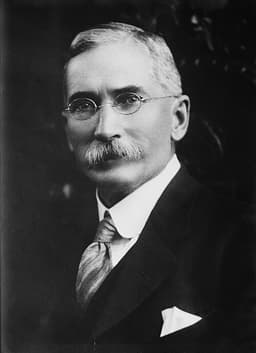
J. B. M. Hertzog
General · Modern
56.1Total
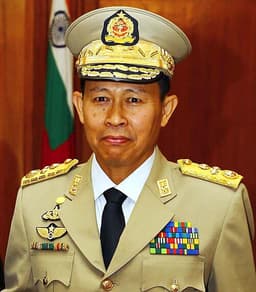
Soe Win
General · Modern
41.7Total
Basic Information
Born
1866
1947
Died
1942
—
Era
Modern
Modern
Nationality
South Africa
Myanmar
Occupation
General
General
Civilization
Other
Eastern
Score Comparison
Military (10%)
25.0
25.9
Political (20%)
60.0
30.8
Influence (20%)
56.7
48.6
Legacy (20%)
50.0
40.0
Leadership (15%)
79.8
57.6
Strategy (15%)
60.0
36.8
TOTAL
56.1
41.7
J. B. M. Hertzog — Complete Timeline
1899 AD
Boer War GeneralWar◆ Major
Hertzog served as a Boer general in the Second Boer War, commanding forces in the Orange Free State. He participated in several battles and became a prominent Afrikaner military leader.
Second Boer WarGeneralMilitary
Impact: regional
1914 AD
Founded the National PartyPolitical Action
Hertzog broke away from the South African Party and founded the National Party, which championed Afrikaner nationalism and opposed British imperial influence. The party would later implement apartheid.
National PartyAfrikaner NationalismFounding
Impact: nationalconstructive
1924 AD
Prime Minister of South AfricaPolitical Action◆ Major
Hertzog became Prime Minister after his National Party won the general election in coalition with the Labour Party. His government implemented policies to protect white workers and promote Afrikaner interests, including the 'civilized labour' policy.
Prime MinisterAfrikaner RightsLabour Policy
Impact: national
1934 AD
Merged with Smuts to Form United PartyPolitical Action◆ Major
Hertzog merged his National Party with Jan Smuts' South African Party to form the United Party. The coalition aimed to address the economic crisis of the Great Depression and promote national unity, but it alienated hardline Afrikaner nationalists.
United PartyCoalitionNational Unity
Impact: nationalconstructive
1936 AD
Passed the Representation of Natives ActReform◆ Major
Hertzog's government passed the Representation of Natives Act, which removed Black voters from the common voters' roll in the Cape Province and allowed them to elect white representatives instead. This further entrenched racial segregation.
SegregationDisenfranchisementLegislation
Impact: nationaldestructive
1939 AD
Resigned Over Neutrality in WWIIPolitical Action◆ Major
Hertzog advocated for South African neutrality in World War II, but his cabinet voted to enter the war on the Allied side. He resigned as Prime Minister and was succeeded by Jan Smuts, splitting the United Party.
World War IINeutralityResignation
Impact: national
Soe Win — Complete Timeline
2004 AD
Appointed Prime Minister of MyanmarPolitical Action◆ Major
Soe Win was appointed Prime Minister of Myanmar by the State Peace and Development Council, succeeding Khin Nyunt. He served as a key figure in the military junta's government.
Military JuntaGovernment Appointment
Impact: national
2007 AD
Saffron Revolution CrackdownPolitical Action
As Prime Minister, Soe Win oversaw the military's violent suppression of the Saffron Revolution, a series of anti-government protests led by Buddhist monks. The crackdown resulted in numerous deaths, arrests, and international condemnation.
Saffron RevolutionHuman RightsRepression
Impact: nationaldestructive
Death in OfficeOther
Soe Win died in office on October 12, 2007, from leukemia. His death occurred shortly after the Saffron Revolution crackdown, and he was succeeded by Thein Sein.
DeathSuccession
Impact: national
Expert Analysis
J. B. M. Hertzog vs Soe Win
# The General as Statesman: Two Paths from Battlefield to Power
On October 12, 2007, Soe Win, the Prime Minister of Myanmar, died in a military hospital in Rangoon. He was 59 years old, and he had spent his final months overseeing the brutal suppression of Buddhist monks who had marched for democracy. Half a world away and nearly a century earlier, another general-turned-prime minister, J. B. M. Hertzog, had stood at the helm of a very different kind of transformation—one that would shape South Africa for generations. Both men emerged from military careers into political power. Both championed the cause of a threatened ethnic or national identity. Yet their trajectories, their choices, and their legacies could hardly have been more different. What drove these two generals down such divergent paths?
Origins
James Barry Munnik Hertzog was born in 1866 on a farm in the Cape Colony, the son of a Boer farmer who had fought the British in the frontier wars. He grew up in a world defined by the bitter memory of British imperialism and the fragile independence of the Boer republics. He studied law in the Netherlands and returned to South Africa with a deep conviction: the Afrikaner people, descendants of Dutch and French settlers, deserved recognition, dignity, and political sovereignty. The land was his home, but the English-speaking elite held the power.
Soe Win was born in 1947 in British Burma, just months before the country gained independence. He came of age in a nation torn by ethnic conflict, military coups, and the long shadow of colonial rule. He joined the Burmese army—the Tatmadaw—and rose through its ranks during decades of isolation and authoritarian rule. For him, the military was not merely a career; it was the institution that held a fractured country together, the only force capable of preserving national unity against separatist movements and foreign interference.
Both men inherited a sense of grievance and a belief that their people—or their nation—needed a strong hand to survive.
Rise to Power
Hertzog’s path to power was forged in war. In 1899, as a Boer general in the Second Boer War, he commanded forces in the Orange Free State against the British Empire. The war devastated the Boer republics, but it also forged a generation of leaders who would never forget the humiliation of British concentration camps and scorched-earth tactics. After the war, Hertzog entered politics. In 1914, he broke away from the South African Party and founded the National Party, which championed Afrikaner nationalism, language rights, and independence from British influence. His political base was the rural Afrikaner community, and his message was simple: the Boers had lost the war, but they would not lose their identity.
Soe Win’s rise was quieter, more bureaucratic. He served in various military and administrative roles under the State Peace and Development Council, the junta that had ruled Myanmar since 1988. In 2004, he was appointed Prime Minister, succeeding Khin Nyunt, who had been purged in an internal power struggle. Soe Win was a loyalist, a man who had proven his reliability in a regime where dissent meant death. His rise was not a matter of popular support or political maneuvering; it was a matter of survival in a system where the only currency was obedience.
Leadership & Governance
As Prime Minister from 1924 to 1939, Hertzog governed with a blend of pragmatism and ideological conviction. He passed laws that protected Afrikaner language rights in schools and government, subsidized white farmers, and negotiated greater autonomy for South Africa within the British Empire. His political wisdom lay in his ability to build coalitions. In 1934, he merged his National Party with Jan Smuts’ South African Party to form the United Party—a grand coalition that aimed to heal the rift between Afrikaners and English-speaking South Africans. But there was a dark side to his governance. In 1936, his government passed the Representation of Natives Act, which removed Black voters from the common voters’ roll in the Cape Province. This was not apartheid—that would come later—but it was a decisive step toward racial segregation, and it laid the legal foundation for the system that would follow.
Soe Win’s governance was far narrower. He was a general in a military junta, not a statesman in a democracy. His tenure as Prime Minister lasted only three years, from 2004 to 2007, and his primary concern was maintaining the regime’s grip on power. He oversaw a system of repression, censorship, and arbitrary detention. The economy stagnated, and international sanctions isolated the country. His leadership style was authoritarian, secretive, and devoid of the political maneuvering that characterized Hertzog’s career. He had no coalition to build, no opposition to negotiate with—only enemies to crush.
Triumph & Tragedy
Hertzog’s greatest moment came in 1924, when he became Prime Minister, fulfilling the dream of Afrikaner political ascendancy. His greatest failure was the 1939 crisis over World War II. When Britain declared war on Germany, Hertzog argued for South African neutrality, believing that the country should not fight for the empire that had once humiliated the Boers. His cabinet voted to enter the war on the Allied side. Hertzog resigned, and his coalition collapsed. He died in 1942, a broken man, watching his life’s work unravel.
Soe Win’s triumph was never personal—it was the survival of the regime. His tragedy was the Saffron Revolution of 2007. For weeks, thousands of Buddhist monks marched through the streets of Rangoon and other cities, demanding democracy and an end to military rule. Soe Win oversaw the crackdown. Soldiers beat monks, fired into crowds, and arrested thousands. The world watched in horror. Soe Win died of leukemia just weeks later, his name forever linked to the suppression of peaceful protest.
Character & Destiny
Hertzog was a man of principle, but his principles were selective. He fought for Afrikaner rights while denying them to Black South Africans. He believed in democracy—for white men. His character was shaped by the Boer War, by the memory of British injustice, and by a deep, unyielding pride. That pride drove him to greatness and to ruin.
Soe Win was a product of the Tatmadaw, an institution that valued loyalty above all else. He was not a visionary or a reformer; he was a bureaucrat of repression. His character was shaped by decades of military rule, by the fear of ethnic disintegration, and by the belief that only force could hold the nation together. That belief led him to crush monks in the streets.
Legacy
Hertzog is remembered as a founder of Afrikaner nationalism, a man who gave his people a voice. But he is also remembered as an architect of racial segregation, a precursor to apartheid. His legacy is complex: a defender of one oppressed group who became an oppressor of another.
Soe Win is remembered, if at all, as a footnote in Myanmar’s long struggle for democracy. His name appears in histories of the Saffron Revolution, but only as the man who ordered the crackdown. He left no reforms, no lasting institutions, no political vision. He was a caretaker of a dying regime.
Conclusion
Two generals, two nations, two centuries. Hertzog and Soe Win both rose from military backgrounds to lead their countries, both championed a threatened identity, and both left behind legacies of exclusion and repression. But Hertzog operated within a political system that allowed for debate, coalition, and change—however flawed. Soe Win operated within a system that allowed only obedience. The difference between them is not just a matter of character; it is a matter of history. One man lived in an era when nationalism could still be a liberating force; the other lived in an era when it had become a cage. And in that cage, there was no room for anything but silence, submission, and the sound of monks chanting.
Rankings
🥇
J. B. M. HertzogLeader
Mil: 25.0Pol: 60.0Inf: 56.7
56.1
🥈
Soe Win
Mil: 25.9Pol: 30.8Inf: 48.6
41.7
+14.4 behind
How This Comparison Works
Algorithm
Each figure is scored on 6 dimensions (0—100 scale) based on structured historical data: Military (10%), Political (20%), Influence (20%), Legacy (20%), Leadership (15%), Strategy (15%). The weighted total produces the final ranking.
Data Sources
Scores are computed from structured sub-indicators in the database. Scale factors adjust for era (Ancient ×0.85, Modern ×1.0) and civilization size (Eastern ×1.05, Other ×0.80) to account for differences in population and military scale.
Maximum 3 Figures
Comparisons are limited to 2—3 figures to ensure readability and statistical meaningfulness.
Error Margins
±5 points per dimension — Sub-scores are derived from historical records with inherent uncertainty. Two figures within 5 points on a dimension should be considered roughly equivalent in that area.
Total Score Accuracy
±3 points overall — The weighted combination of 6 dimensions produces a total score with approximately ±3 points of uncertainty. Differences of less than 3 points are not statistically significant— the figures are effectively tied.
Known Limitations
- Historical records are incomplete and uneven across civilizations
- Figures from oral-tradition societies may be underrepresented
- Occupation labels can misclassify multi-role figures
- Scores measure capability and impact, not moral character
- Quantitative scoring is a comparison tool, not absolute truth
Capability Radar
Military (10%) — Battles & Warfare
Battles
45
10
Win Rate
40
10
Expansion
20
10
Political (20%) — Governance & Reform
Reform
60
10
Diplomacy
55
10
Economy
50
10
Influence (20%) — Cultural & Global Reach
Cultural
50
10
Global
45
10
Legacy (20%) — Historical Impact
Historical
55
20
Longevity
40
10
Leadership (15%) — Power & Stability
Tenure
65
30
Stability
45
10
Strategy (15%) — Tactics & Innovation
Strategy
50
10
Tactics
45
10
Reform
30
10
Similar Comparisons
Comments & Discussion
GENERAL-SCEPTIC6/16/2026
Comparing a democratic statesman like Hertzog to a junta stooge like Soe Win is an insult to political science. One studied constitutional law in the Netherlands; the other climbed the secret-police ladder. The only real parallel is that both ran repressive regimes, but even their brutality differs: Hertzog's segregation was legislative, Soe Win's was rubber bullets and starvation. Please stop romanticizing dictators with better PR.|
博学经典家6/16/2026
苏温与赫佐格的对比完全是历史感缺失的操作。赫氏虽身为布尔战将,却推动南非联邦在1910年建国,开创议会制度。而苏温呢?不过是奈温将军的影武者,在2007年僧侣革命中下令实弹镇压,连葬礼都没人敢办。军装不能掩盖屠夫的事实,时间赋予赫佐格历史的分量,苏温只留下可悲的页脚。|
NUMBERS-NERD6/16/2026
Stats don't lie: Hertzog governed South Africa for 15 years under three coalition governments; Soe Win was PM for barely three years of total civilian repression. GDP per capita growth under Hertzog: about 1.2% annually (unremarkable but stable). Under Soe Win: negative, with 50% inflation as a cherry on top. So the 'military-to-statesman' narrative? Totally busted. One built a state; the other wrecked a failed one.|
铁血历史粉6/16/2026
别扯什么“两条路径”——赫佐格和苏温分明是两条相反的河流。赫佐格在博尔战争中打英国人,后来却和英国人合作成立联邦,推动阿非利卡语与英语并列为官方语言。苏温呢?2007年镇压僧人,血流成河,连军队都厌恶他。战将成为领袖需要治国理政的胸襟,苏温只配当军政府的一条狗。|
REVISIONIST-REBEL6/16/2026
Let’s not whitewash Hertzog just because Soe Win was worse. Hertzog’s 'statesman' legacy includes the 1936 Representation of Natives Act, which stripped Black South Africans of voting rights—the legal backbone of apartheid. Sure, he fought for Afrikaner dignity, but he built it on segregation. Soe Win’s brutality was cruder, but both men channeled ethnic insecurity into oppression. Not two paths—just one long detour through autocracy.|