Loading...
J. B. M. Hertzog vs Prayut Chan-o-cha
J. B. M. Hertzog leads by 8.0 pts · 2 figures compared
…
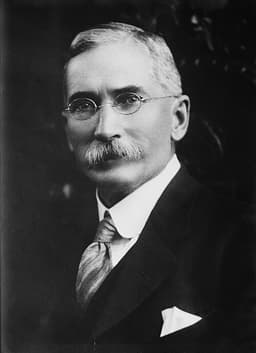
J. B. M. Hertzog
General · Modern
56.1Total
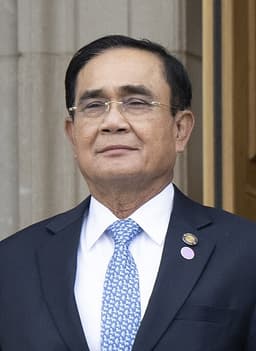
Prayut Chan-o-cha
General · Modern
48.1Total
Basic Information
Born
1866
1954
Died
1942
—
Era
Modern
Modern
Nationality
South Africa
Thailand
Occupation
General
General
Civilization
Other
Eastern
Score Comparison
Military (10%)
25.0
10.2
Political (20%)
60.0
68.0
Influence (20%)
56.7
51.8
Legacy (20%)
50.0
40.8
Leadership (15%)
79.8
68.0
Strategy (15%)
60.0
35.7
TOTAL
56.1
48.1
J. B. M. Hertzog — Complete Timeline
1899 AD
Boer War GeneralWar◆ Major
Hertzog served as a Boer general in the Second Boer War, commanding forces in the Orange Free State. He participated in several battles and became a prominent Afrikaner military leader.
Second Boer WarGeneralMilitary
Impact: regional
1914 AD
Founded the National PartyPolitical Action
Hertzog broke away from the South African Party and founded the National Party, which championed Afrikaner nationalism and opposed British imperial influence. The party would later implement apartheid.
National PartyAfrikaner NationalismFounding
Impact: nationalconstructive
1924 AD
Prime Minister of South AfricaPolitical Action◆ Major
Hertzog became Prime Minister after his National Party won the general election in coalition with the Labour Party. His government implemented policies to protect white workers and promote Afrikaner interests, including the 'civilized labour' policy.
Prime MinisterAfrikaner RightsLabour Policy
Impact: national
1934 AD
Merged with Smuts to Form United PartyPolitical Action◆ Major
Hertzog merged his National Party with Jan Smuts' South African Party to form the United Party. The coalition aimed to address the economic crisis of the Great Depression and promote national unity, but it alienated hardline Afrikaner nationalists.
United PartyCoalitionNational Unity
Impact: nationalconstructive
1936 AD
Passed the Representation of Natives ActReform◆ Major
Hertzog's government passed the Representation of Natives Act, which removed Black voters from the common voters' roll in the Cape Province and allowed them to elect white representatives instead. This further entrenched racial segregation.
SegregationDisenfranchisementLegislation
Impact: nationaldestructive
1939 AD
Resigned Over Neutrality in WWIIPolitical Action◆ Major
Hertzog advocated for South African neutrality in World War II, but his cabinet voted to enter the war on the Allied side. He resigned as Prime Minister and was succeeded by Jan Smuts, splitting the United Party.
World War IINeutralityResignation
Impact: national
Prayut Chan-o-cha — Complete Timeline
2014 AD
Led the 2014 military coupPolitical Action
General Prayut Chan-o-cha, as Army Commander-in-Chief, led a coup d'
CoupMilitaryThailand
Impact: nationaldestructive
Appointed Prime Minister by military legislaturePolitical Action◆ Major
Following the coup, Prayut was appointed Prime Minister by the military-controlled National Legislative Assembly. He assumed executive power, leading a government that promised reforms and national reconciliation.
AppointmentMilitary RuleThailand
Impact: national
2017 AD
Promulgation of the 2017 ConstitutionReform◆ Major
Prayut's government oversaw the drafting and approval of a new constitution that strengthened the military's political role and created a fully appointed Senate. The charter was criticized for entrenching military influence.
ConstitutionMilitaryThailand
Impact: national
2019 AD
Re-elected Prime Minister after 2019 electionPolitical Action◆ Major
Prayut was re-elected Prime Minister following a general election that was criticized for being manipulated to favor pro-military parties. He formed a coalition government, continuing his rule under a civilian facade.
ElectionContinuityThailand
Impact: national
Expert Analysis
J. B. M. Hertzog vs Prayut Chan-o-cha
### The General and the Statesman: Two Paths to Power in Troubled Times
In the summer of 2014, a Thai general in full dress uniform stood before television cameras in Bangkok, his voice flat and measured as he announced the military had seized control of the government. Three-quarters of a century earlier, on a crisp September morning in 1939, another general—this one gray-haired and weary, fighting for a cause he had already lost—walked out of his cabinet room in Pretoria, never to return as prime minister. Both men were soldiers who became national leaders. Both believed they were saving their countries. Yet one left behind a constitution designed to entrench military rule, while the other left behind a political party that would shape a nation for decades. Why did these two generals, born to similar callings, produce such different outcomes?
### Origins
James Barry Munnik Hertzog was born in 1866 on a farm in the Cape Colony, the son of a Boer farmer who had trekked eastward to escape British rule. The Anglo-Boer wars were not distant history for him—they were the furnace in which his identity was forged. He studied law in Europe, returning to a South Africa where the British Empire seemed all-powerful and the Dutch-speaking Boers were treated as second-class citizens in their own land. Hertzog’s world was one of grievance and pride, a place where a man’s worth was measured by his willingness to stand against imperial arrogance.
Prayut Chan-o-cha, born in 1954 in a small town in northeastern Thailand, grew up in a very different kind of struggle. Thailand had never been colonized, but its politics were a revolving door of coups and counter-coups. The military was not an occupying force but the permanent referee of the nation’s political games. Prayut attended the Armed Forces Academies Preparatory School, where loyalty, hierarchy, and order were drilled into him as the highest virtues. His Thailand was not fighting for independence; it was fighting against chaos.
### Rise to Power
Hertzog’s path to power was forged in war. As a Boer general in the Second Boer War of 1899, he earned a reputation for tactical skill and stubborn resistance. After the British victory, he refused to accept the terms of surrender that would have humiliated his people. Instead, he turned to politics, founding the National Party in 1914—a direct challenge to the pro-British establishment. His rise was slow, deliberate, and democratic. He spent a decade building a coalition of Afrikaner farmers, workers, and intellectuals, finally winning the prime ministership in 1924.
Prayut’s rise was sudden and violent. In May 2014, after months of street protests that had paralyzed Bangkok, he appeared on television to announce that the army was taking control. The coup was swift, bloodless, and total. Within weeks, he was appointed prime minister by a military-controlled legislature. There was no election, no coalition-building, no campaign. He simply took power because he had the guns.
### Leadership & Governance
As prime minister, Hertzog governed with a clear ideological purpose: to lift the Afrikaner people from poverty and humiliation. He passed laws to protect Afrikaans language and culture, subsidized white farmers, and secured South Africa’s independence from British dominion. But his vision had a dark side. In 1936, his government passed the Representation of Natives Act, stripping Black South Africans of their voting rights—a foundational step toward apartheid. Hertzog was not a tyrant; he was a nationalist who believed democracy was for his people alone.
Prayut’s governance was less ideological and more managerial. His 2017 constitution was a masterpiece of military engineering, creating a Senate appointed by the army and a system that made it nearly impossible for civilian parties to win a majority. He presented himself as a father figure restoring order, not a visionary building a new society. His economic policies were cautious, his foreign policy pro-China, and his response to dissent was consistent: arrest, silence, and control.
### Triumph & Tragedy
Hertzog’s greatest moment came in 1934, when he merged his National Party with Jan Smuts’ South African Party to form the United Party, uniting the country’s white population against the Depression. His greatest tragedy followed five years later, when he argued for South African neutrality in World War II—a stance that split his cabinet, cost him the premiership, and left him a lonely figure, accused of sympathizing with Hitler.
Prayut’s triumph was simply surviving. He was re-elected in 2019 after an election widely seen as rigged, and he remained in power long after most coup leaders would have faded. His tragedy was the same as his triumph: he presided over a country that grew more divided, more unequal, and less free under his watch.
### Character & Destiny
Hertzog was a man of principle, even when those principles were ugly. He believed in the Afrikaner cause with a religious intensity, and he was willing to lose power rather than betray it. Prayut was a man of pragmatism, even when that pragmatism was cynical. He believed in order above all else, and he was willing to sacrifice democracy to maintain it.
### Legacy
Hertzog is remembered as a founding father of Afrikaner nationalism, a figure both revered and reviled. His name adorns universities and streets, but his policies laid the groundwork for apartheid. Prayut is still too recent for a settled legacy. To some, he is the man who saved Thailand from chaos. To others, he is the general who stole its democracy.
### Conclusion
In the end, the difference between these two generals is not one of good and evil but of context and choice. Hertzog fought for a people he believed were oppressed, and he built a political movement that outlasted him. Prayut fought for a system he believed was fragile, and he built a legal fortress to protect it. One created a party; the other created a trap. Both were soldiers who became statesmen—but only one understood that the ultimate victory is not in holding power, but in shaping what comes after.
Rankings
🥇
J. B. M. HertzogLeader
Mil: 25.0Pol: 60.0Inf: 56.7
56.1
🥈
Prayut Chan-o-cha
Mil: 10.2Pol: 68.0Inf: 51.8
48.1
+8.0 behind
How This Comparison Works
Algorithm
Each figure is scored on 6 dimensions (0—100 scale) based on structured historical data: Military (10%), Political (20%), Influence (20%), Legacy (20%), Leadership (15%), Strategy (15%). The weighted total produces the final ranking.
Data Sources
Scores are computed from structured sub-indicators in the database. Scale factors adjust for era (Ancient ×0.85, Modern ×1.0) and civilization size (Eastern ×1.05, Other ×0.80) to account for differences in population and military scale.
Maximum 3 Figures
Comparisons are limited to 2—3 figures to ensure readability and statistical meaningfulness.
Error Margins
±5 points per dimension — Sub-scores are derived from historical records with inherent uncertainty. Two figures within 5 points on a dimension should be considered roughly equivalent in that area.
Total Score Accuracy
±3 points overall — The weighted combination of 6 dimensions produces a total score with approximately ±3 points of uncertainty. Differences of less than 3 points are not statistically significant— the figures are effectively tied.
Known Limitations
- Historical records are incomplete and uneven across civilizations
- Figures from oral-tradition societies may be underrepresented
- Occupation labels can misclassify multi-role figures
- Scores measure capability and impact, not moral character
- Quantitative scoring is a comparison tool, not absolute truth
Capability Radar
Military (10%) — Battles & Warfare
Battles
45
5
Win Rate
40
5
Expansion
20
5
Political (20%) — Governance & Reform
Reform
60
30
Diplomacy
55
40
Economy
50
35
Influence (20%) — Cultural & Global Reach
Cultural
50
20
Global
45
20
Legacy (20%) — Historical Impact
Historical
55
20
Longevity
40
15
Leadership (15%) — Power & Stability
Tenure
65
60
Stability
45
25
Strategy (15%) — Tactics & Innovation
Strategy
50
15
Tactics
45
10
Reform
30
20
Similar Comparisons
Comments & Discussion
Hertzog-Heretic6/16/2026
Calling Hertzog a "statesman" is generous—he was an Afrikaner nationalism bulldozer who forced bilingualism on South Africa while ignoring black voices entirely. Sure, he founded the National Party, but that same party later birthed apartheid. Prayut at least modernized Thailand's infrastructure and maintained stability. Hertzog’s legacy? A stepping stone to segregation. Prayut’s? A mixed bag of authoritarianism and economic growth. I’d take the Thai general over the Boer idealist any day—at lea
数据侦探6/16/2026
拿一个1939年退休的南非将军跟2014年政变的泰国总理比?这根本是苹果和榴莲嘛。Hertzog靠选举上台执政15年,Prayut是直接坦克开上街夺权。时间跨度差75年,国家背景也不同——南非是英帝国残留,泰国是君主立宪老油条。这种"将军变领袖"的对称叙事太偷懒了,数据上毫无相关性。要比较,先控制时代和制度变量再说。
LegionaryClassicist6/16/2026
The comparison stinks of false equivalence. Hertzog was a product of the Anglo-Boer War trauma—think Cato’s agrarian virtue corrupted by empire—while Prayut sprang from a cold military bureaucracy with no philosophical tradition. Hertzog studied law at Cambridge and debated statecraft; Prayut rose through the Royal Thai Army’s internal security ranks. One argued for language rights in a parliament; the other staged a coup on a Tuesday. They’re not two paths to power—they’re different species of
历史修补匠6/16/2026
从结果看,Hertzog留下的国民党后来成了种族隔离的骨架,但他在30年代的经济政策其实挺务实——比如设立土地银行帮农民脱困。Prayut呢?2014年政变后推动"泰国4.0"数字经济,但腐败指控和媒体压制从来没停。Hertzog至少有个宪法框架下的政策辩论,Prayut这边纯粹是一人独大加军方护体。说"两种救国路径"太抬举Prayut了,他更像个穿军装的威权掌柜。
AfrikanerReckoner6/16/2026
Spare me the hero-worship of Hertzog. He was a bitter republican who sabotaged South Africa's wartime alliance with Britain in 1939, splitting his own cabinet and handing power to Smuts. Prayut never had that luxury of choice—he seized power in a singular, efficient strike. If we’re judging by ruthless pragmatism, Prayut wins: he stayed in office for nine years, controlled the narrative, and modernized infrastructure. Hertzog quit in a huff over a tie-breaking vote. Weak.