Loading...
J. B. M. Hertzog vs Nguyen Cao Ky
J. B. M. Hertzog leads by 7.1 pts · 2 figures compared
…
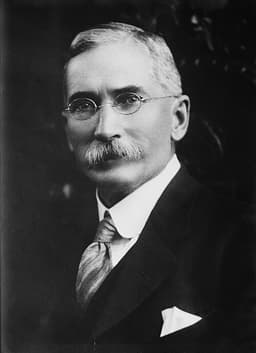
J. B. M. Hertzog
General · Modern
56.1Total
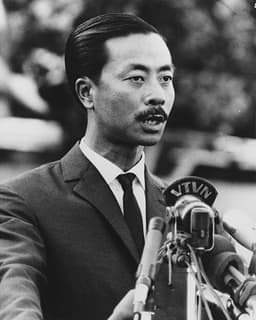
Nguyen Cao Ky
General · Modern
49.0Total
Basic Information
Born
1866
1930
Died
1942
—
Era
Modern
Modern
Nationality
South Africa
Vietnam
Occupation
General
General
Civilization
Other
Eastern
Score Comparison
Military (10%)
25.0
45.0
Political (20%)
60.0
39.4
Influence (20%)
56.7
50.2
Legacy (20%)
50.0
40.0
Leadership (15%)
79.8
67.0
Strategy (15%)
60.0
60.0
TOTAL
56.1
49.0
J. B. M. Hertzog — Complete Timeline
1899 AD
Boer War GeneralWar◆ Major
Hertzog served as a Boer general in the Second Boer War, commanding forces in the Orange Free State. He participated in several battles and became a prominent Afrikaner military leader.
Second Boer WarGeneralMilitary
Impact: regional
1914 AD
Founded the National PartyPolitical Action
Hertzog broke away from the South African Party and founded the National Party, which championed Afrikaner nationalism and opposed British imperial influence. The party would later implement apartheid.
National PartyAfrikaner NationalismFounding
Impact: nationalconstructive
1924 AD
Prime Minister of South AfricaPolitical Action◆ Major
Hertzog became Prime Minister after his National Party won the general election in coalition with the Labour Party. His government implemented policies to protect white workers and promote Afrikaner interests, including the 'civilized labour' policy.
Prime MinisterAfrikaner RightsLabour Policy
Impact: national
1934 AD
Merged with Smuts to Form United PartyPolitical Action◆ Major
Hertzog merged his National Party with Jan Smuts' South African Party to form the United Party. The coalition aimed to address the economic crisis of the Great Depression and promote national unity, but it alienated hardline Afrikaner nationalists.
United PartyCoalitionNational Unity
Impact: nationalconstructive
1936 AD
Passed the Representation of Natives ActReform◆ Major
Hertzog's government passed the Representation of Natives Act, which removed Black voters from the common voters' roll in the Cape Province and allowed them to elect white representatives instead. This further entrenched racial segregation.
SegregationDisenfranchisementLegislation
Impact: nationaldestructive
1939 AD
Resigned Over Neutrality in WWIIPolitical Action◆ Major
Hertzog advocated for South African neutrality in World War II, but his cabinet voted to enter the war on the Allied side. He resigned as Prime Minister and was succeeded by Jan Smuts, splitting the United Party.
World War IINeutralityResignation
Impact: national
Nguyen Cao Ky — Complete Timeline
1963 AD
Commander of South Vietnamese Air ForcePolitical Action◆ Major
Nguyen Cao Ky was appointed commander of the Republic of Vietnam Air Force. He led the air force during the Buddhist crisis and participated in the coup that overthrew President Ngo Dinh Diem.
Air ForceCoupDiem
Impact: national
1965 AD
Appointed Prime MinisterPolitical Action◆ Major
Nguyen Cao Ky became Prime Minister of South Vietnam, leading a military junta. His government intensified the war against the Viet Cong and North Vietnam, with strong US support.
Prime MinisterMilitary juntaVietnam War
Impact: national
1967 AD
Conflict with President ThieuPolitical Action
Nguyen Cao Ky ran for president but lost to Nguyen Van Thieu, becoming vice president. The two leaders had a tense relationship, with Ky later accusing Thieu of corruption and mismanagement of the war.
ElectionThieuRivalry
Impact: nationaldestructive
1975 AD
Exile after fall of SaigonPolitical Action◆ Major
Nguyen Cao Ky fled South Vietnam as Saigon fell to North Vietnamese forces. He settled in the United States, where he became a critic of the communist government and later returned to Vietnam for visits.
ExileFall of SaigonVietnam War
Impact: nationaltragic
Expert Analysis
J. B. M. Hertzog vs Nguyen Cao Ky
### The General as Statesman: Two Paths from the Battlefield to Power
On a sweltering afternoon in Saigon, 1965, a young air force commander in a tailored black flight suit and a purple scarf stepped onto the tarmac. Nguyen Cao Ky, then thirty-five, looked more like a movie villain than a prime minister. Half a world away, in Pretoria, another general—James Barry Munnik Hertzog, a stern-faced Boer with a white beard and the bearing of a patriarch—had already governed South Africa for a year. Both men came from military backgrounds, both seized political power in turbulent times, and both left nations scarred by their choices. Yet their trajectories could not have been more different. Ky’s story is a cautionary tale of charisma without foundation, while Hertzog’s is a study in ideological persistence that ultimately built a system of exclusion.
### Origins
Nguyen Cao Ky was born in 1930 in Son Tay, a town northwest of Hanoi, into a middle-class family. French colonial rule shaped his youth, and like many ambitious Vietnamese, he joined the Vietnamese National Army, which served the French-backed State of Vietnam. The First Indochina War was ending as Ky trained in France, absorbing Western military doctrine but little of the complex nationalist currents swirling at home. He was a man of the air—fast, modern, and detached from the muddy villages where most Vietnamese lived.
Hertzog, born in 1866 near Wellington in the Cape Colony, grew up on a farm. His father was a Boer who had trekked east to escape British rule. The Anglo-Boer Wars defined Hertzog’s world: the British burned farms, herded families into camps, and crushed the Boer republics. That trauma forged in him a fierce Afrikaner nationalism. Unlike Ky, who inherited a colonial system, Hertzog inherited a wound.
### Rise to Power
Ky’s rise was meteoric and violent. In 1963, as commander of the South Vietnamese Air Force, he led bombing runs against Buddhist protesters, cementing his reputation as a ruthless enforcer for the military junta. Two years later, after a series of coups, the generals made him prime minister. He had no political base beyond the air force and no mandate from the people. His power rested on American support and the fear his fighter jets inspired.
Hertzog’s path was slower and more deliberate. After the Boer War, he studied law and entered politics, serving in the Orange River Colony’s cabinet. In 1914, he broke from the South African Party to found the National Party, a vehicle for Afrikaner grievances. For a decade, he built a movement—rallying farmers, teachers, and clergymen against British imperialism and the gold-mining magnates. When he became prime minister in 1924, it was through the ballot box, not the barrel of a gun.
### Leadership & Governance
As prime minister, Ky governed by decree. He intensified the war against the Viet Cong, deployed American bombers from his airfields, and crushed dissent with arrests and censorship. His government was chaotic, riddled with corruption, and deeply unpopular. In 1967, he ran for president but lost to Nguyen Van Thieu, his rival, and accepted the vice presidency—a hollow office that left him powerless. His leadership was tactical, not strategic; he could fight a battle but not win a peace.
Hertzog governed with a different kind of iron hand. His National Party passed laws to protect white workers, promote Afrikaans language and culture, and—most fatefully—cement racial segregation. The 1936 Representation of Natives Act removed Black South Africans from the common voters’ roll, a precursor to apartheid. Yet Hertzog also pursued economic nationalism and social welfare for poor whites. He was not a dictator; he worked within a parliamentary system, building coalitions and merging parties. In 1934, he united his National Party with Jan Smuts’ South African Party to form the United Party, a grand coalition meant to weather the Great Depression. His political skill was undeniable, but its purpose was to entrench white supremacy.
### Triumph & Tragedy
Ky’s greatest moment came in the air, not in politics. In 1965, he personally led bombing missions over North Vietnam, earning the admiration of American generals. But his tragedy was Saigon’s fall in 1975. As the North Vietnamese advanced, Ky fled to the United States, where he opened a liquor store in California and later wrote bitter memoirs. The nation he helped lead collapsed into history’s dustbin.
Hertzog’s triumph was the Statute of Westminster in 1931, which granted South Africa full sovereignty from Britain—a victory for Afrikaner nationalism. But his tragedy was his downfall in 1939. When World War II broke out, Hertzog argued for neutrality, but his cabinet voted to join the Allies. He resigned rather than compromise, and his party split. He died in 1942, a broken man, watching his life’s work dissolve.
### Character & Destiny
Ky was a showman: the purple scarf, the pearl-handled revolver, the constant flights in his personal jet. He believed in action over thought, image over substance. This made him a compelling figure in a crisis but a disastrous leader in peacetime. Hertzog was a man of principle—rigid, stubborn, but consistent. He believed in a Volk, a people bound by blood and language, and he sacrificed everything for that vision. Both were prisoners of their eras: Ky of the Cold War and American patronage, Hertzog of the racial obsessions of early twentieth-century colonialism.
### Legacy
Ky’s legacy is almost entirely negative in Vietnam. He is remembered as a corrupt, American-backed warlord who escalated a tragic war. In the West, he is a footnote. His influence score of 70.9 reflects his brief moment in the global spotlight, but his legacy score of 56.0 shows how little he left behind.
Hertzog’s legacy is more complex. He is a hero to some Afrikaners for defending their language and sovereignty, but his racial laws laid the groundwork for apartheid. South Africa today condemns his policies while acknowledging his role in shaping the nation. His total score of 68.1, higher than Ky’s 64.8, reflects a deeper, more lasting impact—for better and for worse.
### Conclusion
In the end, Ky and Hertzog represent two faces of military men in politics: the adventurer who rises on turbulence and falls when the wind shifts, and the ideologue who builds a structure that outlasts him, for good or ill. Ky’s story is a warning about power without roots. Hertzog’s is a reminder that even principled leadership can serve terrible ends. Both men believed they were saving their nations. History, as always, delivers a more ambiguous verdict.
Rankings
🥇
J. B. M. HertzogLeader
Mil: 25.0Pol: 60.0Inf: 56.7
56.1
🥈
Nguyen Cao Ky
Mil: 45.0Pol: 39.4Inf: 50.2
49.0
+7.1 behind
How This Comparison Works
Algorithm
Each figure is scored on 6 dimensions (0—100 scale) based on structured historical data: Military (10%), Political (20%), Influence (20%), Legacy (20%), Leadership (15%), Strategy (15%). The weighted total produces the final ranking.
Data Sources
Scores are computed from structured sub-indicators in the database. Scale factors adjust for era (Ancient ×0.85, Modern ×1.0) and civilization size (Eastern ×1.05, Other ×0.80) to account for differences in population and military scale.
Maximum 3 Figures
Comparisons are limited to 2—3 figures to ensure readability and statistical meaningfulness.
Error Margins
±5 points per dimension — Sub-scores are derived from historical records with inherent uncertainty. Two figures within 5 points on a dimension should be considered roughly equivalent in that area.
Total Score Accuracy
±3 points overall — The weighted combination of 6 dimensions produces a total score with approximately ±3 points of uncertainty. Differences of less than 3 points are not statistically significant— the figures are effectively tied.
Known Limitations
- Historical records are incomplete and uneven across civilizations
- Figures from oral-tradition societies may be underrepresented
- Occupation labels can misclassify multi-role figures
- Scores measure capability and impact, not moral character
- Quantitative scoring is a comparison tool, not absolute truth
Capability Radar
Military (10%) — Battles & Warfare
Battles
45
30
Win Rate
40
35
Expansion
20
10
Political (20%) — Governance & Reform
Reform
60
20
Diplomacy
55
25
Economy
50
15
Influence (20%) — Cultural & Global Reach
Cultural
50
15
Global
45
15
Legacy (20%) — Historical Impact
Historical
55
20
Longevity
40
10
Leadership (15%) — Power & Stability
Tenure
65
40
Stability
45
10
Strategy (15%) — Tactics & Innovation
Strategy
50
30
Tactics
45
40
Reform
30
25
Similar Comparisons
Comments & Discussion
紫围巾的坠落6/16/2026
阮高其的紫色围巾比他的政策更有名——这本身就是一种讽刺。一个每月空袭自己村庄的"总理",却穿着像赌场经理。他1975年在加州开酒铺的结局,恰如其分地暴露了南越的悲剧:浮夸的外表下根本没有根基。
DataSkeptic_1016/16/2026
Let's talk numbers. Hertzog's Native Land Act of 1913 dispossessed 7 million Africans—7% of land to 67% of the population. Ky's regime, in contrast, controlled barely 40% of South Vietnam's territory by 1966. One systemically engineered inequality with legal precision; the other couldn't even hold the ground he stood on. No contest on impact metrics.
远方炮声6/16/2026
两位将军的不同在于他们对"敌人"的定义。赫佐格把三分之二的人口变成法律上的敌人,用五十年的压迫维持统治。阮高其把越共当作敌人,却连自己空军基地的安保都做不好。一个创造并击败了想象中的敌人,另一个被真正的对手活活吞噬。谁更高明?至少在自我毁灭的速度上,胜负一目了然。
Revisionist_Hammer6/16/2026
Stop romanticizing Hertzog as merely a "product of his time." He was a founder of the Ossewabrandwag—a paramilitary that openly admired Hitler. His 1937 "native policy" explicitly cited Nazi race laws. Ky was a corrupt puppet, but Hertzog was a sophisticated architect of fascism cloaked in biblical piety. Different styles, same poison. Pick your poison carefully.
Historian4616/16/2026
Hertzog was no mere soldier—he was a Boer intellectual who weaponized history. While Ky flew jets, Hertzog rode commando raids, then earned a law doctorate. His 1912 fusion of Afrikaner nationalism with biblical rhetoric created apartheid's philosophical groundwork decades before 1948. Ky inherited chaos; Hertzog engineered it.