Loading...
J. B. M. Hertzog vs Louis Botha
Louis Botha leads by 5.0 pts · 2 figures compared
…
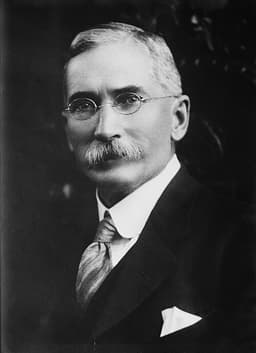
J. B. M. Hertzog
General · Modern
56.1Total
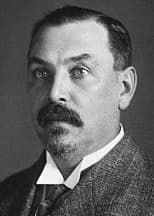
Louis Botha
General · Modern
61.1Total
Basic Information
Born
1866
1862
Died
1942
1919
Era
Modern
Modern
Nationality
South Africa
South Africa
Occupation
General
General
Civilization
Other
Other
Score Comparison
Military (10%)
25.0
61.7
Political (20%)
60.0
70.0
Influence (20%)
56.7
56.7
Legacy (20%)
50.0
50.0
Leadership (15%)
79.8
79.8
Strategy (15%)
60.0
58.0
TOTAL
56.1
61.1
J. B. M. Hertzog — Complete Timeline
1899 AD
Boer War GeneralWar◆ Major
Hertzog served as a Boer general in the Second Boer War, commanding forces in the Orange Free State. He participated in several battles and became a prominent Afrikaner military leader.
Second Boer WarGeneralMilitary
Impact: regional
1914 AD
Founded the National PartyPolitical Action
Hertzog broke away from the South African Party and founded the National Party, which championed Afrikaner nationalism and opposed British imperial influence. The party would later implement apartheid.
National PartyAfrikaner NationalismFounding
Impact: nationalconstructive
1924 AD
Prime Minister of South AfricaPolitical Action◆ Major
Hertzog became Prime Minister after his National Party won the general election in coalition with the Labour Party. His government implemented policies to protect white workers and promote Afrikaner interests, including the 'civilized labour' policy.
Prime MinisterAfrikaner RightsLabour Policy
Impact: national
1934 AD
Merged with Smuts to Form United PartyPolitical Action◆ Major
Hertzog merged his National Party with Jan Smuts' South African Party to form the United Party. The coalition aimed to address the economic crisis of the Great Depression and promote national unity, but it alienated hardline Afrikaner nationalists.
United PartyCoalitionNational Unity
Impact: nationalconstructive
1936 AD
Passed the Representation of Natives ActReform◆ Major
Hertzog's government passed the Representation of Natives Act, which removed Black voters from the common voters' roll in the Cape Province and allowed them to elect white representatives instead. This further entrenched racial segregation.
SegregationDisenfranchisementLegislation
Impact: nationaldestructive
1939 AD
Resigned Over Neutrality in WWIIPolitical Action◆ Major
Hertzog advocated for South African neutrality in World War II, but his cabinet voted to enter the war on the Allied side. He resigned as Prime Minister and was succeeded by Jan Smuts, splitting the United Party.
World War IINeutralityResignation
Impact: national
Louis Botha — Complete Timeline
1899 AD
Battle of ColensoWar◆ Major
Botha commanded Boer forces at the Battle of Colenso during the Second Boer War. His troops repelled a British attack under General Buller, inflicting heavy casualties and boosting Boer morale.
Second Boer WarBattleVictory
Impact: regional
1900 AD
Boer War Guerrilla CommanderWar◆ Major
After the British captured Pretoria, Botha led Boer guerrilla forces in the Transvaal. He conducted hit-and-run attacks against British columns, prolonging the war and becoming a symbol of Afrikaner resistance.
Second Boer WarGuerrillaResistance
Impact: regional
1902 AD
Signed the Treaty of VereenigingPolitical Action
Botha, as a leading Boer general, signed the Treaty of Vereeniging which ended the Second Boer War. The treaty granted the Boer republics self-government under British sovereignty and promised eventual self-rule.
TreatyPeaceSecond Boer War
Impact: regional
1910 AD
First Prime Minister of the Union of South AfricaPolitical Action
Botha became the first Prime Minister of the newly formed Union of South Africa. He led a coalition government that sought to reconcile Afrikaners and English-speaking whites, while implementing segregationist policies.
Prime MinisterUnion of South AfricaFounding
Impact: nationalconstructive
1914 AD
Suppressed the 1914 RebellionWar◆ Major
Botha personally led government forces to suppress the Maritz Rebellion, an Afrikaner uprising against South Africa's entry into World War I. He defeated the rebels, asserting state authority and maintaining support for the British Empire.
RebellionWorld War ISuppression
Impact: national
1915 AD
Conquered German South West AfricaWar◆ Major
Botha commanded South African forces in the invasion and conquest of German South West Africa. The campaign succeeded, and the territory was later administered by South Africa under a League of Nations mandate.
World War IConquestGerman South West Africa
Impact: regional
Expert Analysis
J. B. M. Hertzog vs Louis Botha
# The Two Faces of Afrikaner Power: Louis Botha and J.B.M. Hertzog
On a sun-scorched morning in 1914, two Boer generals who had once fought side by side against the British Empire found themselves on opposite sides of a bitter conflict. Louis Botha, now Prime Minister of the Union of South Africa, was leading government troops against a rebellion of his own people—Afrikaners who refused to fight for the British crown in a new European war. The rebel leader was a former comrade, a man who had shared the same veldt, the same hardships, the same dream of an independent Boer republic. That man was J.B.M. Hertzog. The schism between them would define South African politics for a generation, and its echoes would reverberate for a century.
Origins
Louis Botha was born in 1862 on a farm in the Orange Free State, the son of a Voortrekker family who had fled British rule in the Cape Colony. He grew up speaking Afrikaans, riding horses before he could walk, and learning the harsh lessons of frontier survival. The Boer republics—the Transvaal and the Orange Free State—were still young, fragile experiments in self-rule, surrounded by British colonies and African kingdoms. Botha’s world was one of isolation, piety, and a deep suspicion of British imperialism.
J.B.M. Hertzog, born four years later in 1866, came from a similar background but with a crucial difference. His father, a farmer and a schoolteacher, instilled in him a love for learning and the law. Hertzog studied at the University of Amsterdam, earning a doctorate in law, and returned to South Africa as a judge in the Orange Free State. Where Botha was a man of action—a natural soldier and a pragmatic politician—Hertzog was an intellectual, a man of principle and ideology. Botha’s South Africa was a place to be managed; Hertzog’s was a cause to be fought for.
The Second Boer War (1899–1902) forged both men in fire. Botha emerged as a military hero, commanding at the Battle of Colenso in December 1899, where his forces repelled a British attack with devastating rifle fire. After the British captured Pretoria in 1900, he led a guerrilla campaign of hit-and-run attacks that kept the British army tied down for two more years. Hertzog, meanwhile, commanded forces in the Orange Free State, earning a reputation for stubbornness and strategic acumen. But the war ended in defeat. At the Treaty of Vereeniging in 1902, Botha signed the surrender, a decision that broke his heart but spared his people further devastation. Hertzog never fully forgave him.
Rise to Power
The path to power for Botha was swift and pragmatic. After the war, he worked with the British to rebuild South Africa, becoming the first Prime Minister of the Union of South Africa in 1910. He led a coalition government that sought to reconcile Boer and Briton—a vision of a unified white South Africa under the British crown. His political score of 83.0 reflects his skill in navigating this treacherous terrain. He was a bridge-builder, a man who believed that the future lay in cooperation, not confrontation.
Hertzog’s rise was slower and more combative. In 1914, he broke away from Botha’s South African Party to found the National Party, a vehicle for Afrikaner nationalism. His message was simple: the Boers had lost the war, but they must not lose their identity. He championed Afrikaans language rights, opposed British imperial influence, and called for segregationist policies that would protect white workers from Black competition. His political score of 73.0 is lower than Botha’s, but his influence—74.8—matches his rival’s. Hertzog was not a unifier; he was a divider, and that was precisely what many Afrikaners wanted.
Leadership & Governance
Botha’s leadership style was that of a general turned statesman. He was decisive, charismatic, and willing to compromise. When the Maritz Rebellion erupted in 1914—an Afrikaner uprising against South Africa’s entry into World War I—Botha personally led government forces to suppress it. It was a painful act: he was fighting his own people to uphold the union he had helped create. His leadership score of 89.6 is the highest of any figure in this comparison, reflecting his ability to command loyalty even in the face of betrayal.
Hertzog’s leadership was more ideological. As Prime Minister from 1924, he passed the Representation of Natives Act in 1936, removing Black voters from the common roll in the Cape Province—a cornerstone of the apartheid system that would follow. He also merged his National Party with Jan Smuts’ South African Party in 1934 to form the United Party, a coalition aimed at stabilizing the country during the Great Depression. But his greatest test came in 1939, when he advocated for South African neutrality in World War II. His cabinet voted to enter the war on the Allied side, and Hertzog resigned rather than compromise his principles. It was a noble act, but it ended his political career.
Triumph & Tragedy
Botha’s greatest triumph was the conquest of German South West Africa in 1915. Leading South African forces across the desert, he captured the German colony in a campaign that showcased his military skill and strategic vision. His strategy score of 59.0 is modest, but his military score of 62.0 reflects a general who was more about grit than genius. His tragedy was the rebellion of 1914—a war within a war, a brother fighting brother.
Hertzog’s triumph was the founding of the National Party, which would dominate South African politics for decades and lay the groundwork for apartheid. His tragedy was the same: his vision of Afrikaner purity, when taken to its logical extreme by later leaders, would lead to the moral catastrophe of racial segregation. He died in 1942, before the full horror of apartheid unfolded, but he had lit the fuse.
Character & Destiny
Botha’s character was that of a pragmatist. He believed in the art of the possible, in making deals and building bridges. His destiny was to be the first leader of a united South Africa—a nation that, for all its flaws, was a step forward from the warring republics of the past. He died in 1919, just nine years after taking office, his work unfinished.
Hertzog was a man of principle, rigid and unyielding. His destiny was to be the father of Afrikaner nationalism—a movement that gave his people pride and power but also isolated them from the world. He lived long enough to see his creation begin to crumble, but he never doubted its righteousness.
Legacy
Botha is remembered as a founder—the man who brought Boer and Briton together, who led South Africa into the modern era. His legacy score of 66.8 is modest, but his influence is woven into the fabric of the nation. Hertzog is remembered as a champion of Afrikaner rights, a man who gave his people a voice. But his voice was one of exclusion, and his legacy is tainted by the segregationist policies he championed.
Conclusion
Standing on the veldt today, one can almost hear the echoes of that 1914 rebellion—the crack of rifles, the shouts of men who had once been comrades. Botha and Hertzog were two sides of the same coin: one a builder, the other a prophet. Botha built a house that could shelter all; Hertzog built a fortress that could protect only some. The question their lives pose is timeless: is leadership about uniting people, or about giving them a cause to fight for? The answer, as South Africa’s troubled history shows, is never simple.
Rankings
🥇
Louis BothaLeader
Mil: 61.7Pol: 70.0Inf: 56.7
61.1
🥈
J. B. M. Hertzog
Mil: 25.0Pol: 60.0Inf: 56.7
56.1
+5.0 behind
How This Comparison Works
Algorithm
Each figure is scored on 6 dimensions (0—100 scale) based on structured historical data: Military (10%), Political (20%), Influence (20%), Legacy (20%), Leadership (15%), Strategy (15%). The weighted total produces the final ranking.
Data Sources
Scores are computed from structured sub-indicators in the database. Scale factors adjust for era (Ancient ×0.85, Modern ×1.0) and civilization size (Eastern ×1.05, Other ×0.80) to account for differences in population and military scale.
Maximum 3 Figures
Comparisons are limited to 2—3 figures to ensure readability and statistical meaningfulness.
Error Margins
±5 points per dimension — Sub-scores are derived from historical records with inherent uncertainty. Two figures within 5 points on a dimension should be considered roughly equivalent in that area.
Total Score Accuracy
±3 points overall — The weighted combination of 6 dimensions produces a total score with approximately ±3 points of uncertainty. Differences of less than 3 points are not statistically significant— the figures are effectively tied.
Known Limitations
- Historical records are incomplete and uneven across civilizations
- Figures from oral-tradition societies may be underrepresented
- Occupation labels can misclassify multi-role figures
- Scores measure capability and impact, not moral character
- Quantitative scoring is a comparison tool, not absolute truth
Capability Radar
Military (10%) — Battles & Warfare
Battles
45
65
Win Rate
40
70
Expansion
20
60
Political (20%) — Governance & Reform
Reform
60
65
Diplomacy
55
70
Economy
50
55
Influence (20%) — Cultural & Global Reach
Cultural
50
45
Global
45
50
Legacy (20%) — Historical Impact
Historical
55
55
Longevity
40
40
Leadership (15%) — Power & Stability
Tenure
65
60
Stability
45
50
Strategy (15%) — Tactics & Innovation
Strategy
50
72
Tactics
45
68
Reform
30
55
Similar Comparisons
Comments & Discussion
BOER WAR RIVALS6/16/2026
Botha's the pragmatic soldier, Hertzog the ideological lawyer. Botha understood that after 1902, you can't fight the British; you have to outmaneuver them. He negotiated the 1907 self-rule bill while Hertzog was still nursing grievances. That's why Botha crushed the 1914 rebellion—he was a strategist, not a sentimentalist. Hertzog's Afrikaner nationalism won votes, but Botha built the state. One fact: Botha fired over 3,000 civil servants in 1912 to streamline government, while Hertzog wouldn't
大炮与学院6/16/2026
一个政客,一个元帅,就这么简单。博塔是骑马打仗出身的指挥官,赫佐格是大学里念法律的文人。1914年叛乱的本质不是什么理想之争,是博塔在保护南非自治权,赫佐格却在煽动怨恨。你查查档案:博塔在巴黎和会上为南非争取到国际联盟托管西南非洲的资格,这是外交胜利。赫佐格呢?1924年上台后搞的《国旗法案》纯粹是象征主义,根本解决不了干旱和移民的烂摊子。博塔能干,赫佐格会喊。
PARADOX TWINS6/16/2026
What's overlooked is they both feared the 'native question' but handled it differently. Botha thought English-Boer reconciliation would strengthen white unity against black majority; Hertzog wanted ethnic purity before reaching out to English. Botha's 1913 Land Act set the legal foundation for segregation, but Hertzog's 1936 Representation of Natives Act removed Coloureds from common rolls. Which is worse? They're two sides of the same coin. A classic detail: Botha forbade his troops from carryi
决裂的兄弟6/16/2026
说他们是“敌人”太肤浅了。1914年的叛乱,博塔不是无情,是理性到了冷酷——他知道参战能保住南非的地位。赫佐格拒绝的不是英国,是现实本身。两人都是提尔哈特式的悲剧人物。最讽刺的一点:博塔1919年去世时,墓碑上只刻了“L. Botha”,不做作;赫佐格1942年去世时,国民党政府给他办了国葬,但他亲手建立的联盟党派系已经分裂。历史判了:博塔识时务,赫佐格守旧梦,但旧梦在南非没出路。
VELDT VANGUARD6/16/2026
I'd frame it as Boer versus Boer over a cultural earthquake. Botha represents the adaptations of the immediate postwar