Loading...
Ito Hirobumi vs Saddam Hussein
Ito Hirobumi leads by 24.1 pts · 2 figures compared
…
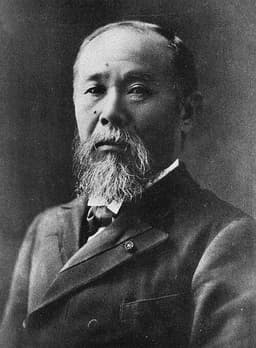
Ito Hirobumi
Politician · Modern
73.8Total
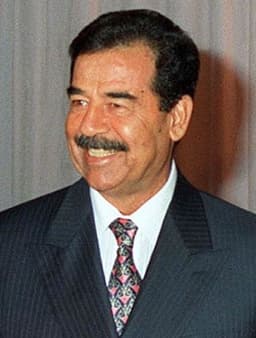
Saddam Hussein
Politician · Modern
49.7Total
Basic Information
Born
1841
1937
Died
1909
—
Era
Modern
Modern
Nationality
Japan
Iraq
Occupation
Politician
Politician
Civilization
Eastern
Middle Eastern
Score Comparison
Military (10%)
50.0
52.5
Political (20%)
86.0
43.7
Influence (20%)
71.0
58.0
Legacy (20%)
80.0
47.5
Leadership (15%)
80.9
40.0
Strategy (15%)
60.0
55.0
TOTAL
73.8
49.7
Ito Hirobumi — Complete Timeline
1882 AD
Establishment of the Bank of JapanReform◆ Major
Under Ito Hirobumi's leadership, the Bank of Japan was established as the nation's central bank. It was modeled after European central banks and aimed to stabilize the currency and control inflation. This institution was crucial for Japan's economic modernization and industrial growth.
Central BankEconomic ReformModernization
Impact: nationalconstructive
1885 AD
First Prime Minister of JapanPolitical Action◆ Major
Ito Hirobumi became the first Prime Minister of Japan under the new cabinet system. He served four non-consecutive terms and was instrumental in shaping the modern Japanese state. His tenure focused on centralizing power, modernizing the economy, and strengthening the military.
Prime MinisterCabinet SystemMeiji Period
Impact: nationalconstructive
1889 AD
Drafting of the Meiji ConstitutionReform
Ito Hirobumi led the drafting of the Meiji Constitution, which established a constitutional monarchy with a bicameral parliament (the Diet). The constitution granted the emperor sovereign power but also provided for elected representatives. It was promulgated in 1889 and remained in effect until 1947.
ConstitutionMeiji PeriodGovernment Reform
Impact: nationalconstructive
1909 AD
Assassination at Harbin StationPolitical Action◆ Major
Ito Hirobumi was assassinated by Korean nationalist An Jung-geun at Harbin railway station in Manchuria. Ito was on a mission to negotiate with Russian officials regarding Korea. His death shocked Japan and was used to justify the formal annexation of Korea in 1910.
AssassinationKoreaAnnexation
Impact: globaltragic
Saddam Hussein — Complete Timeline
1979 AD
Became President of IraqPolitical Action
Saddam Hussein forced President Ahmed Hassan al-Bakr to resign on July 16, 1979, and assumed the presidency. He immediately purged the Ba'ath Party, executing 68 senior members in a televised purge. This consolidated his absolute control over Iraq's government and security apparatus.
Power ConsolidationPurgeBa'ath Party
Impact: nationaldestructive
1980 AD
Invaded IranWar
Saddam launched a full-scale invasion of Iran on September 22, 1980, aiming to seize the oil-rich Khuzestan province and overthrow the new Islamic regime. The war lasted eight years, resulting in hundreds of thousands of casualties and massive economic destruction for both countries, ending in a stalemate.
Iran-Iraq WarInvasionStalemate
Impact: regionaldestructive
1988 AD
Used chemical weapons against Kurds at HalabjaWar◆ Major
During the Anfal campaign, Iraqi forces under Saddam's orders attacked the Kurdish town of Halabja with mustard gas and nerve agents on March 16, 1988. An estimated 5,000 civilians were killed instantly. The attack is considered one of the worst chemical weapons attacks against a civilian population.
Chemical WeaponsWar CrimeKurds
Impact: nationaldestructive
1990 AD
Invaded KuwaitWar
Saddam ordered the invasion and annexation of Kuwait on August 2, 1990, claiming it was historically part of Iraq. The invasion was condemned internationally and led to the Gulf War. A US-led coalition expelled Iraqi forces in February 1991, and Iraq faced severe UN sanctions.
Gulf WarInvasionSanctions
Impact: globaldestructive
2003 AD
Captured by US forces and executedPolitical Action
After the US-led invasion of Iraq in March 2003, Saddam went into hiding. He was captured by US forces on December 13, 2003, near Tikrit. Tried by the Iraqi Special Tribunal for crimes against humanity, he was sentenced to death and executed by hanging on December 30, 2006.
CaptureTrialExecution
Impact: globaltragic
Expert Analysis
Ito Hirobumi vs Saddam Hussein
# The Architect and the Tyrant: Two Paths to Power in the Modern East
On a cold October morning in 1909, Ito Hirobumi stepped off a train at Harbin station in Manchuria, expecting diplomatic talks. Within minutes, he lay dying, shot by a Korean nationalist who saw him as the embodiment of imperial oppression. Nearly a century later, in December 2003, Saddam Hussein emerged from a spider hole near Tikrit, disheveled and defeated, captured by American soldiers after months in hiding. One man had built a nation from the ashes of feudalism; the other had driven his country into the ground. Both sought power, both wielded it ruthlessly, but their stories could not have diverged more dramatically. Why did one become the father of modern Japan, while the other became a cautionary tale for the ages?
Origins
Ito Hirobumi was born in 1841 into a low-ranking samurai family in Hagi, a provincial town in western Japan. His world was one of rigid hierarchy and simmering discontent. The Tokugawa shogunate, which had ruled for over two centuries, was crumbling under pressure from Western gunboats and internal rebellion. Ito grew up watching his father, a farmer who had purchased samurai status, struggle for respect. This early exposure to social fluidity and the fragility of tradition shaped Ito’s lifelong belief in pragmatic reform. He was sent to study in England at age 22, where he witnessed industrialization and parliamentary government firsthand—a revelation that would define his career.
Saddam Hussein was born in 1937 in the village of Al-Awja, near Tikrit, into a poor peasant family. His father died before he was born, and his mother reportedly attempted to abort him. He was raised by an uncle who instilled in him a fierce nationalism and a deep distrust of outsiders. Iraq in the 1930s was a British mandate, still reeling from the collapse of the Ottoman Empire. Unlike Ito, who inherited a coherent if decaying state, Saddam grew up in a land of artificial borders, ethnic fractures, and violent coups. His world was one of survival, not opportunity.
Rise to Power
Ito’s ascent was gradual and intellectual. He joined the reformist movement that overthrew the shogunate in the Meiji Restoration of 1868, then traveled the world studying constitutions and banking systems. In 1882, he oversaw the establishment of the Bank of Japan, modeling it after European central banks to stabilize the currency. When he became Japan’s first prime minister in 1885, it was not through force but through the quiet accumulation of influence within a new bureaucratic elite. His power came from ideas, not armies.
Saddam’s rise was violent and conspiratorial. He joined the Ba'ath Party in his twenties, participating in a failed assassination attempt against Prime Minister Abdul Karim Qasim in 1959. He fled to Egypt, returned, and climbed the party ranks through loyalty and ruthlessness. In 1979, he forced President Ahmed Hassan al-Bakr to resign and immediately purged his rivals in a televised party meeting, reading out names of those to be executed. His power came from fear, not persuasion.
Leadership & Governance
Ito Hirobumi governed through institutions. His crowning achievement was the Meiji Constitution of 1889, which established a constitutional monarchy with a bicameral parliament. He understood that Japan needed a framework that balanced imperial authority with modern governance, and he spent years studying European models to create something uniquely Japanese. His scores reflect this: a Political score of 87.2, but a Military score of only 48.6. He was a builder, not a warrior.
Saddam governed through personality and terror. He built a vast security apparatus, crushed dissent with chemical weapons—as in the 1988 Halabja massacre against Kurds—and waged two catastrophic wars. His Iran-Iraq War (1980-1988) was a strategic disaster, costing hundreds of thousands of lives for minimal gain. His invasion of Kuwait in 1990 triggered international isolation and destruction. His Military score of 52.7 and Strategy score of 47.8 suggest a leader who fought but rarely won. His Political score of 59.2 indicates a ruler who maintained control but never built a durable system.
Triumph & Tragedy
Ito’s triumph was the Meiji Constitution itself—a document that transformed Japan from a feudal backwater into a modern empire in a single generation. His tragedy came at Harbin station, where he was assassinated not by a rival Japanese faction but by a Korean nationalist, a symbol of the imperial overreach his own constitution had enabled. He died as a colonial oppressor to some, a visionary to others.
Saddam’s triumph was survival itself. He outlasted coups, wars, and sanctions for decades, projecting an image of invincibility. His tragedy was his final decade: the 1991 Gulf War defeat, the crippling sanctions, the 2003 invasion, and his capture and execution by an Iraqi court in 2006. He died not as a martyr but as a broken man, his country in ruins.
Character & Destiny
Ito was a pragmatist. He once said, “The constitution is not a thing to be created by one man; it is a thing to be created by the nation.” He listened, adapted, and compromised. His Leadership score of 65.1 reflects a steady hand, not a charismatic one. Saddam was a narcissist. He believed himself a modern-day Saladin, destined to unite the Arab world. His Leadership score of 72.0 suggests charisma, but his Strategy score of 47.8 reveals a fatal recklessness. One built for the long term; the other gambled everything on the short term.
Legacy
Ito Hirobumi’s legacy is the modern Japanese state. The Meiji Constitution lasted until 1947, and his institutional reforms—the central bank, the cabinet system, the civil service—remain foundational. His Influence score of 91.6 and Legacy score of 81.0 place him among history’s great state-builders. Saddam Hussein’s legacy is destruction. His Legacy score of 62.3 reflects a man remembered more for what he destroyed than what he built. Iraq today still struggles with the sectarian wounds he opened.
Conclusion
Standing at Harbin station in 1909, Ito Hirobumi had every reason to believe his life’s work was secure. Japan was a rising power, its institutions stable, its future bright. Standing in that spider hole in 2003, Saddam Hussein had every reason to know his life’s work had failed. The difference was not in ambition—both men wanted power. It was in how they understood the nature of power itself. Ito saw power as something to be shared through institutions; Saddam saw it as something to be hoarded through fear. One built a nation that outlived him. The other built a prison that consumed him. History, in the end, is a merciless judge.
Rankings
🥇
Ito HirobumiLeader
Mil: 50.0Pol: 86.0Inf: 71.0
73.8
🥈
Saddam Hussein
Mil: 52.5Pol: 43.7Inf: 58.0
49.7
+24.1 behind
How This Comparison Works
Algorithm
Each figure is scored on 6 dimensions (0—100 scale) based on structured historical data: Military (10%), Political (20%), Influence (20%), Legacy (20%), Leadership (15%), Strategy (15%). The weighted total produces the final ranking.
Data Sources
Scores are computed from structured sub-indicators in the database. Scale factors adjust for era (Ancient ×0.85, Modern ×1.0) and civilization size (Eastern ×1.05, Other ×0.80) to account for differences in population and military scale.
Maximum 3 Figures
Comparisons are limited to 2—3 figures to ensure readability and statistical meaningfulness.
Error Margins
±5 points per dimension — Sub-scores are derived from historical records with inherent uncertainty. Two figures within 5 points on a dimension should be considered roughly equivalent in that area.
Total Score Accuracy
±3 points overall — The weighted combination of 6 dimensions produces a total score with approximately ±3 points of uncertainty. Differences of less than 3 points are not statistically significant— the figures are effectively tied.
Known Limitations
- Historical records are incomplete and uneven across civilizations
- Figures from oral-tradition societies may be underrepresented
- Occupation labels can misclassify multi-role figures
- Scores measure capability and impact, not moral character
- Quantitative scoring is a comparison tool, not absolute truth
Capability Radar
Military (10%) — Battles & Warfare
Battles
0
65
Win Rate
0
40
Expansion
70
60
Political (20%) — Governance & Reform
Reform
95
40
Diplomacy
90
35
Economy
80
30
Influence (20%) — Cultural & Global Reach
Cultural
75
30
Global
80
50
Legacy (20%) — Historical Impact
Historical
85
55
Longevity
80
20
Leadership (15%) — Power & Stability
Tenure
85
75
Stability
85
20
Strategy (15%) — Tactics & Innovation
Strategy
0
50
Tactics
0
55
Reform
85
45
Similar Comparisons
Comments & Discussion
柳生十兵卫6/16/2026
伊藤博文在日俄战争后吞并朝鲜,这算什么“国家建筑师”?他主导的1889年宪法根本是权宜之计——表面设立议会,实际把天皇神化为绝对主权者。萨达姆固然独裁,但伊拉克石油国有化、扫盲运动都是实打实的成绩。用“封建废墟”美化物饰伊藤,不过是洗白殖民者的历史修正主义。
TempestAnalyst6/16/2026
Look at the raw numbers: Ito’s Japan grew at 3.2% GDP annually from 1888-1900 under his constitutional framework. Saddam’s Iraq saw -5% contraction post-1991 Gulf War due to his adventurism. One man built a platform for growth; the other burned the furniture for warmth. The divergence isn’t character—it’s institutional legacy.
红缨枪博士6/16/2026
真正分歧在制度韧性。伊藤设置枢密院制衡内阁,萨达姆把复兴党变成家族企业。1905年日俄战争后日本能接受朴茨茅斯和约,因为伊藤培养的官僚体系能消化失败;2003年巴格达陷落前夜,共和卫队直接蒸发——独裁者把国家绑在自己裤腰带上,摔下来自然粉身碎骨。
GeopolitikGazer6/16/2026
One crucial detail: Ito studied under Lorenz von Stein in Vienna and internalized the concept of *Rechtsstaat*—a state bound by law. Saddam studied under Ba’athist coup-plotters and internalized Oedipus complex dynamics (he literally forced his sons into arranged marriages to control tribes). That’s your fundamental difference: one man built a legal skeleton for his nation; the other built a personality cult with RPGs.
Chronicler21216/16/2026
This comparison is historically absurd. Ito Hirobumi was a Meiji oligarch who literally drafted Japan’s constitution after studying German models in Berlin. Saddam was a paranoid tribal strongman who wrote romance novels and executed his own doctors. One built functioning railways and a civil service exam; the other built marble palaces and mass graves. Calling them comparable is like comparing a Swiss watchmaker to a demolition derby driver.