Loading...
Ito Hirobumi vs Lazare Carnot
Ito Hirobumi leads by 5.6 pts · 2 figures compared
…
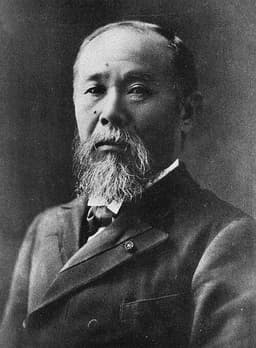
Ito Hirobumi
Politician · Modern
73.8Total
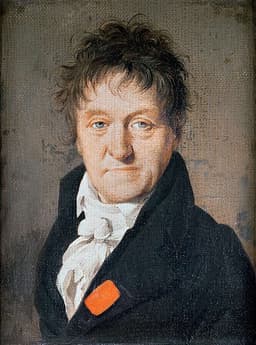
Lazare Carnot
Politician · Modern
68.2Total
Basic Information
Born
1841
1753
Died
1909
1823
Era
Modern
Modern
Nationality
Japan
France
Occupation
Politician
Politician
Civilization
Eastern
Western
Score Comparison
Military (10%)
50.0
61.7
Political (20%)
86.0
72.0
Influence (20%)
71.0
68.0
Legacy (20%)
80.0
65.0
Leadership (15%)
80.9
72.0
Strategy (15%)
60.0
72.0
TOTAL
73.8
68.2
Ito Hirobumi — Complete Timeline
1882 AD
Establishment of the Bank of JapanReform◆ Major
Under Ito Hirobumi's leadership, the Bank of Japan was established as the nation's central bank. It was modeled after European central banks and aimed to stabilize the currency and control inflation. This institution was crucial for Japan's economic modernization and industrial growth.
Central BankEconomic ReformModernization
Impact: nationalconstructive
1885 AD
First Prime Minister of JapanPolitical Action◆ Major
Ito Hirobumi became the first Prime Minister of Japan under the new cabinet system. He served four non-consecutive terms and was instrumental in shaping the modern Japanese state. His tenure focused on centralizing power, modernizing the economy, and strengthening the military.
Prime MinisterCabinet SystemMeiji Period
Impact: nationalconstructive
1889 AD
Drafting of the Meiji ConstitutionReform
Ito Hirobumi led the drafting of the Meiji Constitution, which established a constitutional monarchy with a bicameral parliament (the Diet). The constitution granted the emperor sovereign power but also provided for elected representatives. It was promulgated in 1889 and remained in effect until 1947.
ConstitutionMeiji PeriodGovernment Reform
Impact: nationalconstructive
1909 AD
Assassination at Harbin StationPolitical Action◆ Major
Ito Hirobumi was assassinated by Korean nationalist An Jung-geun at Harbin railway station in Manchuria. Ito was on a mission to negotiate with Russian officials regarding Korea. His death shocked Japan and was used to justify the formal annexation of Korea in 1910.
AssassinationKoreaAnnexation
Impact: globaltragic
Lazare Carnot — Complete Timeline
1793 AD
Directed the Victory at the Battle of WattigniesWar◆ Major
Carnot personally directed French forces at the Battle of Wattignies, a key victory that relieved the siege of Maubeuge. His strategic planning helped turn the tide against the Austrian army.
French RevolutionBattleVictory
Impact: regionalconstructive
Organized the Levée en MasseReform◆ Major
Carnot helped implement the lev
French RevolutionConscriptionMilitary Reform
Impact: globalconstructive
Appointed to the Committee of Public SafetyPolitical Action◆ Major
Carnot was appointed to the Committee of Public Safety, where he took charge of military organization. He reorganized the French army, introduced mass conscription, and coordinated the war effort against foreign coalitions.
French RevolutionCommittee of Public SafetyMilitary
Impact: nationalconstructive
1815 AD
Exiled as a RegicidePolitical Action
After the Bourbon restoration, Carnot was exiled as a regicide for having voted for the execution of Louis XVI. He spent his remaining years in Germany and died in Magdeburg.
ExileRegicideBourbon
Impact: nationaltragic
Expert Analysis
Ito Hirobumi vs Lazare Carnot
# The Architect and the Organizer
On a cold October morning in 1909, Ito Hirobumi stepped off his train at Harbin station in Manchuria, unaware that a young Korean nationalist named An Jung-geun was waiting in the crowd with a pistol. Three shots ended the life of Japan's first prime minister, the man who had written the Meiji Constitution and shaped modern Japan. Across the globe and a century earlier, another architect of national transformation faced a different fate: Lazare Carnot, the "Organizer of Victory" who had saved revolutionary France, spent his final years in exile, a regicide banished by the very monarchy his efforts had helped restore. Both men built the foundations of modern states, yet their paths diverged in ways that reveal the deep forces of history—the pull of tradition versus the chaos of revolution, the promise of stability versus the price of survival.
Origins
Ito Hirobumi was born in 1841 into a low-ranking samurai family in Hagi, a domain that would become a crucible of the Meiji Restoration. His childhood unfolded in a Japan still sealed from the world, where the shogun's authority masked a crumbling feudal order. The arrival of Commodore Perry's black ships in 1853, when Ito was twelve, shattered that isolation and set him on a path of radical change. He joined the *shishi*—"men of high purpose"—who sought to overthrow the shogunate, and his early travels to England and the United States exposed him to Western institutions that he would later transplant to Japan.
Lazare Carnot, born in 1753 in Nolay, Burgundy, came of age in a France where the old regime's contradictions were hardening into crisis. His father was a lawyer and notary, part of the provincial bourgeoisie that resented aristocratic privilege. Carnot trained as a military engineer at the École Royale du Génie in Mézières, absorbing the Enlightenment's faith in reason and order. But unlike Ito, who emerged from a samurai class that saw reform as survival, Carnot was a product of a society where revolution was not a choice but a rupture.
Rise to Power
Ito's rise was methodical, a climb through the ranks of a new state. After the Meiji Restoration of 1868, he served in key posts—governor of Hyogo Prefecture, then finance minister—and traveled to Europe to study constitutional systems. In 1882, he oversaw the establishment of the Bank of Japan, modeling it after European central banks to stabilize the nation's currency. His political acumen—scored at 87.2—was evident in his ability to navigate between Japan's traditional elites and the demands of modernization. By 1885, he became Japan's first prime minister under the new cabinet system, a position he would hold four non-consecutive times.
Carnot's ascent was a product of crisis. In 1793, as revolutionary France faced invasion from all sides, he was appointed to the Committee of Public Safety—the twelve-man body that effectively ruled during the Reign of Terror. While others debated ideology, Carnot took charge of military organization. He implemented the *levée en masse*, a mass conscription that mobilized hundreds of thousands of citizens into a national army. His leadership score of 83.5 reflects a man who could translate chaos into discipline, directing the victory at Wattignies in 1793 that relieved the siege of Maubeuge. Where Ito built institutions through negotiation, Carnot forged armies through sheer will.
Leadership & Governance
Ito's governing style was that of a constitutional architect. The Meiji Constitution of 1889, which he drafted, established a bicameral parliament and a constitutional monarchy, but it reserved ultimate power for the emperor. This was a deliberate balance—a way to modernize Japan while preserving its imperial core. Ito believed that Western forms could be grafted onto Eastern traditions, and his political score of 87.2 reflects his success in creating a stable framework that lasted until 1947. Yet his military score of 48.6 reveals a man who was no warrior; his genius was in the drafting room, not the battlefield.
Carnot, by contrast, was a military organizer of the first order. His strategy score of 65.0 and military score of 61.7 understate his impact: he reorganized fourteen armies, streamlined supply lines, and promoted talented officers like Napoleon Bonaparte. But his governance was inseparable from the Terror. He voted for the execution of Louis XVI in 1793, a decision that would later haunt him. While Ito's constitution created a stable monarchy, Carnot's work was a desperate gamble to save a republic that was devouring its own children.
Triumph & Tragedy
Ito's greatest triumph was the Meiji Constitution, a document that transformed Japan from a feudal society into a modern imperial power. His legacy score of 81.0 reflects this achievement. But his tragedy came at Harbin station, where his assassination by a Korean nationalist exposed the dark side of Japanese expansionism. Ito had been on a mission to negotiate with Russia, but to An Jung-geun, he was the symbol of colonial oppression. The bullet that killed him also marked the end of an era when Japan's modernization had seemed a hopeful experiment.
Carnot's triumph was the salvation of revolutionary France. Without his organizational genius, the republic might have collapsed in 1793. Yet his tragedy was the restoration of the Bourbon monarchy in 1815. As a regicide, he was exiled to Magdeburg, where he died in 1823, a man whose life's work—the republic—had been undone. His influence score of 71.4 and legacy score of 75.0 reflect a figure remembered more for his methods than his final political outcome.
Character & Destiny
Ito was a pragmatist, a man who believed that Japan's survival depended on adopting Western technology and institutions while preserving its cultural soul. His character was shaped by the samurai ethos of duty, but his destiny was to be a bridge between two worlds. Carnot was a man of the Enlightenment, a rationalist who believed that science and organization could conquer any crisis. But his destiny was to serve a revolution that, in the end, devoured its own creators. Both were builders, but Ito built for an empire that would last, while Carnot built for a republic that would fall.
Legacy
Today, Ito Hirobumi is remembered as the father of modern Japan. His face once appeared on the 1,000-yen note, and his constitution shaped Japanese politics for generations. Yet his legacy is complicated by Japan's later militarism, which his own centralization of power may have enabled. Carnot is remembered as the "Organizer of Victory," a figure whose military reforms influenced modern warfare. But his name is less known than those of Robespierre or Napoleon, perhaps because his genius was administrative, not charismatic.
Conclusion
Standing at Harbin station, Ito Hirobumi could not have known that his death would become a symbol of resistance. In exile, Lazare Carnot could not have known that his organizational methods would outlast the revolution they served. Both men were architects of their nations' modernities, but their stories remind us that history does not reward the builder—it only remembers what was built. The difference between Ito and Carnot is not just one of culture or era, but of fate: one saw his creation endure, the other saw his destroyed. In the end, both were prisoners of the forces they tried to master.
Rankings
🥇
Ito HirobumiLeader
Mil: 50.0Pol: 86.0Inf: 71.0
73.8
🥈
Lazare Carnot
Mil: 61.7Pol: 72.0Inf: 68.0
68.2
+5.6 behind
How This Comparison Works
Algorithm
Each figure is scored on 6 dimensions (0—100 scale) based on structured historical data: Military (10%), Political (20%), Influence (20%), Legacy (20%), Leadership (15%), Strategy (15%). The weighted total produces the final ranking.
Data Sources
Scores are computed from structured sub-indicators in the database. Scale factors adjust for era (Ancient ×0.85, Modern ×1.0) and civilization size (Eastern ×1.05, Other ×0.80) to account for differences in population and military scale.
Maximum 3 Figures
Comparisons are limited to 2—3 figures to ensure readability and statistical meaningfulness.
Error Margins
±5 points per dimension — Sub-scores are derived from historical records with inherent uncertainty. Two figures within 5 points on a dimension should be considered roughly equivalent in that area.
Total Score Accuracy
±3 points overall — The weighted combination of 6 dimensions produces a total score with approximately ±3 points of uncertainty. Differences of less than 3 points are not statistically significant— the figures are effectively tied.
Known Limitations
- Historical records are incomplete and uneven across civilizations
- Figures from oral-tradition societies may be underrepresented
- Occupation labels can misclassify multi-role figures
- Scores measure capability and impact, not moral character
- Quantitative scoring is a comparison tool, not absolute truth
Capability Radar
Military (10%) — Battles & Warfare
Battles
0
60
Win Rate
0
65
Expansion
70
80
Political (20%) — Governance & Reform
Reform
95
90
Diplomacy
90
60
Economy
80
75
Influence (20%) — Cultural & Global Reach
Cultural
75
60
Global
80
75
Legacy (20%) — Historical Impact
Historical
85
85
Longevity
80
70
Leadership (15%) — Power & Stability
Tenure
85
70
Stability
85
50
Strategy (15%) — Tactics & Innovation
Strategy
0
85
Tactics
0
70
Reform
85
95
Similar Comparisons
Comments & Discussion
IRONITO6/16/2026
Ito was a brilliant constitutional plagiarist, but Carnot actually innovated. The Meiji Constitution? Just Bismarck's playbook with a Japanese gloss. Carnot invented the corps system, mass conscription, and the semaphore telegraph—actual military revolutions. Ito copied; Carnot created. Show me one original military doctrine from Ito that changed warfare. You can't, because he was a bureaucrat, not an architect of victory.
数据猎手6/16/2026
别被“宪法之父”的称号骗了。伊藤博文的明治宪法其实是个缝合怪——普鲁士框架套天皇神权,选举权只给1%的男性。数据说话:1889年日本国会,贵族院全是天皇任命,众议院纳税门槛高得离谱。卡诺的办法简单粗暴:1793年全民动员令,14支军队,80万人,战争部长直接统一军需调度。效率?卡诺的军队三个月打退反法同盟,伊藤的议会扯皮十年才确立政党政治。
CLASSICALHACK6/16/2026
Carnot's true genius wasn't just organization—it was his scientific mind. This man wrote the definitive memoir on fortification, invented the metric system's geometry, and classified battle tactics like a biologist. Ito studied law and constitutions; Carnot studied math and war. When the Revolution needed victory, Carnot understood that winning required rethinking space, time, and logistics. That's not bureaucracy—that's applied intelligence.
历史旁观者6/16/2026
有趣的是两人都死于背叛者之手,但背叛的意义完全不同。伊藤被朝鲜民族主义者暗杀,因为他代表殖民压迫;卡诺被放逐的保皇党逼死,因为他杀过国王。一个被仇恨者杀死,一个被恐惧者驱逐。历史往往给同类人以不同的结局:伊藤死在权力巅峰的瞬间,卡诺死在流亡的黄昏。哪个更讽刺?都讽刺。但卡诺至少问心无愧:他拯救了一个国家却被它遗忘。
REVISIONISTEYE6/16/2026
Stop romanticizing Carnot. He wasn't just the "Organizer of Victory"—he was an architect of terror. The Committee of Public Safety he served? That's the committee that sent 16,000 to the guillotine in the Terror. His "levée en masse" wasn't liberation; it was the first modern total war, drafting entire nations into killing machines. Ito at least built a constitutional framework that survived his death. Carnot's legacy is revolutionary efficiency married to revolutionary cruelty. Not a clean reco