Loading...
Ibn Tumart vs Zhao Kuangyin
Zhao Kuangyin leads by 15.9 pts · 2 figures compared
…
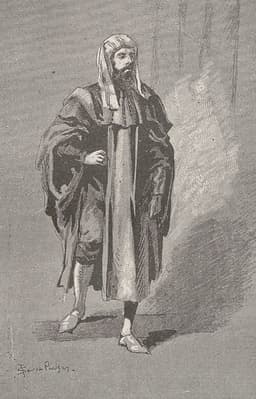
Ibn Tumart
Emperor · Medieval
55.6Total
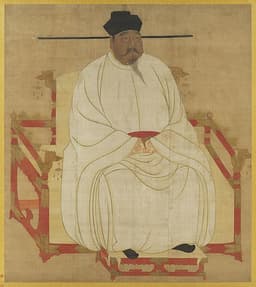
Zhao Kuangyin
Emperor · Medieval
71.5Total
Basic Information
Born
1080
927
Died
1130
976
Era
Medieval
Medieval
Nationality
Almohad Caliphate
China
Occupation
Emperor
Emperor
Civilization
Middle Eastern
Eastern
Score Comparison
Military (10%)
55.0
78.0
Political (20%)
61.3
84.0
Influence (20%)
58.3
68.0
Legacy (20%)
56.0
65.0
Leadership (15%)
47.3
74.0
Strategy (15%)
52.5
68.0
TOTAL
55.6
71.5
Ibn Tumart — Complete Timeline
1121 AD
Proclamation as MahdiCultural
Ibn Tumart proclaimed himself the Mahdi, the guided one, after returning from the East. He began preaching a strict reformist message, condemning the Almoravids for their perceived religious laxity and calling for a return to the Quran and Sunnah.
Impact: regional
Establishment of the Almohad MovementPolitical Action◆ Major
Ibn Tumart founded the Almohad movement (al-Muwahhidun) in the Atlas Mountains of Morocco. He organized his followers into a disciplined religious and military community, rejecting the Almoravid interpretation of Islam and advocating for tawhid (strict monotheism).
Impact: regionalconstructive
1125 AD
Compilation of the Almohad DoctrineCultural
Ibn Tumart compiled his teachings into a book titled 'A'azz ma Yutlab' (The Most Precious of What is Sought). This work outlined the Almohad doctrine, emphasizing the unity of God and rejecting anthropomorphism, and became the foundation of the movement's ideology.
Impact: regionalconstructive
1130 AD
Battle of al-BuhayraWar◆ Major
Ibn Tumart's Almohad forces were defeated by the Almoravids at the Battle of al-Buhayra near Marrakech. This setback prevented the Almohads from capturing the Almoravid capital and forced them to retreat to the mountains.
Impact: regional
Death of Ibn TumartOther◆ Major
Ibn Tumart died shortly after the Battle of al-Buhayra, possibly from wounds or illness. His death was kept secret by his successor Abd al-Mu'min, who continued the Almohad movement and eventually overthrew the Almoravids.
Impact: regionaltragic
Zhao Kuangyin — Complete Timeline
960 AD
Founded Song dynastyPolitical Action
Zhao Kuangyin, a general of Later Zhou, was proclaimed emperor by his troops at Chenqiao. He established the Song dynasty, ending the Five Dynasties period and beginning a new era of Chinese history.
Song dynastyFoundingChenqiao
Impact: globalconstructive
961 AD
Removed military power from generalsPolitical Action◆ Major
Zhao Kuangyin invited senior generals to a banquet and persuaded them to retire peacefully. This 'removal of military power over wine' prevented military coups and centralized control.
Song dynastyMilitary reformCentralization
Impact: nationalconstructive
963 AD
Unified southern ChinaWar◆ Major
Zhao Kuangyin launched campaigns to conquer the southern kingdoms, including Jingnan, Later Shu, and Southern Tang. By his death, most of China was reunified under Song rule.
Song unificationConquestSouthern kingdoms
Impact: national
Expert Analysis
Zhao Kuangyin vs Ibn Tumart
### The Emperor and the Mahdi: Two Paths to Power in a Fractured World
In the year 960, a Chinese general named Zhao Kuangyin was roused from his tent by the clamor of his own troops. They draped a yellow imperial robe over his shoulders, and with that single, theatrical act, the Song Dynasty was born. Half a world away, in the rugged Atlas Mountains of Morocco, another figure was also seized by destiny. In 1121, a Berber scholar named Ibn Tumart stood before his followers and declared himself the *Mahdi*—the guided one, a messianic figure destined to purify Islam. One man became emperor by donning a robe; the other, by claiming a divine mandate. Both sought to unify a fractured world, yet their methods, their fates, and their legacies could not have been more different. What drove one to build a stable, civil empire, and the other to forge a fiery, theocratic movement?
### Origins: The World That Made Them
Zhao Kuangyin was born in 927, a child of the chaos that followed the fall of the mighty Tang Dynasty. China had splintered into the Five Dynasties and Ten Kingdoms—a brutal era of warlords, shifting alliances, and endless war. Zhao was a soldier’s son, raised in a world where power was won by the sword and lost just as quickly. He rose through the ranks of the Later Zhou court, a shrewd and pragmatic man who understood that in such times, survival depended on both military might and political cunning. He was a product of a broken system, and he knew that to fix it, he would have to break it again.
Ibn Tumart was born in 1080, in a village in the High Atlas Mountains of present-day Morocco. His world was also one of fracture, but of a different kind. The Almoravid Empire, a Berber dynasty that had once unified North Africa and Islamic Spain, was growing corrupt and decadent, straying from the strict orthodoxy of its founding. Ibn Tumart, a scholar of deep piety, traveled east to study in Baghdad and Damascus, where he was steeped in the rigid theology of al-Ghazali. He returned to find his homeland polluted by what he saw as idolatry and moral decay. Unlike Zhao, who saw a political problem, Ibn Tumart saw a spiritual crisis. His solution would be not a new dynasty, but a new faith.
### Rise to Power: The Sword and the Scroll
Zhao’s rise was a masterpiece of calculated opportunism. At the Chenqiao mutiny in 960, he did not seize power; he accepted it, stage-managing a reluctant coronation that made him appear the servant of fate, not ambition. Once emperor, he moved with breathtaking speed. By 963, he had launched campaigns to conquer the southern kingdoms—Jingnan, Later Shu, Southern Tang—absorbing them not through annihilation but through a combination of military pressure and diplomatic persuasion. His genius lay in his restraint: he offered amnesty, preserved local elites, and integrated territories rather than destroying them.
Ibn Tumart’s rise was a furnace of conviction. After his proclamation as Mahdi in 1121, he retreated into the mountains, building a fortress community of devoted followers. He preached a radical monotheism, smashing what he deemed idols and demanding absolute obedience. His was a movement of puritanical zeal—he burned books, executed dissenters, and organized his followers into a disciplined, tribal army. Where Zhao used wine and negotiation, Ibn Tumart used fire and scripture. By 1125, he had compiled his teachings into a book, *A'azz ma Yutlab* (The Most Precious of What is Sought), a rigid doctrinal code that would guide his followers. His power came not from a robe placed on his shoulders, but from a truth he believed was placed in his soul.
### Leadership & Governance: The Civilizer and the Purifier
As emperor, Zhao Kuangyin’s leadership was defined by a single, brilliant act: the peaceful removal of military power from his generals. In 961, he invited the senior commanders to a banquet, and over cups of wine, persuaded them to retire to comfortable estates. This “removal of military power over wine” was a stroke of genius. It prevented the very coups that had plagued the Five Dynasties, allowing Zhao to centralize authority under a civilian bureaucracy. He built a meritocratic civil service, encouraged scholarship, and promoted trade. His military score of 74.6 reflects a commander who preferred strategy to slaughter, and his political score of 75.9 shows a ruler who understood that lasting power requires consent, not just conquest.
Ibn Tumart, by contrast, was a leader of absolute spiritual authority. His military score of 40.2 and strategy of 59.0 suggest a man whose strength was not on the battlefield but in the mosque. He was a preacher and a organizer, not a general. His governance was theocratic: he appointed judges and commanders based on loyalty to his doctrine, and his movement was sustained by the promise of divine reward. Yet his rigidity was also his weakness. In 1130, at the Battle of al-Buhayra near Marrakech, his Almohad forces were crushed by the Almoravids. The defeat was a catastrophic setback, and Ibn Tumart died soon after—possibly from wounds, possibly from a broken spirit. His death was kept secret for years by his successor, Abd al-Mu'min, who would eventually fulfill his vision.
### Triumph & Tragedy
Zhao’s greatest triumph was unification. By his death in 976, he had brought most of China under Song control, ending decades of war. His tragedy was that his pacifism sowed the seeds of future weakness. By disarming the military, he left the Song vulnerable to northern invaders like the Khitan Liao and later the Jurchen Jin. The dynasty he founded would survive for three centuries, but it would never fully conquer the steppe.
Ibn Tumart’s triumph was his movement. Though he died in defeat, his ideas outlived him. Under Abd al-Mu'min, the Almohads would sweep across North Africa and into Spain, forging an empire that rivaled the Almoravids. His tragedy was that he never saw it. He died a failure, his body hidden, his dream unrealized. His legacy was built on the faith of others.
### Character & Destiny
Zhao Kuangyin was a realist. He understood power as a human contract, fragile and negotiable. He was generous, calculating, and patient—a man who believed that a cup of wine could do more than a thousand swords. Ibn Tumart was an idealist. He saw the world as a battlefield between truth and falsehood, and he was willing to burn everything to purify it. His character was fire; Zhao’s was water. One reshaped the world by bending it; the other by breaking it.
### Legacy
Zhao Kuangyin is remembered as Song Taizu, the founder of one of China’s most culturally brilliant dynasties. His legacy score of 75.1 reflects a ruler who unified a nation and built a civil order that nurtured art, science, and commerce. He is the emperor who chose peace.
Ibn Tumart is remembered as the Mahdi of the Almohads, a religious revolutionary whose ideas reshaped North African Islam. His legacy score of 67.4 is lower, but his influence was profound: the Almohad Empire would enforce a strict monotheism that echoed through centuries. He is the prophet who chose purity.
### Conclusion
Standing at the edge of their broken worlds, both men reached for the same thing: unity. But one reached with an open hand, the other with a clenched fist. Zhao Kuangyin built a dynasty that lasted; Ibn Tumart built a faith that burned. Their stories remind us that the tools of power—a robe or a revelation, a banquet or a battle—are never neutral. They shape not only the world they remake, but the souls of those who wield them. In the end, the question is not who was greater, but what kind of world each man’s choice made possible. And that is a question history can never fully answer—only keep asking.
Rankings
🥇
Zhao KuangyinLeader
Mil: 78.0Pol: 84.0Inf: 68.0
71.5
🥈
Ibn Tumart
Mil: 55.0Pol: 61.3Inf: 58.3
55.6
+15.9 behind
How This Comparison Works
Algorithm
Each figure is scored on 6 dimensions (0—100 scale) based on structured historical data: Military (10%), Political (20%), Influence (20%), Legacy (20%), Leadership (15%), Strategy (15%). The weighted total produces the final ranking.
Data Sources
Scores are computed from structured sub-indicators in the database. Scale factors adjust for era (Ancient ×0.85, Modern ×1.0) and civilization size (Eastern ×1.05, Other ×0.80) to account for differences in population and military scale.
Maximum 3 Figures
Comparisons are limited to 2—3 figures to ensure readability and statistical meaningfulness.
Error Margins
±5 points per dimension — Sub-scores are derived from historical records with inherent uncertainty. Two figures within 5 points on a dimension should be considered roughly equivalent in that area.
Total Score Accuracy
±3 points overall — The weighted combination of 6 dimensions produces a total score with approximately ±3 points of uncertainty. Differences of less than 3 points are not statistically significant— the figures are effectively tied.
Known Limitations
- Historical records are incomplete and uneven across civilizations
- Figures from oral-tradition societies may be underrepresented
- Occupation labels can misclassify multi-role figures
- Scores measure capability and impact, not moral character
- Quantitative scoring is a comparison tool, not absolute truth
Capability Radar
Military (10%) — Battles & Warfare
Battles
30
75
Win Rate
35
85
Expansion
40
75
Political (20%) — Governance & Reform
Reform
80
90
Diplomacy
30
85
Economy
20
80
Influence (20%) — Cultural & Global Reach
Cultural
60
70
Global
50
60
Legacy (20%) — Historical Impact
Historical
65
80
Longevity
55
75
Leadership (15%) — Power & Stability
Tenure
25
65
Stability
20
85
Strategy (15%) — Tactics & Innovation
Strategy
45
80
Tactics
40
70
Reform
70
90
Similar Comparisons
Comments & Discussion
沙漠先知铁锤6/16/2026
伊本·图马特根本不算革新者,他只是柏柏尔部落迷信的包装工。看看他所谓的"神学纯洁性",不过是用马格里布的口音复读安达卢斯学者的二手观点。赵匡胤至少知道杯酒释兵权是门技术活,而这位马赫迪连阿尔摩哈德王朝的税收体系都没活过两代人。宗教狂热能煽动一时,能建立持续百年的文官制度吗?|
修正主义吐槽6/16/2026
拿赵匡胤跟伊本·图马特比?这就像拿保温杯和燃烧弹比较。赵匡胤是职业经理人,在一个系统崩溃的时代用官僚文件拼凑秩序;伊本·图马特是创业导师,用永生承诺和焚书堆画大饼。但说到底两人都失败了:宋代的"重文轻武"直接导致靖康之耻,阿尔摩哈德的极端教义把马格里布拖进百年反智时代。硬要选,我宁可要一个会写诗的寡头,也不要一个会杀人的先知。|
Historian7606/16/2026
Let's crunch numbers: Zhao's Song ruled 167 years with peak population over 100 million; Ibn's Almohads barely lasted 50 years and their max territory was maybe 2 million km². Zhao centralized tax collection to fund a civil service exam system that selected 30,000+ officials purely by merit. Ibn appointed his tribal kin as military governors. One built a state that outlasted him by centuries; the other created a personality cult that collapsed under his successor. Math doesn't lie.|
Chronicler69356/16/2026
The robe versus the revelation—Zhao's legitimacy derived from historical precedent (the Later Zhou's own coups), while Ibn's came from eschatological rupture. Zhao deliberately mimicked the Tang model of rule by literati, even suppressing his own military faction. Ibn, by contrast, rejected all existing Islamic scholarship as corrupted. One respected tradition to unify; the other destroyed it to purify. In the end, Zhao's Confucian synthesis endured, whereas Ibn's Mahdism vanished into Sufi myst
Chronicler98336/16/2026
Zhao's yellow robe trick is overrated. Any competent general in the Five Dynasties could have pulled that off—he just had better PR. The real genius was his slow demobilization of rival warlords through wine and poetry, not battle. Ibn Tumart at least had theological balls, declaring himself Mahdi and burning books he disagreed with. Zhao's "civil supremacy" was just bureaucratic cowardice dressed as Confucian virtue. Give me a firebrand who reshapes doctrine over a emperor who fears his own sha