Loading...
Ibn Tumart vs Vijayalaya Chola
Ibn Tumart leads by 1.4 pts · 2 figures compared
…
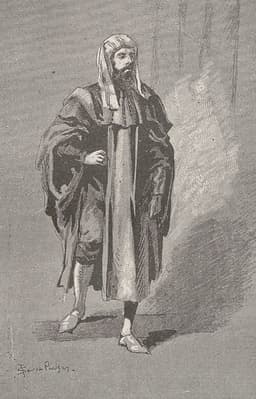
Ibn Tumart
Emperor · Medieval
55.6Total
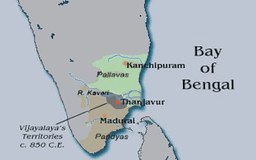
Vijayalaya Chola
Emperor · Medieval
54.2Total
Basic Information
Born
1080
820
Died
1130
870
Era
Medieval
Medieval
Nationality
Almohad Caliphate
India
Occupation
Emperor
Emperor
Civilization
Middle Eastern
Indian
Score Comparison
Military (10%)
55.0
45.0
Political (20%)
61.3
40.8
Influence (20%)
58.3
58.0
Legacy (20%)
56.0
54.0
Leadership (15%)
47.3
64.0
Strategy (15%)
52.5
60.0
TOTAL
55.6
54.2
Ibn Tumart — Complete Timeline
1121 AD
Proclamation as MahdiCultural
Ibn Tumart proclaimed himself the Mahdi, the guided one, after returning from the East. He began preaching a strict reformist message, condemning the Almoravids for their perceived religious laxity and calling for a return to the Quran and Sunnah.
Impact: regional
Establishment of the Almohad MovementPolitical Action◆ Major
Ibn Tumart founded the Almohad movement (al-Muwahhidun) in the Atlas Mountains of Morocco. He organized his followers into a disciplined religious and military community, rejecting the Almoravid interpretation of Islam and advocating for tawhid (strict monotheism).
Impact: regionalconstructive
1125 AD
Compilation of the Almohad DoctrineCultural
Ibn Tumart compiled his teachings into a book titled 'A'azz ma Yutlab' (The Most Precious of What is Sought). This work outlined the Almohad doctrine, emphasizing the unity of God and rejecting anthropomorphism, and became the foundation of the movement's ideology.
Impact: regionalconstructive
1130 AD
Battle of al-BuhayraWar◆ Major
Ibn Tumart's Almohad forces were defeated by the Almoravids at the Battle of al-Buhayra near Marrakech. This setback prevented the Almohads from capturing the Almoravid capital and forced them to retreat to the mountains.
Impact: regional
Death of Ibn TumartOther◆ Major
Ibn Tumart died shortly after the Battle of al-Buhayra, possibly from wounds or illness. His death was kept secret by his successor Abd al-Mu'min, who continued the Almohad movement and eventually overthrew the Almoravids.
Impact: regionaltragic
Vijayalaya Chola — Complete Timeline
820 AD
Foundation of the Imperial Chola DynastyPolitical Action◆ Major
Vijayalaya Chola established the Imperial Chola dynasty, reviving the ancient Chola lineage after centuries of obscurity. He consolidated control over the Kaveri delta region, laying the foundation for the Chola Empire's future expansion.
Impact: regionalconstructive
850 AD
Capture of Thanjavur from the MutharaiyarWar◆ Major
Vijayalaya Chola captured the city of Thanjavur from the Mutharaiyar chieftains, who were vassals of the Pallavas. This victory established the Chola kingdom as an independent power and made Thanjavur the new Chola capital.
Impact: regionalconstructive
860 AD
Construction of the Vijayalaya Choleswaram TempleCultural
Vijayalaya Chola built the Vijayalaya Choleswaram temple at Narthamalai, a rock-cut temple dedicated to Shiva. This temple is one of the earliest Chola architectural monuments, reflecting the transition from Pallava to Chola styles.
constructive
Expert Analysis
Ibn Tumart vs Vijayalaya Chola
### The Founder and the Mahdi
In the year 850, a minor chieftain named Vijayalaya, fighting in the shadow of the great Pallava empire, seized a small, flood-prone town on the Kaveri River delta. He called it Thanjavur. Across the world, three centuries later, a Berber scholar named Ibn Tumart, having returned from the great universities of the East, stood in a dusty marketplace in the Atlas Mountains and declared himself the Mahdi, the guided one. One man took a city; the other claimed a revelation. Both would change history, but in profoundly different ways. Why did one build a dynasty that would last for centuries, while the other founded a movement that would outlive him only through the sword of a successor? The answer lies not in their ambition, but in the soil from which they grew.
### Origins
Vijayalaya Chola emerged from a long twilight. The ancient Chola dynasty, which had ruled the Tamil country in the Sangam age, had faded into obscurity centuries before his birth. By the early ninth century, the Cholas were little more than local chieftains, vassals to the Pallava kings of Kanchi. Vijayalaya was born around 820 into this world of diminished glory. He was a restorer, not a revolutionary. His task was to reclaim a past that was remembered in songs and poems, not to invent a new order. The land he knew was one of intricate temple rituals, competitive dynasties, and a deep, unbroken cultural tradition that gave legitimacy to those who could revive old names.
Ibn Tumart, born around 1080 in the Anti-Atlas mountains of Morocco, inhabited a very different world. He was a Berber of the Masmuda tribe, raised in a society torn between the rigid, literalist Islam of the ruling Almoravid dynasty and the mystical, philosophical currents flowing from Andalusia and the East. His intellectual journey took him to Cordoba, to Alexandria, and to Baghdad, where he absorbed the radical teachings of the theologian al-Ghazali and the strict monotheism of the Hanbali school. He did not come to restore a golden age; he came to purify a corrupted one. His revolution was one of doctrine, not dynasty.
### Rise to Power
Vijayalaya’s path was one of patient opportunism. The Pallava empire was weakening under pressure from the Pandyas and Rashtrakutas. Local chieftains, like the Mutharaiyar who held Thanjavur, were caught in the middle. Around 850, Vijayalaya saw his moment. He launched a campaign against the Mutharaiyar, defeated them, and captured the strategic city of Thanjavur. It was a military feat, but more importantly, it was a political one. He did not declare independence from the Pallavas outright; rather, he positioned himself as a new power center, paying nominal allegiance while building his own strength. His rise was gradual, rooted in the slow accumulation of land, alliances, and temple patronage.
Ibn Tumart’s rise was a thunderclap. After years of study and preaching, he returned to the Maghreb around 1117, denouncing the Almoravids as heretics for their anthropomorphic view of God and their lax religious practices. He gathered followers among the mountain tribes, who were weary of Almoravid taxation and control. In 1121, at the age of around forty, he proclaimed himself the Mahdi—the divinely guided one who would restore true Islam. This was not a political claim; it was a cosmic one. He organized his followers into a strict, hierarchical community, the Almohads (al-Muwahhidun, “the Unitarians”), bound by a rigid doctrine he compiled into a book, *A’azz ma Yutlab*. His power was charismatic and absolute, derived from his claim to infallibility.
### Leadership & Governance
As a ruler, Vijayalaya was a builder. His military campaigns were limited—his score of 24.2 reflects a man who fought only when necessary. His true genius was political (54.2) and strategic (63.3). He understood that to rule, he needed to be seen as a legitimate king. So he built the Vijayalaya Choleswaram temple at Narthamalai, a rock-cut shrine to Shiva, around 860. This was not mere piety; it was a statement. By constructing a temple, he linked himself to the divine order, to the Chola kings of old, and to the local population who revered the gods. His governance was one of integration: he absorbed local elites, patronized Brahmins, and allowed existing administrative structures to continue under his suzerainty.
Ibn Tumart, by contrast, was a preacher and a judge. His leadership score (42.5) reflects a man better at inspiring devotion than commanding armies or administering a state. He created a council of ten, a system of tribal organization, and a strict code of behavior. But his vision was totalitarian in its purity: there was no room for compromise, for local custom, or for the slow accretion of loyalty that builds a stable kingdom. His movement was a weapon aimed at the Almoravids, and he honed it with sermons and excommunications, not with land grants or temple building.
### Triumph & Tragedy
Vijayalaya’s triumph was the capture of Thanjavur. It was the seed from which the Imperial Chola dynasty would grow into a maritime empire stretching from Sri Lanka to Southeast Asia. His tragedy was that he did not live to see it. He died around 870, having laid only the foundation. The dynasty he founded would reach its zenith under Rajaraja Chola and Rajendra Chola over a century later. His greatness was in the beginning, not the end.
Ibn Tumart’s tragedy was more immediate. In 1130, he led his Almohad army against the Almoravid capital of Marrakech. At the Battle of al-Buhayra, his forces were crushed. He died shortly after, possibly from wounds or despair. His death was kept secret by his followers for three years, lest the movement collapse. His greatest triumph—the overthrow of the Almoravids and the establishment of the Almohad Caliphate—would be achieved by his successor, Abd al-Mu’min, a man who was a military commander, not a prophet. Ibn Tumart’s tragedy was that his vision required a sword he could not wield.
### Character & Destiny
Vijayalaya was a pragmatist. He did not claim divine guidance; he claimed an inherited right. His character was one of patience, calculation, and respect for tradition. He understood that power in India came not from breaking the past, but from claiming it. His destiny was to be a founder, not a conqueror.
Ibn Tumart was a zealot. He believed he was the Mahdi, and that belief gave him immense courage and charisma, but also a fatal rigidity. He could inspire men to die, but he could not teach them to live under a stable government. His destiny was to be a spark, not a flame. His movement survived because his followers were willing to lie about his death and adapt his doctrines to the realities of power.
### Legacy
Vijayalaya’s legacy (68.0) is the Chola dynasty itself. The temples he began, the city he captured, the lineage he revived—all became the bedrock of one of India’s greatest empires. He is remembered as the man who started it all, the founder whose name is still chanted in Tamil hymns.
Ibn Tumart’s legacy (67.4) is more complex. He is revered by the Almohads as the Mahdi, but his movement quickly evolved beyond his rigid theology. His successor, Abd al-Mu’min, built an empire that stretched from Morocco to Tunisia, but it was an empire of conquest, not conversion. Ibn Tumart’s name lives on in the history of Islamic reform, but his dream of a purified, united community was never fully realized.
### Conclusion
One man took a city; the other claimed a revelation. Vijayalaya Chola and Ibn Tumart both founded dynasties that changed the world, but they did so from opposite poles of human ambition. The Chola built with stone and patience; the Almohad built with faith and fire. Their stories remind us that history is made not only by those who win battles, but by those who plant seeds that others will water. Vijayalaya’s seed grew into a banyan tree; Ibn Tumart’s became a desert storm. Both were founders. Both were necessary. But only one understood that to rule, you must first learn to build.
Rankings
🥇
Ibn TumartLeader
Mil: 55.0Pol: 61.3Inf: 58.3
55.6
🥈
Vijayalaya Chola
Mil: 45.0Pol: 40.8Inf: 58.0
54.2
+1.4 behind
How This Comparison Works
Algorithm
Each figure is scored on 6 dimensions (0—100 scale) based on structured historical data: Military (10%), Political (20%), Influence (20%), Legacy (20%), Leadership (15%), Strategy (15%). The weighted total produces the final ranking.
Data Sources
Scores are computed from structured sub-indicators in the database. Scale factors adjust for era (Ancient ×0.85, Modern ×1.0) and civilization size (Eastern ×1.05, Other ×0.80) to account for differences in population and military scale.
Maximum 3 Figures
Comparisons are limited to 2—3 figures to ensure readability and statistical meaningfulness.
Error Margins
±5 points per dimension — Sub-scores are derived from historical records with inherent uncertainty. Two figures within 5 points on a dimension should be considered roughly equivalent in that area.
Total Score Accuracy
±3 points overall — The weighted combination of 6 dimensions produces a total score with approximately ±3 points of uncertainty. Differences of less than 3 points are not statistically significant— the figures are effectively tied.
Known Limitations
- Historical records are incomplete and uneven across civilizations
- Figures from oral-tradition societies may be underrepresented
- Occupation labels can misclassify multi-role figures
- Scores measure capability and impact, not moral character
- Quantitative scoring is a comparison tool, not absolute truth
Capability Radar
Military (10%) — Battles & Warfare
Battles
30
45
Win Rate
35
50
Expansion
40
55
Political (20%) — Governance & Reform
Reform
80
35
Diplomacy
30
40
Economy
20
35
Influence (20%) — Cultural & Global Reach
Cultural
60
40
Global
50
30
Legacy (20%) — Historical Impact
Historical
65
55
Longevity
55
50
Leadership (15%) — Power & Stability
Tenure
25
50
Stability
20
45
Strategy (15%) — Tactics & Innovation
Strategy
45
45
Tactics
40
40
Reform
70
30
Similar Comparisons
Comments & Discussion
IbnTumartTheWrath6/16/2026
Tumart was a theological grenade thrown into a tribal powder keg. Calling yourself Mahdi is easy when you're backed by Berber warriors who've just been told they're fighting for salvation, not loot. But here's the heresy: his movement died with him. Al-Mohad power came only when Abd al-Mu'min ignored the revelation and picked up the sword. Vijayalaya built a dynasty; Tumart built a cult that needed a general to survive. For all his cosmic claims, Tumart was the lesser founder.
历史的推土机6/16/2026
说Tumart是革命者?别逗了。看看Vijayalaya——一个二流酋长,趁着Pallava内乱抢了个烂泥镇,结果呢?他把祖宗传下的记忆变成钢铁骨架,撑了四个世纪。Tumart的Berber改革?他死后十年就垮了,全靠Abd al-Mu'min的刀枪续命。要我说,Tumart是个点燃炸药的火柴,Vijayalaya却是那个能盖宫殿的泥瓦匠。一个靠神启喊口号,一个靠泥土修城墙,高下立判。
ClassicsSkeptic6/16/2026
The comparison misses the real fracture: Vijayalaya inherited an unbroken cultural grammar. Tamil temple inscriptions, land grants, even the Pallava bureaucracy—he plugged into a system already humming. Tumart had to invent legitimacy from scratch, claiming Mahdi status against the Maliki orthodoxy that called him heretic. So of course Vijayalaya's dynasty lasted longer: he didn't have to burn the house down to rebuild. Tumart's revolution was epic, but epic failures are still failures.
铁血史官6/16/2026
你们忽略了一个关键:土壤。Vijayalaya在Kaveri三角洲,每条河渠都是前人挖的,每首颂歌都是古人唱的。他只需接上水管。Tumart呢?他在Atlas山区的沙漠帐篷里,对着部落酋长传教,连个像样的城市都没有。一个在文明的温床上种树,一个在荒原上点火——点完了,风一吹就灭。Tumart的悲剧不是野心太大,是选错了战场。Vijayalaya赢了,因为他站在巨人的肩膀上,而不是宣称自己是巨人。