Loading...
Ibn Tumart vs Julius Caesar
Julius Caesar leads by 27.2 pts · 2 figures compared
…
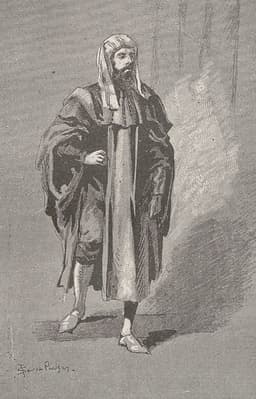
Ibn Tumart
Emperor · Medieval
55.6Total

Julius Caesar
General · Ancient
82.8Total
Basic Information
Born
1080
-100
Died
1130
-44
Era
Medieval
Ancient
Nationality
Almohad Caliphate
Roman Republic
Occupation
Emperor
General
Civilization
Middle Eastern
Western
Score Comparison
Military (10%)
55.0
88.0
Political (20%)
61.3
78.0
Influence (20%)
58.3
85.0
Legacy (20%)
56.0
82.0
Leadership (15%)
47.3
80.0
Strategy (15%)
52.5
85.0
TOTAL
55.6
82.8
Ibn Tumart — Complete Timeline
1121 AD
Proclamation as MahdiCultural
Ibn Tumart proclaimed himself the Mahdi, the guided one, after returning from the East. He began preaching a strict reformist message, condemning the Almoravids for their perceived religious laxity and calling for a return to the Quran and Sunnah.
Impact: regional
Establishment of the Almohad MovementPolitical Action◆ Major
Ibn Tumart founded the Almohad movement (al-Muwahhidun) in the Atlas Mountains of Morocco. He organized his followers into a disciplined religious and military community, rejecting the Almoravid interpretation of Islam and advocating for tawhid (strict monotheism).
Impact: regionalconstructive
1125 AD
Compilation of the Almohad DoctrineCultural
Ibn Tumart compiled his teachings into a book titled 'A'azz ma Yutlab' (The Most Precious of What is Sought). This work outlined the Almohad doctrine, emphasizing the unity of God and rejecting anthropomorphism, and became the foundation of the movement's ideology.
Impact: regionalconstructive
1130 AD
Battle of al-BuhayraWar◆ Major
Ibn Tumart's Almohad forces were defeated by the Almoravids at the Battle of al-Buhayra near Marrakech. This setback prevented the Almohads from capturing the Almoravid capital and forced them to retreat to the mountains.
Impact: regional
Death of Ibn TumartOther◆ Major
Ibn Tumart died shortly after the Battle of al-Buhayra, possibly from wounds or illness. His death was kept secret by his successor Abd al-Mu'min, who continued the Almohad movement and eventually overthrew the Almoravids.
Impact: regionaltragic
Julius Caesar — Complete Timeline
58 BC
Gallic WarsWar◆ Major
Caesar, as proconsul of Gaul, launched a series of campaigns that conquered all of Gaul (modern France, Belgium, and parts of Switzerland). He fought numerous battles, including against the Helvetii, the Belgae, and the Gallic chieftain Vercingetorix. The wars brought immense wealth and a loyal army to Caesar.
Gallic WarsConquestRoman Expansion
Impact: regional
49 BC
Crossing the RubiconPolitical Action◆ Major
Caesar led Legio XIII across the Rubicon River into Italy, defying the Roman Senate's order to disband his army. This act triggered a civil war against Pompey and the Optimates, ultimately leading to Caesar's dictatorship and the end of the Roman Republic.
Roman Civil WarEnd of RepublicPower Struggle
Impact: global
48 BC
Battle of PharsalusWar◆ Major
Caesar's outnumbered army defeated the larger forces of Pompey the Great at Pharsalus in Greece. Caesar's tactical use of a reserve line to counter Pompey's cavalry charge proved decisive. Pompey fled to Egypt, where he was assassinated, leaving Caesar as the undisputed master of the Roman world.
Roman Civil WarBattleDecisive Victory
Impact: regional
44 BC
Appointment as Dictator for LifePolitical Action◆ Major
The Roman Senate appointed Caesar dictator perpetuo (dictator for life), granting him unprecedented personal power. This move concentrated military, legislative, and judicial authority in one person, effectively ending the Roman Republic's traditional system of checks and balances and alarming many senators.
DictatorshipEnd of RepublicPower Consolidation
Impact: regionaldestructive
Assassination on the Ides of MarchPolitical Action◆ Major
A group of Roman senators, led by Marcus Junius Brutus and Gaius Cassius Longinus, stabbed Caesar to death at a meeting of the Senate in the Theatre of Pompey. The assassination was intended to restore the Republic, but instead triggered another civil war that led to the rise of the Roman Empire.
AssassinationRoman PoliticsEnd of Republic
Impact: globaldestructive
Expert Analysis
Julius Caesar vs Ibn Tumart
# The Conqueror and the Mahdi
On a winter day in 49 BCE, a Roman general stood at the banks of a small river in northern Italy, contemplating an act that would shatter centuries of republican tradition. On a spring day in 1121, a Berber preacher climbed into the Atlas Mountains of Morocco, declaring himself the Mahdi, the guided one destined to purify Islam. Both men would reshape the world around them, yet their paths could not have been more different. Julius Caesar and Ibn Tumart each seized a moment of crisis, but where one built an empire that would echo through millennia, the other founded a dynasty that would fade into the margins of history. Why did one become a name spoken by schoolchildren for two thousand years, while the other remains known only to scholars of the medieval Maghreb?
Origins
Julius Caesar was born into the patrician class of the Roman Republic in 100 BCE, a world of marble temples, senatorial debates, and relentless military expansion. His family claimed descent from the goddess Venus, but their political influence had waned. Young Caesar learned early that in Rome, power belonged to those who could command armies and sway crowds. He studied rhetoric in Rhodes, dodged the proscriptions of Sulla’s civil war, and cultivated an image of daring elegance—a man who wore his toga loosely and seduced the wives of his enemies.
Ibn Tumart emerged from a very different world. Born in 1080 in the Anti-Atlas mountains of present-day Morocco, he was a Masmuda Berber, a son of a tribal society where honor and piety mattered more than ancestry. He traveled east to study in Baghdad and Damascus, where he encountered the austere theology of al-Ghazali and the puritanical doctrines of the Hanbali school. What he saw in the Islamic world—the wine-drinking, silk-wearing Almoravid rulers who claimed to defend orthodoxy while living in luxury—filled him with righteous fury. Where Caesar learned to manipulate men, Ibn Tumart learned to judge them.
Rise to Power
Caesar’s ascent came through a masterful blend of military prowess and political cunning. He secured the governorship of Gaul in 58 BCE and spent eight years conquering a territory that stretched from the Mediterranean to the English Channel. His *Commentaries* turned these brutal campaigns into a gripping narrative that made him a legend in Rome. When the Senate ordered him to disband his army, he crossed the Rubicon River in 49 BCE—an act of war against the Republic itself. Within four years, he had defeated his rivals, been named dictator for life, and begun transforming Rome into an autocracy.
Ibn Tumart’s rise was slower and more precarious. After returning from the East, he began preaching in his native mountains, attacking the Almoravids for their lax morals and anthropomorphic depictions of God. In 1121, he proclaimed himself the Mahdi, a title that carried apocalyptic weight in Islamic eschatology. He gathered followers among the mountain tribes, organized them into a disciplined movement called the Almohads (al-Muwahhidun, “those who affirm the unity of God”), and retreated to the fortress of Tinmel to build a theocratic state. Unlike Caesar, who could rely on Roman legions and senatorial allies, Ibn Tumart had only faith and tribal loyalty.
Leadership & Governance
Caesar governed with pragmatism and vision. He reformed the calendar, granted citizenship to Gauls, launched massive building projects, and centralized authority in his own hands. His military genius lay in speed and audacity—he once famously said, “I came, I saw, I conquered” after a lightning campaign in Asia Minor. But he also understood mercy: he pardoned many of his enemies, including Brutus and Cassius, a decision that would prove fatal.
Ibn Tumart governed through doctrine and terror. He compiled his teachings into a book titled *A'azz ma Yutlab* (The Most Precious of What is Sought), which demanded absolute obedience to his interpretation of Islam. He imposed strict dress codes, banned music and wine, and sent missionaries to convert the tribes. His military strategy was less impressive: at the Battle of al-Buhayra near Marrakech in 1130, his forces were crushed by the Almoravids. The defeat was devastating, and Ibn Tumart died shortly after, possibly from wounds or illness, with a total military score of 40.2 compared to Caesar’s 88.0.
Triumph & Tragedy
Caesar’s greatest triumph was the conquest of Gaul, which made him fabulously wealthy and gave him a loyal army. His greatest tragedy was the Ides of March in 44 BCE, when senators stabbed him to death in the Theater of Pompey. He fell at the base of a statue of his old rival, bleeding from twenty-three wounds, his reforms incomplete and his adopted heir, Octavian, still a teenager.
Ibn Tumart’s triumph was ideological: his movement survived his death. His followers kept his death secret for years, claiming he was in seclusion, and under his successor Abd al-Mu’min, the Almohads eventually conquered Marrakech and established an empire stretching from Spain to Tunisia. His tragedy was that he never saw it. He died a defeated commander, his vision unrealized, his body hidden from his own people.
Character & Destiny
Caesar was audacious, charismatic, and ruthlessly ambitious. He once compared himself to Alexander the Great, weeping that at thirty-three, Alexander had conquered the world while Caesar had done nothing. His charm made men follow him; his clemency made them underestimate him. He believed in his own star, and for a time, the stars obeyed.
Ibn Tumart was rigid, dogmatic, and consumed by certainty. He saw himself as the only true Muslim in a world of hypocrites. His leadership score of 42.5 reflects a man who could inspire devotion but not flexibility—he could command a mountain tribe but not negotiate with a city. Where Caesar adapted, Ibn Tumart condemned. Where Caesar seduced, Ibn Tumart demanded.
Legacy
Caesar’s legacy is immeasurable. The word “kaiser” and “tsar” derive from his name. His calendar, with minor adjustments, is still used today. The Roman Empire he set in motion lasted five centuries in the West and a thousand years in the East. His writings are studied in military academies, his assassination is a cautionary tale about power, and his name remains synonymous with ambition.
Ibn Tumart’s legacy is more contained. The Almohad Caliphate he founded ruled North Africa and Spain for a century, building the Giralda of Seville and the Koutoubia Mosque of Marrakech. But his puritanical theology alienated Jews and Christians, and his empire crumbled under the weight of its own intolerance. Today, his influence score of 73.1 and legacy score of 67.4 place him as a significant but secondary figure—remembered by historians of the medieval Maghreb, but unknown to the wider world.
Conclusion
The difference between Caesar and Ibn Tumart is not simply a matter of talent or luck. Caesar inherited a civilization with institutions, laws, and a language that would outlast him; Ibn Tumart built his movement in a tribal society where loyalty was personal and ephemeral. Caesar could write his own story; Ibn Tumart’s story was written by his successors. One conquered the world; the other conquered a faith. Both changed history, but only one changed the world’s imagination. Perhaps the deepest lesson is this: it is not enough to be right, or even to be victorious. You must also be remembered. And memory, like empire, requires a foundation broader than one man’s conviction.
Rankings
🥇
Julius CaesarLeader
Mil: 88.0Pol: 78.0Inf: 85.0
82.8
🥈
Ibn Tumart
Mil: 55.0Pol: 61.3Inf: 58.3
55.6
+27.2 behind
How This Comparison Works
Algorithm
Each figure is scored on 6 dimensions (0—100 scale) based on structured historical data: Military (10%), Political (20%), Influence (20%), Legacy (20%), Leadership (15%), Strategy (15%). The weighted total produces the final ranking.
Data Sources
Scores are computed from structured sub-indicators in the database. Scale factors adjust for era (Ancient ×0.85, Modern ×1.0) and civilization size (Eastern ×1.05, Other ×0.80) to account for differences in population and military scale.
Maximum 3 Figures
Comparisons are limited to 2—3 figures to ensure readability and statistical meaningfulness.
Error Margins
±5 points per dimension — Sub-scores are derived from historical records with inherent uncertainty. Two figures within 5 points on a dimension should be considered roughly equivalent in that area.
Total Score Accuracy
±3 points overall — The weighted combination of 6 dimensions produces a total score with approximately ±3 points of uncertainty. Differences of less than 3 points are not statistically significant— the figures are effectively tied.
Known Limitations
- Historical records are incomplete and uneven across civilizations
- Figures from oral-tradition societies may be underrepresented
- Occupation labels can misclassify multi-role figures
- Scores measure capability and impact, not moral character
- Quantitative scoring is a comparison tool, not absolute truth
Capability Radar
Military (10%) — Battles & Warfare
Battles
30
95
Win Rate
35
92
Expansion
40
97
Political (20%) — Governance & Reform
Reform
80
90
Diplomacy
30
85
Economy
20
82
Influence (20%) — Cultural & Global Reach
Cultural
60
88
Global
50
94
Legacy (20%) — Historical Impact
Historical
65
95
Longevity
55
96
Leadership (15%) — Power & Stability
Tenure
25
75
Stability
20
60
Strategy (15%) — Tactics & Innovation
Strategy
45
94
Tactics
40
96
Reform
70
88
Similar Comparisons
Comments & Discussion
**Marcus Legionarius**6/16/2026
Caesar wins on sheer audacity alone. Crossing the Rubicon wasn't just a political gamble; it was a declaration that one man's ambition outweighed the entire Roman constitution. Ibn Tumart preached reform, sure, but he hid behind his hill fortress for years. Caesar marched on Rome with a single legion and dared the Senate to stop him. That's the difference between a legend and a footnote.
**数据拆解师老赵**6/16/2026
从数据看,这是个不对称比较。凯撒的名字在英文出版物中出现超过二十万次,而伊本·图迈尔特不到三千次。有人说这是“文化偏见”,但别骗自己了。凯撒征服高卢、打败庞培、重塑罗马金融体系——他有实实在在的经济和政治输出。图迈尔特呢?一场失败的围城战和一堆神学辩论。影响力要量化,别拿信仰当借口。
**Livia's Ghost**6/16/2026
People forget that Caesar's legacy was actively managed by his successors. Augustus didn't just inherit power; he curated the myth. He paid writers, poets, and historians to turn a civil war general into a god. Ibn Tumart had no such PR machine. His Almohad followers were busy fighting Almoravids and later squabbling over succession. Context matters: one had the Roman imperial apparatus, the other had a Berber tribal confederation.
**古典学狐狸**6/16/2026
你们都在比较“谁更成功”,但忽略了思想深度。伊本·图迈尔特提出了严格的唯一神论(tawhid),不仅挑战了马利克学派,还建立了一套完整的教育体系,从清真寺到经学院。凯撒呢?他留下的《高卢战记》是宣传手册,不是哲学。图迈尔特的《教义纲领》影响了北非几百年,而凯撒的“宽容”只是政治手腕。谁改变了思想的河流,谁才是真正的征服者。
**Revisionist Rami**6/16/2026
Let's stop pretending Caesar was some unique genius. He was a product of a collapsing system—the Roman Republic was already dying, and he just happened to be the most ruthless survivor. Ibn Tumart, on the other hand, saw a similar crisis in Islamic Spain and the Maghreb—factionalism, religious decay, Almoravid hypocrisy—and tried to build a new moral order from scratch. Caesar preserved power. Ibn Tumart tried to purify faith. Which is more noble?