Loading...
Alexander the Great vs Ibn Tumart
Alexander the Great leads by 29.6 pts · 2 figures compared
…
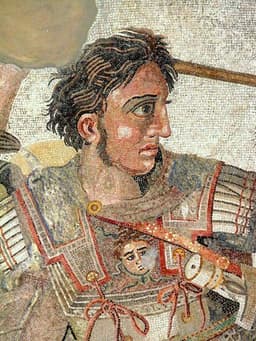
Alexander the Great
General · Ancient
85.2Total
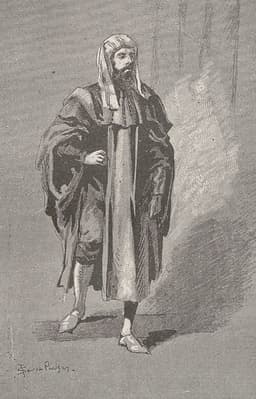
Ibn Tumart
Emperor · Medieval
55.6Total
Basic Information
Born
-356
1080
Died
-323
1130
Era
Ancient
Medieval
Nationality
Macedon
Almohad Caliphate
Occupation
General
Emperor
Civilization
Western
Middle Eastern
Score Comparison
Military (10%)
95.0
55.0
Political (20%)
60.0
61.3
Influence (20%)
92.0
58.3
Legacy (20%)
90.0
56.0
Leadership (15%)
80.0
47.3
Strategy (15%)
92.0
52.5
TOTAL
85.2
55.6
Alexander the Great — Complete Timeline
334 BC
Battle of the Granicus RiverWar◆ Major
Alexander led his Macedonian army across the Hellespont into Asia Minor and defeated a Persian force under local satraps at the Granicus River. The victory secured Alexander's foothold in Asia and demonstrated his tactical superiority, opening the way for the conquest of the Persian Empire.
Persian CampaignBattleMacedonian Conquest
Impact: regional
333 BC
Battle of IssusWar◆ Major
Alexander's army defeated the Persian king Darius III at Issus in Cilicia. Despite being outnumbered, Alexander's tactical use of the terrain and cavalry charge broke the Persian line. Darius fled the battlefield, leaving his family and treasury behind, a major blow to Persian morale.
Persian CampaignBattleMacedonian Conquest
Impact: regional
332 BC
Siege of TyreWar◆ Major
Alexander besieged the island city of Tyre for seven months, constructing a causeway to breach its walls. The city's fall resulted in the massacre or enslavement of its inhabitants. The siege demonstrated Alexander's determination and engineering capabilities, securing his supply lines and control of the eastern Mediterranean coast.
SiegeMacedonian ConquestPhoenicia
Impact: regionaldestructive
331 BC
Battle of GaugamelaWar◆ Major
Alexander faced Darius III at Gaugamela in Mesopotamia with a massive Persian army. Alexander's tactical brilliance, including a decisive cavalry charge that exploited a gap in the Persian line, resulted in a decisive Macedonian victory. Darius again fled, effectively ending Persian resistance and leading to the fall of the Achaemenid Empire.
Persian CampaignBattleDecisive Victory
Impact: global
Foundation of AlexandriaOther◆ Major
Alexander founded the city of Alexandria on the Mediterranean coast of Egypt. He personally selected the site and oversaw the initial planning. Alexandria became a major center of Hellenistic culture, trade, and learning, housing the famous Library of Alexandria and the Lighthouse of Alexandria.
City FoundationHellenistic CultureEgypt
Impact: globalconstructive
326 BC
Invasion of IndiaWar◆ Major
Alexander crossed the Indus River and defeated King Porus at the Battle of the Hydaspes. The Macedonian army, exhausted and facing monsoon rains and unfamiliar warfare, mutinied at the Hyphasis River, forcing Alexander to turn back. This campaign marked the easternmost extent of his conquests.
Indian CampaignBattleMutiny
Impact: regional
Ibn Tumart — Complete Timeline
1121 AD
Proclamation as MahdiCultural
Ibn Tumart proclaimed himself the Mahdi, the guided one, after returning from the East. He began preaching a strict reformist message, condemning the Almoravids for their perceived religious laxity and calling for a return to the Quran and Sunnah.
Impact: regional
Establishment of the Almohad MovementPolitical Action◆ Major
Ibn Tumart founded the Almohad movement (al-Muwahhidun) in the Atlas Mountains of Morocco. He organized his followers into a disciplined religious and military community, rejecting the Almoravid interpretation of Islam and advocating for tawhid (strict monotheism).
Impact: regionalconstructive
1125 AD
Compilation of the Almohad DoctrineCultural
Ibn Tumart compiled his teachings into a book titled 'A'azz ma Yutlab' (The Most Precious of What is Sought). This work outlined the Almohad doctrine, emphasizing the unity of God and rejecting anthropomorphism, and became the foundation of the movement's ideology.
Impact: regionalconstructive
1130 AD
Battle of al-BuhayraWar◆ Major
Ibn Tumart's Almohad forces were defeated by the Almoravids at the Battle of al-Buhayra near Marrakech. This setback prevented the Almohads from capturing the Almoravid capital and forced them to retreat to the mountains.
Impact: regional
Death of Ibn TumartOther◆ Major
Ibn Tumart died shortly after the Battle of al-Buhayra, possibly from wounds or illness. His death was kept secret by his successor Abd al-Mu'min, who continued the Almohad movement and eventually overthrew the Almoravids.
Impact: regionaltragic
Expert Analysis
Alexander the Great vs Ibn Tumart
# The Conqueror and the Reformer: Alexander the Great and Ibn Tumart
On a dusty plain near Marrakech in 1130, a wounded Berber preacher watched his army scatter before the cavalry of the Almoravid Empire. Ibn Tumart, who had proclaimed himself the Mahdi—the guided one destined to restore true Islam—had just suffered a devastating defeat at the Battle of al-Buhayra. Within months, he would be dead, his body hidden by his followers to preserve the movement he had built. Fifteen centuries earlier and two thousand miles east, another man had never known defeat. Alexander of Macedon, at thirty-two, had already conquered the known world from Greece to India, his armies undefeated in battle after battle. Yet both men, in their separate ages, sought to remake the world according to their vision—one through the sword, the other through the word. What drove such different paths, and why did one become a legend of conquest while the other became the hidden founder of an empire?
Origins
Alexander was born in 356 BCE into the turbulent world of ancient Macedon, a kingdom on the fringes of Greek civilization. His father, Philip II, had transformed Macedon from a backward state into a military powerhouse, and his mother, Olympias, claimed descent from the hero Achilles. From childhood, Alexander absorbed two contradictory influences: his father’s ruthless pragmatism and his mother’s mystical ambition. Aristotle, his tutor, gave him the intellectual tools to imagine a world united under Greek culture. The young prince grew up believing that greatness was his birthright.
Ibn Tumart emerged from a very different world. Born around 1080 in the Atlas Mountains of Morocco, he was a Berber of the Masmuda tribe, raised in a society where Islam had taken root but where local traditions still held sway. His early education in Cordoba, the jewel of Islamic Spain, exposed him to the intellectual ferment of the Almoravid Empire—but also to what he saw as its corruption and laxity. Traveling east to Baghdad, he studied under the great theologian al-Ghazali, absorbing a vision of Islam that demanded absolute purity. Where Alexander inherited a kingdom, Ibn Tumart inherited a crisis of faith.
Rise to Power
Alexander’s path was clear from the moment he seized the throne at twenty after his father’s assassination. He crushed rebellions in Greece, then turned east. The Persian Empire, vast but decaying, lay before him. At the Granicus River in 334 BCE, he led a cavalry charge that shattered the Persian satraps. At Issus in 333, he defeated Darius III himself. Tyre fell after a seven-month siege that demonstrated his engineering genius. Egypt surrendered without a fight, and there he founded Alexandria, the first of many cities that would carry his name. Each victory opened the next door.
Ibn Tumart’s rise was slower and more precarious. After returning from the East around 1117, he began preaching against the Almoravids, accusing them of anthropomorphism and religious laxity. His message of strict monotheism—*tawhid*—resonated with the mountain tribes who resented Almoravid rule. In 1121, at the age of forty-one, he proclaimed himself the Mahdi, the guided one who would purify Islam. He retreated to the Atlas Mountains, where he built a fortress community at Tinmel, organizing his followers into a disciplined movement. His power came not from armies but from conviction—and from the belief that God was on his side.
Leadership & Governance
Alexander ruled through conquest and charisma. His military genius was unmatched: he used the phalanx as an anvil and cavalry as a hammer, adapting tactics to every terrain and enemy. At Gaugamela in 331 BCE, his strategic brilliance against a numerically superior Persian army remains a textbook example of battlefield command. His political score of 65.0 reflects a ruler who could inspire loyalty but struggled to govern his sprawling empire. He married a Persian princess, Roxana, and adopted Persian court customs, but his Macedonian generals resented his attempts at fusion. He founded cities, spread Greek culture, but left no stable administration.
Ibn Tumart governed through doctrine and discipline. His military score of 40.2 and strategy of 59.0 suggest he was no battlefield commander—the defeat at al-Buhayra proved that. But his political score of 63.7 and influence of 73.1 reveal a different kind of leader. He compiled his teachings into *A‘azz ma Yutlab* (The Most Precious of What is Sought), a book that became the foundation of Almohad law and theology. He created a council of ten advisors and a military organization of fifty tribal units, each with a religious leader. His power was ideological: he reshaped Berber society through faith, not force.
Triumph & Tragedy
Alexander’s greatest triumph was the conquest of Persia itself—the destruction of an empire that had threatened Greece for centuries. His greatest tragedy was his own mortality. In 323 BCE, at Babylon, he fell ill and died at thirty-two, leaving no clear heir. His generals carved up his empire, and the dream of a unified Hellenistic world fractured into warring kingdoms. “To the strongest,” he reportedly said when asked who should succeed him—a phrase that doomed his legacy.
Ibn Tumart’s triumph was not in his lifetime. He died in 1130, his movement seemingly crushed by the Almoravids. His tragedy was that he never saw his vision realized. Yet his followers kept his death secret for years, maintaining the illusion that the Mahdi still guided them. Under his successor, Abd al-Mu’min, the Almohads rose again, conquered Marrakech in 1147, and built an empire stretching from Spain to Libya. Ibn Tumart’s ideas, not his sword, conquered where he could not.
Character & Destiny
Alexander was driven by *pothos*—a longing for the unknown, a restless desire to push beyond every horizon. He wept when there were no more worlds to conquer. His personality was both his strength and his flaw: the same ambition that drove him across Asia also made him paranoid, cruel, and ultimately isolated. He killed his friend Cleitus in a drunken rage and executed his own generals for disloyalty. He believed himself divine, the son of Zeus, and demanded worship. His character shaped a destiny of endless conquest—and endless loneliness.
Ibn Tumart was driven by certainty. He did not seek personal glory but divine truth. His personality was austere, uncompromising, fanatical. He excommunicated his own brother for disobedience and demanded absolute submission to God’s law. He did not weep for unconquered lands; he wept for impure mosques. His character shaped a destiny of religious revolution—and the founding of a dynasty that would last over a century.
Legacy
Alexander’s legacy is global. His military tactics are still studied at war colleges. His conquests spread Greek language, art, and thought across three continents, creating the Hellenistic world that would later give rise to Rome and, through Rome, to Western civilization. His influence score of 90.0 and legacy of 90.0 reflect a man whose name became synonymous with greatness itself. Yet his empire did not outlive him. He was a destroyer and a builder, but above all, a symbol.
Ibn Tumart’s legacy is more contained but more enduring in its sphere. The Almohad Caliphate he inspired lasted from 1147 to 1269, ruling North Africa and Islamic Spain. His emphasis on strict monotheism influenced later Islamic reform movements. His influence score of 73.1 and legacy of 67.4 reflect a leader known mainly to scholars and historians—but whose ideas shaped the religious landscape of the Maghreb for centuries. He was not a conqueror of lands but a conqueror of souls.
Conclusion
Two men, separated by fifteen centuries and a world of difference. Alexander conquered the known world but could not conquer death; Ibn Tumart could not conquer a single city but built an empire of faith that outlasted him. Alexander’s tragedy was that he died too young; Ibn Tumart’s was that he died too early to see his victory. Both were visionaries, but their visions were fundamentally different: one sought to unite the world under Greek culture, the other to purify it under divine law. In the end, perhaps the most striking contrast is this: Alexander’s name is remembered by millions who know nothing of his battles, while Ibn Tumart’s name is known to few, yet his legacy shaped millions who never knew his name. The conqueror and the reformer—each, in his way, remade the world.
Rankings
🥇
Alexander the GreatLeader
Mil: 95.0Pol: 60.0Inf: 92.0
85.2
🥈
Ibn Tumart
Mil: 55.0Pol: 61.3Inf: 58.3
55.6
+29.6 behind
How This Comparison Works
Algorithm
Each figure is scored on 6 dimensions (0—100 scale) based on structured historical data: Military (10%), Political (20%), Influence (20%), Legacy (20%), Leadership (15%), Strategy (15%). The weighted total produces the final ranking.
Data Sources
Scores are computed from structured sub-indicators in the database. Scale factors adjust for era (Ancient ×0.85, Modern ×1.0) and civilization size (Eastern ×1.05, Other ×0.80) to account for differences in population and military scale.
Maximum 3 Figures
Comparisons are limited to 2—3 figures to ensure readability and statistical meaningfulness.
Error Margins
±5 points per dimension — Sub-scores are derived from historical records with inherent uncertainty. Two figures within 5 points on a dimension should be considered roughly equivalent in that area.
Total Score Accuracy
±3 points overall — The weighted combination of 6 dimensions produces a total score with approximately ±3 points of uncertainty. Differences of less than 3 points are not statistically significant— the figures are effectively tied.
Known Limitations
- Historical records are incomplete and uneven across civilizations
- Figures from oral-tradition societies may be underrepresented
- Occupation labels can misclassify multi-role figures
- Scores measure capability and impact, not moral character
- Quantitative scoring is a comparison tool, not absolute truth
Capability Radar
Military (10%) — Battles & Warfare
Battles
98
30
Win Rate
99
35
Expansion
99
40
Political (20%) — Governance & Reform
Reform
75
80
Diplomacy
80
30
Economy
70
20
Influence (20%) — Cultural & Global Reach
Cultural
95
60
Global
95
50
Legacy (20%) — Historical Impact
Historical
98
65
Longevity
95
55
Leadership (15%) — Power & Stability
Tenure
60
25
Stability
55
20
Strategy (15%) — Tactics & Innovation
Strategy
98
45
Tactics
99
40
Reform
85
70
Similar Comparisons
Comments & Discussion
**Mustafa the Skeptic**6/16/2026
Let's be real here: we're comparing a guy who conquered half the world before 33 to a failed preacher who got his army smashed at al-Buhayra and died soon after. Ibn Tumart's "empire" was built posthumously by his successor, Abd al-Mu'min. Alexander didn't need someone to clean up his mess. Sorry, but "Mahdi with a bloody nose" doesn't stand up to "undefeated in battle."
**铁血史官**6/16/2026
亚历山大靠的是马其顿方阵和父亲遗留的军事机器,伊本·图迈特却凭一己口舌煽动山区部落对抗帝国。后者败绩累累,却奠定了穆瓦希德王朝百年基业——这不是军事对比,而是制度创新与个人崇拜的较量。亚历山大继承王国,图迈特创造宗教,谁更真正"改变世界"?
**Classics Warrior**6/16/2026
You can't compare a lineal descendant of Achilles and Heracles with a Berber reformer whose main claim was being al-Mahdi. Alexander wept that there were no more worlds to conquer; Ibn Tumart wept because his army got routed. One shaped Hellenistic civilization from Egypt to India; the other died with his revolution in tatters. Give me the boy who tamed Bucephalus over the preacher who couldn't tame the Almoravids.
**文化相对论者**6/16/2026
你们太迷恋"胜败"这种幼稚标准了。伊本·图迈特创立了一种融合柏柏尔传统与伊斯兰极端主义的政治神学,其影响延续到15世纪格拉纳达。亚历山大不过复制希腊文明到东方,图迈特却催生了北非本土的宗教帝国——他输掉战役,却赢得了文明基因的传播。谁是真正的失败者?
**Revisionist Striker**6/16/2026
Oh please, Alexander is just a Macedonian thug with good PR from ancient historians who loved a good story. Ibn Tumart's movement actually challenged a corrupt empire and built a lasting dynasty. Alexander's "achievement" was burning Persepolis and getting his men to march to India until they mutinied. Give me a reformer with a revolutionary idea over a drunkard who killed his best friend in a fit of rage.