Loading...
Charles de Gaulle vs Ibn Tumart
Charles de Gaulle leads by 12.6 pts · 2 figures compared
…
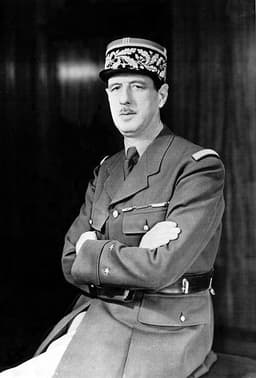
Charles de Gaulle
Politician · Modern
68.2Total
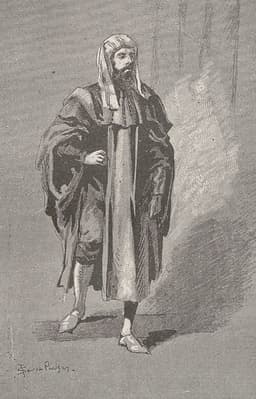
Ibn Tumart
Emperor · Medieval
55.6Total
Basic Information
Born
1890
1080
Died
1970
1130
Era
Modern
Medieval
Nationality
France
Almohad Caliphate
Occupation
Politician
Emperor
Civilization
Western
Middle Eastern
Score Comparison
Military (10%)
55.0
55.0
Political (20%)
75.0
61.3
Influence (20%)
65.0
58.3
Legacy (20%)
68.0
56.0
Leadership (15%)
78.0
47.3
Strategy (15%)
65.0
52.5
TOTAL
68.2
55.6
Charles de Gaulle — Complete Timeline
1940 AD
Appeal of 18 June 1940Political Action
From London, de Gaulle broadcast a radio appeal urging French resistance against Nazi occupation. He called on French soldiers and citizens to continue the fight, founding the Free French Forces and becoming the symbol of French defiance.
World War IIResistanceLeadership
Impact: nationalconstructive
1958 AD
Founding of the Fifth RepublicPolitical Action
De Gaulle returned to power during the Algerian crisis and oversaw the drafting of a new constitution. The Fifth Republic established a strong executive presidency, replacing the unstable parliamentary system of the Fourth Republic.
ConstitutionGovernment ReformPolitical System
Impact: nationalconstructive
1962 AD
End of the Algerian WarPolitical Action◆ Major
De Gaulle negotiated the
DecolonizationPeace TreatyAlgeria
Impact: regionalconstructive
1968 AD
May 1968 CrisisPolitical Action◆ Major
Mass student protests and general strikes paralyzed France, challenging de Gaulle's government. De Gaulle briefly fled to Germany, then returned to dissolve the National Assembly and call elections, which his party won, but his authority was weakened.
ProtestPolitical CrisisSocial Unrest
Impact: nationaldestructive
1969 AD
Resignation as PresidentPolitical Action
De Gaulle resigned after losing a referendum on regional reform and Senate restructuring. The defeat marked the end of his political career, as he withdrew from public life and died the following year.
ResignationPolitical DefeatReferendum
Impact: nationaltragic
Ibn Tumart — Complete Timeline
1121 AD
Proclamation as MahdiCultural
Ibn Tumart proclaimed himself the Mahdi, the guided one, after returning from the East. He began preaching a strict reformist message, condemning the Almoravids for their perceived religious laxity and calling for a return to the Quran and Sunnah.
Impact: regional
Establishment of the Almohad MovementPolitical Action◆ Major
Ibn Tumart founded the Almohad movement (al-Muwahhidun) in the Atlas Mountains of Morocco. He organized his followers into a disciplined religious and military community, rejecting the Almoravid interpretation of Islam and advocating for tawhid (strict monotheism).
Impact: regionalconstructive
1125 AD
Compilation of the Almohad DoctrineCultural
Ibn Tumart compiled his teachings into a book titled 'A'azz ma Yutlab' (The Most Precious of What is Sought). This work outlined the Almohad doctrine, emphasizing the unity of God and rejecting anthropomorphism, and became the foundation of the movement's ideology.
Impact: regionalconstructive
1130 AD
Battle of al-BuhayraWar◆ Major
Ibn Tumart's Almohad forces were defeated by the Almoravids at the Battle of al-Buhayra near Marrakech. This setback prevented the Almohads from capturing the Almoravid capital and forced them to retreat to the mountains.
Impact: regional
Death of Ibn TumartOther◆ Major
Ibn Tumart died shortly after the Battle of al-Buhayra, possibly from wounds or illness. His death was kept secret by his successor Abd al-Mu'min, who continued the Almohad movement and eventually overthrew the Almoravids.
Impact: regionaltragic
Expert Analysis
Charles de Gaulle vs Ibn Tumart
### The Cross and the Crescent: De Gaulle and Ibn Tumart
In the summer of 1940, a towering French general stood before a microphone in London, his voice crackling across the English Channel to a defeated nation. He called for resistance, for hope, for the idea that France was not finished. A millennium earlier, in the harsh peaks of the Atlas Mountains, a Berber preacher with a burning gaze declared himself the Mahdi, the guided one, and summoned his followers to purify Islam with fire and sword. Both men were outcasts, prophets without honor in their own lands. Both would reshape their civilizations. Yet one became the enduring symbol of a modern republic, the other the founding ghost of a forgotten empire. What separates a leader who builds a nation from one who builds a monument to faith?
### Origins
Charles de Gaulle was born into a conservative, Catholic family in Lille in 1890. His father taught philosophy and history; his mother wept at France’s humiliation in the Franco-Prussian War. Young Charles grew up with a visceral sense of national destiny. He was a tall, awkward, bookish boy who read philosophy and dreamed of military glory. The Third Republic was corrupt and unstable, but it was his France. He was shaped by the trenches of Verdun, where he was wounded and captured, and by the interwar years, when he wrote prophetic books about armored warfare while his superiors ignored him. His era was one of industrial might, mass democracy, and total war—a world where ideas had to be translated into institutions.
Ibn Tumart was born around 1080 in the High Atlas, among the Hargha tribe of the Masmuda Berbers. His world was tribal, illiterate, and deeply religious. He traveled east to study in Baghdad, where he absorbed the strict monotheism of al-Ghazali and the Ash’ari school. He returned to the Maghreb a zealot, horrified by the laxity of the Almoravid rulers who drank wine, allowed women to go unveiled, and tolerated anthropomorphic images of God. Where de Gaulle saw a nation in need of a soul, Ibn Tumart saw a faith in need of a sword. His era was one of desert caravans, tribal feuds, and the slow pulse of medieval piety.
### Rise to Power
De Gaulle entered history through a radio broadcast. In June 1940, as the French government capitulated to Hitler, he fled to London. He was a junior general, virtually unknown. But he had a vision: France was not merely a piece of land; it was an idea. He persuaded Winston Churchill to back him, and from a tiny office in Carlton Gardens, he built the Free French Forces. His rise was a miracle of will—a man with no army, no territory, no legitimacy, who simply refused to accept defeat. The turning point came in 1944, when he marched down the Champs-Élysées, hailed by a liberated Paris. He had gambled his life on the force of his own conviction.
Ibn Tumart’s rise was slower and more violent. After returning from the East, he began preaching in the villages of the Atlas, attacking the Almoravids as heretics. His message of *tawhid*—absolute divine unity—was radical. He gathered a small band of disciples, then moved to the mountain fortress of Tinmel. There, in 1121, he proclaimed himself the Mahdi, the infallible guide whose coming had been prophesied. His power was not political but charismatic; he claimed direct authority from God. He organized his followers into a rigid hierarchy, with a council of ten and a military command. His rise was a slow burning fire, fed by tribal grievances and religious fervor.
### Leadership & Governance
De Gaulle was a master of political theater and constitutional design. When the Algerian crisis brought France to the brink of civil war in 1958, he returned to power and crafted the Fifth Republic—a system with a strong executive, a president who stood above parties. He ended the brutal Algerian War in 1962, despite assassination attempts and army mutinies. “I have understood you,” he told the pieds-noirs, knowing he would betray them. His governance was pragmatic, even cynical: he used referendums to bypass parliament, cultivated grandeur as a tool of statecraft, and pursued an independent foreign policy that defied both Washington and Moscow. He was not a democrat in the liberal sense; he believed in a leader who embodied the nation.
Ibn Tumart never ruled a state. He died in 1130, just months after his forces were crushed at the Battle of al-Buhayra. His genius was organizational. He created a movement—the Almohads—with a strict doctrine, a military structure, and a messianic loyalty. His book, *A’azz ma Yutlab*, codified his teachings. After his death, his successor Abd al-Mu’min kept the death secret for years, using Ibn Tumart’s name as a rallying cry. The movement swept across North Africa and into Spain, toppling the Almoravids and creating a vast empire. But it was a state built on religious purity, not political compromise. Dissent was heresy; the Almohad caliph was both king and imam.
### Triumph & Tragedy
De Gaulle’s greatest triumph was the Liberation of Paris in 1944, when he walked through a city wild with joy, reclaiming France’s honor. His greatest tragedy was May 1968, when students and workers paralyzed France, and he briefly fled to Baden-Baden, consulting with the French army in Germany. He returned, called an election, and won—but the magic was broken. The old general had lost touch with the young. He resigned in 1969 after losing a referendum on regional reform, a quiet end for a man who had lived by grand gestures.
Ibn Tumart’s triumph was the founding of a movement that would conquer an empire—an empire he never saw. His tragedy was the defeat at al-Buhayra, where his army was slaughtered outside Marrakech. He died soon after, possibly from wounds, possibly from despair. His followers buried him in secret, afraid that his death would shatter the movement. And yet his legacy endured: the Almohad Caliphate became one of the great powers of the medieval world.
### Character & Destiny
De Gaulle was cold, aloof, and impossibly proud. He once said, “The graveyards are full of indispensable men.” He meant it as a warning to himself. He was a man of immense patience and calculation, who could wait years for the right moment. He wrote memoirs in exile, polished his image, and died in 1970 at his country home, playing solitaire. His character was that of a man who believed he *was* France.
Ibn Tumart was a fanatic, consumed by the fire of his own certainty. He saw himself as the instrument of God’s will. He was ruthless with enemies and demanding with followers. His character was that of a man who believed he *was* the truth.
### Legacy
De Gaulle is remembered as the savior of French honor, the founder of the Fifth Republic, the man who gave France a modern, stable constitution. His name adorns airports, aircraft carriers, and streets. But his vision of a strong, independent France has faded; the Europe he resisted has absorbed his nation.
Ibn Tumart is remembered as a heretic by some, a saint by others. The Almohad empire collapsed, but his ideas—the insistence on absolute monotheism, the rejection of anthropomorphism—echo in Islamic theology. His tomb in Tinmel was destroyed by an earthquake; his movement is a footnote in history books.
### Conclusion
One man built a nation; the other built a faith. De Gaulle understood that power must be anchored in institutions, in the slow, messy work of politics. Ibn Tumart understood that power could be anchored in the absolute—in God, in revelation, in the uncompromising word. Both succeeded in their own terms; both failed in ways they could not foresee. The general’s France still lives, a republic of argument and compromise. The Mahdi’s empire is dust, but the fire of certainty still burns in the hearts of men. Perhaps the difference between a statesman and a prophet is simply this: the statesman learns to live with imperfection, while the prophet demands the impossible. And history, in the end, is kinder to those who asked for less.
Rankings
🥇
Charles de GaulleLeader
Mil: 55.0Pol: 75.0Inf: 65.0
68.2
🥈
Ibn Tumart
Mil: 55.0Pol: 61.3Inf: 58.3
55.6
+12.6 behind
How This Comparison Works
Algorithm
Each figure is scored on 6 dimensions (0—100 scale) based on structured historical data: Military (10%), Political (20%), Influence (20%), Legacy (20%), Leadership (15%), Strategy (15%). The weighted total produces the final ranking.
Data Sources
Scores are computed from structured sub-indicators in the database. Scale factors adjust for era (Ancient ×0.85, Modern ×1.0) and civilization size (Eastern ×1.05, Other ×0.80) to account for differences in population and military scale.
Maximum 3 Figures
Comparisons are limited to 2—3 figures to ensure readability and statistical meaningfulness.
Error Margins
±5 points per dimension — Sub-scores are derived from historical records with inherent uncertainty. Two figures within 5 points on a dimension should be considered roughly equivalent in that area.
Total Score Accuracy
±3 points overall — The weighted combination of 6 dimensions produces a total score with approximately ±3 points of uncertainty. Differences of less than 3 points are not statistically significant— the figures are effectively tied.
Known Limitations
- Historical records are incomplete and uneven across civilizations
- Figures from oral-tradition societies may be underrepresented
- Occupation labels can misclassify multi-role figures
- Scores measure capability and impact, not moral character
- Quantitative scoring is a comparison tool, not absolute truth
Capability Radar
Military (10%) — Battles & Warfare
Battles
60
30
Win Rate
55
35
Expansion
20
40
Political (20%) — Governance & Reform
Reform
95
80
Diplomacy
90
30
Economy
70
20
Influence (20%) — Cultural & Global Reach
Cultural
70
60
Global
80
50
Legacy (20%) — Historical Impact
Historical
85
65
Longevity
75
55
Leadership (15%) — Power & Stability
Tenure
85
25
Stability
75
20
Strategy (15%) — Tactics & Innovation
Strategy
85
45
Tactics
70
40
Reform
80
70
Similar Comparisons
Comments & Discussion
GENERAL'S QUANDARY6/16/2026
De Gaulle and Ibn Tumart both claimed divine mandate, but that's where the similarity ends. De Gaulle was a pragmatist who used mystique as a tool; Ibn Tumart was a zealot who actually believed he was the Mahdi. The difference? De Gaulle saved a secular republic; Ibn Tumart built a theocratic empire that collapsed within decades. The Mahdi's puritanical Almohad movement couldn't even survive its founder, while de Gaulle's Fifth Republic endures. Faith moves mountains, but bad theology erodes the
铁血铸造者6/16/2026
说两人都是“被排斥的先知”?拉倒吧。伊本·图马特在阿特拉斯山里玩宗教清洗,屠戮了半个马格里布才建立政权;戴高乐在欧洲靠着广播讲话就凝聚了自由法国。图马特的军队靠极端教义维持,戴高乐的军队靠对共和国的信仰支撑。一个是中世纪的神权暴君,一个是现代的民主领袖。将他们并列,恰恰忽略了武装信仰与政治信念的根本分野。
DATA REALIST6/16/2026
Let's look at scale: De Gaulle's Free French numbered maybe 70,000 by mid-1942, supported by an entire British Empire, and he still couldn't liberate France without D-Day. Ibn Tumart united Berber tribes against the Almoravids and created an empire stretching from Spain to Tunisia by sheer religious fervor. De Gaulle's impact is measurable in GDP, elections, and NATO. Ibn Tumart's is measurable in centuries of religious reform. The analysis pretends these are comparable, but one operated in the
考证狂魔6/16/2026
分析者说两人都是“流亡先知”,但请注意:戴高乐流亡的是地缘政治意义上的伦敦,而伊本·图马特流亡的是精神意义上的麦加。前者在BBC微音器前呼吁抵抗,后者在山顶清真寺宣讲马赫迪教义。更关键的是,图马特死前指定继任者,建立了延续的政教体系;而戴高乐的权威在他去世后迅速人格化。两者都是个人崇拜的产物,但图马特的遗产在阿尔莫哈德王朝的宗教狂热中留下了印记,而戴高乐的遗产则在法国宪法第五条的冷静文字中。这两种“遗产”的性质完全不可通约。
STRATEGIC ANCHOR6/16/2026
The comparison misses the structural transformation each wrought. De Gaulle's true genius was not the Cross of Lorraine but the 1958 Constitution—a fixed institutional term limit that outlived him. Ibn Tumart's true innovation was a rigid theological doctrine that died with his dynasty. One built a system resilient to the man; the other built a system dependent