Loading...
Ibn Tumart vs Napoleon Bonaparte
Napoleon Bonaparte leads by 15.3 pts · 2 figures compared
…
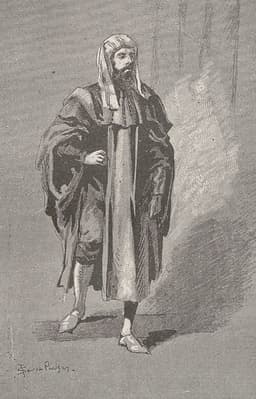
Ibn Tumart
Emperor · Medieval
55.6Total

Napoleon Bonaparte
General · Modern
70.9Total
Basic Information
Born
1080
1769
Died
1130
1821
Era
Medieval
Modern
Nationality
Almohad Caliphate
France
Occupation
Emperor
General
Civilization
Middle Eastern
Western
Score Comparison
Military (10%)
55.0
94.0
Political (20%)
61.3
72.0
Influence (20%)
58.3
40.0
Legacy (20%)
56.0
80.0
Leadership (15%)
47.3
78.0
Strategy (15%)
52.5
90.0
TOTAL
55.6
70.9
Ibn Tumart — Complete Timeline
1121 AD
Proclamation as MahdiCultural
Ibn Tumart proclaimed himself the Mahdi, the guided one, after returning from the East. He began preaching a strict reformist message, condemning the Almoravids for their perceived religious laxity and calling for a return to the Quran and Sunnah.
Impact: regional
Establishment of the Almohad MovementPolitical Action◆ Major
Ibn Tumart founded the Almohad movement (al-Muwahhidun) in the Atlas Mountains of Morocco. He organized his followers into a disciplined religious and military community, rejecting the Almoravid interpretation of Islam and advocating for tawhid (strict monotheism).
Impact: regionalconstructive
1125 AD
Compilation of the Almohad DoctrineCultural
Ibn Tumart compiled his teachings into a book titled 'A'azz ma Yutlab' (The Most Precious of What is Sought). This work outlined the Almohad doctrine, emphasizing the unity of God and rejecting anthropomorphism, and became the foundation of the movement's ideology.
Impact: regionalconstructive
1130 AD
Battle of al-BuhayraWar◆ Major
Ibn Tumart's Almohad forces were defeated by the Almoravids at the Battle of al-Buhayra near Marrakech. This setback prevented the Almohads from capturing the Almoravid capital and forced them to retreat to the mountains.
Impact: regional
Death of Ibn TumartOther◆ Major
Ibn Tumart died shortly after the Battle of al-Buhayra, possibly from wounds or illness. His death was kept secret by his successor Abd al-Mu'min, who continued the Almohad movement and eventually overthrew the Almoravids.
Impact: regionaltragic
Napoleon Bonaparte — Complete Timeline
1799 AD
Coup of 18 BrumaireOther◆ Major
Napoleon Bonaparte, with support from his brother Lucien and key political figures, overthrew the Directory in a bloodless coup. He established the Consulate with himself as First Consul, effectively becoming the ruler of France. This event ended the French Revolution's most unstable period.
French RevolutionCoupRise to Power
Impact: regional
1804 AD
Promulgation of the Napoleonic CodeOther◆ Major
Napoleon enacted the Civil Code of the French, known as the Napoleonic Code, a comprehensive set of laws that replaced the fragmented feudal legal systems. The code established legal equality, protected property rights, and secularized law. It became the basis for legal systems in many European and world countries.
Legal ReformNapoleonic CodeCivil Law
Impact: globalconstructive
1805 AD
Battle of AusterlitzWar◆ Major
Napoleon's Grande Arm
Napoleonic WarsBattleDecisive Victory
Impact: global
1812 AD
Invasion of RussiaWar◆ Major
Napoleon led the Grande Arm
Napoleonic WarsInvasionDisaster
Impact: globaldestructive
1815 AD
Battle of WaterlooWar◆ Major
Napoleon's French army was defeated by the combined forces of the Duke of Wellington's Anglo-Allied army and Gebhard Leberecht von Bl
Napoleonic WarsBattleFinal Defeat
Impact: globaldestructive
Expert Analysis
Napoleon Bonaparte vs Ibn Tumart
# The Mahdi and the Emperor: Two Visions of Power
On a dusty battlefield near Marrakech in 1130, the Almohad faithful lay broken before the walls of the Almoravid capital. Their leader, Ibn Tumart, the self-proclaimed Mahdi, had led them to disaster. Within months, he would be dead, his movement on the verge of collapse. Just over six hundred years later, on a frozen field in Russia, another would-be world conqueror watched his Grand Army dissolve into snow and ash. Napoleon Bonaparte retreated from Moscow in 1812, his empire bleeding into the winter. Two men, two cataclysmic defeats—yet one founded a dynasty that reshaped North Africa, while the other gave his name to an entire age of European history. What separates a religious reformer who nearly vanished from memory from a military genius whose shadow still falls across the West? The answer lies not in battlefield brilliance alone, but in the deeper currents of faith, ambition, and the worlds they sought to remake.
Origins
Napoleon Bonaparte was born in 1769 on the island of Corsica, a place of rugged independence recently annexed by France. His family was minor nobility, poor enough to hunger for advancement, proud enough to resent their French masters. Young Napoleon attended military school in mainland France, where his Corsican accent marked him as an outsider. He devoured history and mathematics, studied artillery, and read the works of Rousseau and Voltaire. The Enlightenment was his intellectual cradle: reason, law, and the perfectibility of human society were his guiding stars.
Ibn Tumart emerged from a different cosmos entirely. Born around 1080 among the Berber Masmuda tribes of the High Atlas Mountains, he grew up in a world where the sun-scorched peaks touched the sky and the Almoravid dynasty ruled with a sword in one hand and a prayer book in the other. He traveled east to study in Cordoba, Baghdad, and Mecca, absorbing the most rigorous currents of Islamic theology. What he found at home upon his return horrified him: the Almoravids, he believed, had corrupted the faith with anthropomorphism, laxity, and worldly compromise. Where Napoleon saw a world to be reorganized by reason, Ibn Tumart saw a world to be purified by fire.
Rise to Power
Napoleon climbed the ladder of revolution. The French Revolution of 1789 had shattered the old order, creating opportunities for ambitious men of talent. In 1793, at just twenty-four, he drove the British from Toulon with a brilliant use of artillery. By 1796, he commanded the Army of Italy, where his lightning campaigns forced Austria to sue for peace. He was not merely a general; he was a master of propaganda, sending dispatches that made him a hero in Paris. In 1799, he staged a coup and made himself First Consul, then Emperor in 1804. His path was secular, strategic, and ruthlessly pragmatic.
Ibn Tumart’s rise was spiritual and apocalyptic. Returning from the East around 1117, he began preaching in public squares, denouncing the Almoravids as heretics. He smashed wine jars, broke musical instruments, and once struck the sister of the Almoravid emir for walking unveiled. He was driven from the cities, but the mountains welcomed him. In 1121, at a mosque in Tinmel, he proclaimed himself the Mahdi—the guided one sent to restore true Islam. This was not a political ambition but a divine claim. He organized his followers into a rigid hierarchy, demanded absolute obedience, and compiled his teachings into a book titled *A'azz ma Yutlab* (The Most Precious of What is Sought). His authority came not from elections or constitutions but from revelation.
Leadership & Governance
Napoleon governed as a modernizer. His Napoleonic Code, enacted in 1804, standardized French law, abolished feudal privileges, protected property rights, and established secular administration. He reformed education, built roads and canals, and founded the Bank of France. On the battlefield, his strategy was a symphony of speed, concentration, and decisive engagement. At Austerlitz in 1805, he crushed the combined armies of Austria and Russia, a victory so complete it ended the Third Coalition. His political wisdom lay in co-opting elites: he married into the Habsburgs, created a new nobility, and offered former revolutionaries a stake in his regime.
Ibn Tumart governed as a purifier. His Almohad movement—from *al-Muwahhidun*, “those who affirm the unity of God”—demanded strict monotheism and rejected any innovation. He organized his followers into tribes and appointed commanders, but his rule was theocratic. He preached that the Almoravids had lost God’s favor, and only a return to absolute submission could restore divine blessing. His military strategy was less sophisticated: the Almohads relied on religious fervor and mountain guerrilla tactics. At the Battle of al-Buhayra in 1130, they attempted a direct assault on Marrakech and were slaughtered. Ibn Tumart had overestimated the power of faith against trained cavalry.
Triumph & Tragedy
Napoleon’s greatest triumph was Austerlitz, where his 73,000 men defeated a larger allied force through deception and audacity. His greatest tragedy was the invasion of Russia in 1812. He marched with over 600,000 soldiers, but the Russians refused to give battle, burning their own land as they retreated. Moscow was empty, and winter arrived early. Only about 40,000 of his men staggered back to France. The disaster shattered his aura of invincibility and led to his first abdication in 1814. He returned briefly in 1815, but at Waterloo, he was defeated by the Duke of Wellington and Prussian forces, ending his hundred-day comeback.
Ibn Tumart’s triumph was the founding of a movement that endured beyond his death. Though he lost the Battle of al-Buhayra, his followers kept his death secret for three years, allowing his successor, Abd al-Mu’min, to reorganize and eventually conquer Marrakech in 1147. Ibn Tumart never saw his victory. His tragedy was that he died in obscurity, his body hidden away, his dream realized by others. He was a prophet without a promised land, a leader who could inspire but not execute.
Character & Destiny
Napoleon was driven by an insatiable hunger for glory and order. He once said, “Impossible is a word to be found only in the dictionary of fools.” His genius lay in his ability to see the battlefield as a chessboard, to calculate probabilities and seize moments. But his arrogance blinded him: he could not stop conquering, could not consolidate what he had won. His character was a paradox—a reformer who crowned himself emperor, a liberator who enslaved nations.
Ibn Tumart was driven by a consuming certainty. He believed he was guided by God, and that belief gave him immense courage and inflexibility. His character was that of a zealot: uncompromising, charismatic, and ultimately fatalistic. He did not calculate probabilities; he trusted providence. When his army was defeated, he did not adapt; he died, perhaps of wounds, perhaps of a broken spirit. His destiny was to be a spark, not a flame.
Legacy
Napoleon’s legacy is stamped on the modern world. The Napoleonic Code influenced legal systems across Europe and the Americas. He redrew the map of Europe, ended the Holy Roman Empire, and spread nationalism. His name is synonymous with military genius, ambition, and hubris. He is remembered as a titan of history, his life a cautionary tale of how far brilliance can rise and how hard it can fall.
Ibn Tumart’s legacy is more contained but no less profound. The Almohad Caliphate he founded ruled North Africa and Spain for over a century, building the Giralda in Seville and fostering a renaissance of philosophy and science. His strict monotheism shaped later Islamic reform movements. But he is little known outside the Muslim world, a figure of local memory rather than global legend.
Conclusion
Standing at the edge of history, these two men seem to inhabit different universes. Napoleon, the Corsican artilleryman who conquered Europe with cannon and code. Ibn Tumart, the Berber theologian who conquered souls with scripture and sword. One sought to remake the world in the image of reason; the other sought to purify it in the image of God. Their defeats were similar—overreach, hubris, the limits of will—but their afterlives diverged. Perhaps the difference lies in what they offered: Napoleon gave the world a system of laws; Ibn Tumart gave his followers a reason to die. In the end, the West remembers the emperor who built a code; the East remembers the Mahdi who built a faith. Both were consumed by their own fire, but the flames they lit still burn, in different directions, illuminating different skies.
Rankings
🥇
Napoleon BonaparteLeader
Mil: 94.0Pol: 72.0Inf: 40.0
70.9
🥈
Ibn Tumart
Mil: 55.0Pol: 61.3Inf: 58.3
55.6
+15.3 behind
How This Comparison Works
Algorithm
Each figure is scored on 6 dimensions (0—100 scale) based on structured historical data: Military (10%), Political (20%), Influence (20%), Legacy (20%), Leadership (15%), Strategy (15%). The weighted total produces the final ranking.
Data Sources
Scores are computed from structured sub-indicators in the database. Scale factors adjust for era (Ancient ×0.85, Modern ×1.0) and civilization size (Eastern ×1.05, Other ×0.80) to account for differences in population and military scale.
Maximum 3 Figures
Comparisons are limited to 2—3 figures to ensure readability and statistical meaningfulness.
Error Margins
±5 points per dimension — Sub-scores are derived from historical records with inherent uncertainty. Two figures within 5 points on a dimension should be considered roughly equivalent in that area.
Total Score Accuracy
±3 points overall — The weighted combination of 6 dimensions produces a total score with approximately ±3 points of uncertainty. Differences of less than 3 points are not statistically significant— the figures are effectively tied.
Known Limitations
- Historical records are incomplete and uneven across civilizations
- Figures from oral-tradition societies may be underrepresented
- Occupation labels can misclassify multi-role figures
- Scores measure capability and impact, not moral character
- Quantitative scoring is a comparison tool, not absolute truth
Capability Radar
Military (10%) — Battles & Warfare
Battles
30
95
Win Rate
35
90
Expansion
40
95
Political (20%) — Governance & Reform
Reform
80
95
Diplomacy
30
80
Economy
20
85
Influence (20%) — Cultural & Global Reach
Cultural
60
85
Global
50
90
Legacy (20%) — Historical Impact
Historical
65
95
Longevity
55
90
Leadership (15%) — Power & Stability
Tenure
25
85
Stability
20
70
Strategy (15%) — Tactics & Innovation
Strategy
45
95
Tactics
40
98
Reform
70
92
Similar Comparisons
Comments & Discussion
NapoleonWuzAFraud6/16/2026
Ibn Tumart actually won the long game. Napoleon's military genius gave him Europe for a decade but his political legacy evaporated at Waterloo. Ibn Tumart died after one major defeat, yet his successor Abd al-Mu'min conquered an empire from Morocco to Tunisia within 17 years. One created a dynasty lasting 150 years, the other gave his name to a psychological complex. The Berber Mahdi outlasted the Corsican Emperor precisely because he offered divine transformation, not just administrative reform
战史判官6/16/2026
拿战史?图马尔特才是真正的硬核改革家。拿破仑充其量是个踩着大革命尸体的军事承包商,图马尔特却敢单枪匹马挑战整个阿尔摩拉维王朝的神学体系。他自称马赫迪不是政治表演,而是在伊斯兰世界最黑暗的宗教学术时代打出的思想核弹。阿尔摩哈德运动后来横扫北非,靠的是信仰革命,不是某次战役的侥幸。拿破仑输了十年就被放逐,图马尔特死后四十年,他的信徒还在扩张帝国。
数据的幽灵6/16/2026
别被拿破仑的传奇叙事骗了。他入侵俄国损失了40万人,根本就是后勤灾难;图马尔特就一次围攻马拉喀什失败,但阿尔摩哈德政权照样起飞。真正算账:拿破仑19年执政消耗了多少法国青年?超越他的战损比,图马尔特死时追随者才几千,20年后却统治半个北非。谁的资源效率更高一目了然。历史不是看谁更会摆pose拍照。
ClassicsSnob6/16/2026
Apples and oranges, but Ibn Tumart was playing Civilization on deity mode. Napoleon walked into a Europe already fractured by revolution, with organized states, bureaucratic systems, and a ready-made meritocracy. Ibn Tumart forged his movement from scratch in the Atlas Mountains, preaching taḥwīd to Berber tribes who'd barely heard of formal theology. He standardized Berber language for liturgy before Latin was even fashionable. Napoleon inherited cannons; Ibn Tumart inherited a prayer rug and a
流沙中的马赫迪6/16/2026
图马尔特输了一次战役却被后世神话,拿破仑赢了几十场最终败于圣赫勒拿——历史是个讽刺大师。但别搞错,两人都是权力骗子:拿破仑包装成公民领袖,实质是君主专制;图马尔特摆出宗教纯洁,手法依然是部落暴政。真正区分他们的不是成败,是时间滤镜。欧洲人需要英雄模板,所以拿破仑封神;伊斯兰世界需要改革先驱,所以图马尔特成为传奇。两人都该被祛魅。