Loading...
Napoleon Bonaparte vs Vijayalaya Chola
Napoleon Bonaparte leads by 16.7 pts · 2 figures compared
…

Napoleon Bonaparte
General · Modern
70.9Total
Vijayalaya Chola
Emperor · Medieval
54.2Total
Basic Information
Born
1769
820
Died
1821
870
Era
Modern
Medieval
Nationality
France
India
Occupation
General
Emperor
Civilization
Western
Indian
Score Comparison
Military (10%)
94.0
45.0
Political (20%)
72.0
40.8
Influence (20%)
40.0
58.0
Legacy (20%)
80.0
54.0
Leadership (15%)
78.0
64.0
Strategy (15%)
90.0
60.0
TOTAL
70.9
54.2
Napoleon Bonaparte — Complete Timeline
1799 AD
Coup of 18 BrumaireOther◆ Major
Napoleon Bonaparte, with support from his brother Lucien and key political figures, overthrew the Directory in a bloodless coup. He established the Consulate with himself as First Consul, effectively becoming the ruler of France. This event ended the French Revolution's most unstable period.
French RevolutionCoupRise to Power
Impact: regional
1804 AD
Promulgation of the Napoleonic CodeOther◆ Major
Napoleon enacted the Civil Code of the French, known as the Napoleonic Code, a comprehensive set of laws that replaced the fragmented feudal legal systems. The code established legal equality, protected property rights, and secularized law. It became the basis for legal systems in many European and world countries.
Legal ReformNapoleonic CodeCivil Law
Impact: globalconstructive
1805 AD
Battle of AusterlitzWar◆ Major
Napoleon's Grande Arm
Napoleonic WarsBattleDecisive Victory
Impact: global
1812 AD
Invasion of RussiaWar◆ Major
Napoleon led the Grande Arm
Napoleonic WarsInvasionDisaster
Impact: globaldestructive
1815 AD
Battle of WaterlooWar◆ Major
Napoleon's French army was defeated by the combined forces of the Duke of Wellington's Anglo-Allied army and Gebhard Leberecht von Bl
Napoleonic WarsBattleFinal Defeat
Impact: globaldestructive
Vijayalaya Chola — Complete Timeline
820 AD
Foundation of the Imperial Chola DynastyPolitical Action◆ Major
Vijayalaya Chola established the Imperial Chola dynasty, reviving the ancient Chola lineage after centuries of obscurity. He consolidated control over the Kaveri delta region, laying the foundation for the Chola Empire's future expansion.
Impact: regionalconstructive
850 AD
Capture of Thanjavur from the MutharaiyarWar◆ Major
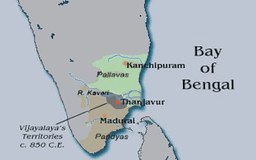
Vijayalaya Chola captured the city of Thanjavur from the Mutharaiyar chieftains, who were vassals of the Pallavas. This victory established the Chola kingdom as an independent power and made Thanjavur the new Chola capital.
Impact: regionalconstructive
860 AD
Construction of the Vijayalaya Choleswaram TempleCultural
Vijayalaya Chola built the Vijayalaya Choleswaram temple at Narthamalai, a rock-cut temple dedicated to Shiva. This temple is one of the earliest Chola architectural monuments, reflecting the transition from Pallava to Chola styles.
constructive
Expert Analysis
Napoleon Bonaparte vs Vijayalaya Chola
### The Emperor and the Founder
History rarely offers a starker contrast than that between Napoleon Bonaparte and Vijayalaya Chola. One, a volcanic genius who set Europe ablaze from the Pyrenees to the Russian steppes, his name a synonym for ambition and catastrophe. The other, a shadowy figure from the mists of South India, who carved a kingdom from a single fortress city and laid a foundation that would endure for three centuries. What separates the man who conquered a continent only to die in exile, from the man who captured one city and founded an empire? The answer lies not in the scale of their victories, but in the nature of their worlds.
### Origins
Napoleon was born in 1769 on the island of Corsica, a place only recently annexed by France. His family was minor nobility, but poor. He was an outsider, a foreigner in his own country, speaking French with a thick Italian accent. This bred in him a ferocious drive to prove himself, a hunger that the rigid hierarchies of the *Ancien Régime* could never satisfy. His era was one of revolutionary upheaval, where old structures were being torn down and a man of talent could rise faster than ever before. The gunpowder and the guillotine were his teachers.
Vijayalaya Chola, born in 820, inhabited a world of ancient, stable hierarchies. He was a scion of the Chola dynasty, a once-great lineage that had been reduced to a minor chieftaincy under the suzerainty of the Pallava kings. His world was one of ritual, dharma, and the slow, patient accumulation of power through alliance and patronage. There was no revolution to exploit, no social upheaval to ride. There was only the long, grinding struggle for supremacy among a dozen petty kingdoms. His era taught him patience, not speed.
### Rise to Power
Napoleon’s rise was a rocket’s trajectory. He seized his moment at the Siege of Toulon in 1793, a young artillery officer whose brutal efficiency scattered the British fleet. By 1796, he was commanding the Army of Italy, a starving, ragged force he transformed into a conquering machine. His campaigns were breathtakingly fast, his victories—Lodi, Arcola, Rivoli—a cascade of audacity. He did not wait for opportunity; he created it. The coup of 18 Brumaire in 1799 placed him at the head of France. He was thirty years old.
Vijayalaya’s rise was a whisper, not a shout. For decades, he served as a vassal of the Pallavas, waiting. The moment came around 850, when the Mutharaiyar chieftains, Pallava subordinates who held the rich city of Thanjavur, grew weak. Vijayalaya struck, capturing the city in a single, decisive campaign. It was not a continental conquest; it was a local coup. But it was enough. Thanjavur became his capital, the seed from which the Imperial Chola dynasty would grow. He did not conquer a world; he seized a door.
### Leadership & Governance
Napoleon governed as he fought: with relentless energy and total centralization. He imposed the Napoleonic Code across Europe, a legal system that enshrined meritocracy, property rights, and secular law. He built roads, standardized education, and reformed the French bureaucracy. But his genius was also his flaw: he could not delegate. Every decision, from the placement of a cannon to the administration of a province, had to pass through his hands. His governance was a one-man show, brilliant but brittle.
Vijayalaya governed as a traditional king of his time. He built the Vijayalaya Choleswaram temple at Narthamalai around 860, a rock-cut shrine to Shiva. This was not mere piety; it was statecraft. By patronizing the temple, he legitimized his rule, bound the local Brahmins and landowners to his cause, and created a cultural anchor for his fledgling dynasty. He did not impose a code of law; he embodied a tradition. His power was built on ritual, alliance, and the slow, organic growth of loyalty.
### Triumph & Tragedy
Napoleon’s greatest moment was Austerlitz in 1805, where he destroyed the combined armies of Russia and Austria. His worst was the invasion of Russia in 1812, a catastrophic miscalculation that cost him his Grand Army. He died in 1821 on the remote island of Saint Helena, a prisoner, his dreams of empire in ashes. His tragedy was that he could not stop. Victory was never enough.
Vijayalaya’s triumph was the capture of Thanjavur. His tragedy is that we know almost nothing of his end. He died around 870, after a reign of roughly twenty years. There was no grand defeat, no dramatic fall. He simply passed, leaving his son Aditya to expand the kingdom. His tragedy is not a spectacular failure, but the silence of history. He was a founder, not a destroyer.
### Character & Destiny
Napoleon was a man of infinite will, believing he could bend the world to his ambition. He once said, “Impossible is a word to be found only in the dictionary of fools.” This belief drove him to the heights of power, but also to his ruin. His character was his destiny: restless, brilliant, and ultimately self-destructive.
Vijayalaya was a man of measured ambition. He did not seek to conquer the world; he sought to restore his dynasty. He understood that power, in his world, was built on patience, not speed. His character was his destiny: a builder who knew when to stop. He founded a dynasty that would one day conquer Sri Lanka and Southeast Asia, but he himself was content with a single city.
### Legacy
Napoleon’s legacy is written in the laws and borders of modern Europe. The Napoleonic Code remains the foundation of civil law across the continent. His name is a byword for military genius and overreach. He is remembered as a titan, a man who changed the world, for better and for worse.
Vijayalaya’s legacy is the Chola Empire itself. His son Aditya would defeat the Pallavas; his grandson Parantaka would expand further. But the true glory would come a century later under Rajaraja Chola, who built the Brihadeeswarar Temple and launched naval expeditions. Vijayalaya is remembered as the root, not the tree. His name is spoken with reverence, but he is a figure of myth, not history.
### Conclusion
Napoleon and Vijayalaya are mirror opposites. One burned bright and fast, consuming himself and his world. One lit a small flame that burned for centuries. Napoleon’s story is a warning about the limits of ambition; Vijayalaya’s is a lesson in the power of patience. One asks us what it means to conquer everything and lose it all. The other asks us what it means to build something that outlasts you. In the end, perhaps the quieter founder achieved the greater victory.
Rankings
🥇
Napoleon BonaparteLeader
Mil: 94.0Pol: 72.0Inf: 40.0
70.9
🥈
Vijayalaya Chola
Mil: 45.0Pol: 40.8Inf: 58.0
54.2
+16.7 behind
How This Comparison Works
Algorithm
Each figure is scored on 6 dimensions (0—100 scale) based on structured historical data: Military (10%), Political (20%), Influence (20%), Legacy (20%), Leadership (15%), Strategy (15%). The weighted total produces the final ranking.
Data Sources
Scores are computed from structured sub-indicators in the database. Scale factors adjust for era (Ancient ×0.85, Modern ×1.0) and civilization size (Eastern ×1.05, Other ×0.80) to account for differences in population and military scale.
Maximum 3 Figures
Comparisons are limited to 2—3 figures to ensure readability and statistical meaningfulness.
Error Margins
±5 points per dimension — Sub-scores are derived from historical records with inherent uncertainty. Two figures within 5 points on a dimension should be considered roughly equivalent in that area.
Total Score Accuracy
±3 points overall — The weighted combination of 6 dimensions produces a total score with approximately ±3 points of uncertainty. Differences of less than 3 points are not statistically significant— the figures are effectively tied.
Known Limitations
- Historical records are incomplete and uneven across civilizations
- Figures from oral-tradition societies may be underrepresented
- Occupation labels can misclassify multi-role figures
- Scores measure capability and impact, not moral character
- Quantitative scoring is a comparison tool, not absolute truth
Capability Radar
Military (10%) — Battles & Warfare
Battles
95
45
Win Rate
90
50
Expansion
95
55
Political (20%) — Governance & Reform
Reform
95
35
Diplomacy
80
40
Economy
85
35
Influence (20%) — Cultural & Global Reach
Cultural
85
40
Global
90
30
Legacy (20%) — Historical Impact
Historical
95
55
Longevity
90
50
Leadership (15%) — Power & Stability
Tenure
85
50
Stability
70
45
Strategy (15%) — Tactics & Innovation
Strategy
95
45
Tactics
98
40
Reform
92
30
Similar Comparisons
Comments & Discussion
数字铁骑6/16/2026
数据不说谎:拿破仑统治13年,掌控过半个欧洲,最后死于圣赫勒拿岛;维阇耶拉亚打下坦贾武尔后,朱罗王朝延续了九个世纪。所谓“大小”只是标签——一个人玩的是火药时代的速决战,另一个人玩的是宗教与土地的文化深耕。真要论历史重量?拿破仑的帝国像烟花,维阇耶拉亚的王朝像千年榕树,你选哪个当根?
破碎之冠守夜人6/16/2026
别被数字骗了。拿破仑大败51次,最后滑铁卢一个月就完蛋;维阇耶拉亚小打小闹?他建的不是帝国,是传承体系——种姓、水利、寺庙经济,这些东西比几万发炮弹更决定历史走向。前者靠西方枪炮征服,后者靠南印高地与卡维里河发展。拿火药时代标准去量中古帝王,不是无知就是偷懒。
Historian8206/16/2026
I’m the data skeptic here. Let’s put numbers on the table: Napoleon’s armies peaked at over 600,000 men; Vijayalaya likely commanded a few thousand. But GDP per capita in 9th-century Tamilakam was comparable to pre-Revolution France if you adjust for subsistence farming. Napoleon overleveraged. Vijayalaya zeroed in on one strategic asset: Thanjavur’s fort and its central location. In lean times, the small foundation wins. Big isn’t always better—it’s just more debt.
Historian6346/16/2026
Napoleon won 70 battles, but his empire crumbled in a decade. Vijayalaya Chola captured just one city—Thanjavur—and it birthed a dynasty that ruled for 300 years. That’s not luck; it’s strategic patience vs. reckless ego. Napoleon’s conquests were a fireworks show; Vijayalaya built a civilization. Give me the founder over the self-destructive comet any day.
Chronicler30376/16/2026
As a classical history nut, I’ll say this: Napoleon was the product of a printing press and a bourgeoisie revolt—his legend was self-made. Vijayalaya Chola? He emerges from inscriptions and copper plates, a founder of a sangam-era revival clan. One was a modern propaganda machine; the other, a bridge from the Pallava twilight to the Chola zenith. Napoleon’s story is loud; Vijayalaya’s is dense. The quiet one lasts.