Loading...
This comparison has not been analyzed yet.
One-time AI generation (~1 minute). Scores and timeline are already available below.
Ibn Tumart vs Tecun Uman
Ibn Tumart leads by 15.3 pts · 2 figures compared
…
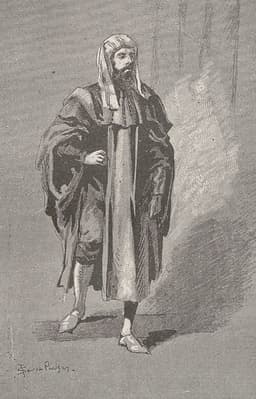
Ibn Tumart
Emperor · Medieval
55.6Total

Tecun Uman
Emperor · Medieval
40.3Total
Basic Information
Born
1080
1500
Died
1130
1524
Era
Medieval
Medieval
Nationality
Almohad Caliphate
Kiche
Occupation
Emperor
Emperor
Civilization
Middle Eastern
Other
Score Comparison
Military (10%)
55.0
21.2
Political (20%)
61.3
26.4
Influence (20%)
58.3
54.9
Legacy (20%)
56.0
47.5
Leadership (15%)
47.3
31.2
Strategy (15%)
52.5
39.6
TOTAL
55.6
40.3
Ibn Tumart — Complete Timeline
1121 AD
Proclamation as MahdiCultural
Ibn Tumart proclaimed himself the Mahdi, the guided one, after returning from the East. He began preaching a strict reformist message, condemning the Almoravids for their perceived religious laxity and calling for a return to the Quran and Sunnah.
Impact: regional
Establishment of the Almohad MovementPolitical Action◆ Major
Ibn Tumart founded the Almohad movement (al-Muwahhidun) in the Atlas Mountains of Morocco. He organized his followers into a disciplined religious and military community, rejecting the Almoravid interpretation of Islam and advocating for tawhid (strict monotheism).
Impact: regionalconstructive
1125 AD
Compilation of the Almohad DoctrineCultural
Ibn Tumart compiled his teachings into a book titled 'A'azz ma Yutlab' (The Most Precious of What is Sought). This work outlined the Almohad doctrine, emphasizing the unity of God and rejecting anthropomorphism, and became the foundation of the movement's ideology.
Impact: regionalconstructive
1130 AD
Battle of al-BuhayraWar◆ Major
Ibn Tumart's Almohad forces were defeated by the Almoravids at the Battle of al-Buhayra near Marrakech. This setback prevented the Almohads from capturing the Almoravid capital and forced them to retreat to the mountains.
Impact: regional
Death of Ibn TumartOther◆ Major
Ibn Tumart died shortly after the Battle of al-Buhayra, possibly from wounds or illness. His death was kept secret by his successor Abd al-Mu'min, who continued the Almohad movement and eventually overthrew the Almoravids.
Impact: regionaltragic
Tecun Uman — Complete Timeline
1524 AD
Led K'iche' Resistance Against SpanishWar◆ Major
Tecun Uman commanded the K'iche' Maya army in battle against Spanish conquistador Pedro de Alvarado in the Guatemalan highlands. He led thousands of warriors in an attempt to defend the K'iche' kingdom from Spanish invasion.
Spanish ConquestMaya ResistanceBattle
Impact: regional
Battle of El PinarWar
Tecun Uman fought in the Battle of El Pinar against Pedro de Alvarado's forces. The K'iche' were defeated due to Spanish cavalry and firearms. Tecun Uman was killed in the battle, according to Maya accounts, by Alvarado himself.
Spanish ConquestBattleDefeat
Impact: regionaltragic
This comparison has not been analyzed yet.
One-time AI generation (~1 minute). Scores and timeline are already available below.
Rankings
🥇
Ibn TumartLeader
Mil: 55.0Pol: 61.3Inf: 58.3
55.6
🥈
Tecun Uman
Mil: 21.2Pol: 26.4Inf: 54.9
40.3
+15.3 behind
How This Comparison Works
Algorithm
Each figure is scored on 6 dimensions (0—100 scale) based on structured historical data: Military (10%), Political (20%), Influence (20%), Legacy (20%), Leadership (15%), Strategy (15%). The weighted total produces the final ranking.
Data Sources
Scores are computed from structured sub-indicators in the database. Scale factors adjust for era (Ancient ×0.85, Modern ×1.0) and civilization size (Eastern ×1.05, Other ×0.80) to account for differences in population and military scale.
Maximum 3 Figures
Comparisons are limited to 2—3 figures to ensure readability and statistical meaningfulness.
Error Margins
±5 points per dimension — Sub-scores are derived from historical records with inherent uncertainty. Two figures within 5 points on a dimension should be considered roughly equivalent in that area.
Total Score Accuracy
±3 points overall — The weighted combination of 6 dimensions produces a total score with approximately ±3 points of uncertainty. Differences of less than 3 points are not statistically significant— the figures are effectively tied.
Known Limitations
- Historical records are incomplete and uneven across civilizations
- Figures from oral-tradition societies may be underrepresented
- Occupation labels can misclassify multi-role figures
- Scores measure capability and impact, not moral character
- Quantitative scoring is a comparison tool, not absolute truth
Capability Radar
Military (10%) — Battles & Warfare
Battles
30
15
Win Rate
35
10
Expansion
40
5
Political (20%) — Governance & Reform
Reform
80
5
Diplomacy
30
10
Economy
20
5
Influence (20%) — Cultural & Global Reach
Cultural
60
40
Global
50
20
Legacy (20%) — Historical Impact
Historical
65
45
Longevity
55
40
Leadership (15%) — Power & Stability
Tenure
25
10
Stability
20
5
Strategy (15%) — Tactics & Innovation
Strategy
45
15
Tactics
40
20
Reform
70
5
Similar Comparisons
Comments & Discussion
No comments yet. Be the first to share your thoughts!