Loading...
Ibn Tumart vs Kublai Khan
Kublai Khan leads by 18.7 pts · 2 figures compared
…
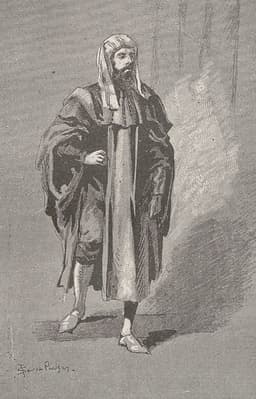
Ibn Tumart
Emperor · Medieval
55.6Total
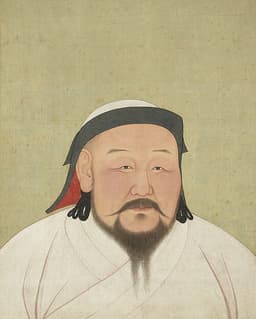
Kublai Khan
Emperor · Medieval
74.3Total
Basic Information
Born
1080
1215
Died
1130
1294
Era
Medieval
Medieval
Nationality
Almohad Caliphate
Mongolia
Occupation
Emperor
Emperor
Civilization
Middle Eastern
Eastern
Score Comparison
Military (10%)
55.0
77.5
Political (20%)
61.3
79.2
Influence (20%)
58.3
75.0
Legacy (20%)
56.0
70.0
Leadership (15%)
47.3
72.0
Strategy (15%)
52.5
76.0
TOTAL
55.6
74.3
Ibn Tumart — Complete Timeline
1121 AD
Proclamation as MahdiCultural
Ibn Tumart proclaimed himself the Mahdi, the guided one, after returning from the East. He began preaching a strict reformist message, condemning the Almoravids for their perceived religious laxity and calling for a return to the Quran and Sunnah.
Impact: regional
Establishment of the Almohad MovementPolitical Action◆ Major
Ibn Tumart founded the Almohad movement (al-Muwahhidun) in the Atlas Mountains of Morocco. He organized his followers into a disciplined religious and military community, rejecting the Almoravid interpretation of Islam and advocating for tawhid (strict monotheism).
Impact: regionalconstructive
1125 AD
Compilation of the Almohad DoctrineCultural
Ibn Tumart compiled his teachings into a book titled 'A'azz ma Yutlab' (The Most Precious of What is Sought). This work outlined the Almohad doctrine, emphasizing the unity of God and rejecting anthropomorphism, and became the foundation of the movement's ideology.
Impact: regionalconstructive
1130 AD
Battle of al-BuhayraWar◆ Major
Ibn Tumart's Almohad forces were defeated by the Almoravids at the Battle of al-Buhayra near Marrakech. This setback prevented the Almohads from capturing the Almoravid capital and forced them to retreat to the mountains.
Impact: regional
Death of Ibn TumartOther◆ Major
Ibn Tumart died shortly after the Battle of al-Buhayra, possibly from wounds or illness. His death was kept secret by his successor Abd al-Mu'min, who continued the Almohad movement and eventually overthrew the Almoravids.
Impact: regionaltragic
Kublai Khan — Complete Timeline
1260 AD
Adoption of Tibetan Buddhism as State ReligionCultural◆ Major
Kublai Khan appointed the Tibetan lama Drog
Tibetan BuddhismReligionMongol-Tibet Relations
Impact: regional
1271 AD
Proclamation of the Yuan DynastyPolitical Action◆ Major
Kublai Khan officially proclaimed the Yuan dynasty, adopting a Chinese-style dynastic name. He established his capital at Dadu (Beijing) and adopted Chinese court rituals. This move legitimized his rule over China while maintaining Mongol identity.
Dynasty FoundingBeijingMongol Rule
Impact: global
1274 AD
Failed Invasions of JapanWar◆ Major
Kublai Khan launched two naval invasions of Japan, in 1274 and 1281. Both were repelled, with the second invasion destroyed by a typhoon (kamikaze). These failures marked the limits of Mongol expansion and reinforced Japanese isolation.
Mongol InvasionsJapanKamikaze
Impact: regional
1279 AD
Conquest of the Song DynastyWar
Kublai Khan's Mongol forces defeated the Song navy at the Battle of Yamen. The last Song emperor drowned, ending the Song dynasty. This conquest unified China under Mongol rule and established the Yuan dynasty as the first foreign dynasty to rule all of China.
Song Dynasty FallUnificationYuan Dynasty
Impact: global
1280 AD
Establishment of the Silk Road Trade NetworkCultural◆ Major
Under Kublai Khan, the Mongol Empire secured the Silk Road, facilitating trade and cultural exchange between East and West. Marco Polo visited his court. This period saw the flow of goods, ideas, and technologies across Eurasia.
Silk RoadTradeCultural Exchange
Impact: globalconstructive
Expert Analysis
Kublai Khan vs Ibn Tumart
# The Emperor and the Mahdi
In the winter of 1271, as Kublai Khan stood in his newly proclaimed capital of Dadu—modern Beijing—and declared the founding of the Yuan Dynasty, he was performing an act of political theater that would have been utterly incomprehensible to a Berber preacher named Ibn Tumart, who had died four decades earlier in the rugged Atlas Mountains of Morocco. One man was a Mongol conqueror who adopted Chinese civilization as his own; the other was a religious reformer who sought to purify Islam through fire and sword. Their worlds never touched, yet both reshaped history. What drove them down such different paths, and what does their contrast reveal about the nature of power itself?
Origins
Kublai Khan was born in 1215, grandson of the great Genghis Khan, into a world of horsemen and conquest. The Mongol Empire was already a force of nature, and Kublai grew up in its shadow. But unlike his grandfather, who saw only steppe and sky, Kublai was raised in a China-influenced court, where he learned to appreciate the sedentary civilization his people were overrunning. He was a Mongol who became fascinated by Chinese bureaucracy, art, and governance—a hybrid identity that would define his reign.
Ibn Tumart, born around 1080 in the High Atlas Mountains, came from a Berber tribe of the Masmuda confederation. His world was one of mountain villages, oral traditions, and the simmering resentment of the Almoravid Empire, which ruled North Africa with a heavy hand. Ibn Tumart traveled east to study in Baghdad and Cairo, where he absorbed the austere theology of al-Ghazali and the legal rigor of the Zahiri school. He returned home convinced that the Almoravids had corrupted Islam, and that he alone was chosen to restore it.
The difference in their origins is stark: Kublai inherited an empire; Ibn Tumart invented a movement. One was born into power; the other had to conjure it from faith and desperation.
Rise to Power
Kublai’s path to supremacy was not automatic. In 1260, after the death of his brother Möngke Khan, he fought a civil war against his younger brother Ariq Böke for control of the Mongol Empire. Kublai won by appealing to Chinese elites and using Chinese-style administration—a decision that alienated many traditional Mongols but secured his base. He was crowned Khagan in 1260, but his real power came from his ability to blend Mongol military might with Chinese governance.
Ibn Tumart’s rise was far more precarious. In 1121, after years of preaching in the streets of Marrakech, he was driven out by the Almoravid authorities. He fled to the Atlas Mountains, where he proclaimed himself the Mahdi—the guided one of Islamic eschatology. This was an audacious claim, one that could have ended in ridicule or execution. But among the mountain Berbers, his message of strict monotheism and resistance to Almoravid corruption struck a chord. He organized his followers into a disciplined community, the Almohads (al-Muwahhidun, "those who affirm the unity of God"), and began a guerrilla war against the Almoravids.
Kublai’s rise was about consolidation; Ibn Tumart’s was about creation. The Mongol emperor built on existing structures; the Berber Mahdi had to build from nothing.
Leadership & Governance
Kublai Khan governed as a pragmatist. After proclaiming the Yuan Dynasty in 1271, he adopted Chinese court rituals, promoted Confucian scholars, and built a capital that rivaled any in the world. He also made a crucial cultural decision: in 1260, he adopted Tibetan Buddhism as the state religion, appointing the lama Drogön Chögyal Phagpa as his imperial preceptor. This move secured the loyalty of Tibet and gave his rule a spiritual dimension that transcended Mongol shamanism. Yet Kublai never fully abandoned Mongol traditions—he continued to hunt, drink, and rule through a dual system of Chinese and Mongol officials.
His military genius was undeniable. In 1279, at the Battle of Yamen, his forces annihilated the Song navy, and the last Song emperor drowned, ending the dynasty. This conquest united China for the first time in centuries. But Kublai’s ambition overreached. His failed invasions of Japan in 1274 and 1281—both destroyed by typhoons—were catastrophic, costing tens of thousands of lives and draining the treasury. The Japanese called these storms *kamikaze*, "divine winds," and they marked the limits of Mongol power.
Ibn Tumart, by contrast, was no military commander. His score of 40.2 in military ability reflects his role as a spiritual leader, not a general. He preached a radical doctrine of *tawhid* (divine unity), condemning the Almoravids for their anthropomorphism and laxity. His followers were organized into a hierarchy of tribes, each with a specific role in the coming jihad. But when he finally confronted the Almoravids at the Battle of al-Buhayra in 1130, his forces were crushed. Ibn Tumart died shortly after—possibly from wounds, possibly from illness—and his death was kept secret for years to prevent the movement from collapsing.
Kublai’s leadership was expansive and adaptive; Ibn Tumart’s was rigid and apocalyptic. One built an empire; the other built a faith.
Triumph & Tragedy
Kublai’s greatest triumph was the unification of China and the establishment of the Silk Road trade network around 1280. Under his protection, merchants, missionaries, and travelers—including Marco Polo—moved freely from Europe to China. This was a golden age of cultural exchange, a moment when East and West briefly touched.
His greatest tragedy was his failure in Japan. The two invasions were not just military defeats; they were symbolic failures that exposed the limits of Mongol power. The divine winds became a Japanese national myth, a story of resistance against an overwhelming enemy.
Ibn Tumart’s triumph was entirely posthumous. After his death, his disciple Abd al-Mu’min took command, kept the Mahdi’s death secret, and eventually conquered Marrakech in 1147, founding the Almohad Caliphate. Ibn Tumart’s ideas—not his sword—won the day. His tragedy was that he never saw his victory. He died in obscurity, his body hidden, his movement on the brink of collapse.
Character & Destiny
Kublai Khan was a man of appetites and calculations. He loved hunting, feasting, and the company of scholars. He was curious about the world, tolerant of different religions, and ruthless when necessary. His character drove him to expand, to build, to rule. But it also led him to overreach, to believe that Mongol power could conquer the sea itself.
Ibn Tumart was a man of fire and certainty. He believed he was the Mahdi, and that belief gave him the courage to challenge an empire. But it also made him inflexible. He could not compromise, could not adapt. His death was the price of his purity.
One was a realist; the other was a zealot. One died in his bed at age 79, surrounded by wealth and power; the other died in the mountains, his body hidden, his dream unfulfilled.
Legacy
Kublai Khan is remembered as a great emperor, the founder of the Yuan Dynasty, a patron of trade and culture. His legacy is visible in the Great Wall, the Silk Road, and the stories of Marco Polo. But his dynasty fell within a century, and later Chinese historians often dismissed him as a foreign conqueror.
Ibn Tumart is remembered as a religious revolutionary, the founder of the Almohad movement. His ideas shaped North African Islam for generations. But his caliphate also fell, and his strict doctrine softened over time. Today, he is a figure of Berber pride and Islamic reform.
Conclusion
What separates the emperor from the Mahdi? Not ability, but circumstance. Kublai inherited an empire and used it to build a world; Ibn Tumart had to create a world from a mountain cave. One succeeded through power; the other through faith. Their stories remind us that history is not a contest of scores but a tapestry of choices—and that the greatest leaders are those who understand the limits of their own vision. Kublai saw the world and tried to conquer it. Ibn Tumart saw God and tried to serve Him. Both failed, in the end. But their failures shaped the world we live in today.
Rankings
🥇
Kublai KhanLeader
Mil: 77.5Pol: 79.2Inf: 75.0
74.3
🥈
Ibn Tumart
Mil: 55.0Pol: 61.3Inf: 58.3
55.6
+18.7 behind
How This Comparison Works
Algorithm
Each figure is scored on 6 dimensions (0—100 scale) based on structured historical data: Military (10%), Political (20%), Influence (20%), Legacy (20%), Leadership (15%), Strategy (15%). The weighted total produces the final ranking.
Data Sources
Scores are computed from structured sub-indicators in the database. Scale factors adjust for era (Ancient ×0.85, Modern ×1.0) and civilization size (Eastern ×1.05, Other ×0.80) to account for differences in population and military scale.
Maximum 3 Figures
Comparisons are limited to 2—3 figures to ensure readability and statistical meaningfulness.
Error Margins
±5 points per dimension — Sub-scores are derived from historical records with inherent uncertainty. Two figures within 5 points on a dimension should be considered roughly equivalent in that area.
Total Score Accuracy
±3 points overall — The weighted combination of 6 dimensions produces a total score with approximately ±3 points of uncertainty. Differences of less than 3 points are not statistically significant— the figures are effectively tied.
Known Limitations
- Historical records are incomplete and uneven across civilizations
- Figures from oral-tradition societies may be underrepresented
- Occupation labels can misclassify multi-role figures
- Scores measure capability and impact, not moral character
- Quantitative scoring is a comparison tool, not absolute truth
Capability Radar
Military (10%) — Battles & Warfare
Battles
30
95
Win Rate
35
90
Expansion
40
95
Political (20%) — Governance & Reform
Reform
80
88
Diplomacy
30
85
Economy
20
90
Influence (20%) — Cultural & Global Reach
Cultural
60
85
Global
50
85
Legacy (20%) — Historical Impact
Historical
65
90
Longevity
55
80
Leadership (15%) — Power & Stability
Tenure
25
90
Stability
20
80
Strategy (15%) — Tactics & Innovation
Strategy
45
92
Tactics
40
85
Reform
70
88
Similar Comparisons
Comments & Discussion
铁骑书生6/16/2026
忽必烈就是个文化投机客,嘴上说爱汉制,手里攥着蒙古刀。1271年建元大都时,他改了国号却留着怯薛军,这不是什么文明融合,是权力计算。他学了儒家礼仪,可那套治国术全是蒙古铁骑撑着的。相比之下,伊本·图迈特至少是个真信徒,他在提因迈勒村搞的是信仰共同体,拒绝任何妥协。一个用汉服包裹征服,一个用教鞭抽打腐化,选哪个?我站那个不怕烧书的。
DataSkeptic886/16/2026
Let's be real—Kublai Khan's "hybrid identity" narrative sounds nice, but the numbers tell a different story. The Yuan census of 1290 recorded about 58 million households in China proper, yet Mongol and Semu officials made up less than 2% of the bureaucracy. That's not integration; that's an occupying aristocracy with a Confucian PR campaign. Ibn Tumart, for all his fire-and-brimstone, at least built a state where the Almohads actually reshuffled local elites. Kublai kept the Chinese in place but
经典学究6/16/2026
拿他俩比本身就荒诞。忽必烈是成吉思汗的血脉,在汗八里坐上龙椅,他的权力来自马鞍与射雕弓,而非什么儒家天命。伊本·图迈特则不同,他在马什拉夫聚起部落,靠的是《古兰经》与圣训的火种,斥责穆拉比特王朝的腐败如腐肉。一个用诏令改写历史,一个用巷战重塑信仰。论纯度,伊本·图迈特离上帝更近;论广度,忽必烈吞下了半个世界。但别搞混了——马背上的帝国和沙漠里的清真寺,岂能同列?
RevisionistCritic6/16/2026
The real story here isn't about two leaders—it's about how historians romanticize violence. Kublai's Yuan Dynasty killed millions in campaigns against the Song, by some estimates up to 10 million Chinese dead, yet he's called a "civilizer" because he built a telescope platform. Ibn Tumart's Almohads massacred Christians and Jews in Marrakesh for refusing conversion, yet they're framed as "reformers." Both were brutal conquerors who used ideology—Confucian or Islamic—to justify slaughter. Stop po
草原独狼6/16/2026
忽必烈才是真草原之子。他祖父铁木真只懂得用马蹄碾碎城池,但忽必烈学会了用汉字写旨意、用科举笼络人心。1274年他调集四千艘船征日本,那是游牧民族第一次拥抱海洋。伊本·图迈特呢?他连