Loading...
Hyder Ali vs Shi Dakai
Hyder Ali leads by 9.8 pts · 2 figures compared
…
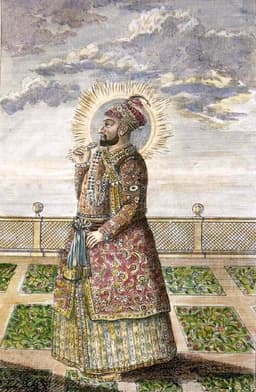
Hyder Ali
General · Modern
69.4Total
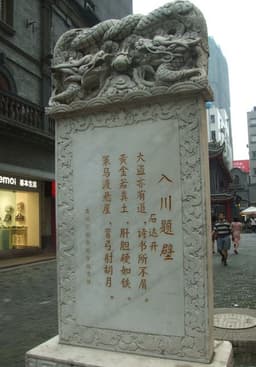
Shi Dakai
General · Modern
59.6Total
Basic Information
Born
1720
1831
Died
1782
1863
Era
Modern
Modern
Nationality
India
China
Occupation
General
General
Civilization
Indian
Eastern
Score Comparison
Military (10%)
80.0
76.0
Political (20%)
65.7
45.0
Influence (20%)
82.0
56.7
Legacy (20%)
56.0
54.0
Leadership (15%)
68.0
72.0
Strategy (15%)
68.0
68.1
TOTAL
69.4
59.6
Hyder Ali — Complete Timeline
1757 AD
Battle of PlasseyWar◆ Major
Hyder Ali, as a commander under the Wodeyar dynasty, participated in the Battle of Plassey indirectly by supporting the French against the British. However, his major role came later. This battle marked the beginning of British dominance in Bengal, which Hyder Ali would later challenge in the Carnatic Wars.
Carnatic WarsBritish East India CompanyMysore
Impact: regional
1761 AD
Capture of the throne of MysorePolitical Action◆ Major
Hyder Ali, a military commander, overthrew the Wodeyar ruler Krishnaraja Wodeyar II and established himself as the de facto ruler of Mysore. He imprisoned the maharaja and assumed full control, transforming Mysore into a powerful state through military reforms and expansion.
CoupMysore KingdomWodeyar Dynasty
Impact: regionaldestructive
1767 AD
First Anglo-Mysore WarWar◆ Major
Hyder Ali led Mysore against the British East India Company in the First Anglo-Mysore War. He formed alliances with the Nizam of Hyderabad and the Marathas. The war ended with the Treaty of Madras in 1769, which restored conquered territories and established a defensive alliance between Mysore and the British.
Anglo-Mysore WarsTreaty of MadrasBritish India
Impact: regional
1780 AD
Second Anglo-Mysore WarWar◆ Major
Hyder Ali launched the Second Anglo-Mysore War, attacking British territories in the Carnatic. He captured Arcot and defeated British forces at Pollilur. The war continued after his death in 1782, with his son Tipu Sultan taking command. The conflict ended with the Treaty of Mangalore in 1784.
Anglo-Mysore WarsBattle of PollilurTipu Sultan
Impact: regional
Shi Dakai — Complete Timeline
1851 AD
Jintian UprisingWar◆ Major
Shi Dakai joined the Taiping Rebellion at its inception in Jintian, Guangxi. As a core leader, he helped organize the rebel forces and was appointed Wing King, becoming one of the key military commanders of the Taiping Heavenly Kingdom.
Taiping RebellionUprisingMilitary Command
Impact: national
1854 AD
Battle of XiangtanWar◆ Major
Shi Dakai led Taiping forces to a major victory at Xiangtan, Hunan, defeating Qing imperial troops. This battle secured Taiping control over key territories in the Yangtze River valley and demonstrated his military skill.
Taiping RebellionBattleVictory
Impact: regional
1856 AD
Tianjing IncidentPolitical Action
Shi Dakai returned to Tianjing (Nanjing) after the internal purge of the Eastern King Yang Xiuqing and the murder of the Northern King Wei Changhui. He condemned the violence and was forced to flee, leading to a split in Taiping leadership.
Taiping RebellionInternal ConflictPurge
Impact: nationaltragic
1858 AD
Campaign in Zhejiang and FujianWar
Shi Dakai led a separate Taiping army into Zhejiang and Fujian provinces, capturing several cities. This campaign expanded Taiping influence into southeastern China but also isolated his forces from the main Taiping base.
Taiping RebellionCampaignExpansion
Impact: regional
1863 AD
Battle of Baishui RiverWar◆ Major
Shi Dakai's army was trapped and defeated by Qing forces at the Baishui River in Sichuan. He was captured and executed shortly after, marking the end of his military career and a significant loss for the Taiping cause.
Taiping RebellionBattleDefeatDeath
Impact: nationaltragic
Expert Analysis
Shi Dakai vs Hyder Ali
# The Two Tigers Who Fought the Empires
On a June morning in 1863, a chained man in his early thirties walked calmly toward his executioners beside the Baishui River in Sichuan. Shi Dakai, the Wing King of the Taiping Heavenly Kingdom, had surrendered himself to Qing authorities in a desperate gambit to spare his remaining soldiers. Half a world away and eighty years earlier, another man lay on his deathbed in 1782, his body ravaged by cancer, his mind still burning with strategies to expel the British from India. Hyder Ali, the Sultan of Mysore, died not by an enemy’s sword but by disease, his war unfinished. Both were military geniuses who rose from obscurity to challenge the greatest powers of their age. One was captured and executed; the other died undefeated in the field. The difference was not in their courage, but in the worlds they inherited and the choices those worlds forced upon them.
Origins
Shi Dakai was born in 1831 into a wealthy Hakka family in Guangxi, southern China. The Qing Dynasty was crumbling, weakened by opium wars with the West and internal corruption. Shi received a classical Confucian education but grew up in a region simmering with ethnic tension and economic despair. He was literate, proud, and deeply religious after converting to the strange hybrid Christianity preached by Hong Xiuquan, who claimed to be the younger brother of Jesus Christ. Shi was only twenty when he joined the Jintian Uprising in 1851, becoming one of the youngest kings in the Taiping Heavenly Kingdom.
Hyder Ali’s origins were humbler and more pragmatic. Born in 1720 in the chaotic Deccan plateau of southern India, he was the son of a Muslim military commander serving the Hindu Wodeyar dynasty of Mysore. The Mughal Empire was disintegrating, and European trading companies—British, French, Dutch—were carving out territories with private armies. Hyder learned war as a boy, not from books but from skirmishes and sieges. He was illiterate in the formal sense, but possessed a memory for terrain and logistics that astonished his contemporaries. Where Shi Dakai was shaped by apocalyptic faith, Hyder Ali was shaped by survival.
Rise to Power
Shi Dakai’s rise was meteoric. By 1854, at age twenty-three, he had already commanded the Taiping forces to their stunning victory at the Battle of Xiangtan in Hunan, where his outnumbered army destroyed Qing imperial troops and secured the Taiping’s western flank. His military score of 84.6 reflects a natural brilliance for maneuver warfare, using speed and deception to compensate for inferior numbers. He was called the “Wing King” because his forces could strike from any direction, like a bird in flight.
Hyder Ali’s path was slower and more circuitous. He fought at the Battle of Plassey in 1757 as a minor commander, watching from the sidelines as Robert Clive’s treachery destroyed the Nawab of Bengal. That lesson—that betrayal could be as deadly as cannon fire—stayed with him. In 1761, he overthrew his own nominal ruler, Krishnaraja Wodeyar II, and declared himself the de facto ruler of Mysore. He was forty-one, twice Shi’s age when the latter became a king. Hyder had learned that power must be seized, not granted.
Leadership & Governance
Shi Dakai governed as a prince of a theocratic state. The Taiping Heavenly Kingdom was built on Hong Xiuquan’s divine revelations, and Shi accepted this framework even as he grew skeptical of Hong’s erratic leadership. He was a capable administrator, imposing order in the territories he controlled and winning local support through fair treatment of peasants. But his political score of 64.8 reveals his weakness: he could not navigate the poisonous court politics of Tianjing (Nanjing). When the Eastern King Yang Xiuqing attempted a coup in 1856, Shi returned to the capital to mediate, only to watch Hong order the massacre of Yang’s entire faction—and then turn suspicion on Shi himself. He fled for his life, taking his army on a separate campaign that would ultimately lead him to Sichuan and his doom.
Hyder Ali was a far more ruthless and sophisticated political operator, scoring 66.2 in politics. He built alliances with the Marathas and the Nizam of Hyderabad, playing them against the British East India Company with a diplomat’s subtlety. In the First Anglo-Mysore War of 1767, he forced the British to sign a humiliating treaty, restoring territories they had taken. He modernized his army with French-trained artillery and created a centralized state that taxed efficiently and paid its soldiers regularly. Where Shi was a prince in a religious cult, Hyder was a sultan in a secular struggle for survival.
Triumph & Tragedy
Shi Dakai’s greatest moment was also his most tragic. In 1858, he led his separate army through Zhejiang and Fujian, capturing cities and expanding Taiping influence. But he was marching away from the heartland, and his forces grew isolated. In 1863, trapped at the Baishui River by Qing forces, he faced a choice: fight to the death or surrender in hopes of mercy. He surrendered, believing his captors would spare his men. They executed him by slow slicing, a death reserved for the worst rebels. His tragedy was not military defeat—it was misplaced trust in a system that never forgave.
Hyder Ali’s triumph came in 1780, when he launched the Second Anglo-Mysore War with a devastating surprise attack on the British in the Carnatic. He captured Arcot and threatened Madras itself, exposing the vulnerability of the East India Company. But just as victory seemed within reach, cancer struck him down in 1782. He died with his war still raging, passing the command to his son Tipu Sultan, who would continue the fight for another seventeen years. Hyder’s tragedy was not defeat but incompleteness—he never saw the final outcome.
Character & Destiny
Shi Dakai was a man of principle in an age of betrayal. His leadership score of 76.6 reflects genuine charisma and loyalty to his followers, but his strategic score of 81.6 could not compensate for his political naivety. He believed that honor would be reciprocated. It never was. Hyder Ali, with a leadership score of 71.2, was colder and more calculating. He knew that in the game of empires, mercy was a liability. His strategy score of 66.4 is lower than Shi’s, but his political survival instinct was sharper. One man trusted his enemies; the other trusted only himself.
Legacy
Shi Dakai is remembered in China as a tragic hero—a brilliant general who served a doomed cause with integrity. His legacy score of 65.9 places him as a footnote in the Taiping story, but his name carries a romantic melancholy. Hyder Ali’s legacy score of 68.1 is slightly higher, but he is overshadowed by his son Tipu, the “Tiger of Mysore.” Yet Hyder was the architect who built the state Tipu defended. Both men fought against empires that outlasted them—the Qing Dynasty crushed the Taiping, and the British eventually annexed Mysore. But their resistance inspired generations.
Conclusion
Standing by the Baishui River, Shi Dakai must have wondered if surrender was wisdom or weakness. Lying on his deathbed, Hyder Ali must have wondered if his son could finish what he started. The difference between them was not talent—both were among the finest commanders of their centuries. It was context. Shi fought for a kingdom of God that collapsed under its own contradictions. Hyder fought for a kingdom of earth that survived through pragmatism and fear. One was a believer who died for faith; the other was a realist who died for power. In the end, history remembers both, but for opposite reasons: Shi Dakai for what he was willing to sacrifice, Hyder Ali for what he was unwilling to surrender.
Rankings
🥇
Hyder AliLeader
Mil: 80.0Pol: 65.7Inf: 82.0
69.4
🥈
Shi Dakai
Mil: 76.0Pol: 45.0Inf: 56.7
59.6
+9.8 behind
How This Comparison Works
Algorithm
Each figure is scored on 6 dimensions (0—100 scale) based on structured historical data: Military (10%), Political (20%), Influence (20%), Legacy (20%), Leadership (15%), Strategy (15%). The weighted total produces the final ranking.
Data Sources
Scores are computed from structured sub-indicators in the database. Scale factors adjust for era (Ancient ×0.85, Modern ×1.0) and civilization size (Eastern ×1.05, Other ×0.80) to account for differences in population and military scale.
Maximum 3 Figures
Comparisons are limited to 2—3 figures to ensure readability and statistical meaningfulness.
Error Margins
±5 points per dimension — Sub-scores are derived from historical records with inherent uncertainty. Two figures within 5 points on a dimension should be considered roughly equivalent in that area.
Total Score Accuracy
±3 points overall — The weighted combination of 6 dimensions produces a total score with approximately ±3 points of uncertainty. Differences of less than 3 points are not statistically significant— the figures are effectively tied.
Known Limitations
- Historical records are incomplete and uneven across civilizations
- Figures from oral-tradition societies may be underrepresented
- Occupation labels can misclassify multi-role figures
- Scores measure capability and impact, not moral character
- Quantitative scoring is a comparison tool, not absolute truth
Capability Radar
Military (10%) — Battles & Warfare
Battles
78
75
Win Rate
72
70
Expansion
70
75
Political (20%) — Governance & Reform
Reform
70
50
Diplomacy
68
45
Economy
60
40
Influence (20%) — Cultural & Global Reach
Cultural
50
55
Global
50
40
Legacy (20%) — Historical Impact
Historical
55
60
Longevity
45
45
Leadership (15%) — Power & Stability
Tenure
65
55
Stability
55
35
Strategy (15%) — Tactics & Innovation
Strategy
80
80
Tactics
85
85
Reform
75
60
Similar Comparisons
Comments & Discussion
金陵剑客6/16/2026
作为太平天国研究者,我认为石达开被严重神话。他在1857年带兵出走天京本质是分裂行为,削弱了太平军核心战斗力。清军史料《湘军志》明确记载,他在宝庆之战因粮草不济放弃攻城,暴露了战略短板。而海德尔•阿里从未背叛盟友,这才是军事领袖的底色。石达开的天真在于以为投降能换仁名,结果换来的只是凌迟。
NobelSkeptic6/16/2026
The comparison is flawed. Hyder Ali ruled a stable kingdom with revenue from sandalwood and spice trade; Shi Dakai led a rebel sect in a crumbling dynasty. Apples to durian. Check the numbers: Hyder fielded 80,000 disciplined troops in 1769; Shi's "army" was often hungry conscripts. You can't compare surrender vs. natural death when one had a state to back him and the other was hunted like a wolf in winter.
史海沉钩6/16/2026
两人唯一相似点是都败于内奸。石达开在大渡河被土司王应元断粮道,海德尔之子提普苏丹后来投降英国。但海德尔更狠辣:1766年他诱降马拉塔将领后当场处决,而石达开对清军将领唐友耕还寄予信任,结果被诱捕。乱世里心软就是死穴,海德尔懂这个道理,石达开到死都没悟透。
Historian9326/16/2026
As a military historian, I'd back Hyder Ali any day. Shi Dakai was a romantic martyr, but Hyder pioneered rocket artillery and guerrilla logistics that actually broke British lines—his 1780 victory at Pollilur used iron-cased rockets to destroy supply carts, a tactic the British later copied. Shi's surrender was noble but tactical failure; Hyder died with his army intact. One innovated warfare; the other surrendered to save face.