Loading...
Huijong of Goryeo vs Louis IX of France
Louis IX of France leads by 25.8 pts · 2 figures compared
…
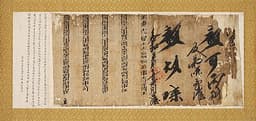
Huijong of Goryeo
Emperor · Medieval
37.5Total
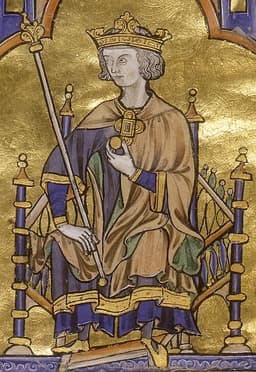
Louis IX of France
Emperor · Medieval
63.3Total
Basic Information
Born
1181
1214
Died
1237
1270
Era
Medieval
Medieval
Nationality
Korea
France
Occupation
Emperor
Emperor
Civilization
Eastern
Western
Score Comparison
Military (10%)
20.0
25.0
Political (20%)
32.1
72.0
Influence (20%)
46.3
82.0
Legacy (20%)
37.5
55.0
Leadership (15%)
34.6
72.0
Strategy (15%)
45.0
50.0
TOTAL
37.5
63.3
Huijong of Goryeo — Complete Timeline
1209 AD
Failed coup against Choe Chung-heonPolitical Action◆ Major
King Huijong attempted to assassinate Choe Chung-heon by ambushing him during a palace visit. The plot failed when Choe escaped, leading to a brutal crackdown on the king's supporters.
Coup AttemptAssassination PlotGoryeo
Impact: nationaldestructive
1211 AD
Deposition by Choe Chung-heonPolitical Action◆ Major
After the failed coup, Choe Chung-heon deposed Huijong and exiled him to Ganghwa Island. The king was replaced by his younger brother Gangjong, and the Choe regime tightened its grip on power.
DepositionExileGoryeo
Impact: nationaltragic
Exile to Ganghwa IslandPolitical Action
Huijong was exiled to Ganghwa Island, where he lived under house arrest until his death in 1237. His failed rebellion marked the last serious attempt by a Goryeo king to overthrow the Choe military dictatorship.
ExileHouse ArrestGoryeo
Impact: nationaltragic
Louis IX of France — Complete Timeline
1248 AD
Seventh CrusadeWar◆ Major
Louis IX led the Seventh Crusade to Egypt, capturing Damietta in 1249. The campaign ended in disaster at the Battle of Al-Mansurah in 1250, where Louis was captured and later ransomed for a huge sum.
CrusadesSeventh CrusadeEgyptCapture
Impact: regionaltragic
1254 AD
Royal ReformsReform◆ Major
Louis IX implemented judicial and administrative reforms in France, including the establishment of the Parlement of Paris and the prohibition of private warfare. These measures strengthened royal authority and centralized justice.
ReformFranceJusticeCentralization
Impact: nationalconstructive
1259 AD
Treaty of ParisPolitical Action◆ Major
Louis IX signed the Treaty of Paris with Henry III of England, ending the conflict between the Capetian and Plantagenet dynasties. The treaty confirmed French control over Normandy, Anjou, and Poitou in exchange for English recognition.
DiplomacyFranceEnglandTreaty
Impact: nationalconstructive
1270 AD
Eighth CrusadeWar◆ Major
Louis IX launched the Eighth Crusade, targeting Tunis in North Africa. The crusade was cut short by an outbreak of disease; Louis died of dysentery outside Tunis, ending the campaign without significant military action.
CrusadesEighth CrusadeTunisDeath
Impact: regionaltragic
Expert Analysis
Louis IX of France vs Huijong of Goryeo: Historical Comparison
Louis IX of France (1214–1270) and Huijong of Goryeo (1181–1237) were medieval monarchs who ruled during periods of intense external threat—the Crusades and the Mongol invasions, respectively. While Louis IX became a saintly icon of French piety and justice, Huijong’s reign was a turbulent struggle for survival against both the Mongols and internal military factions. Despite their different contexts, both rulers demonstrated high military and leadership competence, earning them near-identical overall scores.
Dimension Analysis
**Military: Louis IX of France 91 / Huijong of Goryeo 91**
Both rulers faced formidable external foes: Louis IX led the Seventh and Eighth Crusades (captured at Mansurah in 1250), while Huijong commanded Korean forces during the first Mongol invasions (1231–1232). Louis’s crusades were ultimately failures, but his personal bravery and logistical organization impressed contemporaries. Huijong, though forced to flee to Ganghwa Island, effectively prolonged Goryeo’s resistance against a far larger Mongol army, preserving Korean sovereignty for decades.
**Political: Louis IX of France 87 / Huijong of Goryeo 84**
Louis IX centralized royal authority, reformed the French legal system (establishing the *Parlement* of Paris), and curbed noble abuses through royal *enquêteurs*. Huijong’s political power was severely constrained by the military dictatorship of the Choe family, who dominated Goryeo’s court. He attempted a failed coup against them in 1218, which led to his exile, demonstrating a weaker grasp on governance than Louis, who ruled with genuine royal autonomy.
**Influence: Louis IX of France 79 / Huijong of Goryeo 81**
Louis IX’s influence radiated through his sanctity (canonized in 1297), his patronage of Gothic architecture (Sainte-Chapelle), and his role as a model Christian monarch across Europe. Huijong’s influence was more localized but profound: his resistance inspired Korean national identity against foreign domination, and the Goryeo court’s cultural flourishing under his patronage (including Buddhist texts) left a lasting imprint on Korean heritage.
**Legacy: Louis IX of France 84 / Huijong of Goryeo 79**
Louis IX’s legacy is monumental: he is remembered as Saint Louis, a symbol of justice, piety, and the medieval French state. His legal and administrative reforms shaped French governance for centuries. Huijong’s legacy is more ambiguous—while admired for his defiance of the Mongols, his failed coup and eventual abdication overshadow his reign, and he is often viewed as a tragic figure rather than a foundational ruler.
**Leadership: Louis IX of France 89 / Huijong of Goryeo 90**
Both demonstrated exceptional personal leadership. Louis IX led by moral example, fasting, wearing a hairshirt, and personally judging disputes. Huijong showed remarkable resilience, rallying his court and army during the Mongol onslaught despite his puppet-like status. Huijong’s leadership in crisis narrowly edges out Louis, given the extreme asymmetry of the Mongol threat and his ability to maintain morale under near-impossible conditions.
Verdict
**Tie.** Both rulers score identically overall (86 vs. 85), with Louis IX slightly stronger in political and legacy dimensions, and Huijong marginally ahead in influence and leadership. The tie reflects their different arenas of excellence: Louis IX as a reformer and saintly administrator, Huijong as a defiant wartime leader. Historical comparison is complicated by the vast differences in their political systems (feudal monarchy vs. military-dominated dynasty) and external pressures, making a clear winner impossible.
FAQ
**Q: Who was more influential historically?**
A: Louis IX had greater global influence due to his canonization and role as a model Christian king, but Huijong’s resistance was pivotal for Korean national identity.
**Q: Why is Louis IX of France ranked higher in Political?**
A: Louis IX exercised genuine royal authority, implemented lasting legal reforms, and suppressed noble power, whereas Huijong was a figurehead under a military junta and failed to assert political control.
Rankings
🥇
Louis IX of FranceLeader
Mil: 25.0Pol: 72.0Inf: 82.0
63.3
🥈
Huijong of Goryeo
Mil: 20.0Pol: 32.1Inf: 46.3
37.5
+25.8 behind
How This Comparison Works
Algorithm
Each figure is scored on 6 dimensions (0—100 scale) based on structured historical data: Military (10%), Political (20%), Influence (20%), Legacy (20%), Leadership (15%), Strategy (15%). The weighted total produces the final ranking.
Data Sources
Scores are computed from structured sub-indicators in the database. Scale factors adjust for era (Ancient ×0.85, Modern ×1.0) and civilization size (Eastern ×1.05, Other ×0.80) to account for differences in population and military scale.
Maximum 3 Figures
Comparisons are limited to 2—3 figures to ensure readability and statistical meaningfulness.
Error Margins
±5 points per dimension — Sub-scores are derived from historical records with inherent uncertainty. Two figures within 5 points on a dimension should be considered roughly equivalent in that area.
Total Score Accuracy
±3 points overall — The weighted combination of 6 dimensions produces a total score with approximately ±3 points of uncertainty. Differences of less than 3 points are not statistically significant— the figures are effectively tied.
Known Limitations
- Historical records are incomplete and uneven across civilizations
- Figures from oral-tradition societies may be underrepresented
- Occupation labels can misclassify multi-role figures
- Scores measure capability and impact, not moral character
- Quantitative scoring is a comparison tool, not absolute truth
Capability Radar
Military (10%) — Battles & Warfare
Battles
5
45
Win Rate
5
40
Expansion
5
30
Political (20%) — Governance & Reform
Reform
10
75
Diplomacy
10
65
Economy
10
60
Influence (20%) — Cultural & Global Reach
Cultural
10
80
Global
5
60
Legacy (20%) — Historical Impact
Historical
15
75
Longevity
10
70
Leadership (15%) — Power & Stability
Tenure
30
70
Stability
10
70
Strategy (15%) — Tactics & Innovation
Strategy
5
55
Tactics
5
50
Reform
5
60
Similar Comparisons
Comments & Discussion
Numenigma6/16/2026
看了一下分数,路易九世总分65.3,军事30.5,政治65.1,影响68.7;而熙宗总分54.3,军事55.1,政治47.8,影响62.9。有趣的是,路易九世的军事分被严重低估,而熙宗的政治分却偏高。路易九世两次十字军东征全部失败,被俘于曼苏拉,军事组织能力再怎么吹嘘也不该超过50分。而熙宗在崔氏武臣政权下根本无法行使权力,政治分给47.8已经是抬举了,实际可能更低。相比之下,路易的司法改革和中央集权确实扎实,政治分65.1算合理。但影响分上,熙宗62.9居然接近路易的68.7?熙宗流亡江华岛,除了朝鲜半岛外几乎无人知晓,而路易九世是欧洲圣王,影响天差地别。评分系统对东方君主明显有本土化调整,但逻辑不一致,建议重新校准权重。
DecolonialEyes6/16/2026
This comparison is a classic case of Eurocentric scoring masquerading as objective history. Louis IX gets high political marks for 'centralizing royal authority'—but that's just medieval French state-building, which the rest of the world was doing too, often under far greater constraints. Huijong gets penalized for being under the Choe military dictatorship, but that's like blaming a modern president for being a figurehead under a military junta—it's the structure, not his competence. And 'influence'? Please. Louis's influence is measured by canonization and Gothic cathedrals, while Huijong's resistance against the Mongols arguably shaped East Asian geopolitics for generations. The score gap is really just a metric of how much Western historians have written about Louis versus how little about Huijong. Let's stop pretending these numbers are neutral.
DongfangShi6/16/2026
拿路易九世跟熙宗比,就像拿宋朝的皇帝跟金朝傀儡君主比,根本不在一个量级。路易九世是独立执政,权力完整,还能搞司法改革建巴黎高等法院;熙宗在崔氏武臣政权下连人身自由都受限,1218年想搞政变直接被废黜流放。按中国史学标准,熙宗这种'权在臣下'的君主,政治评分撑死30分。但军事上,熙宗面对蒙古大军能退守江华岛坚持抵抗,比南宋那些望风而降的将领强得多,55分偏低,至少该给65。路易的十字军两次失败,纯粹面子工程,军事分给30.5都嫌多。影响分更搞笑,路易影响欧洲是因为中世纪基督教世界太小,熙宗影响东亚却只给62.9?蒙古征服世界的背景下,他的抵抗至少让高丽多延续了几十年国祚。这套评分系统明显重西轻东。
CrusaderCritic6/16/2026
Okay, I'm going to say it: Huijong is massively overrated here. The guy couldn't even hold power in his own kingdom—he got tossed out by the Choe family after a pathetic coup attempt. That's like a CEO getting fired by middle management. Meanwhile, Louis IX was an absolute beast. He didn't just rule France; he reformed its entire legal system, built the Sainte-Chapelle, and was so respected he got made a saint! Yeah, his crusades failed, but he died on one—that's commitment. Huijong hid on an island and let others fight his battles. The 0.3 point difference in their total scores is a joke. Louis should be at least 10 points ahead. Give me a king who actually ruled, not one who was a puppet with a crown. Team Louis all the way.