Loading...
Huang Xing vs Suchinda Kraprayoon
Huang Xing leads by 20.4 pts · 2 figures compared
…
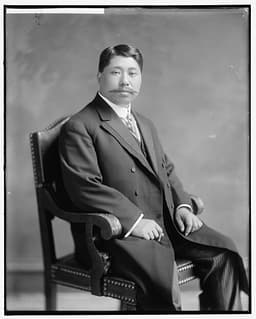
Huang Xing
General · Modern
57.5Total
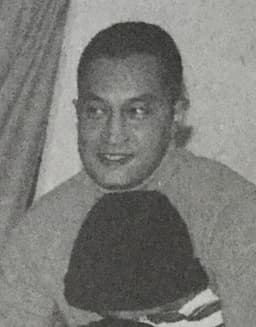
Suchinda Kraprayoon
General · Modern
37.1Total
Basic Information
Born
1874
1933
Died
1916
—
Era
Modern
Modern
Nationality
China
Thailand
Occupation
General
General
Civilization
Eastern
Eastern
Score Comparison
Military (10%)
46.7
10.2
Political (20%)
53.8
27.9
Influence (20%)
62.0
47.1
Legacy (20%)
56.0
37.5
Leadership (15%)
62.0
45.0
Strategy (15%)
60.0
39.6
TOTAL
57.5
37.1
Huang Xing — Complete Timeline
1905 AD
Co-founded the TongmenghuiPolitical Action◆ Major
Huang Xing co-founded the Tongmenghui (Revolutionary Alliance) in Tokyo with Sun Yat-sen. He became its military leader, organizing armed uprisings against the Qing dynasty.
TongmenghuiRevolutionMilitary
Impact: nationalconstructive
1911 AD
Led the Wuchang UprisingWar
Huang Xing led the Wuchang Uprising, which sparked the Xinhai Revolution. He commanded revolutionary forces against Qing troops, securing initial victories that led to the dynasty's collapse.
Xinhai RevolutionUprisingMilitary
Impact: nationalconstructive
1912 AD
Served as Minister of War in the RepublicPolitical Action◆ Major
Huang Xing served as Minister of War in the provisional government of the Republic of China. He worked to organize a national army and defend the republic against counter-revolutionary forces.
GovernmentMilitaryRepublic
Impact: nationalconstructive
1913 AD
Led the Second Revolution Against Yuan ShikaiWar◆ Major
Huang Xing led the Second Revolution, an armed uprising against President Yuan Shikai's authoritarian rule. The rebellion failed due to lack of coordination and military inferiority, forcing Huang into exile.
Second RevolutionYuan ShikaiExile
Impact: nationaltragic
1916 AD
Died in Exile in ShanghaiPolitical Action
Huang Xing died in Shanghai after returning from exile in Japan and the United States. His death marked the loss of a key military leader of the Chinese revolution, though his legacy endured.
DeathExileRevolution
Impact: nationaltragic
Suchinda Kraprayoon — Complete Timeline
1991 AD
Leadership of the 1991 Thai Coup d'ÉtatPolitical Action◆ Major
General Suchinda Kraprayoon led the National Peace Keeping Council in a bloodless coup that overthrew Prime Minister Chatichai Choonhavan. The coup was justified by claims of corruption and political instability, establishing a military junta.
CoupMilitary JuntaPower Seizure
Impact: nationaldestructive
1992 AD
Appointment as Prime MinisterPolitical Action◆ Major
After a general election, Suchinda was appointed Prime Minister despite not being an elected MP. His appointment sparked widespread protests, as it was seen as a continuation of military rule and a violation of democratic principles.
Prime MinisterControversyMilitary Rule
Impact: nationaldestructive
Black May 1992 Uprising and ResignationPolitical Action
Massive pro-democracy protests in Bangkok, led by Chamlong Srimuang, demanded Suchinda's resignation. The military crackdown resulted in dozens of deaths. King Bhumibol intervened, leading to Suchinda's resignation and the restoration of civilian government.
UprisingBlack MayResignation
Impact: nationaltragic
Expert Analysis
Huang Xing vs Suchinda Kraprayoon
# The General and the Revolutionary
On a sweltering May morning in 1992, Bangkok’s streets filled with hundreds of thousands of protesters—students, workers, monks—all demanding one thing: the resignation of General Suchinda Kraprayoon. Across the sea of humanity, a lone figure in military uniform stood in Government House, refusing to yield. Less than a century earlier, another general had stood at the head of a different kind of crowd, leading the Wuchang Uprising that would topple an empire. Huang Xing and Suchinda Kraprayoon both wore uniforms, both seized moments of national crisis, but their paths diverged like two rivers flowing from the same mountain—one toward the sea of revolution, the other into the swamp of failed ambition.
Origins
Suchinda Kraprayoon was born in 1933 into a Thailand still ruled by an absolute monarchy, though the 1932 revolution had already planted seeds of constitutional change. He grew up in a military establishment that viewed itself as the guardian of national stability, where coups were not aberrations but instruments of political management. By the time he graduated from the Chulachomklao Royal Military Academy, Thailand had already experienced over a dozen coups or coup attempts—the army was not an outsider to politics but its most powerful player.
Huang Xing, born in 1874, came of age in a China crumbling under the weight of the Qing Dynasty’s terminal decline. The son of a scholar-official family in Hunan, he was educated in classical Confucian texts but also exposed to Western military thought. Where Suchinda inherited a stable state with a tradition of military intervention, Huang Xing inherited a civilization in collapse—foreign concessions, peasant rebellions, and a dynasty that seemed incapable of reform. His generation did not ask whether the military should enter politics; they asked whether China could survive at all.
Rise to Power
Suchinda’s rise was methodical, almost bureaucratic. He climbed through the ranks of the Thai Army, serving in the elite infantry, then moving into intelligence and logistics. His moment came in 1991, when he led the National Peace Keeping Council in a bloodless coup that overthrew Prime Minister Chatichai Choonhavan. The coup was clean, efficient, and widely accepted by a public weary of corruption. Suchinda did not storm barricades; he simply took control of the telephone exchanges and radio stations.
Huang Xing’s rise was forged in exile and failure. In 1905, he co-founded the Tongmenghui in Tokyo with Sun Yat-sen, becoming the revolutionary alliance’s military commander. While Suchinda plotted in Bangkok’s headquarters, Huang Xing organized armed uprisings from Japan—most of them disastrous. He led the failed Huizhou Uprising in 1907, then another in 1908, each ending in blood and retreat. But failure taught him what success could not: the patience to wait for the right moment. That moment came in October 1911, when he rushed to Wuchang to lead an uprising that had already begun without him.
Leadership & Governance
As prime minister in 1992, Suchinda governed like a caretaker with a gun. He appointed himself despite not being an elected MP, a move that infuriated a rising middle class that had grown tired of military rule. His leadership style was transactional—reward allies, silence critics, maintain order. He offered no vision beyond stability, no reform beyond the status quo. When Chamlong Srimuang, a former general turned pro-democracy activist, began a hunger strike in Bangkok, Suchinda’s response was the only one he knew: send in the troops.
Huang Xing’s leadership was the opposite—visionary but flawed by circumstance. As Minister of War in the provisional government of the Republic of China in 1912, he tried to build a national army from scratch, balancing regional warlords, revolutionary factions, and the looming shadow of Yuan Shikai, the Qing general who had switched sides. His military score of 42.1 reflects a commander who inspired loyalty but struggled with strategy—the Second Revolution against Yuan Shikai in 1913 failed not from lack of courage but from lack of coordination. Yet his political score of 62.7 shows a man who understood that revolution required institutions, not just insurrections.
Triumph & Tragedy
Suchinda’s greatest moment was also his worst. The bloodless coup of 1991 was a masterpiece of military efficiency—no shots fired, no martyrs made. But the Black May uprising of 1992 became his tragedy. When the military crackdown began, soldiers fired into crowds of unarmed protesters. The exact death toll remains disputed—official figures say 52, human rights groups say over 100. What is certain is that Suchinda ordered the violence, and when King Bhumibol Adulyadej intervened, calling both Suchinda and Chamlong to the palace, the general had no choice but to resign. He had held power for just over two months.
Huang Xing’s triumph was the Wuchang Uprising itself. Though he arrived after the fighting had started, his presence galvanized the revolutionaries. The Xinhai Revolution toppled the Qing Dynasty, and Huang Xing stood beside Sun Yat-sen as the republic was born. But his tragedy came soon after. The Second Revolution of 1913 failed, and he fled into exile, watching from Japan and the United States as Yuan Shikai dismantled the republic he had helped build. He died in Shanghai in 1916, at just 42 years old, a revolutionary who outlived his revolution.
Character & Destiny
Suchinda was a product of his institution—the Thai military, which had learned to rule through coups but never through consent. He was not a monster; he was a general who believed that order justified force. But the Bangkok of 1992 was not the Bangkok of 1976. The middle class had grown, democracy had become a demand, not a luxury. Suchinda misread his era, and that misreading cost him everything.
Huang Xing was a product of his era’s desperation. He knew that revolution was a gamble, that most uprisings fail, that exile was more likely than victory. Yet he kept fighting. His leadership score of 75.5 reflects a man who could inspire others to follow him into certain defeat. He was not a master strategist—his strategic score of 57.6 is nearly identical to Suchinda’s 57.8—but he was a believer. And belief, in revolutionary times, can move mountains, even if it cannot always hold them.
Legacy
Suchinda Kraprayoon’s legacy is cautionary. He is remembered as the face of Black May, the general who turned Bangkok’s streets into a killing ground. His total score of 57.8, the lowest of the two, reflects a life that ended not in death but in irrelevance—he retired to private life, and Thailand’s democracy movement, though repeatedly thwarted, never forgot what happened in 1992. He is a footnote in Thai history, a warning against military hubris.
Huang Xing’s legacy is foundational. Though overshadowed by Sun Yat-sen, he is remembered as the "Father of the Chinese Revolution’s Military" in Taiwan, and as a key figure in mainland China’s revolutionary narrative. His total score of 64.2 reflects a life cut short but a cause that endured. The Republic of China he helped found still exists, in altered form, across the strait. He died in exile, but his name is carved into the bedrock of modern Chinese history.
Conclusion
One general seized power to preserve order and lost it in blood. The other seized power to overturn an empire and lost it to betrayal. Suchinda and Huang Xing both wore uniforms, both led men, both believed they were serving their nations. But Suchinda served a system that had already failed, while Huang Xing served a dream that had not yet been born. In the end, the difference between them is not in their scores or their strategies but in their relationship to history itself. Suchinda tried to stop the clock. Huang Xing tried to wind it forward. And history, as always, sided with those who move with its current, not against it.
Rankings
🥇
Huang XingLeader
Mil: 46.7Pol: 53.8Inf: 62.0
57.5
🥈
Suchinda Kraprayoon
Mil: 10.2Pol: 27.9Inf: 47.1
37.1
+20.4 behind
How This Comparison Works
Algorithm
Each figure is scored on 6 dimensions (0—100 scale) based on structured historical data: Military (10%), Political (20%), Influence (20%), Legacy (20%), Leadership (15%), Strategy (15%). The weighted total produces the final ranking.
Data Sources
Scores are computed from structured sub-indicators in the database. Scale factors adjust for era (Ancient ×0.85, Modern ×1.0) and civilization size (Eastern ×1.05, Other ×0.80) to account for differences in population and military scale.
Maximum 3 Figures
Comparisons are limited to 2—3 figures to ensure readability and statistical meaningfulness.
Error Margins
±5 points per dimension — Sub-scores are derived from historical records with inherent uncertainty. Two figures within 5 points on a dimension should be considered roughly equivalent in that area.
Total Score Accuracy
±3 points overall — The weighted combination of 6 dimensions produces a total score with approximately ±3 points of uncertainty. Differences of less than 3 points are not statistically significant— the figures are effectively tied.
Known Limitations
- Historical records are incomplete and uneven across civilizations
- Figures from oral-tradition societies may be underrepresented
- Occupation labels can misclassify multi-role figures
- Scores measure capability and impact, not moral character
- Quantitative scoring is a comparison tool, not absolute truth
Capability Radar
Military (10%) — Battles & Warfare
Battles
35
5
Win Rate
30
5
Expansion
20
5
Political (20%) — Governance & Reform
Reform
60
5
Diplomacy
55
10
Economy
30
5
Influence (20%) — Cultural & Global Reach
Cultural
40
5
Global
40
5
Legacy (20%) — Historical Impact
Historical
55
10
Longevity
45
5
Leadership (15%) — Power & Stability
Tenure
40
10
Stability
25
5
Strategy (15%) — Tactics & Innovation
Strategy
45
10
Tactics
40
10
Reform
50
5
Similar Comparisons
Comments & Discussion
MARSHRUT-REBEL6/16/2026
Any comparison between a revolutionary and a military strongman is superficial. Huang Xing literally lost two fingers throwing bombs at Qing officials in Guangzhou—that's revolutionary commitment. Suchinda? He 'seized power' in a bloodless coup, then massacred pro-democracy protesters in Black May 1992. One gave his body to topple an empire, the other gave orders to kill his own people. Apples and hand grenades.
史实侦探6/16/2026
历史数据不会骗人:黄兴1911年领导武昌起义时,手下不过数千人,却撼动了一个王朝;而素金达1992年手握20万军队,却在民选政府前溃不成军。关键是革命合法性——黄兴代表的是一个民族对自由的渴望,而素金达不过是泰军派系斗争的产物。数据不言自明。
GUANGZHOU-SHADOW6/16/2026
The difference is simple: Huang Xing fought for the end of feudalism—a clear historical mission. Suchinda fought for his own job security in 1992. Let's be specific: Huang's military strategy in the Second Guangzhou Uprising, though tactically a failure, forced Qing attention south and enabled the Wuchang Rising. Suchinda's 'strategy' was clinging to power until the King told him to leave. That's not strategy, that's survival.
文明对话者6/16/2026
从比较政治学角度看,这两人根本不在一个量级。黄兴是孙中山口中的“革命実行者”,是点燃中国共和之火的关键人物;而素金达呢?不过是泰國军事威权主义的一个注脚。黄兴的失败是英雄式的悲剧——广州起义的鲜血书写了革命信仰;素金达的失败是意料之中的闹剧——1992年他跪在国王面前辞职时,连广场上的学生都在嘲笑他。
TEMPLE-TEMPEST6/16/2026
Here's the uncomfortable truth Western historians ignore: Suchinda actually had a point about civilian corruption in early 90s Thailand. But he torpedoed whatever legitimacy he had by refusing to step down when asked. Huang Xing, despite his militarism, always deferred to civilian leadership when needed—that's the mark of a true revolutionary versus a tin-pot general. One built bridges to democracy, the other built barricades.