Loading...
Huang Xing vs Soe Win
Huang Xing leads by 15.8 pts · 2 figures compared
…
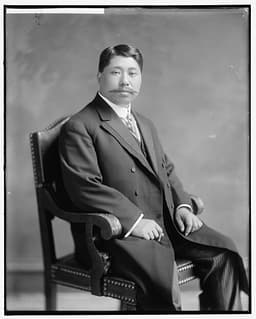
Huang Xing
General · Modern
57.5Total
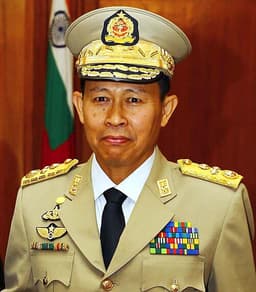
Soe Win
General · Modern
41.7Total
Basic Information
Born
1874
1947
Died
1916
—
Era
Modern
Modern
Nationality
China
Myanmar
Occupation
General
General
Civilization
Eastern
Eastern
Score Comparison
Military (10%)
46.7
25.9
Political (20%)
53.8
30.8
Influence (20%)
62.0
48.6
Legacy (20%)
56.0
40.0
Leadership (15%)
62.0
57.6
Strategy (15%)
60.0
36.8
TOTAL
57.5
41.7
Huang Xing — Complete Timeline
1905 AD
Co-founded the TongmenghuiPolitical Action◆ Major
Huang Xing co-founded the Tongmenghui (Revolutionary Alliance) in Tokyo with Sun Yat-sen. He became its military leader, organizing armed uprisings against the Qing dynasty.
TongmenghuiRevolutionMilitary
Impact: nationalconstructive
1911 AD
Led the Wuchang UprisingWar
Huang Xing led the Wuchang Uprising, which sparked the Xinhai Revolution. He commanded revolutionary forces against Qing troops, securing initial victories that led to the dynasty's collapse.
Xinhai RevolutionUprisingMilitary
Impact: nationalconstructive
1912 AD
Served as Minister of War in the RepublicPolitical Action◆ Major
Huang Xing served as Minister of War in the provisional government of the Republic of China. He worked to organize a national army and defend the republic against counter-revolutionary forces.
GovernmentMilitaryRepublic
Impact: nationalconstructive
1913 AD
Led the Second Revolution Against Yuan ShikaiWar◆ Major
Huang Xing led the Second Revolution, an armed uprising against President Yuan Shikai's authoritarian rule. The rebellion failed due to lack of coordination and military inferiority, forcing Huang into exile.
Second RevolutionYuan ShikaiExile
Impact: nationaltragic
1916 AD
Died in Exile in ShanghaiPolitical Action
Huang Xing died in Shanghai after returning from exile in Japan and the United States. His death marked the loss of a key military leader of the Chinese revolution, though his legacy endured.
DeathExileRevolution
Impact: nationaltragic
Soe Win — Complete Timeline
2004 AD
Appointed Prime Minister of MyanmarPolitical Action◆ Major
Soe Win was appointed Prime Minister of Myanmar by the State Peace and Development Council, succeeding Khin Nyunt. He served as a key figure in the military junta's government.
Military JuntaGovernment Appointment
Impact: national
2007 AD
Saffron Revolution CrackdownPolitical Action
As Prime Minister, Soe Win oversaw the military's violent suppression of the Saffron Revolution, a series of anti-government protests led by Buddhist monks. The crackdown resulted in numerous deaths, arrests, and international condemnation.
Saffron RevolutionHuman RightsRepression
Impact: nationaldestructive
Death in OfficeOther
Soe Win died in office on October 12, 2007, from leukemia. His death occurred shortly after the Saffron Revolution crackdown, and he was succeeded by Thein Sein.
DeathSuccession
Impact: national
Expert Analysis
Huang Xing vs Soe Win
# The General and the Revolutionary: Two Paths to Power in Modern Asia
In the autumn of 2007, as Buddhist monks marched through the streets of Yangon with overturned alms bowls, General Soe Win lay dying in a military hospital. Half a world away and nearly a century earlier, another man—Huang Xing—had breathed his last in a Shanghai apartment, surrounded by the ruins of a republic he had helped build. Both were generals. Both sought to shape their nations’ destinies. But one became a footnote to a revolution he crushed, while the other became a founder of a revolution that still echoes. What made the difference?
Origins
Soe Win was born in 1947, the year Myanmar gained independence from Britain. He came of age in a country where the military had already begun to see itself as the only institution capable of holding the nation together. By the time he entered the Defense Services Academy, Burma was sliding into isolation under General Ne Win’s “Burmese Way to Socialism.” Soe Win learned early that power flowed from the barrel of a gun—and from loyalty to the chain of command. His world was one of order, discipline, and the quiet terror of a state that trusted no one.
Huang Xing, born in 1874, grew up in a very different China—one humiliated by foreign powers and rotting from within. The Qing Dynasty was crumbling, and young intellectuals like Huang Xing were desperate for answers. He studied in Japan, where he absorbed the ideas of constitutional government and revolutionary nationalism. Where Soe Win inherited a system, Huang Xing had to invent one. His generation believed that China could be saved only by tearing down the old order entirely.
Rise to Power
Soe Win’s ascent was methodical, almost invisible. He rose through the ranks of the Tatmadaw, Myanmar’s army, during decades when the military consolidated its grip on every aspect of national life. His appointment as Prime Minister in 2004—succeeding Khin Nyunt after a purge—was a bureaucratic transfer of power, not a revolutionary breakthrough. He was a caretaker of a system already in place, chosen for his reliability rather than his vision.
Huang Xing’s path was the opposite. In 1905, he co-founded the Tongmenghui in Tokyo alongside Sun Yat-sen, becoming the revolutionary alliance’s military commander. He did not inherit power; he conspired for it. When the Wuchang Uprising erupted in October 1911, Huang Xing rushed to the front lines, commanding revolutionary forces against Qing loyalists. That single battle sparked the Xinhai Revolution, which toppled an empire that had ruled for nearly three centuries. Huang Xing did not wait for history—he seized it.
Leadership & Governance
As Prime Minister, Soe Win governed as a soldier-administrator in a junta that viewed politics as a security problem. His tenure is defined by one event: the Saffron Revolution of 2007. When monks led protests against rising fuel prices and military repression, Soe Win authorized a crackdown that saw monasteries raided, monks beaten, and protesters shot. The regime survived, but at a terrible cost—international condemnation and a deepened chasm between the military and the people. Soe Win’s leadership was about control, not consent.
Huang Xing, by contrast, served as Minister of War in the provisional government of the Republic of China in 1912. He faced the impossible task of building a national army from scratch while negotiating with warlords, foreign powers, and the ambitious Yuan Shikai. His leadership was improvisational and exhausting. When Yuan Shikai turned dictator, Huang Xing led the Second Revolution in 1913—a doomed uprising that failed because his coalition was too fragile. He was a better revolutionary than administrator, a man who could spark fires but struggled to keep them burning.
Triumph & Tragedy
Soe Win’s greatest moment was also his worst. The Saffron Revolution crackdown achieved its immediate goal—the protests ended—but it cemented the junta’s reputation as a pariah regime. He died of leukemia in October 2007, just weeks after the violence, never having to face the consequences of his decision. His tragedy was that he could not imagine another way to rule.
Huang Xing’s triumph was the Wuchang Uprising, which made the republic possible. His tragedy came later: exiled, marginalized, and watching Yuan Shikai dismantle everything he had fought for. He died in Shanghai in 1916, at only 42, a broken man. But his failure was more honorable than Soe Win’s success—because he had tried to build something, not just preserve something.
Character & Destiny
Soe Win was a product of the Tatmadaw’s institutional culture: cautious, obedient, and ruthless when necessary. His leadership score of 72.6 suggests competence within a narrow frame, but his political score of 51.8 reveals a man who never understood that governance requires more than force. He was a general who happened to be Prime Minister.
Huang Xing, with a leadership score of 75.5 and a political score of 62.7, was more complex. He was impulsive—his strategy score of 57.6 reflects a tendency to favor action over planning—but he was also idealistic. He believed in a republic when few Chinese even knew what the word meant. His destiny was to be the sword of a revolution that Sun Yat-sen was the pen of.
Legacy
Soe Win is barely remembered today. His legacy score of 56.0 places him among history’s footnotes. In Myanmar, his name evokes the Saffron Revolution’s suppression, a dark chapter that the current military government would rather forget. He left no reforms, no institutions, no ideas—only the memory of violence.
Huang Xing’s legacy score of 66.6 is higher, but not as high as his role might suggest. In China, he is honored as a founding father of the republic, but overshadowed by Sun Yat-sen. His real legacy is the example he set: that generals could serve revolutions, not just states. The People’s Liberation Army, which would later rule China, traces its lineage not to Soe Win’s kind of general—the enforcer—but to Huang Xing’s kind: the revolutionary soldier.
Conclusion
The difference between Soe Win and Huang Xing is not simply a matter of good versus evil. Both were men of their time, shaped by forces larger than themselves. Soe Win inherited a military state and preserved it. Huang Xing inherited an empire in collapse and tried to replace it. One died in power; the other died in exile. But the deeper truth is that history judges not by who held power longest, but by what they did with it. Soe Win used his to close doors; Huang Xing used his to open them. In the end, that is the only distinction that matters.
Rankings
🥇
Huang XingLeader
Mil: 46.7Pol: 53.8Inf: 62.0
57.5
🥈
Soe Win
Mil: 25.9Pol: 30.8Inf: 48.6
41.7
+15.8 behind
How This Comparison Works
Algorithm
Each figure is scored on 6 dimensions (0—100 scale) based on structured historical data: Military (10%), Political (20%), Influence (20%), Legacy (20%), Leadership (15%), Strategy (15%). The weighted total produces the final ranking.
Data Sources
Scores are computed from structured sub-indicators in the database. Scale factors adjust for era (Ancient ×0.85, Modern ×1.0) and civilization size (Eastern ×1.05, Other ×0.80) to account for differences in population and military scale.
Maximum 3 Figures
Comparisons are limited to 2—3 figures to ensure readability and statistical meaningfulness.
Error Margins
±5 points per dimension — Sub-scores are derived from historical records with inherent uncertainty. Two figures within 5 points on a dimension should be considered roughly equivalent in that area.
Total Score Accuracy
±3 points overall — The weighted combination of 6 dimensions produces a total score with approximately ±3 points of uncertainty. Differences of less than 3 points are not statistically significant— the figures are effectively tied.
Known Limitations
- Historical records are incomplete and uneven across civilizations
- Figures from oral-tradition societies may be underrepresented
- Occupation labels can misclassify multi-role figures
- Scores measure capability and impact, not moral character
- Quantitative scoring is a comparison tool, not absolute truth
Capability Radar
Military (10%) — Battles & Warfare
Battles
35
10
Win Rate
30
10
Expansion
20
10
Political (20%) — Governance & Reform
Reform
60
10
Diplomacy
55
10
Economy
30
10
Influence (20%) — Cultural & Global Reach
Cultural
40
10
Global
40
10
Legacy (20%) — Historical Impact
Historical
55
20
Longevity
45
10
Leadership (15%) — Power & Stability
Tenure
40
30
Stability
25
10
Strategy (15%) — Tactics & Innovation
Strategy
45
10
Tactics
40
10
Reform
50
10
Similar Comparisons
Comments & Discussion
岭南刀客6/16/2026
把黄兴和苏貌放一起比,本身就离谱。前者是同盟会的灵魂人物,和孙中山并称"孙黄";后者不过是1988年屠杀学生的军政府刽子手之一。黄兴的失败是英雄的悲壮,苏貌的"成功"是暴政的耻辱。别拿战果来衡量,历史有自己的天平——一边是青史留名的先驱,一边是万人唾骂的走狗。
PyongyangPundit6/16/2026
Huang Xing was a revolutionary who actually fought and bled on the battlefield—leading the Wuchang Uprising with his bare hands. Soe Win? A desk general who climbed the ranks by crushing student protests in 1988 and later served as a junta yes-man. One founded a republic, the other defended a military dictatorship. History doesn't forget who spilled blood for freedom versus who spilled it for control.
铁腕评史6/16/2026
黄兴是辛亥革命真正的军事支柱,连孙中山都承认"克强兄乃吾党第一战力"。而苏貌(Soe Win)不过是缅军政权的一颗螺丝钉,靠镇压迫害上位,最后败血病死在病床上,连个像样的结局都没有。一个流汗流血打江山,一个溜须拍马守监狱——差距不是一星半点。
DataSkepticDave6/16/2026
You can romanticize Huang Xing all you want, but the numbers tell a different story. Huang's Second Revolution in 1913 failed miserably—he raised maybe 10,000 troops and got routed in two months. Soe Win, meanwhile, commanded the brutal 2003 Depayin massacre against Aung San Suu Kyi's convoy with ruthless efficiency. If we're judging by operational success, Soe Win achieved his objectives. Huang Xing died a failure. Moral posturing doesn't change cold hard outcomes.