Loading...
Huang Xing vs Prayut Chan-o-cha
Huang Xing leads by 9.4 pts · 2 figures compared
…
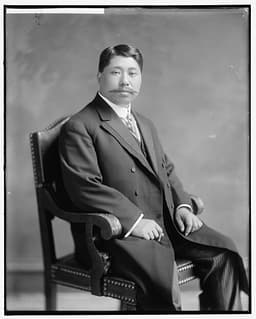
Huang Xing
General · Modern
57.5Total
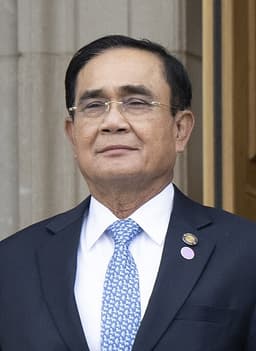
Prayut Chan-o-cha
General · Modern
48.1Total
Basic Information
Born
1874
1954
Died
1916
—
Era
Modern
Modern
Nationality
China
Thailand
Occupation
General
General
Civilization
Eastern
Eastern
Score Comparison
Military (10%)
46.7
10.2
Political (20%)
53.8
68.0
Influence (20%)
62.0
51.8
Legacy (20%)
56.0
40.8
Leadership (15%)
62.0
68.0
Strategy (15%)
60.0
35.7
TOTAL
57.5
48.1
Huang Xing — Complete Timeline
1905 AD
Co-founded the TongmenghuiPolitical Action◆ Major
Huang Xing co-founded the Tongmenghui (Revolutionary Alliance) in Tokyo with Sun Yat-sen. He became its military leader, organizing armed uprisings against the Qing dynasty.
TongmenghuiRevolutionMilitary
Impact: nationalconstructive
1911 AD
Led the Wuchang UprisingWar
Huang Xing led the Wuchang Uprising, which sparked the Xinhai Revolution. He commanded revolutionary forces against Qing troops, securing initial victories that led to the dynasty's collapse.
Xinhai RevolutionUprisingMilitary
Impact: nationalconstructive
1912 AD
Served as Minister of War in the RepublicPolitical Action◆ Major
Huang Xing served as Minister of War in the provisional government of the Republic of China. He worked to organize a national army and defend the republic against counter-revolutionary forces.
GovernmentMilitaryRepublic
Impact: nationalconstructive
1913 AD
Led the Second Revolution Against Yuan ShikaiWar◆ Major
Huang Xing led the Second Revolution, an armed uprising against President Yuan Shikai's authoritarian rule. The rebellion failed due to lack of coordination and military inferiority, forcing Huang into exile.
Second RevolutionYuan ShikaiExile
Impact: nationaltragic
1916 AD
Died in Exile in ShanghaiPolitical Action
Huang Xing died in Shanghai after returning from exile in Japan and the United States. His death marked the loss of a key military leader of the Chinese revolution, though his legacy endured.
DeathExileRevolution
Impact: nationaltragic
Prayut Chan-o-cha — Complete Timeline
2014 AD
Led the 2014 military coupPolitical Action
General Prayut Chan-o-cha, as Army Commander-in-Chief, led a coup d'
CoupMilitaryThailand
Impact: nationaldestructive
Appointed Prime Minister by military legislaturePolitical Action◆ Major
Following the coup, Prayut was appointed Prime Minister by the military-controlled National Legislative Assembly. He assumed executive power, leading a government that promised reforms and national reconciliation.
AppointmentMilitary RuleThailand
Impact: national
2017 AD
Promulgation of the 2017 ConstitutionReform◆ Major
Prayut's government oversaw the drafting and approval of a new constitution that strengthened the military's political role and created a fully appointed Senate. The charter was criticized for entrenching military influence.
ConstitutionMilitaryThailand
Impact: national
2019 AD
Re-elected Prime Minister after 2019 electionPolitical Action◆ Major
Prayut was re-elected Prime Minister following a general election that was criticized for being manipulated to favor pro-military parties. He formed a coalition government, continuing his rule under a civilian facade.
ElectionContinuityThailand
Impact: national
Expert Analysis
Huang Xing vs Prayut Chan-o-cha
# The General and the Revolutionary
On a sweltering May morning in 2014, General Prayut Chan-o-cha appeared on national television in his crisp khaki uniform to announce that the Thai military had seized power. The cameras captured his calm, almost weary demeanor as he declared the end of democratic rule. Seventy years earlier and a thousand miles away, a very different kind of general lay dying in a Shanghai hospital, his body ravaged by illness and exile. Huang Xing had spent his final years watching the republic he helped found crumble into warlordism and dictatorship. Both men were generals who reshaped their nations. One seized power to preserve order; the other fought to create freedom. Their divergent paths reveal how two Eastern civilizations, facing similar crises of modernity, chose radically different answers to the same question: who should rule, and for what purpose?
Origins
Prayut Chan-o-cha was born in 1954 in northeastern Thailand, a region of rice farmers and military garrisons. His father was a sergeant major, his mother a schoolteacher. The young Prayut grew up in the shadow of barracks, learning early that authority came from the barrel of a gun and the chain of command. He entered the Chulachomklao Royal Military Academy at sixteen, absorbing a worldview where discipline, hierarchy, and loyalty to the monarchy were absolute virtues. Thailand in the 1970s was a cauldron of coups, communist insurgencies, and student protests. The army was not merely an institution—it was the arbiter of national destiny.
Huang Xing emerged from a different crucible. Born in 1874 in Hunan province, central China, he came of age during the dying gasp of the Qing Dynasty. His family were minor gentry, and he received a classical Confucian education before traveling to Japan to study military science. There, he encountered a world of revolutionary ideas—constitutionalism, nationalism, republicanism. Where Prayut saw the military as a guardian of tradition, Huang saw it as an instrument of liberation. The Boxer Rebellion of 1900, which humiliated China before foreign powers, convinced him that the old order was not worth preserving. It had to be destroyed.
Rise to Power
Prayut’s ascent was methodical, bureaucratic. He climbed the ranks of Thailand’s army with the patience of a man who knew time was on his side. By 2010, as commander of the First Army, he oversaw the bloody crackdown on Red Shirt protesters in Bangkok—a dress rehearsal for his later ambitions. The political crisis of 2013-2014 gave him his moment. As protests paralyzed the government of Prime Minister Yingluck Shinawatra, Prayut positioned himself as the restorer of order. On May 22, 2014, he led a coup that overthrew the caretaker government, citing the need to “reform” Thai democracy. He was appointed prime minister by a military-controlled legislature three months later.
Huang Xing’s rise was explosive and dangerous. In 1905, he co-founded the Tongmenghui (Revolutionary Alliance) in Tokyo with Sun Yat-sen, becoming the movement’s military commander. While Sun was the intellectual visionary, Huang was the man of action—organizing uprisings, smuggling weapons, training assassins. He led failed revolts in 1906, 1907, and 1908, each time escaping death by inches. Then came October 1911, when a mutiny in Wuchang sparked the Xinhai Revolution. Huang rushed to the scene, taking command of revolutionary forces against Qing loyalists. Within months, the dynasty collapsed. In 1912, he became Minister of War in the provisional republic—a man who had gone from hunted conspirator to founder of a nation.
Leadership & Governance
Prayut governed as a general governs: through decrees, surveillance, and the careful management of elites. His 2017 constitution was a masterpiece of controlled democracy—it created an appointed senate, weakened political parties, and gave the military veto power over civilian governments. He presented himself as a fatherly figure, “Uncle Tu,” who would guide Thailand to stability. His economic policies favored infrastructure projects and royalist business interests. But his rule was also defined by what it suppressed: free speech, dissent, and the political ambitions of the Shinawatra family. He was not a reformer; he was a custodian.
Huang Xing was a revolutionary who never got to govern. His moment of power lasted barely a year. As Minister of War, he tried to build a national army from scratch—disbanding provincial forces, centralizing command, creating a military academy. But the republic was fragile, fractured by warlords and foreign debts. When President Yuan Shikai began to dismantle democratic institutions, Huang led the Second Revolution in 1913—a desperate armed uprising that failed within months. He fled to Japan and the United States, watching from exile as Yuan declared himself emperor. Huang’s tragedy was that he was a builder in an age of destroyers.
Triumph & Tragedy
Prayut’s triumph was his longevity. He survived the 2019 election—widely criticized as manipulated—and remained prime minister through 2023. He weathered protests, a pandemic, and economic stagnation. His tragedy was that his success revealed the hollowness of his vision. Thailand under his rule became stable but stagnant, orderly but unfree. The military’s grip on power grew tighter, but the country’s democratic aspirations did not disappear—they simply went underground.
Huang Xing’s triumph was the Wuchang Uprising, a spark that toppled an empire. His tragedy was his exile and early death at forty-two in 1916, returning to Shanghai only to die of illness. He never saw the republic he dreamed of. Instead, he witnessed its betrayal by Yuan Shikai and its descent into chaos. His last letter reportedly urged his comrades to “never give up the fight for freedom.” He died a failure by his own measure, but a martyr to a cause.
Character & Destiny
Prayut was a pragmatist who believed order was the highest good. He was cautious, calculating, and suspicious of idealism. His personality—rigid, hierarchical, distrustful—mirrored the institution he led. He did not seek to transform Thailand; he sought to preserve it as he understood it: a kingdom under military protection.
Huang Xing was an idealist who believed freedom was worth dying for. He was impulsive, courageous, and generous to a fault. His soldiers adored him; his rivals feared him. He once said, “Revolution is not a dinner party,” and he lived that truth. His personality—passionate, reckless, hopeful—drove him to fight even when winning was impossible.
Legacy
Prayut’s legacy is ambiguous. He will be remembered as the general who made Thailand safe for the military, but who also deepened the divide between royalists and democrats. His constitution may outlast him, but so will the resentment it breeds. History may judge him as a caretaker of decline.
Huang Xing’s legacy is more luminous. He is honored in China as a founding father, second only to Sun Yat-sen. His statue stands in Wuhan, where the revolution began. He represents the revolutionary path not taken—a Chinese republic that might have been democratic, unified, and free. His failure became a warning, but also an inspiration.
Conclusion
Prayut and Huang Xing faced the same fundamental challenge: how to lead a nation in crisis. One chose order over freedom, the other freedom over order. One seized power to stop change; the other fought to unleash it. Their lives remind us that generals are never just soldiers—they are the mirrors of their nations’ deepest fears and highest hopes. And the question they answered remains urgent today: what are we willing to sacrifice, and for what kind of future?
Rankings
🥇
Huang XingLeader
Mil: 46.7Pol: 53.8Inf: 62.0
57.5
🥈
Prayut Chan-o-cha
Mil: 10.2Pol: 68.0Inf: 51.8
48.1
+9.4 behind
How This Comparison Works
Algorithm
Each figure is scored on 6 dimensions (0—100 scale) based on structured historical data: Military (10%), Political (20%), Influence (20%), Legacy (20%), Leadership (15%), Strategy (15%). The weighted total produces the final ranking.
Data Sources
Scores are computed from structured sub-indicators in the database. Scale factors adjust for era (Ancient ×0.85, Modern ×1.0) and civilization size (Eastern ×1.05, Other ×0.80) to account for differences in population and military scale.
Maximum 3 Figures
Comparisons are limited to 2—3 figures to ensure readability and statistical meaningfulness.
Error Margins
±5 points per dimension — Sub-scores are derived from historical records with inherent uncertainty. Two figures within 5 points on a dimension should be considered roughly equivalent in that area.
Total Score Accuracy
±3 points overall — The weighted combination of 6 dimensions produces a total score with approximately ±3 points of uncertainty. Differences of less than 3 points are not statistically significant— the figures are effectively tied.
Known Limitations
- Historical records are incomplete and uneven across civilizations
- Figures from oral-tradition societies may be underrepresented
- Occupation labels can misclassify multi-role figures
- Scores measure capability and impact, not moral character
- Quantitative scoring is a comparison tool, not absolute truth
Capability Radar
Military (10%) — Battles & Warfare
Battles
35
5
Win Rate
30
5
Expansion
20
5
Political (20%) — Governance & Reform
Reform
60
30
Diplomacy
55
40
Economy
30
35
Influence (20%) — Cultural & Global Reach
Cultural
40
20
Global
40
20
Legacy (20%) — Historical Impact
Historical
55
20
Longevity
45
15
Leadership (15%) — Power & Stability
Tenure
40
60
Stability
25
25
Strategy (15%) — Tactics & Innovation
Strategy
45
15
Tactics
40
10
Reform
50
20
Similar Comparisons
Comments & Discussion
No comments yet. Be the first to share your thoughts!