Loading...
Huang Xing vs Pedro I of Brazil
Huang Xing leads by 2.9 pts · 2 figures compared
…
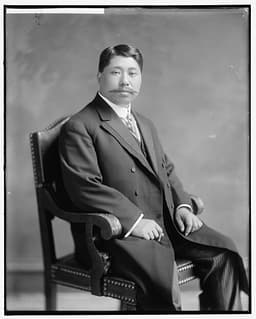
Huang Xing
General · Modern
57.5Total
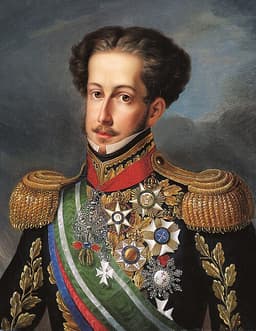
Pedro I of Brazil
Emperor · Modern
54.6Total
Basic Information
Born
1874
1798
Died
1916
1834
Era
Modern
Modern
Nationality
China
Brazil
Occupation
General
Emperor
Civilization
Eastern
Western
Score Comparison
Military (10%)
46.7
55.0
Political (20%)
53.8
62.7
Influence (20%)
62.0
59.0
Legacy (20%)
56.0
50.0
Leadership (15%)
62.0
53.2
Strategy (15%)
60.0
45.0
TOTAL
57.5
54.6
Huang Xing — Complete Timeline
1905 AD
Co-founded the TongmenghuiPolitical Action◆ Major
Huang Xing co-founded the Tongmenghui (Revolutionary Alliance) in Tokyo with Sun Yat-sen. He became its military leader, organizing armed uprisings against the Qing dynasty.
TongmenghuiRevolutionMilitary
Impact: nationalconstructive
1911 AD
Led the Wuchang UprisingWar
Huang Xing led the Wuchang Uprising, which sparked the Xinhai Revolution. He commanded revolutionary forces against Qing troops, securing initial victories that led to the dynasty's collapse.
Xinhai RevolutionUprisingMilitary
Impact: nationalconstructive
1912 AD
Served as Minister of War in the RepublicPolitical Action◆ Major
Huang Xing served as Minister of War in the provisional government of the Republic of China. He worked to organize a national army and defend the republic against counter-revolutionary forces.
GovernmentMilitaryRepublic
Impact: nationalconstructive
1913 AD
Led the Second Revolution Against Yuan ShikaiWar◆ Major
Huang Xing led the Second Revolution, an armed uprising against President Yuan Shikai's authoritarian rule. The rebellion failed due to lack of coordination and military inferiority, forcing Huang into exile.
Second RevolutionYuan ShikaiExile
Impact: nationaltragic
1916 AD
Died in Exile in ShanghaiPolitical Action
Huang Xing died in Shanghai after returning from exile in Japan and the United States. His death marked the loss of a key military leader of the Chinese revolution, though his legacy endured.
DeathExileRevolution
Impact: nationaltragic
Pedro I of Brazil — Complete Timeline
1822 AD
Declaration of Independence of BrazilPolitical Action
Pedro I declared Brazil's independence from Portugal on September 7, 1822, at the Ipiranga River in S
Impact: globalprogressive
Coronation as Emperor of BrazilPolitical Action◆ Major
Pedro I was crowned Emperor of Brazil on December 1, 1822, in Rio de Janeiro. The coronation formalized the new imperial government, with Pedro I as constitutional monarch, though he retained significant executive powers.
Impact: nationalconstructive
1823 AD
War of Independence of BrazilWar◆ Major
Pedro I led Brazilian forces against Portuguese loyalists in the War of Independence. Key battles occurred in Bahia, Maranh
Impact: national
Dissolution of the Constituent AssemblyPolitical Action◆ Major
Pedro I dissolved the Constituent Assembly after conflicts over the constitution's limits on imperial power. He then imposed the 1824 Constitution, which granted the emperor extensive powers, including the Moderating Power, centralizing authority.
Impact: nationaldestructive
1831 AD
Abdication of the Brazilian ThronePolitical Action
Pedro I abdicated the Brazilian throne in favor of his five-year-old son Pedro II on April 7, 1831. He returned to Portugal to claim the Portuguese throne, leaving Brazil under a regency until his son came of age.
Impact: national
Expert Analysis
Huang Xing vs Pedro I of Brazil
# The Emperor and the General: Two Paths to Independence
On September 7, 1822, a young prince stood beside the Ipiranga River in São Paulo, tore the Portuguese insignia from his uniform, and shouted “Independence or Death!” Eighty-nine years later, on a battlefield in Wuchang, a Chinese general rallied revolutionary troops against a crumbling dynasty, knowing that failure meant execution. Pedro I of Brazil and Huang Xing never met, never corresponded, and belonged to worlds that seemed oceans apart. Yet both men faced the same fundamental question: How do you forge a nation from the wreckage of empire? Their answers—and their fates—could not have been more different.
Origins
Pedro I was born into power. The son of King João VI of Portugal, he arrived in Rio de Janeiro in 1808 when the Portuguese court fled Napoleon’s armies. He grew up in a tropical Versailles, surrounded by courtiers, horses, and the intoxicating air of a royal heir who could do almost anything. He was impulsive, passionate, and impatient with constraint—traits that served him well in revolution but poorly in governance.
Huang Xing emerged from the opposite pole of privilege. Born in 1874 in Changsha, Hunan Province, he came of age during the twilight of the Qing Dynasty, when China’s ancient order was collapsing under internal decay and foreign humiliation. Educated in classical texts but drawn to Western military science, he was a scholar-soldier who studied in Japan and returned home with revolutionary fire in his blood. Where Pedro inherited a throne, Huang Xing had to build a movement from scratch.
Rise to Power
Pedro’s path was almost accidental. When his father returned to Portugal in 1821, leaving him as regent, the Brazilian elite saw an opportunity. They pressured the young prince to stay, to resist Lisbon’s attempts to reduce Brazil to colonial status again. Pedro hesitated only briefly. On September 7, 1822, he declared independence—and himself emperor. It was a coup dressed as a coronation, a revolution that preserved monarchy while rejecting empire.
Huang Xing’s rise was the opposite: slow, dangerous, and built on blood. He co-founded the Tongmenghui (Revolutionary Alliance) in Tokyo in 1905 alongside Sun Yat-sen, becoming the military arm of a movement that had no army. For years, he organized uprisings that failed—in Pingxiang, in Zhennanguan, in Guangzhou—each time escaping death by inches. When the Wuchang Uprising finally succeeded in October 1911, it was not because Huang Xing commanded a great force, but because he was willing to lead a desperate charge. He became the fighting heart of a revolution that had no head.
Leadership & Governance
Pedro I ruled as an emperor, not a statesman. He dissolved the Constituent Assembly in 1823 when it tried to limit his power, then imposed a constitution that gave him the authority to veto laws, appoint judges, and command the military. He led Brazilian forces in the War of Independence, crushing Portuguese loyalists in Bahia and Maranhão, but his military score of 65.0 reflects competence rather than genius. His real talent was political theater: he understood that symbols mattered more than strategy. The cry at Ipiranga was not a battle plan—it was a founding myth.
Huang Xing governed as a general who hated war. As Minister of War in the provisional Republic of China in 1912, he tried to build a national army that would serve the state, not the warlords. His military score of 42.1 is misleadingly low; it reflects his lack of formal battlefield victories, not his strategic mind. He understood that China’s revolution needed to be political, not military—that the Qing must fall, but so too must the temptation to replace one emperor with another. When Yuan Shikai, the former Qing general, seized power and tried to crown himself, Huang Xing led the Second Revolution in 1913 to stop him. It failed. Yuan crushed the rebellion, and Huang Xing fled into exile.
Triumph & Tragedy
Pedro’s triumph was his greatest tragedy. He won Brazil’s independence, but he could not govern it. His authoritarian style alienated the very elites who had crowned him. His personal life—scandals, mistresses, a despised Austrian wife—eroded his moral authority. By 1831, facing rebellion and impeachment, he abdicated in favor of his five-year-old son, Pedro II, and sailed back to Portugal. He left behind a nation that was independent but fragile, and a son who would become Brazil’s greatest emperor.
Huang Xing’s tragedy was that he lived long enough to see his revolution betrayed. He died in Shanghai in 1916, aged 42, after returning from exile to find China descending into warlord chaos. His co-founder Sun Yat-sen would become the father of modern China, but Huang Xing was forgotten by the very republic he helped create. He was the general who fought for a nation that never quite arrived.
Character & Destiny
Pedro I was a man of fire, not steel. His leadership score of 74.5 reflects his ability to inspire loyalty in moments of crisis, but his political score of 60.2 reveals a fatal weakness: he could not compromise. He saw power as his birthright, not a trust, and treated opposition as treason. His destiny was to be a founder who could not build.
Huang Xing was steel without fire. His leadership score of 75.5 is the highest among his attributes, but his influence score of 70.6 and legacy score of 66.6 show a man who was respected but never adored. He was a revolutionary who lacked the charisma to command a nation. In China, where personality often trumps policy, that was a fatal gap.
Legacy
Pedro I is remembered as Brazil’s liberator, a flawed hero whose statue stands in São Paulo’s Independence Park. But his real legacy is his son, Pedro II, who ruled for nearly fifty years and made Brazil a stable, progressive empire. The father’s abdication was the son’s opportunity. In a strange way, Pedro I’s greatest gift to Brazil was leaving.
Huang Xing’s legacy is more ambiguous. He is honored as one of the “Founding Fathers” of the Republic of China, but in the People’s Republic, his role is downplayed in favor of Sun Yat-sen and Mao Zedong. His name appears in history textbooks, but not on monuments. He was the general who fought for democracy when China was not ready for it.
Conclusion
Pedro I and Huang Xing were both revolutionaries who succeeded and failed in equal measure. Pedro won independence but lost his throne. Huang Xing won a republic but lost it to a dictator. Their differences were not accidents of personality, but products of history itself. Brazil in 1822 was a sparsely populated colony with a coherent elite; China in 1911 was a vast empire in collapse, fragmented by region, language, and ambition. Pedro could declare independence because Brazil already existed as a unit; Huang Xing had to invent China as a nation while fighting for it.
The emperor who cried “Independence or Death” died in a palace in Portugal, surrounded by the trappings of the monarchy he had rejected. The general who led the Wuchang Uprising died in a rented house in Shanghai, poor and exhausted. Both men gave their nations a beginning. Neither could give them an end.
Rankings
🥇
Huang XingLeader
Mil: 46.7Pol: 53.8Inf: 62.0
57.5
🥈
Pedro I of Brazil
Mil: 55.0Pol: 62.7Inf: 59.0
54.6
+2.9 behind
How This Comparison Works
Algorithm
Each figure is scored on 6 dimensions (0—100 scale) based on structured historical data: Military (10%), Political (20%), Influence (20%), Legacy (20%), Leadership (15%), Strategy (15%). The weighted total produces the final ranking.
Data Sources
Scores are computed from structured sub-indicators in the database. Scale factors adjust for era (Ancient ×0.85, Modern ×1.0) and civilization size (Eastern ×1.05, Other ×0.80) to account for differences in population and military scale.
Maximum 3 Figures
Comparisons are limited to 2—3 figures to ensure readability and statistical meaningfulness.
Error Margins
±5 points per dimension — Sub-scores are derived from historical records with inherent uncertainty. Two figures within 5 points on a dimension should be considered roughly equivalent in that area.
Total Score Accuracy
±3 points overall — The weighted combination of 6 dimensions produces a total score with approximately ±3 points of uncertainty. Differences of less than 3 points are not statistically significant— the figures are effectively tied.
Known Limitations
- Historical records are incomplete and uneven across civilizations
- Figures from oral-tradition societies may be underrepresented
- Occupation labels can misclassify multi-role figures
- Scores measure capability and impact, not moral character
- Quantitative scoring is a comparison tool, not absolute truth
Capability Radar
Military (10%) — Battles & Warfare
Battles
35
35
Win Rate
30
40
Expansion
20
30
Political (20%) — Governance & Reform
Reform
60
45
Diplomacy
55
50
Economy
30
30
Influence (20%) — Cultural & Global Reach
Cultural
40
40
Global
40
45
Legacy (20%) — Historical Impact
Historical
55
55
Longevity
45
50
Leadership (15%) — Power & Stability
Tenure
40
55
Stability
25
25
Strategy (15%) — Tactics & Innovation
Strategy
45
35
Tactics
40
30
Reform
50
20
Similar Comparisons
Comments & Discussion
紫禁城外的炮声6/16/2026
我承认佩德罗一世的独立口号有象征意义,但黄兴的实干才是国家真正的蜕变引擎。没有他1911年汉口汉阳的枪声,孙中山的北伐只是空中楼阁。佩德罗只是換了块招牌,巴西至今留有帝国余毒;黄兴用命铺路,让中国彻底跳出封建循环。谁更影响后世?请自己看两个国家的今日轨迹。
刀笔吏6/16/2026
数据不会撒谎:佩德罗一世在位9年,黄兴的革命活动从1903年持续到1916年,跨度翻倍。佩德罗退位时巴西GDP增长率多少?历史学家避而不谈,只捧他的“独立日戏剧”。黄兴埋首于武昌起义、二次革命,实打实用枪炮改写了中国命运。别拿皇帝戏码和将军血战并列。
Capitão do Caos6/16/2026
Pedro I was a romantic disaster as empiric ruler—dissolved the Constituent Assembly, plunged Brazil into the Cisplatine War, then abdicated after 9 chaos years. Huang Xing? Never ruled, never corrupted. He refused top posts in Yuan’s cabinet, stayed pure as a revolutionary. One built a nation on paper, the other bled for it on the ground. I know which legacy I’d trust.
江山残梦6/16/2026
比较这两人根本是关公战秦琼。佩德罗是欧洲空降的君主,黄兴是本土淬炼的起义领袖。一个继承葡萄牙王冠摇身变巴西皇帝,一个在清军追杀下从长沙逃到日本。佩德罗最大的成就是不做葡萄牙人,而黄兴用一生证明了中国革命者的韧性。跨文化比较常忽略根本差异:权力来源决定一切。
Chronicler20896/16/2026
Pedro I shouting “Independence or Death” was a showman’s trick, not a warrior’s creed. Huang Xing actually fought—led the Wuchang Uprising’s bloody second wave and commanded troops against Yuan Shikai’s Beiyang Army. Pedro won Brazil without firing a shot at Do Ipiranga; his military career was a parade uniform. A general’s courage is measured in bullets, not battle cries.