Loading...
Huang Xing vs Nguyen Cao Ky
Huang Xing leads by 8.5 pts · 2 figures compared
…
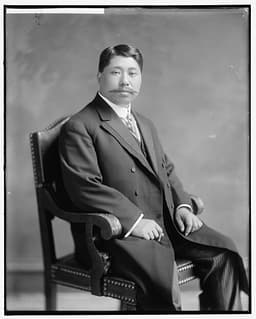
Huang Xing
General · Modern
57.5Total
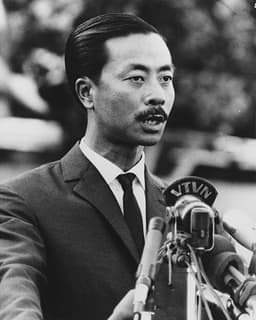
Nguyen Cao Ky
General · Modern
49.0Total
Basic Information
Born
1874
1930
Died
1916
—
Era
Modern
Modern
Nationality
China
Vietnam
Occupation
General
General
Civilization
Eastern
Eastern
Score Comparison
Military (10%)
46.7
45.0
Political (20%)
53.8
39.4
Influence (20%)
62.0
50.2
Legacy (20%)
56.0
40.0
Leadership (15%)
62.0
67.0
Strategy (15%)
60.0
60.0
TOTAL
57.5
49.0
Huang Xing — Complete Timeline
1905 AD
Co-founded the TongmenghuiPolitical Action◆ Major
Huang Xing co-founded the Tongmenghui (Revolutionary Alliance) in Tokyo with Sun Yat-sen. He became its military leader, organizing armed uprisings against the Qing dynasty.
TongmenghuiRevolutionMilitary
Impact: nationalconstructive
1911 AD
Led the Wuchang UprisingWar
Huang Xing led the Wuchang Uprising, which sparked the Xinhai Revolution. He commanded revolutionary forces against Qing troops, securing initial victories that led to the dynasty's collapse.
Xinhai RevolutionUprisingMilitary
Impact: nationalconstructive
1912 AD
Served as Minister of War in the RepublicPolitical Action◆ Major
Huang Xing served as Minister of War in the provisional government of the Republic of China. He worked to organize a national army and defend the republic against counter-revolutionary forces.
GovernmentMilitaryRepublic
Impact: nationalconstructive
1913 AD
Led the Second Revolution Against Yuan ShikaiWar◆ Major
Huang Xing led the Second Revolution, an armed uprising against President Yuan Shikai's authoritarian rule. The rebellion failed due to lack of coordination and military inferiority, forcing Huang into exile.
Second RevolutionYuan ShikaiExile
Impact: nationaltragic
1916 AD
Died in Exile in ShanghaiPolitical Action
Huang Xing died in Shanghai after returning from exile in Japan and the United States. His death marked the loss of a key military leader of the Chinese revolution, though his legacy endured.
DeathExileRevolution
Impact: nationaltragic
Nguyen Cao Ky — Complete Timeline
1963 AD
Commander of South Vietnamese Air ForcePolitical Action◆ Major
Nguyen Cao Ky was appointed commander of the Republic of Vietnam Air Force. He led the air force during the Buddhist crisis and participated in the coup that overthrew President Ngo Dinh Diem.
Air ForceCoupDiem
Impact: national
1965 AD
Appointed Prime MinisterPolitical Action◆ Major
Nguyen Cao Ky became Prime Minister of South Vietnam, leading a military junta. His government intensified the war against the Viet Cong and North Vietnam, with strong US support.
Prime MinisterMilitary juntaVietnam War
Impact: national
1967 AD
Conflict with President ThieuPolitical Action
Nguyen Cao Ky ran for president but lost to Nguyen Van Thieu, becoming vice president. The two leaders had a tense relationship, with Ky later accusing Thieu of corruption and mismanagement of the war.
ElectionThieuRivalry
Impact: nationaldestructive
1975 AD
Exile after fall of SaigonPolitical Action◆ Major
Nguyen Cao Ky fled South Vietnam as Saigon fell to North Vietnamese forces. He settled in the United States, where he became a critic of the communist government and later returned to Vietnam for visits.
ExileFall of SaigonVietnam War
Impact: nationaltragic
Expert Analysis
Huang Xing vs Nguyen Cao Ky
# The General Who Couldn’t Win the Peace
On a humid morning in Saigon, 1965, Nguyen Cao Ky stood before a crowd in his trademark black flight jacket, a pearl-handled revolver at his hip, and declared that his only hero was Adolf Hitler. Half a world away and half a century earlier, Huang Xing trudged through the mud of Wuchang, a revolutionary general who had never sought personal power but found himself commanding an army that would topple an empire. Two generals, two revolutions, two different fates. One fled into exile as his country fell; the other died in exile, his dream of a republic already crumbling. Why did one man’s leadership end in catastrophe and the other’s in quiet tragedy?
Origins
Nguyen Cao Ky was born in 1930 in northern Vietnam, into a land already scarred by French colonialism and simmering with nationalist fervor. He was a child of the Vietnamese elite—his father a mandarin in the colonial administration—and he grew up fluent in French, educated in the ways of the occupier. The air force became his path: a modern, technical service that suited a man who loved speed, risk, and the illusion of control. By 1963, at age thirty-three, he was commander of the Republic of Vietnam Air Force, a position won through a combination of competence and coup politics.
Huang Xing, born in 1874 in Hunan province, came from a world of Confucian scholars and rural poverty. His father was a village teacher, and young Huang was raised on the classics—but the classics could not explain why China had been humiliated by foreign powers. He studied in Japan, where he encountered revolutionary ideas, and there he found his purpose: not to serve the emperor, but to overthrow him. Where Ky was a product of French colonial modernity, Huang was forged in the crucible of Chinese humiliation and the desperate search for national salvation.
Rise to Power
Ky’s rise was swift and violent. In 1963, he played a key role in the coup that overthrew President Ngo Dinh Diem. The Buddhist crisis had paralyzed South Vietnam, and Ky, commanding the air force, bombed the presidential palace. It was a brutal introduction to politics: power came through the barrel of a gun, and loyalty was measured in bomb tonnage. By 1965, he was prime minister, the youngest in the nation’s history, leading a military junta that promised to win the war against the communist North.
Huang Xing’s ascent was slower, more deliberate, and more ideological. In 1905, he co-founded the Tongmenghui with Sun Yat-sen in Tokyo, becoming the organization’s military chief. He spent years organizing uprisings—failed ones, mostly—until 1911, when the Wuchang Uprising finally sparked the Xinhai Revolution. Huang rushed to the front, commanding revolutionary forces against the Qing dynasty. His military leadership score of 42.1 seems low, but it reflects the reality: he was more organizer than tactician, more symbol than strategist.
Leadership & Governance
Ky governed as a military strongman in a country at war. His style was theatrical and authoritarian: he flew his own jet into combat, dismissed democracy as a luxury South Vietnam could not afford, and relied on American support to stay afloat. His political score of 60.2 reflects a man who understood power but not politics—he could command troops, but he could not build institutions. His government intensified the war against the North, but corruption, instability, and the alienation of the Buddhist majority eroded his legitimacy.
Huang Xing, by contrast, governed as a republican idealist. As Minister of War in 1912, he tried to organize a national army loyal to the new republic, not to any warlord. His political score of 62.7 is slightly higher than Ky’s, but the difference matters: Huang believed in institutions, in law, in the dream of a democratic China. Yet his idealism was his weakness. When Yuan Shikai, the former Qing general, began to consolidate power, Huang led the Second Revolution in 1913—a desperate, doomed uprising against a man who had no intention of sharing power.
Triumph & Tragedy
Ky’s greatest moment was also his most tragic: the 1967 election. He ran for president against Nguyen Van Thieu, his rival in the junta, and lost. The election was flawed, but it was real—and Ky accepted the result, becoming vice president. It was a rare moment of political maturity. But the relationship was poisoned from the start. Ky and Thieu governed together in a state of cold war, each distrusting the other, and the government remained paralyzed. When Saigon fell in 1975, Ky fled, one of the last to board a helicopter from the U.S. Embassy roof.
Huang Xing’s tragedy was more personal. After the Second Revolution failed, he fled to Japan and then the United States, a revolutionary without a revolution. He returned to Shanghai in 1916, sick and exhausted, and died that same year at the age of forty-two. His death marked the loss of a key figure in China’s republican movement—but the republic itself was already dying, consumed by warlordism and corruption.
Character & Destiny
Ky was a man of action, not reflection. His leadership score of 76.3 is the highest among his metrics, but it was a leadership of the moment, not of vision. He could inspire loyalty in his pilots, but he could not inspire a nation. His influence score of 70.9 is substantial, but it was influence without direction—he became a symbol of South Vietnam’s desperation, not its hope.
Huang Xing was a man of principle, not pragmatism. His leadership score of 75.5 is nearly equal to Ky’s, but it was leadership of a different kind: patient, selfless, committed to an ideal. His legacy score of 66.6 reflects the respect he earned, but also the failure of his project. He is remembered as the “father of the Chinese republic” alongside Sun Yat-sen, but his republic never fully lived.
Legacy
Ky died in 2011 in California, a retired general in a country that no longer existed. He wrote memoirs, gave interviews, and defended his actions, but he remained a figure of controversy—a man who fought for a lost cause and could not admit defeat. His legacy score of 56.0 is the lowest of his metrics, a reflection of a life that ended in irrelevance.
Huang Xing is remembered in China as a revolutionary martyr, a man who gave his life for a dream that would not be realized until after his death. His legacy score of 66.6 is modest, but it carries weight: he is honored in textbooks, in museums, in the collective memory of a nation that eventually found its way—though not the way he had hoped.
Conclusion
Two generals, two revolutions, two different fates. Ky and Huang both sought to shape the destiny of their nations, but they were shaped by forces beyond their control: colonialism, war, and the cruel logic of history. Ky’s tragedy was that he fought for a country that could not survive; Huang’s tragedy was that he fought for a republic that could not be born. In the end, both men were defeated—not by their enemies, but by the limits of their own vision. The lesson is sobering: in times of revolution, the generals who win the battles are not always the ones who win the peace. Sometimes, no one does.
Rankings
🥇
Huang XingLeader
Mil: 46.7Pol: 53.8Inf: 62.0
57.5
🥈
Nguyen Cao Ky
Mil: 45.0Pol: 39.4Inf: 50.2
49.0
+8.5 behind
How This Comparison Works
Algorithm
Each figure is scored on 6 dimensions (0—100 scale) based on structured historical data: Military (10%), Political (20%), Influence (20%), Legacy (20%), Leadership (15%), Strategy (15%). The weighted total produces the final ranking.
Data Sources
Scores are computed from structured sub-indicators in the database. Scale factors adjust for era (Ancient ×0.85, Modern ×1.0) and civilization size (Eastern ×1.05, Other ×0.80) to account for differences in population and military scale.
Maximum 3 Figures
Comparisons are limited to 2—3 figures to ensure readability and statistical meaningfulness.
Error Margins
±5 points per dimension — Sub-scores are derived from historical records with inherent uncertainty. Two figures within 5 points on a dimension should be considered roughly equivalent in that area.
Total Score Accuracy
±3 points overall — The weighted combination of 6 dimensions produces a total score with approximately ±3 points of uncertainty. Differences of less than 3 points are not statistically significant— the figures are effectively tied.
Known Limitations
- Historical records are incomplete and uneven across civilizations
- Figures from oral-tradition societies may be underrepresented
- Occupation labels can misclassify multi-role figures
- Scores measure capability and impact, not moral character
- Quantitative scoring is a comparison tool, not absolute truth
Capability Radar
Military (10%) — Battles & Warfare
Battles
35
30
Win Rate
30
35
Expansion
20
10
Political (20%) — Governance & Reform
Reform
60
20
Diplomacy
55
25
Economy
30
15
Influence (20%) — Cultural & Global Reach
Cultural
40
15
Global
40
15
Legacy (20%) — Historical Impact
Historical
55
20
Longevity
45
10
Leadership (15%) — Power & Stability
Tenure
40
40
Stability
25
10
Strategy (15%) — Tactics & Innovation
Strategy
45
30
Tactics
40
40
Reform
50
25
Similar Comparisons
Comments & Discussion
No comments yet. Be the first to share your thoughts!