Loading...
Huang Xing vs Louis Botha
Louis Botha leads by 3.6 pts · 2 figures compared
…
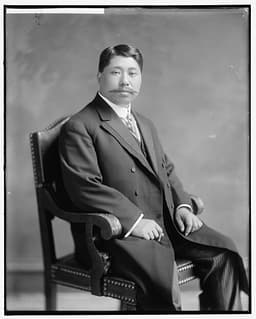
Huang Xing
General · Modern
57.5Total
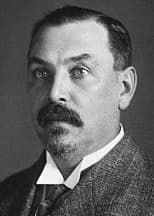
Louis Botha
General · Modern
61.1Total
Basic Information
Born
1874
1862
Died
1916
1919
Era
Modern
Modern
Nationality
China
South Africa
Occupation
General
General
Civilization
Eastern
Other
Score Comparison
Military (10%)
46.7
61.7
Political (20%)
53.8
70.0
Influence (20%)
62.0
56.7
Legacy (20%)
56.0
50.0
Leadership (15%)
62.0
79.8
Strategy (15%)
60.0
58.0
TOTAL
57.5
61.1
Huang Xing — Complete Timeline
1905 AD
Co-founded the TongmenghuiPolitical Action◆ Major
Huang Xing co-founded the Tongmenghui (Revolutionary Alliance) in Tokyo with Sun Yat-sen. He became its military leader, organizing armed uprisings against the Qing dynasty.
TongmenghuiRevolutionMilitary
Impact: nationalconstructive
1911 AD
Led the Wuchang UprisingWar
Huang Xing led the Wuchang Uprising, which sparked the Xinhai Revolution. He commanded revolutionary forces against Qing troops, securing initial victories that led to the dynasty's collapse.
Xinhai RevolutionUprisingMilitary
Impact: nationalconstructive
1912 AD
Served as Minister of War in the RepublicPolitical Action◆ Major
Huang Xing served as Minister of War in the provisional government of the Republic of China. He worked to organize a national army and defend the republic against counter-revolutionary forces.
GovernmentMilitaryRepublic
Impact: nationalconstructive
1913 AD
Led the Second Revolution Against Yuan ShikaiWar◆ Major
Huang Xing led the Second Revolution, an armed uprising against President Yuan Shikai's authoritarian rule. The rebellion failed due to lack of coordination and military inferiority, forcing Huang into exile.
Second RevolutionYuan ShikaiExile
Impact: nationaltragic
1916 AD
Died in Exile in ShanghaiPolitical Action
Huang Xing died in Shanghai after returning from exile in Japan and the United States. His death marked the loss of a key military leader of the Chinese revolution, though his legacy endured.
DeathExileRevolution
Impact: nationaltragic
Louis Botha — Complete Timeline
1899 AD
Battle of ColensoWar◆ Major
Botha commanded Boer forces at the Battle of Colenso during the Second Boer War. His troops repelled a British attack under General Buller, inflicting heavy casualties and boosting Boer morale.
Second Boer WarBattleVictory
Impact: regional
1900 AD
Boer War Guerrilla CommanderWar◆ Major
After the British captured Pretoria, Botha led Boer guerrilla forces in the Transvaal. He conducted hit-and-run attacks against British columns, prolonging the war and becoming a symbol of Afrikaner resistance.
Second Boer WarGuerrillaResistance
Impact: regional
1902 AD
Signed the Treaty of VereenigingPolitical Action
Botha, as a leading Boer general, signed the Treaty of Vereeniging which ended the Second Boer War. The treaty granted the Boer republics self-government under British sovereignty and promised eventual self-rule.
TreatyPeaceSecond Boer War
Impact: regional
1910 AD
First Prime Minister of the Union of South AfricaPolitical Action
Botha became the first Prime Minister of the newly formed Union of South Africa. He led a coalition government that sought to reconcile Afrikaners and English-speaking whites, while implementing segregationist policies.
Prime MinisterUnion of South AfricaFounding
Impact: nationalconstructive
1914 AD
Suppressed the 1914 RebellionWar◆ Major
Botha personally led government forces to suppress the Maritz Rebellion, an Afrikaner uprising against South Africa's entry into World War I. He defeated the rebels, asserting state authority and maintaining support for the British Empire.
RebellionWorld War ISuppression
Impact: national
1915 AD
Conquered German South West AfricaWar◆ Major
Botha commanded South African forces in the invasion and conquest of German South West Africa. The campaign succeeded, and the territory was later administered by South Africa under a League of Nations mandate.
World War IConquestGerman South West Africa
Impact: regional
Expert Analysis
Huang Xing vs Louis Botha
# The General Who Built a Nation, and the General Who Lost One
On a dusty plain in South Africa in 1899, a Boer farmer named Louis Botha watched British soldiers march into a killing field at Colenso. He gave the order to fire, and the red coats fell in rows. Across the world, in the teeming city of Shanghai in 1916, another general lay dying in exile, his lungs ravaged by disease and his heart broken by a revolution he had helped start but could not finish. Huang Xing had spent his last years fleeing from the very republic he had co-founded. Two men, two continents, two revolutions—one succeeded in building a nation, the other saw his dream crumble. Why did Botha’s path lead to power and Huang Xing’s to oblivion? The answer lies not in their courage, but in the soil they stood on and the enemies they faced.
Origins
Louis Botha was born in 1862 on a farm in the Orange Free State, a child of the Boer frontier. His people were Dutch-speaking farmers who had trekked into the African interior to escape British rule. They were Calvinist, stubborn, and fiercely independent. Botha grew up riding horses, shooting rifles, and managing cattle—skills that would later make him a natural guerrilla leader. His world was small, homogeneous, and united by a common enemy: the British Empire.
Huang Xing was born in 1874 in Hunan province, the son of a scholar-gentry family. China was collapsing around him—the Qing Dynasty was rotting from within, foreign powers carved up its ports, and rebellion simmered in every province. Huang Xing studied the classics but also read Western military texts. He traveled to Japan, where he met other young exiles burning with the dream of a republic. Unlike Botha, who fought for a land he already owned, Huang Xing fought for an idea—a modern China that did not yet exist.
Rise to Power
Botha’s rise was forged in fire. When the Second Boer War erupted in 1899, he was a 37-year-old farmer who had never commanded troops. But at Colenso, he displayed a cold-eyed tactical brilliance that stunned the British. He dug trenches, used machine guns, and let the enemy waste themselves on open ground. When the British captured Pretoria in 1900, Botha did not surrender. He melted into the veld and led a guerrilla campaign of hit-and-run attacks that stretched the empire to its breaking point. By 1902, he was the face of Boer resistance—and the man who signed the Treaty of Vereeniging, ending the war with a negotiated peace that preserved Afrikaner dignity.
Huang Xing rose through organization. In 1905, he co-founded the Tongmenghui (Revolutionary Alliance) in Tokyo alongside Sun Yat-sen. While Sun was the visionary, Huang was the muscle—he recruited secret societies, smuggled weapons, and planned uprisings. In 1911, when the Wuchang Uprising exploded, Huang rushed to the front. He commanded revolutionary forces against the Qing army, and the dynasty crumbled. He became Minister of War in the new Republic of China. But his power was fragile: the revolution had not been a single, unified movement but a patchwork of regional warlords and factions.
Leadership & Governance
Botha governed as he fought: pragmatically. As the first Prime Minister of the Union of South Africa in 1910, he faced a bitter divide between Boers and Britons, and between whites and blacks. He chose reconciliation with the British Empire, forming a coalition government that sought to unite the two white communities. When Afrikaner rebels rose against him in the 1914 Maritz Rebellion, Botha did not negotiate—he personally led government forces to crush them. He then turned outward, invading German South West Africa in 1915 and conquering it for the British crown. Botha was not a democrat in the modern sense; he was a builder of a nation that served his people’s interests.
Huang Xing governed through idealism. As Minister of War, he tried to organize a national army, but the provinces refused to send troops. When Yuan Shikai, the former Qing general, seized power and declared himself emperor, Huang led the Second Revolution in 1913—a desperate, poorly coordinated uprising that collapsed in weeks. He fled into exile, first to Japan, then to the United States. He never held power again. His tragedy was that he believed in a republic without first building the institutions to sustain it.
Triumph & Tragedy
Botha’s greatest moment came in 1915, when he rode into Windhoek at the head of a South African army. He had conquered an entire German colony with minimal casualties, proving that the Boers could fight not just for themselves, but for a larger empire. His deepest wound was the 1914 Rebellion, when he had to shoot down his own people—Afrikaners who saw him as a traitor for cooperating with the British. Yet he bore that burden without hesitation, because he believed in the Union he had helped create.
Huang Xing’s triumph was the Wuchang Uprising, the spark that toppled a dynasty. He stood at the gates of history and pushed them open. His tragedy was the Second Revolution—a failure that condemned him to exile. He returned to Shanghai in 1916, dying at age 42, a ghost of the revolution he had ignited. His last words, some say, were: “The republic is lost.”
Character & Destiny
Botha was a realist. He understood that power flows from unity, not purity. He could negotiate with the British because he respected their strength, and he could crush his own rebels because he valued order over ideology. His personality was that of a farmer who knew when to plant and when to burn.
Huang Xing was a romantic. He believed in the republic as a moral cause, not a political machine. He trusted Sun Yat-sen’s vision but lacked Sun’s charisma or patience. He was a soldier who could win battles but not build coalitions. In a China of warlords and foreign powers, his idealism was a weapon that broke in his hands.
Legacy
Botha’s legacy is the Union of South Africa—a state that lasted until 1961 and whose racial policies would later be condemned, but which gave the Afrikaner people a lasting political home. He is remembered as a founding father, a statue in Pretoria, a name on a province. His total score of 73.4 reflects a man who achieved concrete power.
Huang Xing’s legacy is more intangible. He is honored as a co-founder of the Chinese republic, but his name is overshadowed by Sun Yat-sen. He lives in history books, not in monuments. His score of 64.2 reflects a life of promise unfulfilled.
Conclusion
Louis Botha and Huang Xing both fought for nations they believed in. Botha’s nation existed on the ground—a land of farms and families, with a common enemy to unite them. Huang Xing’s nation existed only in the imagination—a modern China that had to be built from rubble. Botha succeeded because he could compromise with power; Huang Xing failed because he could not. In the end, the difference between them is not courage or intelligence, but the simple, brutal truth that some revolutions are born into a world ready to receive them, and others are not.
Rankings
🥇
Louis BothaLeader
Mil: 61.7Pol: 70.0Inf: 56.7
61.1
🥈
Huang Xing
Mil: 46.7Pol: 53.8Inf: 62.0
57.5
+3.6 behind
How This Comparison Works
Algorithm
Each figure is scored on 6 dimensions (0—100 scale) based on structured historical data: Military (10%), Political (20%), Influence (20%), Legacy (20%), Leadership (15%), Strategy (15%). The weighted total produces the final ranking.
Data Sources
Scores are computed from structured sub-indicators in the database. Scale factors adjust for era (Ancient ×0.85, Modern ×1.0) and civilization size (Eastern ×1.05, Other ×0.80) to account for differences in population and military scale.
Maximum 3 Figures
Comparisons are limited to 2—3 figures to ensure readability and statistical meaningfulness.
Error Margins
±5 points per dimension — Sub-scores are derived from historical records with inherent uncertainty. Two figures within 5 points on a dimension should be considered roughly equivalent in that area.
Total Score Accuracy
±3 points overall — The weighted combination of 6 dimensions produces a total score with approximately ±3 points of uncertainty. Differences of less than 3 points are not statistically significant— the figures are effectively tied.
Known Limitations
- Historical records are incomplete and uneven across civilizations
- Figures from oral-tradition societies may be underrepresented
- Occupation labels can misclassify multi-role figures
- Scores measure capability and impact, not moral character
- Quantitative scoring is a comparison tool, not absolute truth
Capability Radar
Military (10%) — Battles & Warfare
Battles
35
65
Win Rate
30
70
Expansion
20
60
Political (20%) — Governance & Reform
Reform
60
65
Diplomacy
55
70
Economy
30
55
Influence (20%) — Cultural & Global Reach
Cultural
40
45
Global
40
50
Legacy (20%) — Historical Impact
Historical
55
55
Longevity
45
40
Leadership (15%) — Power & Stability
Tenure
40
60
Stability
25
50
Strategy (15%) — Tactics & Innovation
Strategy
45
72
Tactics
40
68
Reform
50
55
Similar Comparisons
Comments & Discussion
WildBoerWrangler6/16/2026
Botha benefited from fighting a limited colonial war with a clear territorial objective. Huang Xing faced the impossible task of trying to nationalize a fractured empire. The Boers had one enemy—Britain—while Huang’s revolutionaries fought Manchu loyalists, regional warlords, AND foreign powers simultaneously. That's not a leadership comparison; it's a complexity mismatch. Botha's Colenso victory bought him political capital; Huang's Wuchang Uprising bought him exile.
硝烟史官6/16/2026
说黄兴输在人格魅力纯属胡扯。他领导了黄花岗起义,身先士卒,断指犹战,这种硬汉在哪个时代都是真英雄。问题在于他对袁世凯太天真了,以为靠几纸宪法就能驯服北洋军阀。看一看历史吧:黄兴把兵权交出去的那一刻,辛亥革命就注定被窃取。这不是性格缺陷,这是战略幼稚。
BuffaloSoldierSkeptic6/16/2026
Let's not romanticize Botha's "nation-building." He unified white settlers while systematically dispossessing Black Africans—that's ethnic consolidation, not statecraft. Huang Xing, for all his failures, at least envisioned a modern China with representation beyond Manchu elites. Botha's success came from racial exclusion; Huang's failure from trying to include too many factions without military backing. The "successful" model won't export well.
边塞散人6/16/2026
博塔把游击战的灵活带进了政治,所以成了总理。黄兴却把同盟会的内斗带进了民国,所以他只能流亡。看看这个细节:博塔在英布战争后期主动谈判,保全了布尔人的政治遗产;黄兴在癸丑之役后死守南京,非要硬拼到底。一个懂得及时止损,一个只会玉石俱焚。这不是谁更勇敢的问题,这是谁更高明的问题。