Loading...
Huang Xing vs Julius Maada Bio
Huang Xing leads by 6.3 pts · 2 figures compared
…
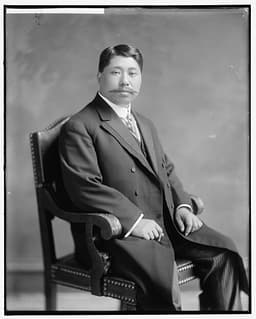
Huang Xing
General · Modern
57.5Total
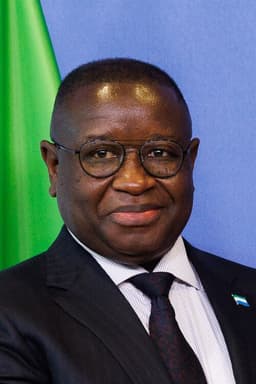
Julius Maada Bio
General · Modern
51.2Total
Basic Information
Born
1874
1964
Died
1916
—
Era
Modern
Modern
Nationality
China
Sierra Leone
Occupation
General
General
Civilization
Eastern
Other
Score Comparison
Military (10%)
46.7
50.0
Political (20%)
53.8
45.0
Influence (20%)
62.0
53.3
Legacy (20%)
56.0
45.0
Leadership (15%)
62.0
70.0
Strategy (15%)
60.0
43.7
TOTAL
57.5
51.2
Huang Xing — Complete Timeline
1905 AD
Co-founded the TongmenghuiPolitical Action◆ Major
Huang Xing co-founded the Tongmenghui (Revolutionary Alliance) in Tokyo with Sun Yat-sen. He became its military leader, organizing armed uprisings against the Qing dynasty.
TongmenghuiRevolutionMilitary
Impact: nationalconstructive
1911 AD
Led the Wuchang UprisingWar
Huang Xing led the Wuchang Uprising, which sparked the Xinhai Revolution. He commanded revolutionary forces against Qing troops, securing initial victories that led to the dynasty's collapse.
Xinhai RevolutionUprisingMilitary
Impact: nationalconstructive
1912 AD
Served as Minister of War in the RepublicPolitical Action◆ Major
Huang Xing served as Minister of War in the provisional government of the Republic of China. He worked to organize a national army and defend the republic against counter-revolutionary forces.
GovernmentMilitaryRepublic
Impact: nationalconstructive
1913 AD
Led the Second Revolution Against Yuan ShikaiWar◆ Major
Huang Xing led the Second Revolution, an armed uprising against President Yuan Shikai's authoritarian rule. The rebellion failed due to lack of coordination and military inferiority, forcing Huang into exile.
Second RevolutionYuan ShikaiExile
Impact: nationaltragic
1916 AD
Died in Exile in ShanghaiPolitical Action
Huang Xing died in Shanghai after returning from exile in Japan and the United States. His death marked the loss of a key military leader of the Chinese revolution, though his legacy endured.
DeathExileRevolution
Impact: nationaltragic
Julius Maada Bio — Complete Timeline
1992 AD
1992 Sierra Leonean coup d'étatPolitical Action◆ Major
Julius Maada Bio was a member of the National Provisional Ruling Council (NPRC) that overthrew President Joseph Momoh in a military coup. Bio served as a key figure in the junta, which promised to end the civil war but faced criticism for human rights abuses.
CoupSierra LeoneCivil War
Impact: nationaldestructive
1996 AD
Brief tenure as head of statePolitical Action◆ Major
Bio led a palace coup within the NPRC in January 1996, becoming head of state. He oversaw the transition to civilian rule, handing over power to Ahmad Tejan Kabbah after elections in March 1996, a move that earned him praise for restoring democracy.
TransitionDemocracyCoup
Impact: nationalconstructive
2018 AD
Election as President of Sierra LeonePolitical Action◆ Major
Bio won the 2018 Sierra Leonean presidential election as the candidate of the Sierra Leone People's Party, defeating Samura Kamara in a runoff. His victory marked a return to power for the SLPP after a decade in opposition.
ElectionSierra LeonePresidency
Impact: nationalconstructive
2023 AD
Re-election amid economic challengesPolitical Action◆ Major
Bio was re-elected in 2023 with 56.6% of the vote, but the election was disputed by the opposition. His second term has been marked by economic difficulties, including high inflation and debt, as well as allegations of authoritarianism.
ElectionSierra LeoneEconomy
Impact: national
Expert Analysis
Huang Xing vs Julius Maada Bio
### The General Who Became a Democrat, and the Revolutionary Who Never Ruled
In the humid heat of Freetown, January 1996, a young army officer in his early thirties sat in the presidential office he had just seized from his own comrades. Across the world, in a Shanghai hospital twenty years earlier, a revolutionary leader had drawn his last breath, his dream of a stable republic shattered by warlords and betrayal. Julius Maada Bio and Huang Xing both wore the uniform of a general, both fought for their nations’ futures, yet their paths diverged like the rivers of West Africa and the Yangtze. One would eventually trade his fatigues for a presidential sash, winning elections decades after his coup; the other would die in exile, a founder who never held supreme power. What made one a democrat and the other a martyr? The answer lies not in their ambitions, but in the eras that shaped them.
### Origins
Julius Maada Bio was born in 1964, a child of a Sierra Leone that was still optimistic in its first years of independence. His world was one of military academies and Cold War realpolitik, where a young man with ambition could climb through the ranks of a fractured state. Huang Xing, born in 1874, came of age in a China crumbling under the weight of the Qing Dynasty, where the only path to change was to tear down an ancient order. Bio’s Sierra Leone was a small, resource-rich nation on the periphery of global power; Huang’s China was a civilization in agony, humiliated by foreign powers and internal decay. Bio learned the mechanics of power from the inside, as a soldier in a coup-prone state. Huang learned from the outside, as an exile in Japan, studying military science and plotting revolution. One was shaped by a world where coups were routine; the other by a world where dynasties fell only through blood.
### Rise to Power
Bio’s rise was swift and violent. In 1992, at just twenty-eight, he was a key member of the National Provisional Ruling Council that overthrew President Joseph Momoh. Sierra Leone was a nation bleeding from civil war, and the young officers promised order. But power within the junta was unstable. In January 1996, Bio staged a palace coup, becoming head of state himself. His tenure was brief—only a few months—but decisive. He chose to oversee a transition to civilian rule, handing over power to an elected president. This was not idealism; it was pragmatism. The war was unwinnable by the military alone, and international pressure was mounting.
Huang Xing’s path was different. He co-founded the Tongmenghui in 1905 with Sun Yat-sen, becoming the military architect of the revolution. While Sun was the philosopher, Huang was the man of action, organizing uprisings that failed again and again. Then came the Wuchang Uprising in 1911, a spark that ignited the Xinhai Revolution. Huang rushed to the front, commanding revolutionary forces against the Qing. The dynasty fell, and Huang became Minister of War in the new Republic of China. But his power was never absolute. He was a general without a standing army, a revolutionary without a state.
### Leadership & Governance
Bio’s leadership evolved dramatically. After his brief coup, he left the military, studied abroad, and returned as a civilian politician. His victory in the 2018 election was a testament to patience and reinvention. As president, he governed not as a general but as a party leader, navigating Sierra Leone’s fragile democracy. His re-election in 2023, with 56.6% of the vote, came amid economic hardship and disputed results. He was no reformer on the scale of a Mandela, but he had accomplished something rare: a coup leader who became a twice-elected democrat.
Huang Xing never had that chance. As Minister of War, he tried to build a national army, but the Republic was already fragmenting. When President Yuan Shikai turned authoritarian in 1913, Huang led the Second Revolution, an armed rebellion that failed within months. He fled to exile in Japan and the United States, a general without a country. His political wisdom was real—he understood that China needed unity—but his military strategy was flawed. He could spark a revolution but could not consolidate a state.
### Triumph & Tragedy
Bio’s greatest triumph was his own transformation. From a coup leader in 1992 to a democratically elected president in 2018, he defied the pattern of African strongmen. His tragedy is that he inherited a broken economy and a war-scarred society, and his second term has been marred by allegations of electoral manipulation. The promise of 1996—that a soldier could give way to a civilian—has been complicated by the realities of power.
Huang Xing’s triumph was the Wuchang Uprising, a moment that changed Chinese history. His tragedy was that he lived to see the Republic he helped create descend into warlordism. He died in 1916, at just forty-two, in Shanghai, after returning from exile. His last years were spent watching his comrade Sun Yat-sen struggle against the same forces Huang had fought. He was a founder who never ruled, a revolutionary who never saw the revolution succeed.
### Character & Destiny
Bio’s character was that of a survivor. He adapted—from soldier to junta member to democrat. His decisions were driven by a pragmatic instinct for power, not ideology. He knew when to seize power and, more importantly, when to let it go. Huang Xing was a man of principle, not pragmatism. He believed in the republic with a fervor that made him willing to fight and lose. Where Bio calculated, Huang committed. One lived to rule; the other died for a dream.
### Legacy
Bio’s legacy is still being written. He is remembered as a coup leader who became a democrat, a rare transition in West Africa. But his place in history is uncertain—a figure of transformation or of unfulfilled promise. Huang Xing is remembered as a co-founder of the Chinese Republic, second only to Sun Yat-sen. His name is etched in the founding myths of modern China, but his military failures are often glossed over. He is a hero of the revolution, not a ruler.
### Conclusion
Standing at the end of their stories, one sees two generals who chose different paths. Bio took the long road from coup to ballot box, a journey that required shedding the uniform and embracing the messy compromise of democracy. Huang Xing took the short, bright road of revolution, a path that ended in exile and early death. Both were men of their times—Bio’s era allowed for reinvention; Huang’s demanded sacrifice. The difference between them is not just in their choices, but in the worlds that made those choices possible. One general became a president; the other remained a revolutionary forever. History judges both, but it also remembers: the soldier who learns to put down his gun may yet build something more lasting than the one who only knows how to fire it.
Rankings
🥇
Huang XingLeader
Mil: 46.7Pol: 53.8Inf: 62.0
57.5
🥈
Julius Maada Bio
Mil: 50.0Pol: 45.0Inf: 53.3
51.2
+6.3 behind
How This Comparison Works
Algorithm
Each figure is scored on 6 dimensions (0—100 scale) based on structured historical data: Military (10%), Political (20%), Influence (20%), Legacy (20%), Leadership (15%), Strategy (15%). The weighted total produces the final ranking.
Data Sources
Scores are computed from structured sub-indicators in the database. Scale factors adjust for era (Ancient ×0.85, Modern ×1.0) and civilization size (Eastern ×1.05, Other ×0.80) to account for differences in population and military scale.
Maximum 3 Figures
Comparisons are limited to 2—3 figures to ensure readability and statistical meaningfulness.
Error Margins
±5 points per dimension — Sub-scores are derived from historical records with inherent uncertainty. Two figures within 5 points on a dimension should be considered roughly equivalent in that area.
Total Score Accuracy
±3 points overall — The weighted combination of 6 dimensions produces a total score with approximately ±3 points of uncertainty. Differences of less than 3 points are not statistically significant— the figures are effectively tied.
Known Limitations
- Historical records are incomplete and uneven across civilizations
- Figures from oral-tradition societies may be underrepresented
- Occupation labels can misclassify multi-role figures
- Scores measure capability and impact, not moral character
- Quantitative scoring is a comparison tool, not absolute truth
Capability Radar
Military (10%) — Battles & Warfare
Battles
35
15
Win Rate
30
20
Expansion
20
5
Political (20%) — Governance & Reform
Reform
60
50
Diplomacy
55
55
Economy
30
45
Influence (20%) — Cultural & Global Reach
Cultural
40
30
Global
40
20
Legacy (20%) — Historical Impact
Historical
55
35
Longevity
45
25
Leadership (15%) — Power & Stability
Tenure
40
55
Stability
25
40
Strategy (15%) — Tactics & Innovation
Strategy
45
20
Tactics
40
25
Reform
50
10
Similar Comparisons
Comments & Discussion
No comments yet. Be the first to share your thoughts!