Loading...
Ho Chi Minh vs Shamil Basayev
Ho Chi Minh leads by 19.8 pts · 2 figures compared
…
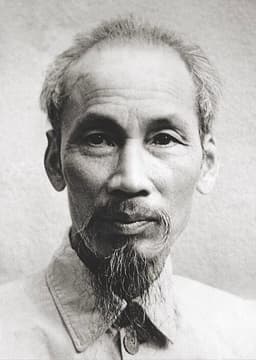
Ho Chi Minh
Revolutionary · Modern
62.9Total
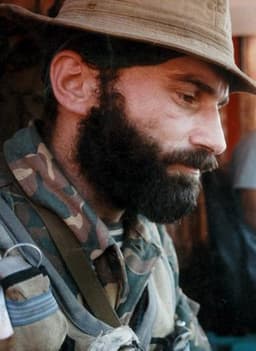
Shamil Basayev
Revolutionary · Modern
43.1Total
Basic Information
Born
1890
1965
Died
1969
—
Era
Modern
Modern
Nationality
Vietnam
Chechnya
Occupation
Revolutionary
Revolutionary
Civilization
Eastern
Western
Score Comparison
Military (10%)
55.0
40.0
Political (20%)
72.0
35.0
Influence (20%)
62.0
45.5
Legacy (20%)
58.0
35.0
Leadership (15%)
72.0
57.1
Strategy (15%)
58.0
51.7
TOTAL
62.9
43.1
Ho Chi Minh — Complete Timeline
1941 AD
Establishment of the Viet MinhPolitical Action◆ Major
Ho Chi Minh founded the Viet Minh (League for the Independence of Vietnam) in southern China. This coalition of nationalist and communist groups became the primary force for Vietnamese independence, fighting both Japanese occupation and French colonialism.
Viet MinhIndependence MovementWorld War II
Impact: nationalconstructive
1945 AD
Declaration of Independence of VietnamPolitical Action
Ho Chi Minh proclaimed the Democratic Republic of Vietnam in Hanoi's Ba Dinh Square, citing the US Declaration of Independence. This established the Viet Minh government and began the struggle for independence from French colonial rule.
IndependenceVietnamDecolonization
Impact: nationalconstructive
1954 AD
Battle of Dien Bien PhuWar
Ho Chi Minh's Viet Minh forces, under General Giap, defeated the French garrison at Dien Bien Phu. This victory ended French colonial rule in Indochina and led to the Geneva Accords dividing Vietnam at the 17th parallel.
Vietnam WarDecolonizationFrench Indochina
Impact: regional
Geneva AccordsPolitical Action◆ Major
Ho Chi Minh's delegation signed the Geneva Accords, temporarily dividing Vietnam at the 17th parallel. The agreement promised nationwide elections in 1956, which were never held, leading to the permanent division of Vietnam.
Geneva ConferenceDivision of VietnamDiplomacy
Impact: regional
1959 AD
Start of the Vietnam WarWar
Ho Chi Minh's government in North Vietnam authorized armed struggle against the US-backed South Vietnamese regime. This escalated into the Vietnam War, a prolonged conflict that resulted in millions of deaths and US withdrawal in 1973.
Vietnam WarCold WarCommunism
Impact: globaldestructive
Shamil Basayev — Complete Timeline
1995 AD
Budyonnovsk Hospital Hostage CrisisWar◆ Major
Basayev led a raid on the Russian town of Budyonnovsk, taking over 1,000 hostages in a hospital. The crisis ended with a negotiated settlement that allowed him to return to Chechnya. This attack demonstrated Chechen reach into Russia.
Hostage CrisisTerrorismChechnya
Impact: nationaldestructive
1999 AD
Invasion of DagestanWar
Basayev led Chechen and Islamist fighters into Dagestan to support local rebels. This invasion triggered the Second Chechen War as Russia responded with a full-scale military campaign. The invasion failed to gain local support.
DagestanChechnyaInvasion
Impact: regionaldestructive
2002 AD
Moscow Theater Hostage CrisisWar◆ Major
Basayev orchestrated the Moscow theater hostage crisis, where Chechen militants took 850 people hostage. Russian forces ended the siege with gas, killing 130 hostages. The attack increased international condemnation of Chechen rebels.
Hostage CrisisTerrorismMoscow
Impact: nationaldestructive
2004 AD
Beslan School SiegeWar◆ Major
Basayev planned the Beslan school siege, where militants took over 1,100 people hostage. The siege ended in a bloody assault, resulting in 334 deaths, mostly children. This attack was widely condemned globally.
Hostage CrisisTerrorismBeslan
Impact: globaltragic
2006 AD
Killed by Russian ExplosivesWar◆ Major
Basayev was killed in Ingushetia when a truck loaded with explosives detonated. Russian intelligence claimed responsibility. His death removed the most prominent Chechen rebel commander.
AssassinationChechnyaRussia
Impact: regional
Expert Analysis
Shamil Basayev vs Ho Chi Minh
# The Revolutionary's Mirror: Ho Chi Minh and Shamil Basayev
In the summer of 1969, as Ho Chi Minh lay dying in Hanoi, his country was locked in a war that would ultimately forge a unified Vietnam. Thirty-seven years later, in the summer of 2006, Shamil Basayev died in a truck explosion in Ingushetia, his corpse unrecognizable, his cause in ruins. Both men called themselves revolutionaries. Both fought against what they saw as foreign domination. Yet one is remembered as a founding father, his portrait hanging in every school and government office; the other as a terrorist, his name a curse across the world. What makes the difference between a revolutionary who builds a nation and one who only destroys?
Origins
Ho Chi Minh was born in 1890 in Nghe An province, central Vietnam, into a family of Confucian scholars who had served the imperial court. His father, Nguyen Sinh Sac, was a mandarin who refused to collaborate with the French colonial administration and was eventually dismissed. The young Ho—then named Nguyen Tat Thanh—grew up in a world of rice paddies, bamboo groves, and simmering resentment. When he left Vietnam in 1911 as a cook on a French steamer, he carried not just a sailor's wages but a deep, almost religious conviction that his country's humiliation could be reversed.
Shamil Basayev was born in 1965 in the Chechen village of Dyshne-Vedeno, in the Caucasus Mountains. His world was one of clan loyalties, blood feuds, and the memory of Stalin's 1944 deportation of the entire Chechen people to Central Asia—a trauma that had killed perhaps a third of them. Unlike Ho, who was shaped by Confucian bureaucracy and French colonialism, Basayev was shaped by the Soviet collapse, the vacuum of power, and the raw, unmediated violence that followed.
The difference in their eras is crucial. Ho came of age when nationalism was the dominant revolutionary ideology, when Lenin and Wilson both spoke of self-determination, when a colonized intellectual could dream of joining the global conversation. Basayev came of age when the Soviet Union was dying, when ideology had been replaced by ethnicity and religion, when the only conversation left was the language of guns.
Rise to Power
Ho Chi Minh's path to power was long, patient, and global. He spent decades abroad—in Paris, Moscow, Guangzhou, Hong Kong—working as a photographer, a cook, a communist organizer. He founded the Vietnamese Communist Party in 1930, but it was in 1941, at the age of fifty-one, that he finally established the Viet Minh, a coalition of nationalist and communist forces. His rise was not through military charisma but through political endurance. He was the man who outlasted empires.
Basayev's rise was meteoric and violent. In 1991, at twenty-six, he was part of the Chechen independence movement. By 1995, he had led the Budyonnovsk hospital hostage crisis, taking over a thousand hostages and forcing the Russian government to negotiate. The crisis ended with a ceasefire and Basayev's safe passage—a tactical victory that made him a hero in Chechnya and a monster in Moscow. He was thirty years old.
The key turning point for Ho was the 1954 Battle of Dien Bien Phu, where his forces, under General Vo Nguyen Giap, defeated the French garrison after a fifty-six-day siege. The victory was not just military; it was psychological. A small Asian nation had humiliated a European empire. For Basayev, the turning point was 1999, when he led fighters into Dagestan, triggering the Second Chechen War. It was a miscalculation that would destroy Chechnya and turn him from a nationalist guerrilla into an Islamist terrorist.
Leadership & Governance
Ho Chi Minh was a political leader who happened to fight wars. He governed through persuasion, patience, and the careful construction of a party-state. His leadership score of 84.8 reflects a man who could hold together a coalition of communists, nationalists, and peasants—a man who quoted the American Declaration of Independence while fighting the French and the Americans. He was ruthless when necessary, but his ruthlessness was strategic, not personal.
Basayev was a military commander who never governed. His leadership score of 34.5 reflects a man who could lead a raid but not a country. He was the field commander of a war without a state, the planner of operations that achieved nothing except carnage. The Moscow theater hostage crisis in 2002 and the Beslan school siege in 2004 were tactical disasters that killed hundreds of civilians and destroyed any political legitimacy Basayev might have had.
The difference is not just in their scores but in their strategy scores: Ho at 60.0, Basayev at 45.6. Ho understood that war was an extension of politics. Basayev seemed to believe that war was an end in itself.
Triumph & Tragedy
Ho Chi Minh's greatest moment was the 1945 Declaration of Independence of Vietnam, delivered in Hanoi's Ba Dinh Square, where he read from the American Declaration and the French Declaration of the Rights of Man. His tragedy was that he did not live to see the reunification of Vietnam in 1975—he died in 1969, six years before the fall of Saigon.
Basayev's greatest moment was perhaps Budyonnovsk in 1995, when he forced the Russian government to negotiate. His tragedy was that he never had another such moment. Every subsequent operation—Dagestan, Moscow, Beslan—was a step deeper into a moral and strategic abyss. He died as he lived: in an explosion, his body so mangled that identification required DNA testing.
Character & Destiny
Ho Chi Minh was ascetic, celibate, and utterly dedicated to his cause. He wrote poetry in classical Chinese, spoke multiple languages, and could charm Western journalists while planning guerrilla campaigns. He was a man of immense self-control, and that control shaped his destiny. He died in bed, surrounded by his comrades, his legacy secure.
Basayev was a man of rage and faith, a product of the Caucasus where honor is avenged in blood. He lost his family in the wars—his wife and children killed by Russian forces—and that loss drove him further into extremism. He was a man of immense self-destruction, and that destruction shaped his destiny. He died in a truck, alone, his body scattered across the road.
Legacy
Ho Chi Minh's legacy score is 72.2. His name is on cities, streets, and currency. His mausoleum in Hanoi is a pilgrimage site. He is remembered as the father of modern Vietnam, a man who liberated his country from colonialism.
Basayev's legacy score is 47.7. He is remembered as a terrorist, the planner of Beslan, where 334 people died, including 186 children. No city is named for him. No school teaches his life. He is a ghost, not a father.
Conclusion
The difference between Ho Chi Minh and Shamil Basayev is not in their violence—both men ordered deaths. It is not in their enemies—both fought Russia and its allies. The difference lies in their vision. Ho Chi Minh wanted to build a nation. Basayev wanted to destroy an empire. One succeeded in creation; the other succeeded only in destruction. In the end, history forgives the builder and condemns the arsonist—not because one was moral and the other was not, but because one left something standing, and the other left only ashes.
Rankings
🥇
Ho Chi MinhLeader
Mil: 55.0Pol: 72.0Inf: 62.0
62.9
🥈
Shamil Basayev
Mil: 40.0Pol: 35.0Inf: 45.5
43.1
+19.8 behind
How This Comparison Works
Algorithm
Each figure is scored on 6 dimensions (0—100 scale) based on structured historical data: Military (10%), Political (20%), Influence (20%), Legacy (20%), Leadership (15%), Strategy (15%). The weighted total produces the final ranking.
Data Sources
Scores are computed from structured sub-indicators in the database. Scale factors adjust for era (Ancient ×0.85, Modern ×1.0) and civilization size (Eastern ×1.05, Other ×0.80) to account for differences in population and military scale.
Maximum 3 Figures
Comparisons are limited to 2—3 figures to ensure readability and statistical meaningfulness.
Error Margins
±5 points per dimension — Sub-scores are derived from historical records with inherent uncertainty. Two figures within 5 points on a dimension should be considered roughly equivalent in that area.
Total Score Accuracy
±3 points overall — The weighted combination of 6 dimensions produces a total score with approximately ±3 points of uncertainty. Differences of less than 3 points are not statistically significant— the figures are effectively tied.
Known Limitations
- Historical records are incomplete and uneven across civilizations
- Figures from oral-tradition societies may be underrepresented
- Occupation labels can misclassify multi-role figures
- Scores measure capability and impact, not moral character
- Quantitative scoring is a comparison tool, not absolute truth
Capability Radar
Military (10%) — Battles & Warfare
Battles
65
45
Win Rate
60
40
Expansion
55
15
Political (20%) — Governance & Reform
Reform
85
5
Diplomacy
90
10
Economy
40
5
Influence (20%) — Cultural & Global Reach
Cultural
75
20
Global
75
20
Legacy (20%) — Historical Impact
Historical
85
25
Longevity
70
15
Leadership (15%) — Power & Stability
Tenure
70
10
Stability
50
5
Strategy (15%) — Tactics & Innovation
Strategy
80
35
Tactics
70
55
Reform
75
20
Similar Comparisons
Comments & Discussion
丛林雄鹰6/16/2026
拿切·格瓦拉和玻利维亚游击队员比还差不多。胡志明是三十年战略马拉松,从巴黎和会陈情到奠边府伏击,每一步都在下大棋。巴萨耶夫却是十年短跑冲刺,绑架医院、炸毁楼房,赢得恐惧却输掉未来。一将功成万骨枯,两堆白骨,一堆埋进了国家纪念馆,另一堆丢在无名野坟。
拾遗书生6/16/2026
别忘了时间维度。胡志明1920年在法国加入共产国际时,巴萨耶夫的爷爷还在被斯大林流放。整整四十五年的政治积累,让胡志明把抗日、抗法、抗美三场战争打成了连续的建国叙事。巴萨耶夫只有1991到2006这十五年,而且一半时间在烧钱内战。你把两个不同量级的历史进程硬塞进同一框架,这是跨时空的政治盲视。
冷眼客6/16/2026
最可笑的是把"反对外国统治"作为共同点。胡志明对抗的是殖民帝国,世界公认的非法统治;巴萨耶夫对抗的俄罗斯联邦,是联合国承认的主权国家。一个是反殖民主义,一个是分离主义。这两者不共享道德屋顶。你拿诺贝尔和平奖和博科圣地问怎么区分?简单:前者有国际法框架,后者只有AK47和自杀炸弹。
Historian5746/16/2026
The analysis cherry-picks facts to create false symmetry. Ho Chi Minh had Soviet and Chinese backing, industrial-grade logistics, and a global anti-colonial zeitgeist on his side. Basayev had decrepit Kalashnikovs and mountain hideouts. Compare their resource pools, not just their rhetoric. Without external superpower support, Basayev's "revolution" was always a guerrilla sideshow. The real mirror here is between French imperial failures and Russian security incompetence, not between two revolut
Historian5686/16/2026
Both men fought occupying armies, but the difference lies in their strategic choices. Ho Chi Minh built a broad coalition with disciplined political structures and international diplomacy at the 1954 Geneva Conference. Basayev’s reliance on hostage-taking and civilian attacks, like the 2004 Beslan school siege, alienated potential allies and ensured his movement's isolation. One built a state; the other built a graveyard for his cause. That's not moral equivalence; it's historical outcome.