Loading...
Ho Chi Minh vs Mangal Pandey
Ho Chi Minh leads by 14.3 pts · 2 figures compared
…
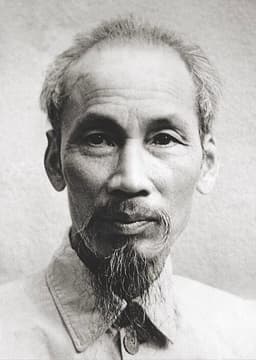
Ho Chi Minh
Revolutionary · Modern
62.9Total
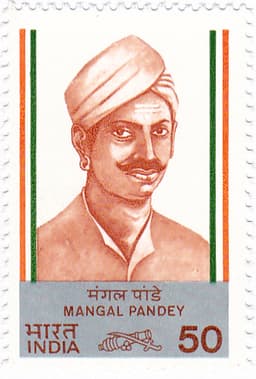
Mangal Pandey
Revolutionary · Modern
48.6Total
Basic Information
Born
1890
1827
Died
1969
1857
Era
Modern
Modern
Nationality
Vietnam
India
Occupation
Revolutionary
Revolutionary
Civilization
Eastern
Indian
Score Comparison
Military (10%)
55.0
39.9
Political (20%)
72.0
35.0
Influence (20%)
62.0
51.8
Legacy (20%)
58.0
46.7
Leadership (15%)
72.0
62.6
Strategy (15%)
58.0
53.8
TOTAL
62.9
48.6
Ho Chi Minh — Complete Timeline
1941 AD
Establishment of the Viet MinhPolitical Action◆ Major
Ho Chi Minh founded the Viet Minh (League for the Independence of Vietnam) in southern China. This coalition of nationalist and communist groups became the primary force for Vietnamese independence, fighting both Japanese occupation and French colonialism.
Viet MinhIndependence MovementWorld War II
Impact: nationalconstructive
1945 AD
Declaration of Independence of VietnamPolitical Action
Ho Chi Minh proclaimed the Democratic Republic of Vietnam in Hanoi's Ba Dinh Square, citing the US Declaration of Independence. This established the Viet Minh government and began the struggle for independence from French colonial rule.
IndependenceVietnamDecolonization
Impact: nationalconstructive
1954 AD
Battle of Dien Bien PhuWar
Ho Chi Minh's Viet Minh forces, under General Giap, defeated the French garrison at Dien Bien Phu. This victory ended French colonial rule in Indochina and led to the Geneva Accords dividing Vietnam at the 17th parallel.
Vietnam WarDecolonizationFrench Indochina
Impact: regional
Geneva AccordsPolitical Action◆ Major
Ho Chi Minh's delegation signed the Geneva Accords, temporarily dividing Vietnam at the 17th parallel. The agreement promised nationwide elections in 1956, which were never held, leading to the permanent division of Vietnam.
Geneva ConferenceDivision of VietnamDiplomacy
Impact: regional
1959 AD
Start of the Vietnam WarWar
Ho Chi Minh's government in North Vietnam authorized armed struggle against the US-backed South Vietnamese regime. This escalated into the Vietnam War, a prolonged conflict that resulted in millions of deaths and US withdrawal in 1973.
Vietnam WarCold WarCommunism
Impact: globaldestructive
Mangal Pandey — Complete Timeline
1857 AD
Attack on British officers at BarrackporePolitical Action◆ Major
Mangal Pandey attacked two British officers at the Barrackpore military cantonment. He was arrested after the attack, and his actions sparked widespread unrest among Indian sepoys, leading to the 1857 rebellion.
Indian Rebellion of 1857Trigger Event
Impact: regional
Execution by hangingPolitical Action◆ Major
Mangal Pandey was tried by a British military court and executed by hanging at Barrackpore. His execution made him a martyr and a symbol of resistance against British rule in India.
Indian Rebellion of 1857ExecutionMartyr
Impact: regionaltragic
Expert Analysis
Ho Chi Minh vs Mangal Pandey
# The Revolutionary and the Sepoy
On a humid morning in March 1857, a lone Indian soldier at Barrackpore, near Calcutta, loaded his musket and turned it on his British officers. Mangal Pandey’s attack lasted mere minutes; he wounded one officer, missed another, and was soon overpowered, tried, and hanged. Eighty-eight years later and a thousand miles east, a frail, bearded man in a simple khaki suit stood before a crowd in Hanoi and read a declaration of independence modeled on Thomas Jefferson’s. Ho Chi Minh’s revolution would last three decades, consume millions of lives, and reshape Southeast Asia. Two men, two acts of defiance against empire. One became a spark that flared and died; the other, a fire that consumed the old order. Why did such similar beginnings yield such different outcomes?
Origins
Mangal Pandey was born in 1827 into a high-caste Brahmin family in the village of Nagwa, in what is now Uttar Pradesh. He was a sepoy, a native soldier in the British East India Company’s army, a force that had conquered India for the Company. His world was one of rigid hierarchies—caste, race, and military discipline—and simmering grievances. The introduction of new rifle cartridges greased with cow and pig fat, offensive to both Hindus and Muslims, was the final insult. Pandey was not a theorist or a strategist. He was a soldier who snapped.
Ho Chi Minh was born Nguyen Sinh Cung in 1890 in Nghe An province, central Vietnam, then part of French Indochina. His father was a Confucian scholar and minor official who resisted French rule, and young Ho was educated in both classical Chinese and French schools. He left Vietnam at twenty-one, working as a cook, a photographer’s assistant, and a laborer across three continents. In Paris, he read Marx and Lenin; in Moscow, he studied revolutionary organization; in Guangzhou, he trained cadres. By the time he returned to Vietnam in 1941, he had spent three decades learning the mechanics of revolution. Pandey had a grievance; Ho had an education.
Rise to Power
Pandey’s rise was instantaneous and involuntary. On March 29, 1857, he attacked his officers, was captured, and was executed on April 8. That single act triggered a chain reaction: within weeks, sepoys across northern India mutinied, and the Indian Rebellion of 1857 erupted. But Pandey himself never led an army, never made a speech, never saw a strategy through. He was a symbol created by his death.
Ho Chi Minh’s rise was slow, deliberate, and organizational. In 1941, he crossed from China into Vietnam and established the Viet Minh, a coalition of nationalist and communist groups. He was not a battlefield commander—that role fell to Vo Nguyen Giap—but Ho was the political architect. In 1945, with Japan’s defeat imminent, he seized the moment. On September 2, he declared the Democratic Republic of Vietnam. The French returned, and war followed. Ho’s power grew not through a single dramatic act but through years of patient coalition-building, propaganda, and guerrilla warfare. By 1954, when Giap’s forces crushed the French at Dien Bien Phu, Ho had become the face of Vietnamese independence.
Leadership & Governance
Pandey never governed. He was a sepoy who rebelled and died. His leadership was that of a martyr: a man whose sacrifice inspired others but who left no institutions, no policies, no state.
Ho Chi Minh governed for nearly a quarter-century. His leadership style was paradoxical: a communist who quoted the American Declaration of Independence, a revolutionary who wrote poetry, a dictator who cultivated an image of paternal simplicity. He lived in a modest stilt house in Hanoi, wore sandals made of tires, and was called “Uncle Ho.” Politically, he was ruthless and pragmatic. He purged rivals, enforced party discipline, and accepted the division of Vietnam at the Geneva Accords in 1954 as a tactical necessity. His military strategy—protracted guerrilla war, mass mobilization, and reliance on the Ho Chi Minh Trail—was masterful in execution, though it required staggering human costs. He authorized the Vietnam War’s escalation in 1959, knowing it would bring American bombers and millions of casualties.
Triumph & Tragedy
Pandey’s triumph was his martyrdom. His execution made him the first hero of the Indian independence movement, a name whispered in barracks and villages for generations. His tragedy was that he never saw the freedom he helped ignite. The rebellion he sparked was crushed within a year, and India remained under British rule for another ninety years.
Ho Chi Minh’s triumph was Dien Bien Phu. In 1954, a ragtag army of peasants defeated a modern European power in set-piece battle—a victory that echoed across the colonized world. His tragedy was that he never saw the war’s end. Ho died in 1969, six years before North Vietnamese tanks rolled into Saigon. He also never achieved the unified, independent Vietnam he had envisioned; the postwar state was authoritarian, impoverished, and scarred by war.
Character & Destiny
Pandey was a man of passion, not calculation. He acted on outrage, not ideology. His character was that of a soldier who could no longer obey. That made him a perfect martyr but an impossible leader.
Ho Chi Minh was a man of iron patience and cold calculation. He wrote in 1960: “Nothing is more precious than independence and freedom.” But he also understood that independence required decades of sacrifice. His character was shaped by exile, study, and the hard lessons of failure. He had seen revolutions fail in Europe and Asia; he was determined that his would not. That determination made him a master of the long game, but it also made him willing to accept immense suffering as the price of victory.
Legacy
Mangal Pandey is remembered as a symbol: the first spark of 1857, the man who dared. His face appears on Indian stamps, his name adorns streets and statues. But his legacy is more emotional than political. He is a martyr, not a founder.
Ho Chi Minh’s legacy is a nation. Hanoi is still called Ho Chi Minh City by many, his embalmed body lies in a mausoleum, and his image is everywhere in Vietnam. Yet his legacy is contested: revered by many as the father of modern Vietnam, criticized by others for the authoritarianism and war that followed. His political score of 67.8 and leadership score of 84.8 reflect a man who was effective but not flawless, beloved but not gentle.
Conclusion
The sepoy and the revolutionary: one died in minutes, the other lived for decades. One became a symbol, the other a statesman. Their differences were not of courage but of context. Pandey had no time to learn, no organization to build, no strategy to refine. Ho Chi Minh had thirty years of exile, three continents of experience, and a movement that he forged with his own hands. The tragedy of Mangal Pandey is that he had everything a revolution needs except time. The tragedy of Ho Chi Minh is that he had time, and used it all. Both changed history—one by dying, the other by living long enough to see his dream take shape, even if he never saw it fulfilled. In the end, what separates the martyr from the leader is not the quality of their conviction, but the length of their patience.
Rankings
🥇
Ho Chi MinhLeader
Mil: 55.0Pol: 72.0Inf: 62.0
62.9
🥈
Mangal Pandey
Mil: 39.9Pol: 35.0Inf: 51.8
48.6
+14.3 behind
How This Comparison Works
Algorithm
Each figure is scored on 6 dimensions (0—100 scale) based on structured historical data: Military (10%), Political (20%), Influence (20%), Legacy (20%), Leadership (15%), Strategy (15%). The weighted total produces the final ranking.
Data Sources
Scores are computed from structured sub-indicators in the database. Scale factors adjust for era (Ancient ×0.85, Modern ×1.0) and civilization size (Eastern ×1.05, Other ×0.80) to account for differences in population and military scale.
Maximum 3 Figures
Comparisons are limited to 2—3 figures to ensure readability and statistical meaningfulness.
Error Margins
±5 points per dimension — Sub-scores are derived from historical records with inherent uncertainty. Two figures within 5 points on a dimension should be considered roughly equivalent in that area.
Total Score Accuracy
±3 points overall — The weighted combination of 6 dimensions produces a total score with approximately ±3 points of uncertainty. Differences of less than 3 points are not statistically significant— the figures are effectively tied.
Known Limitations
- Historical records are incomplete and uneven across civilizations
- Figures from oral-tradition societies may be underrepresented
- Occupation labels can misclassify multi-role figures
- Scores measure capability and impact, not moral character
- Quantitative scoring is a comparison tool, not absolute truth
Capability Radar
Military (10%) — Battles & Warfare
Battles
65
5
Win Rate
60
5
Expansion
55
5
Political (20%) — Governance & Reform
Reform
85
5
Diplomacy
90
5
Economy
40
5
Influence (20%) — Cultural & Global Reach
Cultural
75
40
Global
75
40
Legacy (20%) — Historical Impact
Historical
85
60
Longevity
70
50
Leadership (15%) — Power & Stability
Tenure
70
5
Stability
50
5
Strategy (15%) — Tactics & Innovation
Strategy
80
5
Tactics
70
10
Reform
75
5
Similar Comparisons
Comments & Discussion
HoChiMinhoTheorist6/16/2026
Mangal Pandey was a martyr, not a revolutionary. A single act of rage doesn't make a movement—it makes a symbol. Ho Chi Minh studied Marxism in Paris, organized in Moscow, and fought guerrillas in the jungle. Pandey fired one musket, missed his target, and got hanged. Ho read Lenin, founded the Viet Minh, and won against France and the US. One had ideology and global networks; the other had anger and a greased cartridge. That's the difference between a spark and a wildfire.
MangalPandeyDefender6/16/2026
潘迪是英雄,胡志明是政治机器。潘迪在1857年单枪匹马反抗殖民压迫,他的牺牲点燃了印度民族起义的火焰,虽然失败了,但那是人民自发的愤怒。胡志明呢?他背后有苏联和中共撑腰,打了几十年的仗,死了几百万人,最后换来一个集权国家。真正的革命者的心在胸膛里燃烧,而不是在国外接受训练。
FormatCritic6/16/2026
Comparing a sepoy who served the East India Company to a Communist revolutionary is like comparing a firecracker to an atomic bomb. Pandey was a soldier in a colonial army who had a religious crisis over animal fat—hardly a systematic anti-imperialist. Ho Chi Minh, by contrast, traveled the world, wrote political essays, and coordinated with global communist parties. The analysis here over-romanticizes Pandey's "similar beginnings." They were not similar. One was a mutineer, the other a politica
ClassicsScholar6/16/2026
把两个不同时代、不同背景的战士放在一起比较,就像把屈原和毛泽东并列。潘迪是印度教传统的产物,他反抗的是亵渎圣物——牛油和猪油子弹,这是信仰的捍卫。胡志明是现代革命的产物,他借助西方思想来推翻西方统治。两人都反对帝国,但动机完全不同:一个出于宗教虔诚,一个出于民族主义与马克思主义的融合。历史学家不该忽视文化的深层逻辑。
HistoryBuffRealist6/16/2026
Here's the uncomfortable truth: Mangal Pandey failed because 1857 India was a feudal mess with no unified leadership. Ho Chi Minh succeeded because 1945 Vietnam had a disciplined party, a clear ideology, and Soviet weapons. Pandey's rebellion was crushed in months; Ho's took decades but won. If you're comparing them, remember that geography, timing, and resources matter more than bravery. Pandey was brave, but Ho was smart. Bravery starts revolutions; smarts finish them.