Loading...
Ho Chi Minh vs Li Zicheng
Ho Chi Minh leads by 19.4 pts · 2 figures compared
…
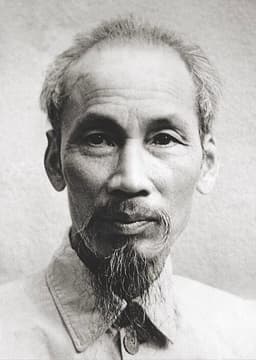
Ho Chi Minh
Revolutionary · Modern
62.9Total
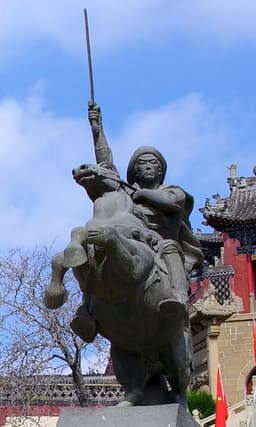
Li Zicheng
Revolutionary · Modern
43.5Total
Basic Information
Born
1890
1606
Died
1969
1645
Era
Modern
Modern
Nationality
Vietnam
China
Occupation
Revolutionary
Revolutionary
Civilization
Eastern
Eastern
Score Comparison
Military (10%)
55.0
50.0
Political (20%)
72.0
27.9
Influence (20%)
62.0
52.5
Legacy (20%)
58.0
44.2
Leadership (15%)
72.0
39.0
Strategy (15%)
58.0
43.3
TOTAL
62.9
43.5
Ho Chi Minh — Complete Timeline
1941 AD
Establishment of the Viet MinhPolitical Action◆ Major
Ho Chi Minh founded the Viet Minh (League for the Independence of Vietnam) in southern China. This coalition of nationalist and communist groups became the primary force for Vietnamese independence, fighting both Japanese occupation and French colonialism.
Viet MinhIndependence MovementWorld War II
Impact: nationalconstructive
1945 AD
Declaration of Independence of VietnamPolitical Action
Ho Chi Minh proclaimed the Democratic Republic of Vietnam in Hanoi's Ba Dinh Square, citing the US Declaration of Independence. This established the Viet Minh government and began the struggle for independence from French colonial rule.
IndependenceVietnamDecolonization
Impact: nationalconstructive
1954 AD
Battle of Dien Bien PhuWar
Ho Chi Minh's Viet Minh forces, under General Giap, defeated the French garrison at Dien Bien Phu. This victory ended French colonial rule in Indochina and led to the Geneva Accords dividing Vietnam at the 17th parallel.
Vietnam WarDecolonizationFrench Indochina
Impact: regional
Geneva AccordsPolitical Action◆ Major
Ho Chi Minh's delegation signed the Geneva Accords, temporarily dividing Vietnam at the 17th parallel. The agreement promised nationwide elections in 1956, which were never held, leading to the permanent division of Vietnam.
Geneva ConferenceDivision of VietnamDiplomacy
Impact: regional
1959 AD
Start of the Vietnam WarWar
Ho Chi Minh's government in North Vietnam authorized armed struggle against the US-backed South Vietnamese regime. This escalated into the Vietnam War, a prolonged conflict that resulted in millions of deaths and US withdrawal in 1973.
Vietnam WarCold WarCommunism
Impact: globaldestructive
Li Zicheng — Complete Timeline
1644 AD
Captured Beijing and Ended the Ming DynastyWar
Li Zicheng led his rebel army to capture Beijing. The Chongzhen Emperor committed suicide, ending the Ming dynasty. Li Zicheng proclaimed the Shun dynasty and briefly ruled from the Forbidden City before being defeated by Qing forces.
Ming-Qing TransitionRebellionBeijing
Impact: globaldestructive
Defeated at the Battle of Shanhai PassWar◆ Major
Li Zicheng's army was defeated by the combined forces of Wu Sangui and the Manchus at the Battle of Shanhai Pass. The defeat forced him to abandon Beijing and retreat westward, effectively ending his control over northern China.
Ming-Qing TransitionBattleDefeat
Impact: globaltragic
Proclaimed the Shun DynastyPolitical Action◆ Major
After capturing Beijing, Li Zicheng formally proclaimed the establishment of the Shun dynasty in Xi'an. He adopted the title of emperor and began implementing his own administrative policies, though his rule was short-lived.
Shun DynastyProclamationRebellion
Impact: nationalconstructive
1645 AD
Killed in Jiugong MountainWar◆ Major
Li Zicheng was killed by a local militia while fleeing through Jiugong Mountain in Hubei province. His death marked the end of the Shun dynasty and the collapse of his rebellion, though some accounts claim he survived and became a monk.
Shun DynastyDeathRebellion
Impact: nationaltragic
Expert Analysis
Ho Chi Minh vs Li Zicheng
# The Revolutionary's Two Paths: Ho Chi Minh and Li Zicheng
In the spring of 1644, a peasant rebel named Li Zicheng rode into Beijing at the head of a triumphant army, watching the last Ming emperor hang himself from a locust tree behind the Forbidden City. Three hundred years later and a thousand miles to the south, another revolutionary named Ho Chi Minh stood before a crowd in Hanoi's Ba Dinh Square, reading a declaration of independence that echoed Thomas Jefferson. Both men had risen from obscurity to topple established powers. One ruled for less than six weeks. The other became the father of a nation that endures today. What makes one rebel king and the other a founding father?
Origins
Li Zicheng was born in 1606 into a world collapsing under its own weight. The Ming dynasty, after nearly three centuries, had become a machine of corruption and famine. His family were impoverished farmers in Shaanxi province, a region devastated by drought and locust plagues. When his father died and the government demanded taxes on land that produced nothing, young Li took work as a postal courier—a minor government post that disappeared when the Ming cut budgets to fund border wars. He joined a local militia, then mutinied when his superiors failed to pay wages. The man who would end a dynasty began as a starving peasant with nothing to lose.
Ho Chi Minh was born Nguyen Sinh Cung in 1890 in Nghe An province, central Vietnam, then part of French Indochina. His father, a Confucian scholar, refused to work for the colonial administration, and young Ho grew up in a household of whispered resistance. Unlike Li, he was educated—first at a Franco-Vietnamese school, then at the Quoc Hoc lycée in Hue, where he was expelled for protesting colonial abuses. He left Vietnam in 1911 as a kitchen hand on a French steamer, spending the next thirty years in London, Paris, Moscow, and Guangzhou. By the time he founded the Viet Minh in 1941, he had worked as a pastry chef under Auguste Escoffier, attended the founding congress of the French Communist Party, and studied Marxist-Leninist theory under Soviet mentors. Li Zicheng had a grievance. Ho Chi Minh had a doctrine.
Rise to Power
Li Zicheng's ascent was a story of desperation turned into momentum. In the late 1630s, as Ming authority fragmented, he gathered followers through charisma and a simple slogan: "Eat well, distribute equally." His army swelled with peasants, bandits, and disaffected soldiers. By 1643, he controlled most of central China. His victory was less a masterstroke of strategy than a collapse of the opposing system—the Ming court was paralyzed by infighting, its generals more concerned with court politics than defending the realm. When Li marched on Beijing in April 1644, the capital fell almost without a fight.
Ho Chi Minh's rise was slower, more deliberate, and international. He spent decades building networks. In 1941, he slipped across the border into southern China to establish the Viet Minh, a coalition that combined Communist cadres with nationalist groups. The turning point came in 1954, when his commander Vo Nguyen Giap crushed the French garrison at Dien Bien Phu—a battle Ho never fought in person but planned from a jungle command post. The Geneva Accords that followed divided Vietnam, but they also gave Ho a legal foothold in the north. He had not simply seized power; he had negotiated it, waited for it, and built a state around it.
Leadership & Governance
Li Zicheng's brief reign in Beijing reveals a man who knew how to conquer but not how to rule. He proclaimed the Shun dynasty with himself as emperor, but his administration was a shambles. He ordered his soldiers not to loot, yet failed to pay them, so they looted anyway. He attempted to tax the wealthy, but his revenue collectors were former bandits who extorted indiscriminately. His greatest error was strategic: he refused to negotiate with the Ming general Wu Sangui, who guarded the Great Wall's eastern pass. Instead of offering amnesty or alliance, Li threatened Wu's family and confiscated their property. Wu defected to the Manchu invaders, and at the Battle of Shanhai Pass in May 1644, Li's peasant army was crushed by the combined Qing forces. He fled Beijing, was hunted down, and killed by a local militia in Jiugong Mountain in 1645. His dynasty lasted forty-two days.
Ho Chi Minh governed with a different calculus. He was not a military commander—his leadership score of 84.8 reflects his political acumen, not battlefield prowess. He delegated war to Giap and focused on building legitimacy. He cultivated an image of ascetic simplicity: the wispy beard, the rubber sandals, the humble bamboo hut. He was ruthless when necessary—land reform in the 1950s killed tens of thousands—but he understood that revolution required a narrative. His 1945 declaration quoted the American Declaration of Independence, deliberately appealing to Western ideals even as he fought Western powers. He was patient. When the Vietnam War began in 1959, he was already 69 years old, a frail figure who embodied national resistance rather than personal ambition.
Triumph & Tragedy
Li Zicheng's triumph—the capture of Beijing—was also his tragedy. He had no plan for governance, no allies, no vision beyond toppling the Ming. His fall was swift and total. He is remembered in Chinese history as a cautionary tale: the peasant who seized the dragon throne and couldn't hold it.
Ho Chi Minh's tragedy was that he never saw his dream realized. He died in 1969, six years before North Vietnamese tanks rolled into Saigon. He had fought the French, the Japanese, the Americans, and the Chinese, and he outlived most of his enemies. But his final years were marked by war and division. The nation he declared in 1945 was not unified until after his death. He left behind a country devastated by decades of conflict, its independence won at an unimaginable cost.
Character & Destiny
The difference between these two revolutionaries is not merely one of luck or circumstance—it is a difference of worldview. Li Zicheng was a man of his time, shaped by the cyclical logic of Chinese dynastic history: the mandate of heaven passes to whoever can seize it. He thought in terms of conquest, not construction. Ho Chi Minh was a man of the modern age, a product of global ideologies and networks. He thought in terms of systems—political, military, diplomatic. Li Zicheng could not imagine a state beyond the emperor's court. Ho Chi Minh could imagine a state that outlasted any single leader.
Legacy
Today, Li Zicheng is a footnote in Chinese history, remembered in folk tales and scholarly debates about peasant rebellions. Ho Chi Minh is a national icon. His embalmed body lies in a mausoleum in Hanoi, a pilgrimage site for millions. His face appears on currency, his name adorns streets from Hanoi to Havana. His political score of 67.8 and legacy score of 72.2 reflect not just his achievements but his survival as a symbol.
Conclusion
History offers no simple verdict on which revolutionary path is better. Li Zicheng's failure reminds us that tearing down a system requires more than anger; it requires a blueprint for what comes after. Ho Chi Minh's endurance shows that patience, ideology, and international strategy can turn a rebel into a statesman. But both men were products of their eras—the one a desperate peasant in a collapsing empire, the other a cosmopolitan revolutionary in a world of empires. Their stories are not a moral fable but a mirror: the same hunger for justice, the same willingness to destroy, the same gamble that chaos can be shaped into order. One man lost that bet in forty-two days. The other won it over a lifetime. The difference was not in their courage but in their imagination.
Rankings
🥇
Ho Chi MinhLeader
Mil: 55.0Pol: 72.0Inf: 62.0
62.9
🥈
Li Zicheng
Mil: 50.0Pol: 27.9Inf: 52.5
43.5
+19.4 behind
How This Comparison Works
Algorithm
Each figure is scored on 6 dimensions (0—100 scale) based on structured historical data: Military (10%), Political (20%), Influence (20%), Legacy (20%), Leadership (15%), Strategy (15%). The weighted total produces the final ranking.
Data Sources
Scores are computed from structured sub-indicators in the database. Scale factors adjust for era (Ancient ×0.85, Modern ×1.0) and civilization size (Eastern ×1.05, Other ×0.80) to account for differences in population and military scale.
Maximum 3 Figures
Comparisons are limited to 2—3 figures to ensure readability and statistical meaningfulness.
Error Margins
±5 points per dimension — Sub-scores are derived from historical records with inherent uncertainty. Two figures within 5 points on a dimension should be considered roughly equivalent in that area.
Total Score Accuracy
±3 points overall — The weighted combination of 6 dimensions produces a total score with approximately ±3 points of uncertainty. Differences of less than 3 points are not statistically significant— the figures are effectively tied.
Known Limitations
- Historical records are incomplete and uneven across civilizations
- Figures from oral-tradition societies may be underrepresented
- Occupation labels can misclassify multi-role figures
- Scores measure capability and impact, not moral character
- Quantitative scoring is a comparison tool, not absolute truth
Capability Radar
Military (10%) — Battles & Warfare
Battles
65
55
Win Rate
60
60
Expansion
55
65
Political (20%) — Governance & Reform
Reform
85
15
Diplomacy
90
20
Economy
40
10
Influence (20%) — Cultural & Global Reach
Cultural
75
40
Global
75
35
Legacy (20%) — Historical Impact
Historical
85
55
Longevity
70
30
Leadership (15%) — Power & Stability
Tenure
70
20
Stability
50
5
Strategy (15%) — Tactics & Innovation
Strategy
80
55
Tactics
70
50
Reform
75
30
Similar Comparisons
Comments & Discussion
MingDynastyDropout6/16/2026
Li Zicheng was a tactical amateur who lucked into Beijing. He had zero logistical planning—his army looted instead of governing, and he never secured the northern passes against the Manchus. Ho Chi Minh, by contrast, orchestrated a 30-year insurgency using guerrilla warfare and political mobilization. Li couldn't even hold power for two months; Ho built a national movement that outlasted French colonialism and American intervention. One was a desperate mob leader, the other a strategic revolutio
数据侦探6/16/2026
这个对比数据根本不匹配。李自成在1644年只有几十万流寇,缺乏稳定政权;胡志明领导了数千万人的民族解放运动,控制北越二十多年。说他们是同类革命者,就像拿小舢板比航空母舰。李自成败在粮草短缺和吴三桂背叛,胡志明有苏联和中国支撑,环境天差地别。
ClassicsScholar6/16/2026
The real parallel isn't leadership but timing. Li Zicheng arrived at the capital when Ming authority had already evaporated—he was a symptom of collapse, not its cause. Ho Chi Minh similarly exploited a colonial power weakened by WWII. But here's the crucial difference: Li claimed the Mandate of Heaven without building administrative legitimacy, while Ho methodically constructed a party-state apparatus. In Confucian terms, Li had the mandate but not the method; Ho mastered both.
反叛史学家6/16/2026
别把胡志明神化了。他1945年独立宣言抄袭美国,但转头就学斯大林搞集权——土改杀了多少越南农民?李自成至少还分田地给穷人。胡志明在1950年代处决地主时,不就跟李自成在北京抢掠差不多?两个都是成王败寇的故事,只不过胡赢了就有教科书洗白。
PostalRebelHistorian6/16/2026
Li's six-week reign gets overshadowed by his tragic PR failure. He personally ordered his troops not to loot Beijing desperately needed grain tributes, but they disobeyed—contrast this with Ho's iron discipline in the Viet Minh. Yet both faced an identical dilemma: how to feed an army in a starving country. Li lost because his supply chains rotted overnight; Ho survived by dispersing forces among peasants. The difference wasn't character—it was cold logistics.