Loading...
Hideki Tojo vs Louis Botha
Louis Botha leads by 7.2 pts · 2 figures compared
…
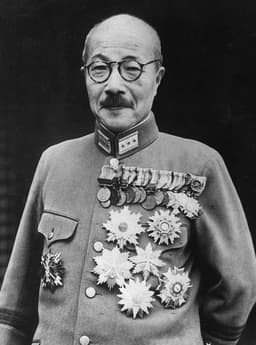
Hideki Tojo
General · Modern
53.9Total
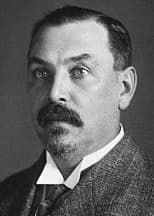
Louis Botha
General · Modern
61.1Total
Basic Information
Born
1884
1862
Died
1948
1919
Era
Modern
Modern
Nationality
Japan
South Africa
Occupation
General
General
Civilization
Eastern
Other
Score Comparison
Military (10%)
70.0
61.7
Political (20%)
48.0
70.0
Influence (20%)
55.0
56.7
Legacy (20%)
50.0
50.0
Leadership (15%)
53.2
79.8
Strategy (15%)
55.0
58.0
TOTAL
53.9
61.1
Hideki Tojo — Complete Timeline
1941 AD
Attack on Pearl HarborWar
As Prime Minister, Hideki Tojo authorized the attack on the US naval base at Pearl Harbor, Hawaii. The surprise attack brought the United States into World War II. Tojo's decision was based on the belief that war with the US was inevitable due to resource embargoes and diplomatic failures.
World War IIPearl HarborUS-Japan War
Impact: globaldestructive
Appointment as Prime MinisterPolitical Action◆ Major
Hideki Tojo was appointed Prime Minister of Japan, replacing Fumimaro Konoe. He retained his position as Army Minister and later took on other portfolios, consolidating power. His appointment marked the ascendancy of the military faction in the Japanese government and the shift towards total war.
Prime MinisterMilitary GovernmentWorld War II
Impact: national
1942 AD
Fall of SingaporeWar◆ Major
Under Tojo's leadership, Japanese forces captured Singapore from the British in a swift campaign. The fall of Singapore was one of the worst British military defeats in history. It demonstrated Japanese military prowess and led to the occupation of a key strategic location in Southeast Asia.
World War IISingaporeJapanese Victory
Impact: global
1948 AD
Execution by the International Military Tribunal for the Far EastPolitical Action◆ Major
Hideki Tojo was found guilty of war crimes by the International Military Tribunal for the Far East and sentenced to death. He was executed by hanging on December 23, 1948. His trial and execution symbolized the Allied effort to hold Japanese leaders accountable for wartime atrocities.
War CrimesExecutionTokyo Trials
Impact: globaltragic
Louis Botha — Complete Timeline
1899 AD
Battle of ColensoWar◆ Major
Botha commanded Boer forces at the Battle of Colenso during the Second Boer War. His troops repelled a British attack under General Buller, inflicting heavy casualties and boosting Boer morale.
Second Boer WarBattleVictory
Impact: regional
1900 AD
Boer War Guerrilla CommanderWar◆ Major
After the British captured Pretoria, Botha led Boer guerrilla forces in the Transvaal. He conducted hit-and-run attacks against British columns, prolonging the war and becoming a symbol of Afrikaner resistance.
Second Boer WarGuerrillaResistance
Impact: regional
1902 AD
Signed the Treaty of VereenigingPolitical Action
Botha, as a leading Boer general, signed the Treaty of Vereeniging which ended the Second Boer War. The treaty granted the Boer republics self-government under British sovereignty and promised eventual self-rule.
TreatyPeaceSecond Boer War
Impact: regional
1910 AD
First Prime Minister of the Union of South AfricaPolitical Action
Botha became the first Prime Minister of the newly formed Union of South Africa. He led a coalition government that sought to reconcile Afrikaners and English-speaking whites, while implementing segregationist policies.
Prime MinisterUnion of South AfricaFounding
Impact: nationalconstructive
1914 AD
Suppressed the 1914 RebellionWar◆ Major
Botha personally led government forces to suppress the Maritz Rebellion, an Afrikaner uprising against South Africa's entry into World War I. He defeated the rebels, asserting state authority and maintaining support for the British Empire.
RebellionWorld War ISuppression
Impact: national
1915 AD
Conquered German South West AfricaWar◆ Major
Botha commanded South African forces in the invasion and conquest of German South West Africa. The campaign succeeded, and the territory was later administered by South Africa under a League of Nations mandate.
World War IConquestGerman South West Africa
Impact: regional
Expert Analysis
Hideki Tojo vs Louis Botha
# The General Who Governed: Two Paths from Battlefield to Power
On a December morning in 1941, Hideki Tojo stood before the Japanese Diet and declared war on the United States, setting in motion a conflict that would consume the Pacific and ultimately destroy his nation. Just thirty-nine years earlier and half a world away, another general—Louis Botha—had signed a treaty surrendering his people’s hard-won independence, then spent the next decade building the very state he had fought against. Both men commanded armies, both became prime ministers, but their journeys from soldier to statesman could not have diverged more sharply. What accounts for the difference between the general who led his nation to annihilation and the one who led his people toward reconciliation?
Origins
Hideki Tojo was born in 1884 into a samurai family in Tokyo, the son of a lieutenant general. His world was one of rigid hierarchy, imperial loyalty, and military discipline. Japan, newly modernized and hungry for empire, offered ambitious officers a clear path: serve the Emperor, expand the nation’s borders, and crush those who stood in the way. Tojo absorbed this ethos completely. He graduated from the Imperial Japanese Army Academy at the top of his class, then studied at the Army War College, where he learned not just strategy but a worldview that equated military strength with national destiny.
Louis Botha, born in 1862 on a farm in the Orange Free State, grew up in a very different world—the rugged, open veld of southern Africa, where Boer farmers lived by the gun and the Bible. His family had trekked inland to escape British rule, and young Louis learned to ride, shoot, and command men not in a classroom but on horseback, chasing cattle rustlers and fighting African chiefdoms. The Boer republics were rough democracies, where a man’s authority came from his reputation, not his rank. Botha’s education was practical, his politics personal, and his loyalty rooted in a people, not an empire.
Rise to Power
Tojo’s ascent was methodical and institutional. He served as a military attaché in Berlin, commanded troops in Manchuria, and by 1937 was chief of staff of the Kwantung Army, the hardline force that effectively ran Japan’s puppet state in China. His reputation as a ruthless, efficient officer—the “razor” who could cut through bureaucratic hesitation—brought him to Tokyo as Army Minister in 1940. When Prime Minister Fumimaro Konoe resigned in October 1941, unable to resist the military’s demand for war, the Emperor appointed Tojo as his successor. Tojo kept his army portfolio, concentrating military and political power in a way no Japanese civilian leader could match.
Botha’s rise was forged in fire. When the Second Boer War erupted in 1899, he was a 37-year-old farmer and politician with no formal military training. Yet at the Battle of Colenso in December of that year, he commanded Boer forces that repelled a British attack, killing over a thousand soldiers while losing only a handful of his own men. His calm under fire and tactical instinct earned him command of the Transvaal’s forces after the death of General Piet Joubert. When the British captured Pretoria in 1900, Botha transformed into a guerrilla commander, leading hit-and-run raids that kept the war alive for two more years. His men called him “the Lion of the Transvaal”—and they followed him not because of a uniform, but because he shared their rations, their risks, and their hopes.
Leadership & Governance
Tojo governed as he commanded: with iron discipline and a conviction that the military knew best. He centralized control over Japan’s war economy, suppressed dissent through the secret police, and pushed through the attack on Pearl Harbor in December 1941, believing that a decisive blow would force America to negotiate. The fall of Singapore in February 1942 seemed to confirm his genius—the British fortress surrendered in just a week, with 80,000 troops captured. But Tojo’s leadership was brittle. He could not adapt when the tide turned at Midway and Guadalcanal. He micromanaged campaigns from Tokyo, ignored intelligence that contradicted his assumptions, and refused to consider peace until it was too late.
Botha’s governance was the opposite: flexible, pragmatic, and rooted in compromise. After signing the Treaty of Vereeniging in 1902—ending the Boer War on British terms—he turned from guerrilla leader to nation-builder. As the first Prime Minister of the Union of South Africa in 1910, he faced an impossible task: unite bitter Afrikaners with English-speaking South Africans, maintain white supremacy over a Black majority, and keep the British Empire at arm’s length. He did not rule by decree but by coalition, balancing the demands of former enemies. When Afrikaner hardliners rebelled in 1914, Botha personally led troops to suppress them—not as a conqueror, but as a father disciplining wayward sons.
Triumph & Tragedy
Tojo’s greatest moment—Pearl Harbor—was also his tragedy. The attack bought Japan six months of dominance but awakened an industrial giant that would grind the Empire to dust. By 1944, American forces were bombing Tokyo, and Tojo’s own generals forced him to resign. He survived the war only to face the International Military Tribunal for the Far East, which convicted him of war crimes. He was executed by hanging in 1948, a fate he met with stoic defiance, insisting his actions were justified.
Botha’s triumph was the conquest of German South West Africa in 1915, a campaign that expanded South African territory and proved his military skill. But his tragedy was subtler: he spent his final years fighting to hold together a nation that was already fracturing along racial lines. He died in 1919, a respected statesman, but the seeds of apartheid were already planted in the policies he had helped create.
Character & Destiny
Tojo was a man of narrow vision and absolute conviction. He believed in the Emperor, the army, and the inevitability of Japanese expansion. This certainty gave him strength in 1941 but made him blind in 1944. He could not imagine defeat, so he could not prepare for it. His leadership style—rigid, hierarchical, intolerant of dissent—mirrored the military culture he embodied.
Botha was a pragmatist who understood that survival required change. He had fought the British, then made peace with them. He had led a rebellion, then suppressed one. His flexibility was not weakness but wisdom—a recognition that a leader’s duty is to his people’s future, not his own pride.
Legacy
Tojo is remembered as a symbol of Japanese militarism and wartime brutality. His legacy is a warning: what happens when a general becomes prime minister without ever learning that governing is not the same as commanding.
Botha is remembered as a founder of modern South Africa, though his legacy is complicated by the racial policies he upheld. He showed that a warrior can become a peacemaker, but also that peacemaking has limits when it does not address fundamental injustice.
Conclusion
The difference between Tojo and Botha is not simply one of victory or defeat—Botha lost his war, Tojo lost his peace. It is a difference of imagination. Tojo could only see the battlefield; Botha could see the nation beyond it. One fought for an empire that consumed him; the other fought for a people, then learned to lead them through the long, hard work of building something new. In the end, the general who knew when to lay down his sword proved more powerful than the one who never could.
Rankings
🥇
Louis BothaLeader
Mil: 61.7Pol: 70.0Inf: 56.7
61.1
🥈
Hideki Tojo
Mil: 70.0Pol: 48.0Inf: 55.0
53.9
+7.2 behind
How This Comparison Works
Algorithm
Each figure is scored on 6 dimensions (0—100 scale) based on structured historical data: Military (10%), Political (20%), Influence (20%), Legacy (20%), Leadership (15%), Strategy (15%). The weighted total produces the final ranking.
Data Sources
Scores are computed from structured sub-indicators in the database. Scale factors adjust for era (Ancient ×0.85, Modern ×1.0) and civilization size (Eastern ×1.05, Other ×0.80) to account for differences in population and military scale.
Maximum 3 Figures
Comparisons are limited to 2—3 figures to ensure readability and statistical meaningfulness.
Error Margins
±5 points per dimension — Sub-scores are derived from historical records with inherent uncertainty. Two figures within 5 points on a dimension should be considered roughly equivalent in that area.
Total Score Accuracy
±3 points overall — The weighted combination of 6 dimensions produces a total score with approximately ±3 points of uncertainty. Differences of less than 3 points are not statistically significant— the figures are effectively tied.
Known Limitations
- Historical records are incomplete and uneven across civilizations
- Figures from oral-tradition societies may be underrepresented
- Occupation labels can misclassify multi-role figures
- Scores measure capability and impact, not moral character
- Quantitative scoring is a comparison tool, not absolute truth
Capability Radar
Military (10%) — Battles & Warfare
Battles
65
65
Win Rate
40
70
Expansion
70
60
Political (20%) — Governance & Reform
Reform
30
65
Diplomacy
35
70
Economy
25
55
Influence (20%) — Cultural & Global Reach
Cultural
30
45
Global
55
50
Legacy (20%) — Historical Impact
Historical
55
55
Longevity
40
40
Leadership (15%) — Power & Stability
Tenure
60
60
Stability
20
50
Strategy (15%) — Tactics & Innovation
Strategy
50
72
Tactics
55
68
Reform
45
55
Similar Comparisons
Comments & Discussion
GENERAL'S GRUDGE6/16/2026
Botha's surrender at Vereeniging in 1902 wasn't weakness—it was strategic genius. Tojo, by contrast, had no such vision. Botha understood that a negotiated peace preserved Afrikaner dignity and set the stage for political dominance within a decade. Tojo chose Pearl Harbor over diplomacy, dragging Japan into an unwinnable war. Botha survived and thrived; Tojo ended on the gallows. That's the difference between a statesman and a fanatic.
铁血宰相魂6/16/2026
Botha重建南非联邦时,连死敌Smuts都成了他内阁成员。Tojo呢?东条英机把日本陆军省搞成个人独裁,连海军联合舰队司令山本五十六都被他排挤。Botha把枪杆子变成选票箱,Tojo把议会变成刀架子。一个用刀剑种麦子,一个用麦子铸刀剑,结果不言自明。
BODICE RIPPERS6/16/2026
Everyone forgets Botha's first war was against the Zulu, not the British. He crushed Dinuzulu's rebellion in 1888 as a young commando leader, learning state-sponsored violence before fighting for Boer independence. Tojo's career skips straight from barracks to Pacific. Botha evolved; Tojo never did. Botha's final act was suppressing a 1914 Boer rebellion—he knew when to fight his own people. Tojo wrote a political testament in his cell.
薛定谔的裁缝6/16/2026
比较两位将军的军事履历最有趣:Botha在Spion Kop指挥过布尔游击战,对英军实行焦土政策;Tojo在中国搞“三光政策”。但Botha停战后立刻解散自己的突击队,去开普敦组建联邦。Tojo呢?他当首相期间还兼任陆军大臣和内务大臣,死攥着枪杆子不放。Botha懂得军人干政的尽头是悬崖,Tojo只看见军靴下的捷径。
RUSTIC RATTLER6/16/2026
Botha's command style was farmer-general: he once rode 50 miles alone to scout British positions before a battle. Tojo micromanaged from Tokyo, issuing orders to division commanders 3,000 miles away. Botha slept under wagons with his men; Tojo inspected via motorcade. The Boer War taught Botha that war is boots on the ground, not dispatches from headquarters. Pacific War taught Tojo nothing except how to miscalculate American resolve.
民主猎犬6/16/2026
当Botha拿着英国剑当南非总理时,他事实上接受了“白人的责任”——一种殖民妥协。Tojo则披着“大东亚共荣”的破旗,想把亚洲全变成日本后院。但Botha至少玩转了议会政治,拉拢