Loading...
Hideki Tojo vs Julius Maada Bio
Hideki Tojo leads by 2.7 pts · 2 figures compared
…
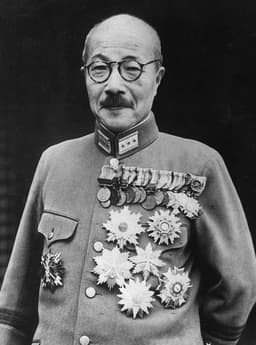
Hideki Tojo
General · Modern
53.9Total
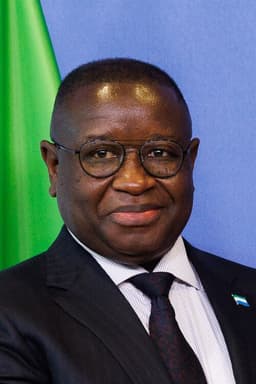
Julius Maada Bio
General · Modern
51.2Total
Basic Information
Born
1884
1964
Died
1948
—
Era
Modern
Modern
Nationality
Japan
Sierra Leone
Occupation
General
General
Civilization
Eastern
Other
Score Comparison
Military (10%)
70.0
50.0
Political (20%)
48.0
45.0
Influence (20%)
55.0
53.3
Legacy (20%)
50.0
45.0
Leadership (15%)
53.2
70.0
Strategy (15%)
55.0
43.7
TOTAL
53.9
51.2
Hideki Tojo — Complete Timeline
1941 AD
Attack on Pearl HarborWar
As Prime Minister, Hideki Tojo authorized the attack on the US naval base at Pearl Harbor, Hawaii. The surprise attack brought the United States into World War II. Tojo's decision was based on the belief that war with the US was inevitable due to resource embargoes and diplomatic failures.
World War IIPearl HarborUS-Japan War
Impact: globaldestructive
Appointment as Prime MinisterPolitical Action◆ Major
Hideki Tojo was appointed Prime Minister of Japan, replacing Fumimaro Konoe. He retained his position as Army Minister and later took on other portfolios, consolidating power. His appointment marked the ascendancy of the military faction in the Japanese government and the shift towards total war.
Prime MinisterMilitary GovernmentWorld War II
Impact: national
1942 AD
Fall of SingaporeWar◆ Major
Under Tojo's leadership, Japanese forces captured Singapore from the British in a swift campaign. The fall of Singapore was one of the worst British military defeats in history. It demonstrated Japanese military prowess and led to the occupation of a key strategic location in Southeast Asia.
World War IISingaporeJapanese Victory
Impact: global
1948 AD
Execution by the International Military Tribunal for the Far EastPolitical Action◆ Major
Hideki Tojo was found guilty of war crimes by the International Military Tribunal for the Far East and sentenced to death. He was executed by hanging on December 23, 1948. His trial and execution symbolized the Allied effort to hold Japanese leaders accountable for wartime atrocities.
War CrimesExecutionTokyo Trials
Impact: globaltragic
Julius Maada Bio — Complete Timeline
1992 AD
1992 Sierra Leonean coup d'étatPolitical Action◆ Major
Julius Maada Bio was a member of the National Provisional Ruling Council (NPRC) that overthrew President Joseph Momoh in a military coup. Bio served as a key figure in the junta, which promised to end the civil war but faced criticism for human rights abuses.
CoupSierra LeoneCivil War
Impact: nationaldestructive
1996 AD
Brief tenure as head of statePolitical Action◆ Major
Bio led a palace coup within the NPRC in January 1996, becoming head of state. He oversaw the transition to civilian rule, handing over power to Ahmad Tejan Kabbah after elections in March 1996, a move that earned him praise for restoring democracy.
TransitionDemocracyCoup
Impact: nationalconstructive
2018 AD
Election as President of Sierra LeonePolitical Action◆ Major
Bio won the 2018 Sierra Leonean presidential election as the candidate of the Sierra Leone People's Party, defeating Samura Kamara in a runoff. His victory marked a return to power for the SLPP after a decade in opposition.
ElectionSierra LeonePresidency
Impact: nationalconstructive
2023 AD
Re-election amid economic challengesPolitical Action◆ Major
Bio was re-elected in 2023 with 56.6% of the vote, but the election was disputed by the opposition. His second term has been marked by economic difficulties, including high inflation and debt, as well as allegations of authoritarianism.
ElectionSierra LeoneEconomy
Impact: national
Expert Analysis
Hideki Tojo vs Julius Maada Bio
# The General’s Two Paths
On a December morning in 1941, Hideki Tojo stood before the Japanese Diet and declared war on the United States, setting in motion a conflict that would consume the Pacific and seal his own fate. Half a century later, on a humid night in Freetown in 1996, Julius Maada Bio quietly stepped down from power, handing over Sierra Leone to a democratically elected government. Both men were generals. Both seized control in times of national crisis. Yet one ended on the gallows, the other in a presidential palace. What made the difference?
Origins
Hideki Tojo was born in 1884 into a samurai family, the son of a decorated army officer. Imperial Japan was then racing to modernize, building a military machine fueled by bushido—the warrior code—and a conviction that Japan’s destiny lay in expansion. Tojo absorbed these values at the Imperial Japanese Army Academy, where discipline was absolute and dissent unthinkable. He rose through the ranks not as a charismatic visionary but as a meticulous administrator—nicknamed “the Razor” for his sharp, efficient mind. His Japan was a nation of rigid hierarchy, where the emperor was divine and the army answered to no civilian authority.
Julius Maada Bio was born in 1964 in a small village in Sierra Leone, a West African country rich in diamonds but cursed by corruption. His childhood unfolded against the backdrop of post-independence decay: one-party rule, economic collapse, and a creeping sense of betrayal. Bio joined the army as a young man, but his Sierra Leone was no disciplined empire. It was a state where soldiers looted more than they protected, and where the line between rebel and officer blurred. He rose in a military that was less a profession than a survival game.
Rise to Power
Tojo’s ascent was methodical. By 1937, he was chief of staff of the Kwantung Army in Manchuria, the vanguard of Japanese expansion. He advocated for a hard line against China and the West, aligning himself with the militarist faction that saw diplomacy as weakness. In October 1941, with Japan facing an American oil embargo and the clock ticking, Emperor Hirohito appointed Tojo prime minister. The choice was deliberate: Tojo was the man who would not flinch. Within two months, he authorized the attack on Pearl Harbor, a gamble he believed would cripple the U.S. Pacific Fleet and buy Japan time to conquer Southeast Asia.
Bio’s rise was sudden and chaotic. In 1992, he was a young captain when a group of junior officers—fed up with President Joseph Momoh’s corrupt, bankrupt regime—staged a coup. Bio joined them. The National Provisional Ruling Council took power, and Bio found himself a minister at age 28. But the council soon fractured. In January 1996, Bio led a palace coup, ousting his own comrades to become head of state. He was 31. Unlike Tojo, he had no grand imperial vision—only a country bleeding from a brutal civil war and a desperate need for order.
Leadership & Governance
Tojo governed as a military dictator. He retained his post as army minister, concentrating power in his hands. He tightened censorship, suppressed dissent, and pushed Japan deeper into war. His military strategy was aggressive and often brilliant—the fall of Singapore in February 1942 was a stunning victory, capturing 80,000 British troops with a fraction of their number. But Tojo’s political wisdom was hollow. He never understood the industrial might of the United States. He saw war as a test of spirit, not logistics. By 1944, as American forces island-hopped toward Japan, Tojo’s own generals turned on him. He resigned in disgrace.
Bio, by contrast, chose a different path. As head of state, he faced the Revolutionary United Front, a rebel army infamous for amputating civilians’ hands. He could have clung to power, as many African strongmen did. Instead, he oversaw elections in 1996 and handed over to the winner, Ahmed Tejan Kabbah. It was a gamble—Sierra Leone’s democracy soon collapsed into more war—but Bio had set a precedent. When he returned to the presidency in 2018, after winning a free election, he governed as a civilian, not a general. His challenges were economic: a collapsed mining sector, youth unemployment, and a pandemic. His re-election in 2023 was disputed, but he remained within the constitutional framework.
Triumph & Tragedy
Tojo’s greatest moment was also his tragedy. Pearl Harbor was a tactical masterpiece—but it awakened a sleeping giant. His fall of Singapore was a triumph of speed and audacity, but it overextended Japan’s supply lines. By 1945, his nation lay in ruins, two cities incinerated by atomic bombs. Tojo himself attempted suicide in 1945 but failed. In 1948, the International Military Tribunal for the Far East convicted him of war crimes, including the mistreatment of prisoners of war and the Nanjing Massacre. He was hanged, his last words scribbled in a poem: “I go to the land of my ancestors, leaving behind a world of ashes.”
Bio’s tragedy is quieter. He gave up power once, only to see Sierra Leone descend into a decade of horror. He returned in 2018 to a country still scarred, its institutions weak, its people poor. His triumph is that he kept the peace. No coup, no civil war. His critics call him indecisive; his supporters say he is patient. But compared to Tojo, Bio’s legacy is a paradox: a general who chose not to fight, a leader who chose not to rule.
Character & Destiny
Tojo was a man of iron conviction and narrow vision. He believed in hierarchy, duty, and the infallibility of the emperor. He could not imagine surrender, so he led Japan to annihilation. His personality—rigid, dutiful, ruthless—matched the militarist machine that produced him. History broke him not because he was cruel, but because he was inflexible.
Bio is a pragmatist. He learned in the barracks that power is fleeting and survival requires adaptation. He saw what happened to African leaders who refused to let go—they were overthrown, killed, or driven into exile. His character is cautious, calculating, and surprisingly democratic for a man who once seized power by force. He understood that in a fragile state, legitimacy matters more than control.
Legacy
Tojo remains a symbol of Japanese militarism and wartime atrocity. In Japan, he is rarely discussed—a ghost too painful to confront. In the West, he is the face of the enemy. His legacy is a warning: when a general becomes a prime minister and refuses to listen, the nation burns.
Bio is still writing his legacy. He is remembered as the general who stepped aside, then returned to lead democratically. In Sierra Leone, he is a figure of cautious hope—not a hero, but a survivor. His scores—a modest 64.7 overall—reflect a life of compromise rather than conquest. But in a world of generals who seize power and never let go, Bio’s willingness to hand it over, even briefly, is rare.
Conclusion
One man commanded an empire and destroyed it. Another commanded a barracks and built a democracy, fragile though it may be. Tojo and Bio share a uniform but not a fate. The difference lies not in their ambition but in their imagination: Tojo could only see war as victory or defeat; Bio saw that sometimes, the greatest victory is to walk away. In the end, the general who knew when to fight—and when not to—outlasted the one who never stopped.
Rankings
🥇
Hideki TojoLeader
Mil: 70.0Pol: 48.0Inf: 55.0
53.9
🥈
Julius Maada Bio
Mil: 50.0Pol: 45.0Inf: 53.3
51.2
+2.7 behind
How This Comparison Works
Algorithm
Each figure is scored on 6 dimensions (0—100 scale) based on structured historical data: Military (10%), Political (20%), Influence (20%), Legacy (20%), Leadership (15%), Strategy (15%). The weighted total produces the final ranking.
Data Sources
Scores are computed from structured sub-indicators in the database. Scale factors adjust for era (Ancient ×0.85, Modern ×1.0) and civilization size (Eastern ×1.05, Other ×0.80) to account for differences in population and military scale.
Maximum 3 Figures
Comparisons are limited to 2—3 figures to ensure readability and statistical meaningfulness.
Error Margins
±5 points per dimension — Sub-scores are derived from historical records with inherent uncertainty. Two figures within 5 points on a dimension should be considered roughly equivalent in that area.
Total Score Accuracy
±3 points overall — The weighted combination of 6 dimensions produces a total score with approximately ±3 points of uncertainty. Differences of less than 3 points are not statistically significant— the figures are effectively tied.
Known Limitations
- Historical records are incomplete and uneven across civilizations
- Figures from oral-tradition societies may be underrepresented
- Occupation labels can misclassify multi-role figures
- Scores measure capability and impact, not moral character
- Quantitative scoring is a comparison tool, not absolute truth
Capability Radar
Military (10%) — Battles & Warfare
Battles
65
15
Win Rate
40
20
Expansion
70
5
Political (20%) — Governance & Reform
Reform
30
50
Diplomacy
35
55
Economy
25
45
Influence (20%) — Cultural & Global Reach
Cultural
30
30
Global
55
20
Legacy (20%) — Historical Impact
Historical
55
35
Longevity
40
25
Leadership (15%) — Power & Stability
Tenure
60
55
Stability
20
40
Strategy (15%) — Tactics & Innovation
Strategy
50
20
Tactics
55
25
Reform
45
10
Similar Comparisons
Comments & Discussion
Razor's Reckoning6/16/2026
Tojo's end wasn't about being a general—it was about refusing to break the arc of militarism. He could have negotiated after Midway, but bushido's death cult demanded suicidal resistance. Bio knew when to step aside, learning from Rawlings in Ghana that power isn't always held by force. That political instinct, not military skill, separates the gallows from a palace. Show me one samurai who willingly surrendered power—you can't. That's the difference.
数据猎人6/16/2026
别被叙事骗了。东亚战场1941年日军伤亡仅4万,太平洋战争结束时却损失212万——Tojo的"效率"建立在帝国后期错误情报和僵化指挥链上。Bio在1996年退出时,Sierra Leone人均GDP才260美元,2018年他当选总统后,2020年竟跌至484美元。两个将军,两场经济灾难,只是规模不同。谁更"成功"?看数据,别靠浪漫故事。
Thucydides' Ghost6/16/2026
The real hinge is constitutional tradition, not personal virtue. Tojo inherited the Meiji Constitution of 1889, where the emperor commanded the military outside civilian control—a structural flaw that made generals unaccountable. Bio governed under Sierra Leone's 1991 Constitution, which explicitly subordinates military to elected authority. Even if Tojo had wanted peace in 1944, Article 11 of the Imperial Constitution shackled him. Bio could resign because his legal framework allowed it. Compar
民国书虫6/16/2026
别忘了时间差。Tojo活在帝国神化的时代,他1937年就策划了卢沟桥事变,1941年偷袭珍珠港时全球还在殖民体系中挣扎。Bio呢?冷战后,国际社会盯着非洲政变,制裁与援助捆绑。1996年他若赖着不走,欧盟分分钟切断钻石贸易路。不是Bio更善良,是时代变了。Tojo要活在90年代?他可能更精明,但绝不会选绞刑架。
Chancer's Gambit6/16/2026
Bio's "democratic" exit is overrated. He stepped down only because the RUF rebels were still fighting—his junta was broke and isolated. In 1997, he launched another coup (failed), then finally won an election in 2018 by campaigning as an ex-strongman who'd "bring order." Tojo at least had the courage to face trial and take responsibility—Bio hides behind civilian suits while Sierra Leone's youth unemployment hits 60%. Give me the honest militarist over the polished opportunist any day.