Loading...
Heraclius vs Mursili II
Heraclius leads by 4.7 pts · 2 figures compared
…
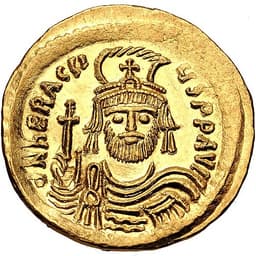
Heraclius
Emperor · Ancient
61.0Total

Mursili II
Emperor · Ancient
56.3Total
Basic Information
Born
-575
-1321
Died
—
-1295
Era
Ancient
Ancient
Nationality
Byzantine Empire
Hittite Empire
Occupation
Emperor
Emperor
Civilization
Western
Middle Eastern
Score Comparison
Military (10%)
78.5
74.0
Political (20%)
45.0
45.0
Influence (20%)
58.3
56.4
Legacy (20%)
52.0
48.3
Leadership (15%)
72.0
66.0
Strategy (15%)
80.6
61.2
TOTAL
61.0
56.3
Heraclius — Complete Timeline
610 AD
Overthrow of PhocasPolitical Action◆ Major
Heraclius led a revolt from Carthage against the usurper Emperor Phocas. He sailed to Constantinople, where supporters opened the gates. Phocas was captured and executed, and Heraclius was crowned emperor, ending a period of civil strife and military decline.
CoupPhocasByzantine Empire
Impact: nationalconstructive
622 AD
Byzantine-Sassanid War: Final CampaignWar
Heraclius personally led a multi-year campaign against the Sassanid Persian Empire, which had occupied much of Byzantine territory. He defeated Persian forces at the Battle of Nineveh in 627 and recovered the True Cross, restoring Byzantine prestige and ending the war.
Byzantine-Sassanid WarNinevehTrue Cross
Impact: globalconstructive
636 AD
Loss of the Levant to Muslim ConquestWar
Heraclius's forces were decisively defeated by the Rashidun Caliphate at the Battle of Yarmouk. This loss led to the permanent loss of Syria, Palestine, and Egypt to Muslim rule, drastically reducing Byzantine territory and marking the beginning of the Arab-Byzantine wars.
Muslim ConquestYarmoukTerritorial Loss
Impact: globaltragic
Mursili II — Complete Timeline
1318 BC
Conquest of ArzawaWar◆ Major
Mursili II launched a decisive campaign against the Arzawa states in western Anatolia. He defeated King Uhha-Ziti and annexed Arzawa territory, ending the Arzawa threat and restoring Hittite dominance in the west.
Hittite EmpireArzawaConquest
Impact: regionalconstructive
1315 BC
Composition of the Plague PrayersCultural◆ Major
Mursili II composed a series of prayers to the gods, known as the Plague Prayers, seeking to end a devastating plague that had killed his brother and many subjects. These texts provide insight into Hittite religion and royal ideology.
Hittite EmpireReligionLiterature
Impact: regional
1312 BC
Campaign against the KaskaWar◆ Major
Mursili II conducted a series of campaigns against the Kaska tribes in the Pontic mountains. He defeated them and secured the northern border of the Hittite heartland, preventing further invasions of Hattusa.
Hittite EmpireKaskaCampaign
Impact: regionalconstructive
1305 BC
Suppression of the Rebellion of PiyamaraduWar
Mursili II suppressed a rebellion led by Piyamaradu, a local ruler in western Anatolia who had allied with the Ahhiyawa (Mycenaeans). The campaign reasserted Hittite control over the region and checked Ahhiyawan influence.
Hittite EmpireAhhiyawaRebellion
Impact: regional
Expert Analysis
Origins
Heraclius was born around 575 AD in Cappadocia, the son of Heraclius the Elder, a prominent Armenian general serving the Byzantine Empire. His family was of Armenian origin, and his father served as the Exarch of Africa. Heraclius grew up in the military camps of North Africa, receiving a rigorous military education. In 608 AD, his father rebelled against the unpopular Emperor Phocas, and Heraclius was appointed as co-commander. When his father died in 610 AD, Heraclius led the revolt to its conclusion, sailing to Constantinople and overthrowing Phocas.
Mursili II was born around 1321 BC, the son of the Hittite King Suppiluliuma I. He was the youngest of several brothers and was not initially expected to rule. The Hittite Empire was at its peak under his father, who had expanded Hittite control over Syria and Anatolia. Mursili grew up in the royal court at Hattusa, trained in diplomacy and warfare. His older brother Arnuwanda II became king after Suppiluliuma's death, but died of plague shortly after, leaving Mursili as the unexpected heir around 1321 BC.
Rise to Power
Heraclius rose to power by overthrowing the tyrant Phocas in 610 AD. Phocas had seized the throne in 602 AD after a military revolt, leading to a chaotic reign marked by wars with the Sassanid Persians and internal unrest. Heraclius, backed by his father's African forces and the influential Patriarch of Constantinople, sailed to the capital. He was welcomed by the populace and Phocas was executed. Heraclius was crowned emperor at age 35, inheriting a crumbling empire: the Persians had taken much of the East, and the Avars and Slavs threatened the Balkans.
Mursili II became king unexpectedly in 1321 BC after the death of his brother Arnuwanda II from plague. He was young and inexperienced, but he quickly asserted his authority. The Hittite Empire faced threats from the Arzawa states in the west, the Kaska tribes in the north, and the remnants of Mitanni in the east. Mursili's first years were marked by a revolt led by his uncle, but he suppressed it decisively. He then launched a series of campaigns to restore Hittite control, starting with a major invasion of Arzawa in 1320 BC.
Leadership & Governance
Heraclius's leadership was characterized by personal military command and religious fervor. He reorganized the Byzantine army into a more mobile and effective force, using the theme system to recruit soldiers from land grants. His governance was heavily influenced by the Orthodox Church; he promoted Christianity as a unifying force and even tried to bridge the Monophysite schism, though he failed. He also reformed the coinage and administration, but his policies were often reactive to crises. His military score of 78.5 and strategy score of 80.6 reflect his tactical brilliance, but his political score of 45.0 indicates his difficulties in managing internal factions and holding conquered territories.
Mursili II's leadership was more systematic and focused on religious piety. He was a devout king who believed the plague was divine punishment for his father's sins, and he composed the Plague Prayers to appease the gods. These prayers provide insight into Hittite governance, where the king acted as high priest and military commander. Mursili II conducted annual campaigns to secure borders, but he also used diplomacy and treaties to manage vassals. His military score of 74.0 and strategy score of 61.2 show he was a competent general, but his political score of 45.0 mirrors Heraclius's weakness in statecraft.
Triumph & Tragedy
Heraclius's greatest triumph was his successful counteroffensive against the Sassanid Persians. In 622-628 AD, he led a multi-year campaign deep into Persian territory, defeating the Persian armies at the Battle of Nineveh in 627 AD and forcing the Persians to return all occupied Byzantine lands. This victory restored the True Cross to Jerusalem and seemed to revive the Byzantine Empire. However, his greatest tragedy was the loss of the Levant to the Muslim conquests. After years of exhausting war with Persia, the Byzantine army was depleted. At the Battle of Yarmouk in 636 AD, the Rashidun Caliphate decisively defeated the Byzantines, leading to the permanent loss of Syria, Palestine, and Egypt. Heraclius died in 641 AD, reportedly in despair.
Mursili II's greatest triumph was the conquest of Arzawa, which ended the western threat to the Hittite Empire. In 1320 BC, he defeated King Uhha-Ziti and annexed the Arzawa lands, bringing them under Hittite control. He also successfully campaigned against the Kaska tribes, securing the northern borders. His tragedy was the ongoing plague that devastated the empire, killing his brother and many subjects. Despite his prayers, the plague persisted, weakening the Hittite state. He also faced the rebellion of Piyamaradu, which he suppressed, but the Mycenaean involvement foreshadowed future conflicts.
Character & Destiny
Heraclius was a determined, resourceful leader who excelled in crisis. He was personally brave, leading his troops in battle, and had a strategic vision that allowed him to outmaneuver the Persians. However, he was also stubborn and overconfident after his Persian victory, underestimating the Arab threat. His character led him to focus on religious unity rather than military preparedness, contributing to his loss of the Levant. Historians note that he was a great general but a mediocre administrator, and his reign marked the end of the ancient world and the beginning of the medieval era.
Mursili II was a pious and methodical ruler, deeply concerned with divine favor. He was cautious in his campaigns, avoiding excessive risk, and he used diplomacy to consolidate gains. His prayers show a man burdened by guilt and responsibility, seeking to atone for his father's sins. His character shaped his destiny: the plague was beyond his control, but his religious response helped legitimize his rule. He successfully maintained the Hittite Empire's stability, but his reign did not expand it as much as his father's had.
Legacy
Heraclius's legacy is mixed. He saved the Byzantine Empire from the Persians, but his losses to the Arabs transformed the Mediterranean world. His military reforms influenced later Byzantine tactics, and his use of the True Cross became a symbol of Christian triumph. He scored 58.3 in influence and 52.0 in legacy, reflecting his role as a transitional figure. The empire he saved survived for another 800 years, but his failures allowed Islam to expand.
Mursili II's legacy is more obscure but significant. His Plague Prayers are one of the earliest examples of personal religious expression in history, and his campaigns stabilized the Hittite Empire for another century. He scored 56.4 in influence and 48.3 in legacy, reflecting his impact within Hittite history but limited global recognition. He is remembered as a pious and successful king who maintained his father's empire.
Conclusion
Heraclius had a greater total score (61.0 vs 56.3) and a more profound historical impact. While Mursili II was a competent ruler, his achievements were primarily consolidatory. Heraclius faced larger existential threats and his actions reshaped the geopolitical landscape: his victory over Persia prolonged the Byzantine Empire, while his loss to the Arabs changed the course of world history. Mursili II's legacy is important for Hittite studies, but it does not compare to the transformative events of the 7th century. HistoryVersus.com rates Heraclius higher due to his strategic brilliance and the magnitude of his successes and failures.
Rankings
🥇
HeracliusLeader
Mil: 78.5Pol: 45.0Inf: 58.3
61.0
🥈
Mursili II
Mil: 74.0Pol: 45.0Inf: 56.4
56.3
+4.7 behind
How This Comparison Works
Algorithm
Each figure is scored on 6 dimensions (0—100 scale) based on structured historical data: Military (10%), Political (20%), Influence (20%), Legacy (20%), Leadership (15%), Strategy (15%). The weighted total produces the final ranking.
Data Sources
Scores are computed from structured sub-indicators in the database. Scale factors adjust for era (Ancient ×0.85, Modern ×1.0) and civilization size (Eastern ×1.05, Other ×0.80) to account for differences in population and military scale.
Maximum 3 Figures
Comparisons are limited to 2—3 figures to ensure readability and statistical meaningfulness.
Error Margins
±5 points per dimension — Sub-scores are derived from historical records with inherent uncertainty. Two figures within 5 points on a dimension should be considered roughly equivalent in that area.
Total Score Accuracy
±3 points overall — The weighted combination of 6 dimensions produces a total score with approximately ±3 points of uncertainty. Differences of less than 3 points are not statistically significant— the figures are effectively tied.
Known Limitations
- Historical records are incomplete and uneven across civilizations
- Figures from oral-tradition societies may be underrepresented
- Occupation labels can misclassify multi-role figures
- Scores measure capability and impact, not moral character
- Quantitative scoring is a comparison tool, not absolute truth
Capability Radar
Military (10%) — Battles & Warfare
Battles
85
75
Win Rate
80
80
Expansion
70
80
Political (20%) — Governance & Reform
Reform
70
65
Diplomacy
65
70
Economy
60
60
Influence (20%) — Cultural & Global Reach
Cultural
65
55
Global
75
45
Legacy (20%) — Historical Impact
Historical
80
60
Longevity
70
50
Leadership (15%) — Power & Stability
Tenure
75
70
Stability
55
65
Strategy (15%) — Tactics & Innovation
Strategy
90
75
Tactics
85
70
Reform
75
60
Similar Comparisons
Comments & Discussion
No comments yet. Be the first to share your thoughts!