Loading...
Heraclius vs Julius Caesar
Julius Caesar leads by 21.8 pts · 2 figures compared
…
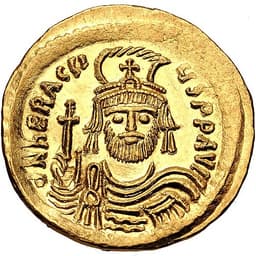
Heraclius
Emperor · Ancient
61.0Total

Julius Caesar
General · Ancient
82.8Total
Basic Information
Born
-575
-100
Died
—
-44
Era
Ancient
Ancient
Nationality
Byzantine Empire
Roman Republic
Occupation
Emperor
General
Civilization
Western
Western
Score Comparison
Military (10%)
78.5
88.0
Political (20%)
45.0
78.0
Influence (20%)
58.3
85.0
Legacy (20%)
52.0
82.0
Leadership (15%)
72.0
80.0
Strategy (15%)
80.6
85.0
TOTAL
61.0
82.8
Heraclius — Complete Timeline
610 AD
Overthrow of PhocasPolitical Action◆ Major
Heraclius led a revolt from Carthage against the usurper Emperor Phocas. He sailed to Constantinople, where supporters opened the gates. Phocas was captured and executed, and Heraclius was crowned emperor, ending a period of civil strife and military decline.
CoupPhocasByzantine Empire
Impact: nationalconstructive
622 AD
Byzantine-Sassanid War: Final CampaignWar
Heraclius personally led a multi-year campaign against the Sassanid Persian Empire, which had occupied much of Byzantine territory. He defeated Persian forces at the Battle of Nineveh in 627 and recovered the True Cross, restoring Byzantine prestige and ending the war.
Byzantine-Sassanid WarNinevehTrue Cross
Impact: globalconstructive
636 AD
Loss of the Levant to Muslim ConquestWar
Heraclius's forces were decisively defeated by the Rashidun Caliphate at the Battle of Yarmouk. This loss led to the permanent loss of Syria, Palestine, and Egypt to Muslim rule, drastically reducing Byzantine territory and marking the beginning of the Arab-Byzantine wars.
Muslim ConquestYarmoukTerritorial Loss
Impact: globaltragic
Julius Caesar — Complete Timeline
58 BC
Gallic WarsWar◆ Major
Caesar, as proconsul of Gaul, launched a series of campaigns that conquered all of Gaul (modern France, Belgium, and parts of Switzerland). He fought numerous battles, including against the Helvetii, the Belgae, and the Gallic chieftain Vercingetorix. The wars brought immense wealth and a loyal army to Caesar.
Gallic WarsConquestRoman Expansion
Impact: regional
49 BC
Crossing the RubiconPolitical Action◆ Major
Caesar led Legio XIII across the Rubicon River into Italy, defying the Roman Senate's order to disband his army. This act triggered a civil war against Pompey and the Optimates, ultimately leading to Caesar's dictatorship and the end of the Roman Republic.
Roman Civil WarEnd of RepublicPower Struggle
Impact: global
48 BC
Battle of PharsalusWar◆ Major
Caesar's outnumbered army defeated the larger forces of Pompey the Great at Pharsalus in Greece. Caesar's tactical use of a reserve line to counter Pompey's cavalry charge proved decisive. Pompey fled to Egypt, where he was assassinated, leaving Caesar as the undisputed master of the Roman world.
Roman Civil WarBattleDecisive Victory
Impact: regional
44 BC
Appointment as Dictator for LifePolitical Action◆ Major
The Roman Senate appointed Caesar dictator perpetuo (dictator for life), granting him unprecedented personal power. This move concentrated military, legislative, and judicial authority in one person, effectively ending the Roman Republic's traditional system of checks and balances and alarming many senators.
DictatorshipEnd of RepublicPower Consolidation
Impact: regionaldestructive
Assassination on the Ides of MarchPolitical Action◆ Major
A group of Roman senators, led by Marcus Junius Brutus and Gaius Cassius Longinus, stabbed Caesar to death at a meeting of the Senate in the Theatre of Pompey. The assassination was intended to restore the Republic, but instead triggered another civil war that led to the rise of the Roman Empire.
AssassinationRoman PoliticsEnd of Republic
Impact: globaldestructive
Expert Analysis
heraclius-vs-julius-caesar
The Crossing and the Retreat
On a cold January morning in 49 BCE, Julius Caesar stood at the banks of the Rubicon River in northern Italy. He knew that crossing it with his army meant civil war—a gamble that would either make him master of Rome or destroy him. He crossed anyway, uttering the famous words, "The die is cast." Seven centuries later, another emperor faced his own Rubicon. In 636 CE, Heraclius watched from a hillside as his army disintegrated at the Battle of Yarmouk. The standard of the True Cross, which he had carried triumphantly into Jerusalem just six years earlier, was now in Muslim hands. He retreated to Constantinople, never to lead a campaign again. Both men were generals who saved their civilizations from existential threats. One succeeded beyond measure; the other saw his greatest victory turn to ash. What made the difference?
Origins
Julius Caesar was born in 100 BCE into a patrician family that had fallen on hard times. The Roman Republic was already cracking under the weight of its own success—corruption, class warfare, and the ambitions of powerful generals. Caesar grew up in the shadow of his uncle Marius, a populist reformer, and the dictator Sulla, who had proscribed his family. He learned early that survival required cunning, charm, and a willingness to break the rules. His education in rhetoric and philosophy at Rhodes honed a mind that could argue, manipulate, and inspire.
Heraclius was born around 575 CE into a very different world. The Byzantine Empire, the eastern half of the old Roman Empire, was a Christian theocracy fighting for its life. His father, the governor of Carthage, was an Armenian by descent who had risen through military ranks. Heraclius grew up in Africa, far from the intrigues of Constantinople, but he understood the empire's fragility. The Persians had been pushing westward for decades, and the Avars and Slavs pressed from the north. His world was one of desperate survival, not expansive ambition.
Rise to Power
Caesar’s path was a masterclass in patience and opportunism. He served as a military tribune, then quaestor in Spain, where he wept before a statue of Alexander the Great, lamenting that at his age Alexander had already conquered the world. He climbed the political ladder methodically: aedile, pontifex maximus, praetor, and finally consul in 59 BCE. Along the way, he formed the First Triumvirate with Pompey and Crassus, a backroom deal that gave him command of Gaul. His conquest of Gaul (58–50 BCE) was not just a military campaign—it was a platform for glory, wealth, and a loyal army.
Heraclius came to power through a coup. In 610 CE, the emperor Phocas had become a tyrant, losing provinces and alienating the people. Heraclius, then governor of Carthage, sailed to Constantinople with a fleet. His supporters opened the gates, and he personally executed Phocas. But he inherited a disaster: the Persians had taken Syria, Palestine, and Egypt; the Avars were at the gates of the capital; and the treasury was empty. Unlike Caesar, who rose by building power, Heraclius rose by seizing a sinking ship.
Leadership & Governance
Caesar governed through a blend of clemency and calculation. He pardoned his enemies—Cicero, Brutus, Cassius—believing that mercy would bind them to him. He reformed the calendar, granted citizenship to provincials, and launched massive public works. His military genius was in speed and logistics; his siege of Alesia (52 BCE) remains a textbook example of double-envelopment. But his political wisdom had limits. He centralized power, declared himself dictator for life, and minted coins with his own image. He treated the Senate as a rubber stamp, not a partner.
Heraclius governed as a warrior-emperor, personally leading his armies in the Byzantine-Sassanid War. From 622 to 628 CE, he campaigned deep into Persian territory, bypassing cities to strike at the heart of the empire. He revived the army by granting land to soldiers and using the church to fund his wars. His greatest triumph came in 628 CE, when he defeated the Persians at Nineveh and recovered the True Cross, returning it to Jerusalem in a ceremony of breathtaking symbolism. But his political reforms were reactive, not visionary. He tried to unify the church with the doctrine of Monothelitism, but only created more division. His empire was too exhausted to consolidate his gains.
Triumph & Tragedy
Caesar’s triumph was total: he conquered Gaul, defeated Pompey, and became master of the Roman world. He was offered a crown, and though he refused it, everyone knew what it meant. His tragedy was that he could not stop. He planned campaigns against Parthia and Dacia, as if conquest were the only language he spoke. On the Ides of March, 44 BCE, a conspiracy of senators stabbed him to death. His last words, according to tradition, were "Et tu, Brute?"—a recognition that even his allies had turned against him.
Heraclius’s triumph was the defeat of Persia, a victory that seemed to restore the Roman Empire to its ancient glory. But it lasted barely a decade. In 636 CE, at the Battle of Yarmouk, his outnumbered forces were routed by the Rashidun Caliphate. The loss of the Levant was permanent. Heraclius watched his life’s work unravel, and he died in 641 CE, a broken man. His tragedy was not assassination but slow erosion—the realization that history had moved past him.
Character & Destiny
Caesar was driven by an insatiable ambition. He wrote his own commentaries, controlled his own narrative, and believed he was destined for greatness. His charm and ruthlessness were two sides of the same coin. He could forgive a rival and execute a pirate with equal ease. His flaw was hubris—he believed he could bend the Republic to his will without breaking it.
Heraclius was a survivor, not a conqueror. He was a devout Christian who saw himself as God’s instrument, but he lacked Caesar’s cold pragmatism. After Yarmouk, he is said to have lamented, "Peace be with you, Syria—what a beautiful land you will be for the enemy." His character was shaped by loss; he fought to preserve, not to expand. His destiny was to be the hinge between two eras—the last Roman emperor to win a great victory, and the first to lose a province to Islam.
Legacy
Caesar’s legacy is the Roman Empire itself. His name became a title—Kaiser, Tsar—and his reforms laid the foundation for imperial rule. He is remembered as a genius and a tyrant, a man who destroyed the Republic and built something more durable. His assassination did not restore liberty; it unleashed civil wars that ended with Augustus.
Heraclius’s legacy is more ambiguous. He saved the Byzantine Empire from Persia, but his victories were hollow. The Muslim conquests that followed Yarmouk reshaped the Mediterranean world, and Heraclius is often blamed for the loss of the Levant. Yet he is also remembered as a saint in the Eastern Orthodox Church, the emperor who restored the True Cross. His real achievement was survival—he kept the empire alive long enough for it to become Byzantium, the shield of Europe for another eight centuries.
Conclusion
Caesar and Heraclius were both men of their times, but their times were not the same. Caesar lived in a world of ambition, where a single man could remake history through will and war. Heraclius lived in a world of limits, where even the greatest victory could be undone by forces beyond control. One crossed a river and changed the world; the other watched an army retreat and saw his world change without him. Their stories remind us that history belongs not just to the bold, but to the lucky—and that the line between triumph and tragedy is often nothing more than the turn of a page.
Rankings
🥇
Julius CaesarLeader
Mil: 88.0Pol: 78.0Inf: 85.0
82.8
🥈
Heraclius
Mil: 78.5Pol: 45.0Inf: 58.3
61.0
+21.8 behind
How This Comparison Works
Algorithm
Each figure is scored on 6 dimensions (0—100 scale) based on structured historical data: Military (10%), Political (20%), Influence (20%), Legacy (20%), Leadership (15%), Strategy (15%). The weighted total produces the final ranking.
Data Sources
Scores are computed from structured sub-indicators in the database. Scale factors adjust for era (Ancient ×0.85, Modern ×1.0) and civilization size (Eastern ×1.05, Other ×0.80) to account for differences in population and military scale.
Maximum 3 Figures
Comparisons are limited to 2—3 figures to ensure readability and statistical meaningfulness.
Error Margins
±5 points per dimension — Sub-scores are derived from historical records with inherent uncertainty. Two figures within 5 points on a dimension should be considered roughly equivalent in that area.
Total Score Accuracy
±3 points overall — The weighted combination of 6 dimensions produces a total score with approximately ±3 points of uncertainty. Differences of less than 3 points are not statistically significant— the figures are effectively tied.
Known Limitations
- Historical records are incomplete and uneven across civilizations
- Figures from oral-tradition societies may be underrepresented
- Occupation labels can misclassify multi-role figures
- Scores measure capability and impact, not moral character
- Quantitative scoring is a comparison tool, not absolute truth
Capability Radar
Military (10%) — Battles & Warfare
Battles
85
95
Win Rate
80
92
Expansion
70
97
Political (20%) — Governance & Reform
Reform
70
90
Diplomacy
65
85
Economy
60
82
Influence (20%) — Cultural & Global Reach
Cultural
65
88
Global
75
94
Legacy (20%) — Historical Impact
Historical
80
95
Longevity
70
96
Leadership (15%) — Power & Stability
Tenure
75
75
Stability
55
60
Strategy (15%) — Tactics & Innovation
Strategy
90
94
Tactics
85
96
Reform
75
88
Similar Comparisons
Comments & Discussion
No comments yet. Be the first to share your thoughts!