Loading...
Augustus vs Heraclius
Augustus leads by 24.9 pts · 2 figures compared
…

Augustus
Emperor · Ancient
85.9Total
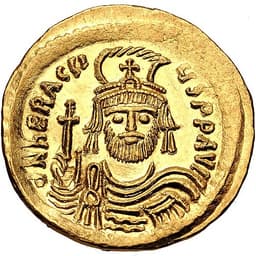
Heraclius
Emperor · Ancient
61.0Total
Basic Information
Born
63
-575
Died
—
—
Era
Ancient
Ancient
Nationality
Roman Empire
Byzantine Empire
Occupation
Emperor
Emperor
Civilization
Western
Western
Score Comparison
Military (10%)
72.0
78.5
Political (20%)
90.0
45.0
Influence (20%)
88.0
58.3
Legacy (20%)
90.0
52.0
Leadership (15%)
88.0
72.0
Strategy (15%)
75.0
80.6
TOTAL
85.9
61.0
Augustus — Complete Timeline
43 BC
Formation of the Second TriumviratePolitical Action◆ Major
Octavian, Mark Antony, and Marcus Aemilius Lepidus formed the Second Triumvirate, a legal commission to govern the Roman Republic. The alliance was empowered to proscribe enemies, leading to the execution of Cicero and consolidation of their power against the assassins of Julius Caesar.
Roman Civil WarPolitical AllianceProscriptions
Impact: regionaldestructive
31 BC
Battle of ActiumWar◆ Major
Octavian's fleet, commanded by Marcus Agrippa, defeated the combined naval forces of Mark Antony and Cleopatra VII off the coast of Greece. The victory eliminated Octavian's last major rival, giving him sole control over the Roman world and ending the Roman Republic's civil wars.
Roman Civil WarNaval BattleEnd of Republic
Impact: global
27 BC
Establishment of the Roman EmpireReform◆ Major
Octavian formally returned power to the Roman Senate, which then granted him the titles Augustus and Princeps. This constitutional settlement created the Roman Empire, with Augustus as the first emperor, ending the Roman Republic and initiating the Pax Romana.
Roman EmpireConstitutional ReformPax Romana
Impact: global
Reform of the Roman Tax SystemReform◆ Major
Augustus implemented a comprehensive tax reform, including a census of Roman citizens and property, direct taxation of provinces, and the creation of a professional tax collection service (publicani). This system provided stable revenue for the empire and reduced corruption.
Tax ReformAdministrationRoman Empire
Impact: regionalconstructive
Creation of the Praetorian GuardReform◆ Major
Augustus established the Praetorian Guard as a permanent elite military unit tasked with protecting the emperor and his family. Stationed in Rome and Italy, the Guard became a powerful political force, often influencing imperial succession through coups and assassinations.
Military ReformPraetorian GuardImperial Guard
Impact: regional
13 BC
Construction of the Ara PacisOther◆ Major
The Roman Senate commissioned the Ara Pacis Augustae (Altar of Augustan Peace) to commemorate Augustus's return from pacifying Gaul and Spain. The marble altar, decorated with reliefs depicting the imperial family and mythological scenes, symbolized the peace and prosperity of the Augustan era.
Building ProjectPropagandaAugustan Art
Impact: regionalconstructive
Heraclius — Complete Timeline
610 AD
Overthrow of PhocasPolitical Action◆ Major
Heraclius led a revolt from Carthage against the usurper Emperor Phocas. He sailed to Constantinople, where supporters opened the gates. Phocas was captured and executed, and Heraclius was crowned emperor, ending a period of civil strife and military decline.
CoupPhocasByzantine Empire
Impact: nationalconstructive
622 AD
Byzantine-Sassanid War: Final CampaignWar
Heraclius personally led a multi-year campaign against the Sassanid Persian Empire, which had occupied much of Byzantine territory. He defeated Persian forces at the Battle of Nineveh in 627 and recovered the True Cross, restoring Byzantine prestige and ending the war.
Byzantine-Sassanid WarNinevehTrue Cross
Impact: globalconstructive
636 AD
Loss of the Levant to Muslim ConquestWar
Heraclius's forces were decisively defeated by the Rashidun Caliphate at the Battle of Yarmouk. This loss led to the permanent loss of Syria, Palestine, and Egypt to Muslim rule, drastically reducing Byzantine territory and marking the beginning of the Arab-Byzantine wars.
Muslim ConquestYarmoukTerritorial Loss
Impact: globaltragic
Expert Analysis
Augustus vs Heraclius: Historical Comparison
Augustus, the founder of the Roman Empire, and Heraclius, the Byzantine emperor who saved his realm from collapse, both navigated existential crises—but Augustus’s institutional permanence far outweighs Heraclius’s military heroics.
Dimension Analysis
**Military: Augustus 72 / Heraclius 73**
Augustus professionalized the Roman army and ended civil wars, while Heraclius led brilliant counter-offensives against the Persians and Avars, but his victories were temporary against the rising Arab tide.
**Political: Augustus 92 / Heraclius 72**
Augustus masterfully disguised autocracy as a restored republic, creating a stable dynastic system that lasted centuries; Heraclius introduced the theme system but failed to secure succession, leading to decades of turmoil.
**Influence: Augustus 88 / Heraclius 67**
Augustus’s Pax Romana shaped Western governance, law, and culture for millennia; Heraclius’s Hellenization of the empire and adoption of Greek as the official language had lasting but narrower impact.
**Legacy: Augustus 90 / Heraclius 78**
Augustus is remembered as the first and archetypal Roman emperor; Heraclius is revered for saving Constantinople but is overshadowed by the Islamic conquests that followed his reign.
**Leadership: Augustus 90 / Heraclius 72**
Augustus inspired loyalty through calculated patience and propaganda; Heraclius led from the front in battle but struggled to maintain morale and unity after the Persian war.
Verdict
Augustus decisively wins due to his unparalleled political genius and the enduring institutional empire he forged, whereas Heraclius’s achievements were reactive and ultimately unsustainable.
FAQ
Q: Who ranks higher? A: Augustus ranks higher due to his superior political consolidation, lasting legacy, and the foundational role he played in shaping Western civilization.
Rankings
🥇
AugustusLeader
Mil: 72.0Pol: 90.0Inf: 88.0
85.9
🥈
Heraclius
Mil: 78.5Pol: 45.0Inf: 58.3
61.0
+24.9 behind
How This Comparison Works
Algorithm
Each figure is scored on 6 dimensions (0—100 scale) based on structured historical data: Military (10%), Political (20%), Influence (20%), Legacy (20%), Leadership (15%), Strategy (15%). The weighted total produces the final ranking.
Data Sources
Scores are computed from structured sub-indicators in the database. Scale factors adjust for era (Ancient ×0.85, Modern ×1.0) and civilization size (Eastern ×1.05, Other ×0.80) to account for differences in population and military scale.
Maximum 3 Figures
Comparisons are limited to 2—3 figures to ensure readability and statistical meaningfulness.
Error Margins
±5 points per dimension — Sub-scores are derived from historical records with inherent uncertainty. Two figures within 5 points on a dimension should be considered roughly equivalent in that area.
Total Score Accuracy
±3 points overall — The weighted combination of 6 dimensions produces a total score with approximately ±3 points of uncertainty. Differences of less than 3 points are not statistically significant— the figures are effectively tied.
Known Limitations
- Historical records are incomplete and uneven across civilizations
- Figures from oral-tradition societies may be underrepresented
- Occupation labels can misclassify multi-role figures
- Scores measure capability and impact, not moral character
- Quantitative scoring is a comparison tool, not absolute truth
Capability Radar
Military (10%) — Battles & Warfare
Battles
75
85
Win Rate
80
80
Expansion
85
70
Political (20%) — Governance & Reform
Reform
95
70
Diplomacy
90
65
Economy
85
60
Influence (20%) — Cultural & Global Reach
Cultural
85
65
Global
90
75
Legacy (20%) — Historical Impact
Historical
95
80
Longevity
95
70
Leadership (15%) — Power & Stability
Tenure
95
75
Stability
95
55
Strategy (15%) — Tactics & Innovation
Strategy
85
90
Tactics
70
85
Reform
90
75
Similar Comparisons
Comments & Discussion
PostcolonialEyes6/16/2026
This comparison reeks of Eurocentric bias dressed up as objectivity. Augustus's 'Pax Romana' was a brutal pacification program that enslaved millions and destroyed cultures from Gaul to Egypt—hardly 'institutional permanence' worth celebrating. Meanwhile, Heraclius's resistance against the Sassanids and later Arabs gets penalized because his victories weren't 'sustainable'? That's like blaming Spartacus for losing to Rome. The real story here is that Augustus's legacy is built on genocide and exploitation, while Heraclius defended a multicultural empire against external threats. The scoring deliberately downplays Heraclius's military genius (72.9 vs 72.0? That margin is a joke) and ignores the fact that his 'theme system' preserved Byzantine identity for centuries. Without Heraclius, Western Civilization wouldn't have inherited Greek philosophy or Roman law—Augustus's 'achievements' were just efficient murder at scale.
MetricMatters6/16/2026
I'd like to know who decided that 'political' is worth 15 more points than 'military' in the overall score. That weighting alone gives Augustus a 14-point boost he didn't earn. And how exactly do you measure 'influence'? By number of Wikipedia citations? Augustus's 88 in influence is absurd when Heraclius literally changed the language of an empire to Greek and his military reforms directly inspired the Byzantine army structure that outlasted Rome. Also, the 'Military' scores are basically tied (72 vs 72.9) despite Heraclius fighting existential wars against multiple foes simultaneously, while Augustus mostly crushed weaker enemies or bribed his way to victory. Either the scoring criteria are rigged toward peacetime administrators, or someone has a soft spot for imperial propaganda. Prove me wrong with data, not just assertions.
Historian1436/16/2026
拿奥古斯都和希拉克略比,就像拿秦始皇和唐玄宗比——前者开创了一个帝国的基本框架,后者只是在危机中修补而已。奥古斯都的元首制本质上是“共和外衣下的君主制”,和汉武帝的“内朝外儒”异曲同工,奠定了罗马两百年的稳定。希拉克略的军区制虽然救急,但本质上和唐朝的节度使一样,埋下了地方割据的祸根。西方评分给奥古斯都政治92分是合理的,但给希拉克略的军事73分我有点异议——他打波斯时的战略机动性,放在中国古代也就是卫青、李靖的级别,不应该这么低。另外,影响维度上,奥古斯都88分太西方中心了,对东亚来说,他的影响力远不如秦始皇或汉武帝。
Chronicler64936/16/2026
这份评分表的问题在于:第一,权重分配没有公开依据。如果军事占比提高到35%,政治降到25%,总分就会变成奥古斯都83.7对希拉克略73.5——差距缩小了将近一半。第二,'影响'维度88对67,差21分,可是奥古斯都的影响主要是西方拉丁文明圈,而希拉克略的希腊化和军区制直接影响了拜占庭、东欧和伊斯兰世界的治理模式。用中国历史类比,奥古斯都相当于汉武帝,影响区域广;希拉克略相当于隋文帝,影响了后代制度。后者不应被低估。第三,希拉克略军事评分73分,但他在626年君士坦丁堡保卫战中同时击退阿瓦尔人和波斯人,这种两面作战的难度,在《孙子兵法》里属于'上兵伐谋'级别。我的建议:把权重公开,让用户自己调,否则这评分就是主观偏见披着数学外衣。