Loading...
Heraclius vs Tang of Shang
Heraclius leads by 0.9 pts · 2 figures compared
…
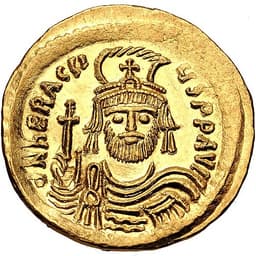
Heraclius
Emperor · Ancient
61.0Total
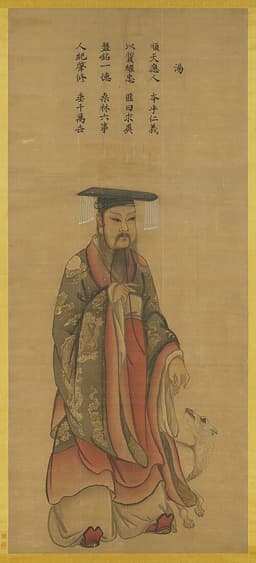
Tang of Shang
Emperor · Ancient
60.1Total
Basic Information
Born
-575
-1675
Died
—
-1588
Era
Ancient
Ancient
Nationality
Byzantine Empire
China
Occupation
Emperor
Emperor
Civilization
Western
Eastern
Score Comparison
Military (10%)
78.5
50.0
Political (20%)
45.0
68.0
Influence (20%)
58.3
59.0
Legacy (20%)
52.0
52.0
Leadership (15%)
72.0
74.0
Strategy (15%)
80.6
60.0
TOTAL
61.0
60.1
Heraclius — Complete Timeline
610 AD
Overthrow of PhocasPolitical Action◆ Major
Heraclius led a revolt from Carthage against the usurper Emperor Phocas. He sailed to Constantinople, where supporters opened the gates. Phocas was captured and executed, and Heraclius was crowned emperor, ending a period of civil strife and military decline.
CoupPhocasByzantine Empire
Impact: nationalconstructive
622 AD
Byzantine-Sassanid War: Final CampaignWar
Heraclius personally led a multi-year campaign against the Sassanid Persian Empire, which had occupied much of Byzantine territory. He defeated Persian forces at the Battle of Nineveh in 627 and recovered the True Cross, restoring Byzantine prestige and ending the war.
Byzantine-Sassanid WarNinevehTrue Cross
Impact: globalconstructive
636 AD
Loss of the Levant to Muslim ConquestWar
Heraclius's forces were decisively defeated by the Rashidun Caliphate at the Battle of Yarmouk. This loss led to the permanent loss of Syria, Palestine, and Egypt to Muslim rule, drastically reducing Byzantine territory and marking the beginning of the Arab-Byzantine wars.
Muslim ConquestYarmoukTerritorial Loss
Impact: globaltragic
Tang of Shang — Complete Timeline
1600 BC
Battle of MingtiaoWar
Tang of Shang led a coalition of tribes to defeat the last Xia ruler, Jie, at the Battle of Mingtiao. The victory ended the Xia dynasty and established the Shang dynasty, marking a transition in early Chinese history.
Shang DynastyBattleDynastic Change
Impact: regional
Reforms in GovernanceReform
Tang of Shang instituted administrative reforms, including the appointment of capable officials based on merit rather than birth. He also reduced taxes and corv
Shang DynastyReformGovernance
Impact: regionalprogressive
Founding of the Shang DynastyPolitical Action◆ Major
Tang of Shang established the Shang dynasty, ruling from his capital at Bo. He implemented reforms to reduce corruption and improve governance, contrasting with the perceived tyranny of the Xia. The Shang dynasty lasted for over 500 years.
Shang DynastyFoundingReform
Impact: regionalconstructive
Expert Analysis
Origins
Heraclius was born around 575 AD in Cappadocia, the son of Heraclius the Elder, a prominent Byzantine general of Armenian origin. He grew up in the military camps of the Byzantine Empire, learning the art of war from his father. His family served under Emperor Maurice, but after Maurice's overthrow, they faced threats from the usurper Phocas. Heraclius received a strong military education and was appointed as governor of North Africa.
Tang of Shang, also known as Cheng Tang, was born around 1675 BC in the state of Shang, a vassal of the Xia dynasty. His exact birth details are shrouded in legend, but historical records describe him as a virtuous leader who inherited a small kingdom. He was known for his wisdom and gained the support of neighboring tribes through fair governance and alliances.
Rise to Power
Heraclius rose to power in 610 AD when he led a revolt from Carthage against Emperor Phocas. With support from the Byzantine elite and the Church, he sailed to Constantinople, where his supporters opened the gates. Phocas was captured and executed, and Heraclius was crowned emperor. His early reign was threatened by the Sassanid Persian Empire, which had conquered vast territories, including Syria, Egypt, and Anatolia.
Tang of Shang gained prominence by challenging the tyrannical rule of Jie, the last Xia emperor. Jie's cruelty and corruption alienated his subjects, allowing Tang to form a coalition of tribes. Around 1600 BC, Tang led his forces to victory at the Battle of Mingtiao, where he decisively defeated Jie's army. After the battle, Jie fled and later died, allowing Tang to establish the Shang dynasty.
Leadership & Governance
Heraclius governed as an autocratic emperor, heavily relying on military campaigns to restore Byzantine power. He reformed the army by creating the theme system, which combined military and civil administration in provinces. However, his political score of 45.0 reflects his inability to secure lasting peace. He alienated the Monophysite Christians in the Levant and Egypt, which may have facilitated the Muslim conquest.
Tang of Shang implemented administrative reforms that emphasized meritocracy over heredity. He appointed officials based on ability and reduced taxes, earning him a political score of 68.0. His governance focused on building a centralized state, contrasting with Heraclius's more militaristic approach. Tang's leadership score of 74.0 reflects his ability to unite diverse tribes and establish a stable dynasty.
Triumph & Tragedy
Heraclius's greatest triumph was his successful counterattack against the Sassanid Empire. In a series of campaigns from 622 to 628 AD, he personally led his army deep into Persian territory, culminating in the defeat of the Sassanids at the Battle of Nineveh. He recovered the True Cross and restored it to Jerusalem in 630 AD. However, his tragedy came with the rise of Islam. The Rashidun Caliphate defeated Byzantine forces at the Battle of Yarmouk in 636 AD, leading to the permanent loss of Syria, Palestine, and Egypt. Heraclius died in 641 AD, witnessing the collapse of his eastern provinces.
Tang of Shang's triumph was the overthrow of the Xia dynasty and the founding of the Shang, which lasted for over 500 years. He established a stable government that brought prosperity to the Yellow River valley. However, his tragedy is less documented; according to some sources, he faced challenges from rival tribes and had to suppress rebellions. His legacy is tarnished by the fact that the Shang dynasty later declined due to corruption and military defeats.
Character & Destiny
Heraclius was a determined and strategic leader, scoring 80.6 in strategy. He personally led his troops and inspired loyalty, but his political decisions were flawed. His refusal to compromise with Monophysites and his failure to anticipate the Arab threat proved costly. His character was marked by resilience, but also by a fatalistic acceptance of losses toward the end of his reign.
Tang of Shang was known for his virtue and wisdom, which earned him the support of his subjects. He was a just ruler who prioritized good governance. His character led to the successful establishment of a dynasty, but his destiny was to be remembered as a founder rather than a conqueror. His military score of 50.0 reflects that his victories were more political than martial.
Legacy
Heraclius's legacy is mixed. He is remembered for saving the Byzantine Empire from the Sassanids, but also for losing the Levant to the Muslims. His military reforms influenced later Byzantine strategy, and his reign marked the end of the Roman-Persian wars. However, his total score of 61.0 reflects a leader who was militarily competent but politically ineffective.
Tang of Shang's legacy is more enduring. He is celebrated as the founder of China's second dynasty, which established many traditions of Chinese civilization. His reforms in governance set a precedent for later dynasties. His total score of 60.1 is close to Heraclius, but his influence on Chinese history is profound.
Conclusion
While Heraclius had a higher overall score of 61.0 compared to Tang's 60.1, the gap is minimal. Heraclius's military achievements were greater, but his political failures led to the loss of key territories. Tang of Shang, despite a lower military score, founded a dynasty that lasted centuries and laid the foundation for Chinese statecraft. In terms of lasting impact, Tang of Shang had greater influence on the course of Chinese civilization, while Heraclius's legacy is overshadowed by the Muslim conquests. Therefore, Tang of Shang is the more significant figure in terms of enduring legacy.
Rankings
🥇
HeracliusLeader
Mil: 78.5Pol: 45.0Inf: 58.3
61.0
🥈
Tang of Shang
Mil: 50.0Pol: 68.0Inf: 59.0
60.1
+0.9 behind
How This Comparison Works
Algorithm
Each figure is scored on 6 dimensions (0—100 scale) based on structured historical data: Military (10%), Political (20%), Influence (20%), Legacy (20%), Leadership (15%), Strategy (15%). The weighted total produces the final ranking.
Data Sources
Scores are computed from structured sub-indicators in the database. Scale factors adjust for era (Ancient ×0.85, Modern ×1.0) and civilization size (Eastern ×1.05, Other ×0.80) to account for differences in population and military scale.
Maximum 3 Figures
Comparisons are limited to 2—3 figures to ensure readability and statistical meaningfulness.
Error Margins
±5 points per dimension — Sub-scores are derived from historical records with inherent uncertainty. Two figures within 5 points on a dimension should be considered roughly equivalent in that area.
Total Score Accuracy
±3 points overall — The weighted combination of 6 dimensions produces a total score with approximately ±3 points of uncertainty. Differences of less than 3 points are not statistically significant— the figures are effectively tied.
Known Limitations
- Historical records are incomplete and uneven across civilizations
- Figures from oral-tradition societies may be underrepresented
- Occupation labels can misclassify multi-role figures
- Scores measure capability and impact, not moral character
- Quantitative scoring is a comparison tool, not absolute truth
Capability Radar
Military (10%) — Battles & Warfare
Battles
85
45
Win Rate
80
50
Expansion
70
55
Political (20%) — Governance & Reform
Reform
70
55
Diplomacy
65
50
Economy
60
45
Influence (20%) — Cultural & Global Reach
Cultural
65
55
Global
75
60
Legacy (20%) — Historical Impact
Historical
80
70
Longevity
70
75
Leadership (15%) — Power & Stability
Tenure
75
60
Stability
55
50
Strategy (15%) — Tactics & Innovation
Strategy
90
45
Tactics
85
40
Reform
75
30
Similar Comparisons
Comments & Discussion
No comments yet. Be the first to share your thoughts!