Loading...
Henry VII of England vs Tailapa II
Henry VII of England leads by 2.3 pts · 2 figures compared
…
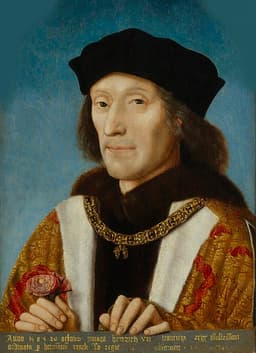
Henry VII of England
Emperor · Medieval
62.7Total
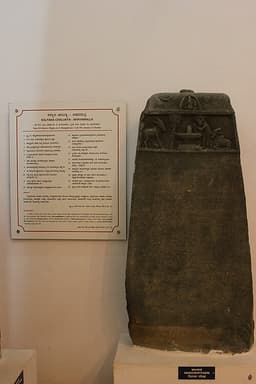
Tailapa II
Emperor · Medieval
60.4Total
Basic Information
Born
1457
957
Died
1509
997
Era
Medieval
Medieval
Nationality
England
India
Occupation
Emperor
Emperor
Civilization
Western
Indian
Score Comparison
Military (10%)
55.0
74.7
Political (20%)
78.0
53.8
Influence (20%)
59.0
61.0
Legacy (20%)
52.0
52.0
Leadership (15%)
78.0
72.0
Strategy (15%)
60.0
58.0
TOTAL
62.7
60.4
Henry VII of England — Complete Timeline
1485 AD
Battle of Bosworth FieldWar
Henry Tudor defeated and killed Richard III at Bosworth Field, ending the Wars of the Roses. This victory allowed Henry to claim the throne as Henry VII, founding the Tudor dynasty.
BattleVictoryTudor Dynasty
Impact: nationalconstructive
1486 AD
Marriage to Elizabeth of YorkPolitical Action◆ Major
Henry VII married Elizabeth of York, uniting the Houses of Lancaster and York. This marriage symbolically ended the Wars of the Roses and strengthened the legitimacy of the Tudor claim to the throne.
MarriageUnificationTudor
Impact: nationalconstructive
1487 AD
Defeat of Lambert SimnelWar◆ Major
Henry VII defeated the Yorkist pretender Lambert Simnel at the Battle of Stoke Field. This victory crushed a major rebellion and secured Henry's throne against early challenges to his rule.
RebellionBattleYorkist
Impact: nationalconstructive
1489 AD
Treaty of Medina del CampoPolitical Action◆ Major
Henry VII signed a treaty with Spain, arranging the marriage of his son Arthur to Catherine of Aragon. This alliance strengthened England's position in Europe and laid the groundwork for future diplomatic ties.
DiplomacySpainAlliance
Impact: regionalconstructive
1499 AD
Execution of Perkin WarbeckPolitical Action
Henry VII executed Perkin Warbeck, a pretender who claimed to be Richard of Shrewsbury. Warbeck's capture and execution ended a major threat to Henry's reign and demonstrated his firm control over the kingdom.
PretenderExecutionSecurity
Impact: national
Tailapa II — Complete Timeline
973 AD
Founding of the Western Chalukya DynastyPolitical Action◆ Major
Tailapa II overthrew the Rashtrakuta ruler Karka II and established the Western Chalukya dynasty. This marked the end of Rashtrakuta rule in the Deccan and the beginning of a new Chalukya era.
Impact: regional
995 AD
Defeat of the Paramara King MunjaWar◆ Major
Tailapa II defeated and captured the Paramara king Munja of Malwa. This victory consolidated Western Chalukya control over the northern Deccan and established their military reputation.
Impact: regional
Expert Analysis
Origins
Henry VII of England (born 1457) was the son of Edmund Tudor, Earl of Richmond, and Margaret Beaufort, a descendant of John of Gaunt. His father died before his birth, and his early life was marked by exile in Brittany and France after the Yorkist victory in the Wars of the Roses. Tailapa II (born c. 930) was a feudatory chief under the Rashtrakuta Empire, claiming descent from the Chalukya dynasty of Badami. His early life is less documented, but he rose from a local ruler to challenge the declining Rashtrakuta power.
Rise to Power
Henry VII seized the throne at the Battle of Bosworth Field (1485), defeating Richard III with support from French forces and English defectors. His claim was weak, but he solidified it by marrying Elizabeth of York (1486), uniting the warring houses. He then crushed the Yorkist rebellion of Lambert Simnel at Stoke Field (1487) and executed Perkin Warbeck (1499), eliminating major threats. Tailapa II overthrew Rashtrakuta king Karka II around 973 CE, founding the Western Chalukya dynasty. He defeated the Paramara king Munja of Malwa, capturing him and consolidating control over the northern Deccan. His military campaigns expanded Chalukya territory but lacked the political consolidation seen in Henry's reign.
Leadership & Governance
Henry VII was a meticulous administrator who strengthened the monarchy by reforming finances, using the Court of Star Chamber to curb noble power, and avoiding war to preserve wealth. He scored 78.0 in political leadership and 78.0 in leadership overall. His marriage alliances, like the Treaty of Medina del Campo (1489) with Spain, secured England's position. Tailapa II scored 74.7 in military but only 53.8 in political leadership. He relied on military conquest and feudal ties, but his governance was less centralized. He patronized Kannada literature and Jainism, but his empire faced rebellions after his death.
Triumph & Tragedy
Henry's greatest triumph was ending the Wars of the Roses and founding the Tudor dynasty, which lasted over a century. His fiscal policies left a surplus of £300,000. His tragedy was the death of his heir Arthur (1502), leading to succession uncertainty and the eventual marriage of Arthur's widow to his second son Henry VIII. Tailapa's triumph was defeating the Paramaras and establishing the Western Chalukya Empire, which lasted until 1189. His tragedy was the lack of a stable succession system; his son Satyashraya faced immediate revolts, weakening the dynasty.
Character & Destiny
Henry VII was cautious, secretive, and fiscally prudent, traits that stabilized England but also made him unpopular. His paranoia about pretenders led to harsh measures, but his methodical approach secured his throne. Tailapa II was a warrior-king, bold in battle but less adept at political maneuvering. His character suited conquest but not the long-term governance needed for empire stability. Historians view Henry as a pivotal figure in English state-building, while Tailapa is seen as a capable founder but not a transformative leader.
Legacy
Henry VII's legacy is the Tudor dynasty and the centralization of English government, laying groundwork for the English Reformation and rise of England as a European power. His influence score of 59.0 reflects this but is limited compared to later Tudors. Tailapa II's legacy is the Western Chalukya dynasty, which left architectural wonders like the Kailasanatha Temple and fostered Kannada literature. However, his influence is regional, scoring 61.0, and his empire fragmented within two centuries.
Conclusion
Henry VII had greater impact due to his foundational role in English history and the long-lasting Tudor dynasty. His political and leadership scores (78.0 each) exceed Tailapa's (53.8 and 72.0), and his total score (62.7) is higher than Tailapa's (60.4). While Tailapa was a more effective military commander (74.7 vs 55.0), Henry's political acumen and legacy of stable governance outweigh Tailapa's conquests. Henry VII's strategic marriage and fiscal reforms created a template for modern statecraft, whereas Tailapa's achievements remained confined to the Deccan. Thus, Henry VII stands as the more consequential figure.
Rankings
🥇
Henry VII of EnglandLeader
Mil: 55.0Pol: 78.0Inf: 59.0
62.7
🥈
Tailapa II
Mil: 74.7Pol: 53.8Inf: 61.0
60.4
+2.3 behind
How This Comparison Works
Algorithm
Each figure is scored on 6 dimensions (0—100 scale) based on structured historical data: Military (10%), Political (20%), Influence (20%), Legacy (20%), Leadership (15%), Strategy (15%). The weighted total produces the final ranking.
Data Sources
Scores are computed from structured sub-indicators in the database. Scale factors adjust for era (Ancient ×0.85, Modern ×1.0) and civilization size (Eastern ×1.05, Other ×0.80) to account for differences in population and military scale.
Maximum 3 Figures
Comparisons are limited to 2—3 figures to ensure readability and statistical meaningfulness.
Error Margins
±5 points per dimension — Sub-scores are derived from historical records with inherent uncertainty. Two figures within 5 points on a dimension should be considered roughly equivalent in that area.
Total Score Accuracy
±3 points overall — The weighted combination of 6 dimensions produces a total score with approximately ±3 points of uncertainty. Differences of less than 3 points are not statistically significant— the figures are effectively tied.
Known Limitations
- Historical records are incomplete and uneven across civilizations
- Figures from oral-tradition societies may be underrepresented
- Occupation labels can misclassify multi-role figures
- Scores measure capability and impact, not moral character
- Quantitative scoring is a comparison tool, not absolute truth
Capability Radar
Military (10%) — Battles & Warfare
Battles
30
70
Win Rate
35
75
Expansion
25
75
Political (20%) — Governance & Reform
Reform
80
65
Diplomacy
85
60
Economy
80
65
Influence (20%) — Cultural & Global Reach
Cultural
50
55
Global
45
40
Legacy (20%) — Historical Impact
Historical
70
60
Longevity
65
50
Leadership (15%) — Power & Stability
Tenure
75
70
Stability
85
60
Strategy (15%) — Tactics & Innovation
Strategy
45
70
Tactics
40
65
Reform
50
60
Similar Comparisons
Comments & Discussion
No comments yet. Be the first to share your thoughts!