Loading...
Kublai Khan vs Tailapa II
Kublai Khan leads by 13.9 pts · 2 figures compared
…
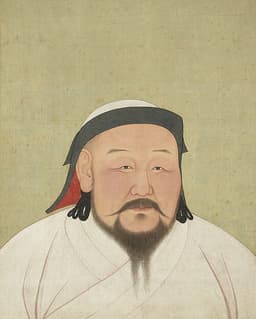
Kublai Khan
Emperor · Medieval
74.3Total
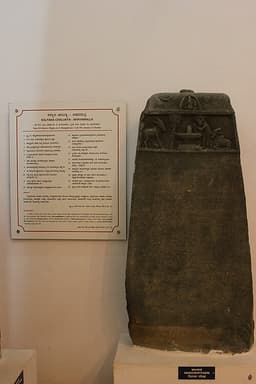
Tailapa II
Emperor · Medieval
60.4Total
Basic Information
Born
1215
957
Died
1294
997
Era
Medieval
Medieval
Nationality
Mongolia
India
Occupation
Emperor
Emperor
Civilization
Eastern
Indian
Score Comparison
Military (10%)
77.5
74.7
Political (20%)
79.2
53.8
Influence (20%)
75.0
61.0
Legacy (20%)
70.0
52.0
Leadership (15%)
72.0
72.0
Strategy (15%)
76.0
58.0
TOTAL
74.3
60.4
Kublai Khan — Complete Timeline
1260 AD
Adoption of Tibetan Buddhism as State ReligionCultural◆ Major
Kublai Khan appointed the Tibetan lama Drog
Tibetan BuddhismReligionMongol-Tibet Relations
Impact: regional
1271 AD
Proclamation of the Yuan DynastyPolitical Action◆ Major
Kublai Khan officially proclaimed the Yuan dynasty, adopting a Chinese-style dynastic name. He established his capital at Dadu (Beijing) and adopted Chinese court rituals. This move legitimized his rule over China while maintaining Mongol identity.
Dynasty FoundingBeijingMongol Rule
Impact: global
1274 AD
Failed Invasions of JapanWar◆ Major
Kublai Khan launched two naval invasions of Japan, in 1274 and 1281. Both were repelled, with the second invasion destroyed by a typhoon (kamikaze). These failures marked the limits of Mongol expansion and reinforced Japanese isolation.
Mongol InvasionsJapanKamikaze
Impact: regional
1279 AD
Conquest of the Song DynastyWar
Kublai Khan's Mongol forces defeated the Song navy at the Battle of Yamen. The last Song emperor drowned, ending the Song dynasty. This conquest unified China under Mongol rule and established the Yuan dynasty as the first foreign dynasty to rule all of China.
Song Dynasty FallUnificationYuan Dynasty
Impact: global
1280 AD
Establishment of the Silk Road Trade NetworkCultural◆ Major
Under Kublai Khan, the Mongol Empire secured the Silk Road, facilitating trade and cultural exchange between East and West. Marco Polo visited his court. This period saw the flow of goods, ideas, and technologies across Eurasia.
Silk RoadTradeCultural Exchange
Impact: globalconstructive
Tailapa II — Complete Timeline
973 AD
Founding of the Western Chalukya DynastyPolitical Action◆ Major
Tailapa II overthrew the Rashtrakuta ruler Karka II and established the Western Chalukya dynasty. This marked the end of Rashtrakuta rule in the Deccan and the beginning of a new Chalukya era.
Impact: regional
995 AD
Defeat of the Paramara King MunjaWar◆ Major
Tailapa II defeated and captured the Paramara king Munja of Malwa. This victory consolidated Western Chalukya control over the northern Deccan and established their military reputation.
Impact: regional
Expert Analysis
Kublai Khan vs Tailapa II
# The Emperor and the Restorer
On a winter morning in 1279, a Mongol emperor stood on the deck of a warship off the coast of southern China, watching the last remnants of the Song dynasty sink into the sea. Half a world away, nearly three centuries earlier, a different scene unfolded in the Deccan plateau of India: a warrior-prince named Tailapa II, emerging from the shadow of a fallen empire, raised his sword to reclaim a throne his ancestors had lost. Both men were founders. Both were conquerors. Yet one would be remembered as a titan whose empire stretched from Korea to Hungary, while the other would be known only to regional historians. The difference between them is not merely one of scale, but of the very forces that shaped their worlds.
Origins
Kublai Khan was born into the whirlwind of Mongol conquest. His grandfather was Genghis Khan, the man who had united the steppe tribes and set the world ablaze. By the time Kublai reached adulthood, the Mongol Empire was already the largest contiguous land empire in history. He grew up in a world where loyalty was measured in blood and ambition was measured in territory. His education was practical: how to ride, how to shoot, how to command. But he also absorbed the sophisticated cultures of the peoples his family had conquered, particularly the Chinese, whose administrative traditions would later define his reign.
Tailapa II, by contrast, was born into a world of collapse. The Rashtrakuta Empire, which had dominated the Deccan for two centuries, was crumbling. Tailapa belonged to the Chalukya clan, a once-great ruling family that had been displaced by the Rashtrakutas generations earlier. His early life was spent in obscurity, a minor noble in a declining kingdom. Where Kublai inherited an empire, Tailapa inherited only a name. The difference in their starting points would define their paths: one man would expand what he already had; the other would have to build from scratch.
Rise to Power
Kublai’s rise was a family affair, but not a friendly one. In 1260, after the death of his brother Möngke Khan, Kublai fought a civil war against his own younger brother, Ariq Böke, for the title of Great Khan. He won, but the victory fractured the Mongol Empire permanently. The western khanates—the Golden Horde, the Ilkhanate, the Chagatai Khanate—would never again answer to a single ruler. Kublai, however, had no interest in ruling the entire steppe. His eyes were fixed on China.
Tailapa’s rise was more straightforward, but no less dramatic. In 973, he gathered a small army and marched against the Rashtrakuta ruler Karka II. The battle was not a grand clash of empires but a desperate gamble by a man with little to lose. Tailapa won. He proclaimed the Western Chalukya dynasty and began the slow work of rebuilding Chalukya rule in the Deccan. His rise was not the conquest of a superpower but the restoration of a local dynasty—a story repeated countless times in Indian history, where empires rose and fell with the monsoon rains.
Leadership & Governance
Kublai Khan governed as a Mongol emperor who had become a Chinese emperor. He adopted the name Yuan for his dynasty, a Chinese-style designation meaning “origin,” and moved his capital to what is now Beijing. He appointed Tibetan Buddhism as the state religion in 1260, making the lama Drogön Chögyal Phagpa his imperial preceptor—a move that tied the Mongol court to the spiritual authority of Tibet while keeping the Chinese bureaucracy intact. His governance was a fusion: Mongol military discipline with Chinese civil administration, steppe pragmatism with Confucian ritual.
Tailapa II governed as a Hindu king in the classical mold. He patronized temples, granted land to Brahmins, and upheld the dharma of kingship. His administration was decentralized, relying on local chieftains and feudatories who owed him allegiance but governed their own territories. He was not a reformer but a restorer: his goal was to revive Chalukya glory, not to reinvent it. Where Kublai built a new system, Tailapa rebuilt an old one.
Their military strategies reflected these differences. Kublai’s conquest of the Song dynasty in 1279 was a masterpiece of logistics and siege warfare, involving massive armies, naval battles, and a coordinated campaign across thousands of miles. His invasions of Japan in 1274 and 1281, however, were disasters—not because of Japanese resistance but because of typhoons that destroyed his fleets. The “divine wind,” or *kamikaze*, became legend. Kublai’s ambition outran his reach.
Tailapa’s campaigns were smaller in scale but decisive in their region. In 995, he defeated and captured the Paramara king Munja of Malwa, a victory that secured Western Chalukya dominance in the Deccan. He fought the Cholas to the south and the Paramaras to the north, but his wars were not wars of annihilation. They were wars of consolidation, aimed at establishing a stable balance of power rather than an empire of continental scope.
Triumph & Tragedy
Kublai’s greatest triumph was the conquest of the Song, the most populous and wealthy state in the world at the time. When the last Song emperor drowned off the coast of Yamen in 1279, Kublai became the ruler of all China—the first foreigner to do so since the Mongols themselves. His greatest tragedy was the failure of his Japanese invasions, which cost tens of thousands of lives and shattered the myth of Mongol invincibility. The divine wind that saved Japan also revealed the limits of his power.
Tailapa’s greatest triumph was the defeat of Munja, which cemented his dynasty’s control over the Deccan. His tragedy is less dramatic: he died in 997, only 24 years after founding his dynasty, leaving his kingdom to successors who would struggle to maintain what he had built. The Western Chalukyas would last another two centuries, but they would never achieve the dominance of their Rashtrakuta predecessors or the Chola rivals. Tailapa’s triumph was not the founding of a great empire but the restoration of a modest one.
Character & Destiny
Kublai Khan was a man of immense vision and immense flaws. He could organize a campaign across half a continent but could not understand why the Japanese refused to submit. He could embrace Chinese culture but could not shed his Mongol suspicion of the Chinese elite. His character was a paradox: a conqueror who wanted to rule as a sage, a barbarian who wanted to be civilized. This tension drove his decisions—the adoption of Buddhism, the patronage of scholars, the construction of a new capital—and ultimately defined his legacy.
Tailapa II was a man of narrower ambition but clearer purpose. He knew what he wanted: to restore his family’s name and secure his region. He did not dream of conquering the world; he dreamed of ruling the Deccan. His character was that of a survivor, not a visionary. He played the game of kingship as it had been played for centuries in India: alliances, betrayals, battles, and marriages. He was not a reformer or a revolutionary. He was a restorer.
Legacy
Kublai Khan left behind an empire that would not outlast him by much. The Yuan dynasty fell to the Ming in 1368, less than a century after his death. But his legacy endured: the unification of China under a single ruler, the reopening of the Silk Road, the exchange of goods and ideas between East and West. Marco Polo visited his court. The Pax Mongolica allowed travelers, merchants, and missionaries to cross Asia safely. Kublai’s name became synonymous with Mongol greatness, even as his empire crumbled.
Tailapa II left behind a dynasty that would produce some of India’s finest temples and poets, but little else that the world remembers. The Western Chalukyas are studied by specialists, not celebrated by the general public. His legacy is local, not global. And yet, for the people of the Deccan, his restoration of Chalukya rule was a moment of pride and stability in a turbulent age.
Conclusion
The difference between Kublai Khan and Tailapa II is not a difference of quality but of context. Kublai was born into the greatest empire the world had ever seen; Tailapa was born into a broken kingdom. Kublai could afford to dream of Japan; Tailapa had to fight for Malwa. One built a new world; the other rebuilt an old one. Both succeeded, and both failed, in ways that their circumstances made inevitable. The historian’s task is not to judge which was greater, but to understand why their paths diverged. And in that understanding, we see not just two men, but two worlds—one vast and fleeting, the other modest and enduring.
Rankings
🥇
Kublai KhanLeader
Mil: 77.5Pol: 79.2Inf: 75.0
74.3
🥈
Tailapa II
Mil: 74.7Pol: 53.8Inf: 61.0
60.4
+13.9 behind
How This Comparison Works
Algorithm
Each figure is scored on 6 dimensions (0—100 scale) based on structured historical data: Military (10%), Political (20%), Influence (20%), Legacy (20%), Leadership (15%), Strategy (15%). The weighted total produces the final ranking.
Data Sources
Scores are computed from structured sub-indicators in the database. Scale factors adjust for era (Ancient ×0.85, Modern ×1.0) and civilization size (Eastern ×1.05, Other ×0.80) to account for differences in population and military scale.
Maximum 3 Figures
Comparisons are limited to 2—3 figures to ensure readability and statistical meaningfulness.
Error Margins
±5 points per dimension — Sub-scores are derived from historical records with inherent uncertainty. Two figures within 5 points on a dimension should be considered roughly equivalent in that area.
Total Score Accuracy
±3 points overall — The weighted combination of 6 dimensions produces a total score with approximately ±3 points of uncertainty. Differences of less than 3 points are not statistically significant— the figures are effectively tied.
Known Limitations
- Historical records are incomplete and uneven across civilizations
- Figures from oral-tradition societies may be underrepresented
- Occupation labels can misclassify multi-role figures
- Scores measure capability and impact, not moral character
- Quantitative scoring is a comparison tool, not absolute truth
Capability Radar
Military (10%) — Battles & Warfare
Battles
95
70
Win Rate
90
75
Expansion
95
75
Political (20%) — Governance & Reform
Reform
88
65
Diplomacy
85
60
Economy
90
65
Influence (20%) — Cultural & Global Reach
Cultural
85
55
Global
85
40
Legacy (20%) — Historical Impact
Historical
90
60
Longevity
80
50
Leadership (15%) — Power & Stability
Tenure
90
70
Stability
80
60
Strategy (15%) — Tactics & Innovation
Strategy
92
70
Tactics
85
65
Reform
88
60
Similar Comparisons
Comments & Discussion
MongolSkeptic6/16/2026
"Scale doesn't make a leader. Kublai inherited the largest military machine in history—his empire was built on his grandfather's blood, not his own. Tailapa II clawed his way from obscurity under a fallen empire, defeated the mighty Rashtrakuta with a ragtag force, and founded the Western Chalukya dynasty. That's real leadership, not riding a wave of conquest."
历史纠错官6/16/2026
"把忽必烈和尾拉帕二世放在一起比较?这本身就是历史维度上的错误。忽必烈是征服者,他的帝国建立在马背上和血泊中。尾拉帕是复国者,他的战争是为了恢复祖业,而非扩张掠夺。前者要的是天下,后者要的是正义。两个完全不同的动机,怎么能同日而语?"
DataCruncher6/16/2026
"One ruled an empire spanning 12 million km², the other controlled maybe 200,000 km². But Tailapa's victory at the Battle of Manyakheta in 973 CE was a precise, calculated strike against a superior force—a tactical masterpiece that historians still study. Kublai's conquest of Song China was a 40-year attrition campaign funded by tribute from half of Asia. Give me the underdog with a strategy."
江南遗民6/16/2026
"忽必烈灭了南宋,统一了中国,但他永远无法理解江南的文明。他接收的是一个被蒙古铁蹄踏碎的国家,而尾拉帕恢复了印度西南部的传统王朝。恢复与征服的差别就在于此:尾拉帕让文化重生,忽必烈却让文化凋零。南宋的文人雅士在他统治下只配当最下等的臣民。"