Loading...
Alexander the Great vs Tailapa II
Alexander the Great leads by 24.8 pts · 2 figures compared
…
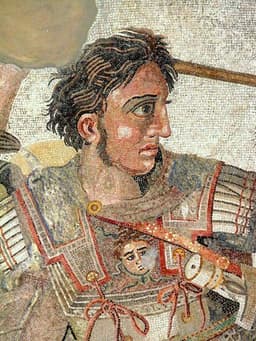
Alexander the Great
General · Ancient
85.2Total
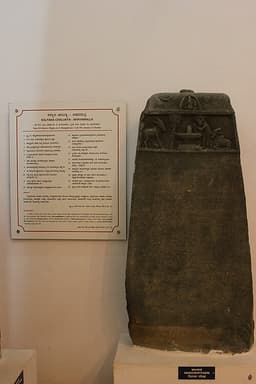
Tailapa II
Emperor · Medieval
60.4Total
Basic Information
Born
-356
957
Died
-323
997
Era
Ancient
Medieval
Nationality
Macedon
India
Occupation
General
Emperor
Civilization
Western
Indian
Score Comparison
Military (10%)
95.0
74.7
Political (20%)
60.0
53.8
Influence (20%)
92.0
61.0
Legacy (20%)
90.0
52.0
Leadership (15%)
80.0
72.0
Strategy (15%)
92.0
58.0
TOTAL
85.2
60.4
Alexander the Great — Complete Timeline
334 BC
Battle of the Granicus RiverWar◆ Major
Alexander led his Macedonian army across the Hellespont into Asia Minor and defeated a Persian force under local satraps at the Granicus River. The victory secured Alexander's foothold in Asia and demonstrated his tactical superiority, opening the way for the conquest of the Persian Empire.
Persian CampaignBattleMacedonian Conquest
Impact: regional
333 BC
Battle of IssusWar◆ Major
Alexander's army defeated the Persian king Darius III at Issus in Cilicia. Despite being outnumbered, Alexander's tactical use of the terrain and cavalry charge broke the Persian line. Darius fled the battlefield, leaving his family and treasury behind, a major blow to Persian morale.
Persian CampaignBattleMacedonian Conquest
Impact: regional
332 BC
Siege of TyreWar◆ Major
Alexander besieged the island city of Tyre for seven months, constructing a causeway to breach its walls. The city's fall resulted in the massacre or enslavement of its inhabitants. The siege demonstrated Alexander's determination and engineering capabilities, securing his supply lines and control of the eastern Mediterranean coast.
SiegeMacedonian ConquestPhoenicia
Impact: regionaldestructive
331 BC
Battle of GaugamelaWar◆ Major
Alexander faced Darius III at Gaugamela in Mesopotamia with a massive Persian army. Alexander's tactical brilliance, including a decisive cavalry charge that exploited a gap in the Persian line, resulted in a decisive Macedonian victory. Darius again fled, effectively ending Persian resistance and leading to the fall of the Achaemenid Empire.
Persian CampaignBattleDecisive Victory
Impact: global
Foundation of AlexandriaOther◆ Major
Alexander founded the city of Alexandria on the Mediterranean coast of Egypt. He personally selected the site and oversaw the initial planning. Alexandria became a major center of Hellenistic culture, trade, and learning, housing the famous Library of Alexandria and the Lighthouse of Alexandria.
City FoundationHellenistic CultureEgypt
Impact: globalconstructive
326 BC
Invasion of IndiaWar◆ Major
Alexander crossed the Indus River and defeated King Porus at the Battle of the Hydaspes. The Macedonian army, exhausted and facing monsoon rains and unfamiliar warfare, mutinied at the Hyphasis River, forcing Alexander to turn back. This campaign marked the easternmost extent of his conquests.
Indian CampaignBattleMutiny
Impact: regional
Tailapa II — Complete Timeline
973 AD
Founding of the Western Chalukya DynastyPolitical Action◆ Major
Tailapa II overthrew the Rashtrakuta ruler Karka II and established the Western Chalukya dynasty. This marked the end of Rashtrakuta rule in the Deccan and the beginning of a new Chalukya era.
Impact: regional
995 AD
Defeat of the Paramara King MunjaWar◆ Major
Tailapa II defeated and captured the Paramara king Munja of Malwa. This victory consolidated Western Chalukya control over the northern Deccan and established their military reputation.
Impact: regional
Expert Analysis
Alexander the Great vs Tailapa II
# The Conqueror and the Restorer
On a dusty battlefield in the Deccan plateau, a king named Tailapa II watched his enemy fall. The Paramara ruler Munja, who had once boasted of his literary prowess and military might, now knelt in chains before the man who had shattered his ambitions. Half a world away and thirteen centuries earlier, another young king had stood before the fallen Persian emperor Darius III, his own path to glory secured through the destruction of an empire. Both moments marked the triumph of a single will over an established order. Yet the men themselves—Alexander of Macedon and Tailapa II of the Western Chalukyas—could hardly have been more different. Why did one become a legend whose name still echoes through the ages, while the other remains a footnote even in his own civilization’s history? The answer lies not in their achievements alone, but in the worlds they inherited and the choices they made.
Origins
Alexander was born in 356 BCE into a kingdom already forged by his father, Philip II, into a military machine. The son of a brilliant general and the fierce Olympias, he grew up with Aristotle as his tutor and the *Iliad* as his scripture. The Greek world was fractious but culturally supreme, and Persia—the great enemy—loomed to the east, vast and seemingly decadent. Alexander inherited not just a throne but a purpose: to avenge the Persian invasions of Greece and to prove himself worthy of Achilles.
Tailapa II was born in 957 CE into a very different world. India’s Deccan was a chessboard of warring dynasties—the Rashtrakutas, the Paramaras, the Cholas—each claiming supremacy through blood and tribute. Tailapa was a scion of the Chalukya line, a family that had once ruled but had been eclipsed by the Rashtrakutas for over two centuries. His ambition was not to conquer the known world but to reclaim what was his. Where Alexander’s world was one of expansion, Tailapa’s was one of restoration.
Rise to Power
Alexander’s ascent was swift and brutal. At twenty, he became king after Philip’s assassination, immediately crushing rebellions in Thebes and Corinth. By twenty-two, he had crossed into Asia Minor, winning the first of his three great battles against the Persians at the Granicus River. His rise was a cascade of victories—Issus, Tyre, Gaugamela—each one pushing him deeper into an empire that stretched from the Mediterranean to the Indus.
Tailapa’s rise was slower, more calculated. For years, he served as a feudatory under the Rashtrakuta emperor Karka II, biding his time. In 973 CE, when Karka’s grip weakened, Tailapa struck. He overthrew the Rashtrakuta ruler and declared the founding of the Western Chalukya dynasty. This was not a world-conquering campaign but a coup d’état—a surgical strike to reclaim a throne. Where Alexander’s ambition was boundless, Tailapa’s was bounded by the geography of the Deccan.
Leadership & Governance
Alexander led from the front. At the Battle of Hydaspes in 326 BCE, he personally charged into the Indian war elephants, his army following him into the unknown. His military genius lay in speed, deception, and the ability to inspire men to march through deserts and over mountains. Politically, he was less successful. He tried to fuse Greek and Persian cultures, marrying his officers to Persian noblewomen and adopting Persian court rituals. But his soldiers mutinied at the Hyphasis River, refusing to go further, and his empire fractured upon his death.
Tailapa ruled from the throne room. His military score of 67.3 reflects a capable general, not a revolutionary one. His strategy score of 55.4 suggests he won through patience and local knowledge rather than tactical brilliance. His defeat of the Paramara king Munja in 995 CE was decisive but not world-shaking—it consolidated control over the central Deccan, not an entire continent. Politically, Tailapa was more astute than Alexander: he restored Chalukya institutions, patronized temples, and stabilized a region that had known constant war. His leadership score of 73.3 indicates a ruler who governed, not just conquered.
Triumph & Tragedy
Alexander’s greatest moment was the fall of Persepolis, the Persian capital, in 330 BCE. He had avenged Greece, subdued the world’s greatest empire, and stood at the pinnacle of human achievement. His tragedy came soon after: he died in Babylon in 323 BCE at age thirty-two, possibly from fever, poison, or exhaustion. His empire—the largest the world had yet seen—collapsed into civil war among his generals.
Tailapa’s greatest moment was the capture of Munja, a victory that secured the Western Chalukya dynasty for generations. His tragedy is less dramatic but more profound: he is largely forgotten. While Alexander’s name appears in a hundred languages, Tailapa’s survives only in inscriptions and regional histories. The world he restored would eventually fall to the Cholas and later the Delhi Sultanate, but his dynasty endured for over two centuries—a quiet triumph compared to Alexander’s blazing, brief fire.
Character & Destiny
Alexander was restless, driven by a need to surpass all limits. When told there were no more worlds to conquer, he wept. His personality—arrogant, generous, ruthless, visionary—shaped an age. He believed in his own divinity and acted accordingly. This hubris was both his engine and his undoing.
Tailapa was pragmatic, a restorer rather than a visionary. He did not seek immortality; he sought legitimacy. His personality was shaped by the constraints of his world—a world of shifting alliances, limited resources, and a culture that valued continuity over novelty. He did not weep for new worlds; he thanked the gods for the one he had reclaimed.
Legacy
Alexander’s legacy is immense: he spread Hellenistic culture from Egypt to India, founded cities like Alexandria, and inspired Caesar, Napoleon, and every empire-builder who followed. His legacy score of 90.0 reflects a man who changed the course of civilization.
Tailapa’s legacy is quieter but real. He revived the Chalukya architectural tradition, patronized Kannada literature, and established a dynasty that would produce some of India’s finest temples, including those at Belur and Halebidu. His legacy score of 66.9 is modest by comparison, but it is a legacy of preservation and stability, not destruction and transformation.
Conclusion
Alexander and Tailapa faced the same fundamental question: what does a conqueror do after the victory? Alexander answered by reaching for more, until the world itself could not contain him. Tailapa answered by building walls, not breaking them. One became a myth; the other became a king. In the end, the difference between them is not just a matter of scale—it is a difference of purpose. Alexander wanted to change the world; Tailapa wanted to restore it. The world remembers those who remake it, even if only for a moment. But perhaps the quieter work of restoration deserves its own kind of remembrance.
Rankings
🥇
Alexander the GreatLeader
Mil: 95.0Pol: 60.0Inf: 92.0
85.2
🥈
Tailapa II
Mil: 74.7Pol: 53.8Inf: 61.0
60.4
+24.8 behind
How This Comparison Works
Algorithm
Each figure is scored on 6 dimensions (0—100 scale) based on structured historical data: Military (10%), Political (20%), Influence (20%), Legacy (20%), Leadership (15%), Strategy (15%). The weighted total produces the final ranking.
Data Sources
Scores are computed from structured sub-indicators in the database. Scale factors adjust for era (Ancient ×0.85, Modern ×1.0) and civilization size (Eastern ×1.05, Other ×0.80) to account for differences in population and military scale.
Maximum 3 Figures
Comparisons are limited to 2—3 figures to ensure readability and statistical meaningfulness.
Error Margins
±5 points per dimension — Sub-scores are derived from historical records with inherent uncertainty. Two figures within 5 points on a dimension should be considered roughly equivalent in that area.
Total Score Accuracy
±3 points overall — The weighted combination of 6 dimensions produces a total score with approximately ±3 points of uncertainty. Differences of less than 3 points are not statistically significant— the figures are effectively tied.
Known Limitations
- Historical records are incomplete and uneven across civilizations
- Figures from oral-tradition societies may be underrepresented
- Occupation labels can misclassify multi-role figures
- Scores measure capability and impact, not moral character
- Quantitative scoring is a comparison tool, not absolute truth
Capability Radar
Military (10%) — Battles & Warfare
Battles
98
70
Win Rate
99
75
Expansion
99
75
Political (20%) — Governance & Reform
Reform
75
65
Diplomacy
80
60
Economy
70
65
Influence (20%) — Cultural & Global Reach
Cultural
95
55
Global
95
40
Legacy (20%) — Historical Impact
Historical
98
60
Longevity
95
50
Leadership (15%) — Power & Stability
Tenure
60
70
Stability
55
60
Strategy (15%) — Tactics & Innovation
Strategy
98
70
Tactics
99
65
Reform
85
60
Similar Comparisons
Comments & Discussion
DustAndDarius6/16/2026
Alexander’s success came from inheriting a well-oiled war machine from Philip II, but Tailapa II had nothing but a forgotten clan name. Starting from scratch to restore the Western Chalukyas after 200 years of Rashtrakuta dominance is way harder. Tailapa wasn’t handed a phalanx; he built one from peasants. Yet nobody names their kid after him. That’s just bad marketing by Indian historians.
地缘赌徒6/16/2026
亚历山大但凡晚生五十年,马其顿方阵就会被罗马军团撕碎。他的辉煌建立在时空红利上,而Tailapa二世在德干高原上硬扛着帕拉玛拉和朱罗两线作战,没希腊化世界的补给线可依赖。地理位置决定命运——马其顿的对手是腐朽的阿契美尼德,而Tailapa的邻居个个都是硬骨头。别跟我谈伟大,先看他们打的是谁。
CancelTheCanon6/16/2026
Tailapa II actually reunited a fragmented Deccan through administrative savvy, not just battlefield glory. He revived land grants to Brahmins and temples, stabilizing his realm for generations. Alexander just burned Persepolis and got his army mutinying in India. Who’s the better state-builder? The guy who left a dynasty, not a corpse pile. But his nickname? "The Great?" Please. Tailapa earned "Restorer" with concrete policy.
数据狂人6/16/2026
对比征服范围:亚历山大在8年内横跨约500万平方公里,但死亡率高达70%的军队全靠掠夺维持。Tailapa二世在20年内稳固了约80万平方公里的德干,税收记录显示粮食产量增加两成。每平方公里死亡率谁更低?Tailapa用农业振兴替代了刀刃经济。数据不会撒谎——持久繁荣比闪电战更需要智慧。
HellenicSkeptic6/16/2026
You revisionists forget: Alexander spread Hellenism, founding cities that became cultural hubs for centuries. Tailapa II? He built a temple and wrote some copper-plate grants. The Western Chalukya revival barely outlived him. Alexander’s mythos lasted because he changed how people thought—from Egypt to Afghanistan. Tailapa changed tax collectors. Sorry, but burning Persepolis beats balancing ledgers if we’re measuring lasting impact on global history.