Loading...
Henry the Fowler vs Zhao Kuangyin
Zhao Kuangyin leads by 10.6 pts · 2 figures compared
…
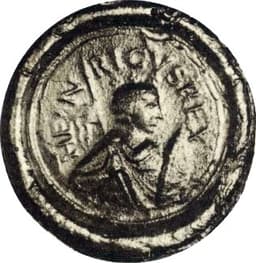
Henry the Fowler
Emperor · Medieval
60.9Total
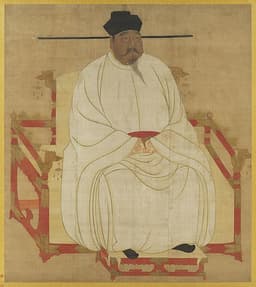
Zhao Kuangyin
Emperor · Medieval
71.5Total
Basic Information
Born
876
927
Died
936
976
Era
Medieval
Medieval
Nationality
East Francia
China
Occupation
Emperor
Emperor
Civilization
Western
Eastern
Score Comparison
Military (10%)
70.0
78.0
Political (20%)
59.3
84.0
Influence (20%)
55.0
68.0
Legacy (20%)
52.0
65.0
Leadership (15%)
85.0
74.0
Strategy (15%)
55.0
68.0
TOTAL
60.9
71.5
Henry the Fowler — Complete Timeline
919 AD
Election as King of East FranciaPolitical Action
Henry the Fowler was elected King of East Francia by the Saxon and Frankish nobles at Fritzlar on May 6, 919. He was the first Saxon king, marking the transition from Carolingian to Ottonian rule. His election was contested by other dukes but he prevailed.
ElectionAccessionOttonian Dynasty
Impact: regionalconstructive
921 AD
Treaty of Bonn (921)Political Action◆ Major
Henry the Fowler signed the Treaty of Bonn with Charles the Simple of West Francia, recognizing each other's royal titles and establishing peaceful relations. This treaty ended Carolingian claims over East Francia and solidified Henry's legitimacy as an independent king.
TreatyRecognitionDiplomacy
Impact: regionalconstructive
924 AD
Nine-Year Truce with the MagyarsPolitical Action◆ Major
Henry the Fowler negotiated a nine-year truce with the Magyars, agreeing to pay tribute in exchange for a halt to their raids. He used this period to fortify towns, reorganize the army, and train cavalry. This strategic pause was crucial for his later military reforms.
TruceMagyarsMilitary Reform
Impact: regionalconstructive
929 AD
Battle of Lenzen (929)War◆ Major
Henry the Fowler's forces defeated a Slavic army at the Battle of Lenzen, securing the eastern frontier of East Francia. This victory allowed Henry to consolidate control over the Elbe region and establish the March of Brandenburg, a key step in German eastward expansion.
BattleSlavic WarsEastern Expansion
Impact: regionalconstructive
933 AD
Battle of Riade (933)War
After the truce with the Magyars expired, Henry the Fowler led a German army to victory at the Battle of Riade (near Merseburg). The defeat of the Magyar cavalry ended their raids into East Francia for a generation and established Henry's reputation as a defender of Christendom.
BattleMagyarsVictory
Impact: regionalconstructive
936 AD
Death of Henry the FowlerOther◆ Major
Henry the Fowler died on July 2, 936, at Memleben. He was succeeded by his son, Otto I, who would become Holy Roman Emperor. Henry's reign laid the foundations for the Ottonian dynasty and the medieval German kingdom.
DeathSuccessionOttonian
Impact: regional
Zhao Kuangyin — Complete Timeline
960 AD
Founded Song dynastyPolitical Action
Zhao Kuangyin, a general of Later Zhou, was proclaimed emperor by his troops at Chenqiao. He established the Song dynasty, ending the Five Dynasties period and beginning a new era of Chinese history.
Song dynastyFoundingChenqiao
Impact: globalconstructive
961 AD
Removed military power from generalsPolitical Action◆ Major
Zhao Kuangyin invited senior generals to a banquet and persuaded them to retire peacefully. This 'removal of military power over wine' prevented military coups and centralized control.
Song dynastyMilitary reformCentralization
Impact: nationalconstructive
963 AD
Unified southern ChinaWar◆ Major
Zhao Kuangyin launched campaigns to conquer the southern kingdoms, including Jingnan, Later Shu, and Southern Tang. By his death, most of China was reunified under Song rule.
Song unificationConquestSouthern kingdoms
Impact: national
Expert Analysis
Zhao Kuangyin vs Henry the Fowler
# The Emperor and the Duke: Two Architects of Medieval Kingdoms
On a spring evening in 961, a Chinese emperor hosted a banquet for his most powerful generals. Wine flowed freely, laughter echoed through the halls, and when the emperor finally spoke, his words were not of war but of retirement. By dawn, the military men who had placed him on the throne had agreed to lay down their swords. Half a world away and decades earlier, another ruler faced a different kind of challenge. In 924, Henry the Fowler, King of East Francia, signed a humiliating truce with Magyar raiders, agreeing to pay tribute to save his kingdom from annihilation. One man disarmed his own allies with wine and poetry; the other bought time with gold and patience. Both would build kingdoms that shaped the future of their civilizations, but their paths reveal the profound differences between Eastern and Western medieval statecraft.
Origins
Zhao Kuangyin was born in 927 into a military family serving the Later Zhou dynasty, one of the short-lived regimes that had emerged from the chaos of the Five Dynasties and Ten Kingdoms period. His father was a general, and young Zhao grew up surrounded by the clatter of armor and the politics of the camp. The China he knew was a world of constant warfare, where generals made and unmade emperors at will. By contrast, Henry the Fowler, born in 876, inherited a different kind of instability. East Francia had emerged from the ruins of Charlemagne's empire, a patchwork of Saxon, Frankish, and Bavarian duchies held together by fragile loyalties. Henry was the son of Otto the Illustrious, Duke of Saxony, and his world was one not of imperial collapse but of feudal negotiation. Where Zhao learned that power came from military force, Henry learned that power came from consensus.
Rise to Power
Zhao's ascent was swift and dramatic. In 960, while leading his army north to repel a Khitan invasion, his troops stopped at Chenqiao, draped a yellow imperial robe over his shoulders, and proclaimed him emperor. The story may be partly legend, but it captures a truth: Zhao became emperor because his soldiers wanted him to. He accepted the mandate, marched back to the capital, and founded the Song dynasty with remarkable efficiency. Henry's rise was no less significant but far more deliberate. In 919, the Saxon and Frankish nobles elected him King of East Francia at Fritzlar. He was not imposed by an army but chosen by a council. Unlike Zhao, Henry faced immediate opposition from other powerful dukes, particularly the Duke of Bavaria, who refused to recognize his authority. Henry did not crush his rivals; he negotiated with them, exchanging titles and territories for loyalty.
Leadership & Governance
The contrast in their ruling styles is most striking in how they handled military power. Zhao's famous "removal of military power over a cup of wine" in 961 was a masterstroke of political genius. He invited his most trusted generals to a banquet, reminded them of the instability that had plagued previous dynasties, and offered them wealth, land, and comfortable retirement in exchange for their commands. They accepted. Zhao then reorganized the Song military, placing civilian officials in charge and rotating commanders to prevent any single general from building a power base. The result was unprecedented internal stability, but at a cost: the Song military would never again match the ferocity of the Tang armies.
Henry faced the opposite problem. His kingdom was under constant threat from Magyar raids and Slavic incursions. His solution was to build a network of fortified towns and train a new kind of cavalry, drawing on Saxon warriors who could fight on horseback. In 924, he made the painful decision to pay tribute to the Magyars for a nine-year truce. It was not cowardice but strategy. He used those years to fortify his defenses, train his army, and build alliances. When the truce expired, he refused to pay and met the Magyars at Riade in 933. The victory was decisive, and Henry became the defender of Christendom. His governance was personal and feudal—he ruled through dukes and bishops, not bureaucrats—but it worked.
Triumph & Tragedy
Zhao's greatest triumph was the unification of southern China. Between 963 and 976, he launched campaigns that conquered the kingdoms of Jingnan, Later Shu, and Southern Tang, bringing the Yangtze River basin under Song control. He was a careful strategist, preferring diplomacy and economic pressure to outright war. His tragedy was that he never completed the work. The Khitan Liao dynasty in the north remained unconquered, and the Sixteen Prefectures, a strategic buffer zone, stayed in enemy hands. Zhao died in 976, possibly poisoned by his brother, leaving an unfinished empire.
Henry's triumph was the Battle of Lenzen in 929, where his forces crushed a Slavic army and secured the eastern frontier. His tragedy was more subtle. He spent his entire reign building a kingdom, but he never claimed the imperial title. When he died in 936 at Memleben, he was still a king, not an emperor. His son Otto would take that final step, becoming Holy Roman Emperor in 962. Henry laid the foundation, but he never wore the crown.
Character & Destiny
Zhao was a man of calculated gentleness. He did not execute his rivals; he invited them to dinner. He did not purge the old bureaucracy; he absorbed it. His political scores of 75.9 and leadership of 82.3 reflect a ruler who understood that power is often maintained by disarming it. Henry, with his political score of 74.5 and leadership of 75.7, was more pragmatic than visionary. He accepted tribute, negotiated with enemies, and built slowly. His strategy score of 55.2 is surprisingly low, but it misses the point: Henry's genius was not in battlefield tactics but in the patient construction of a stable kingdom.
Their different fates reflect their different worlds. Zhao lived in a civilization that valued centralized bureaucracy and cultural refinement. Henry lived in one that valued feudal loyalty and military readiness. Zhao could afford to disarm his generals because China had a tradition of imperial administration. Henry could not because East Francia had no such tradition—his power depended on the very dukes and counts he had to keep strong.
Legacy
Zhao Kuangyin is remembered as the founder of the Song dynasty, a golden age of Chinese culture, commerce, and technology. His decision to prioritize civilian rule over military power shaped China for centuries, for better and worse. The Song became a prosperous but vulnerable empire, eventually conquered by the Mongols. Henry the Fowler is remembered as the founder of the Ottonian dynasty, which would produce the Holy Roman Empire. His son Otto I would be crowned emperor, and the Saxon kings would dominate Europe for a generation.
Conclusion
Both men faced the same fundamental challenge: how to build a stable kingdom in an age of violence. Zhao chose to disarm his own followers, trusting in institutions and culture. Henry chose to arm his enemies' enemies, trusting in time and patience. One created a civilization; the other created a dynasty. In the end, their stories remind us that the greatest leaders are not those who conquer the most territory, but those who understand the limits of their own power—and the possibilities of their own age.
Rankings
🥇
Zhao KuangyinLeader
Mil: 78.0Pol: 84.0Inf: 68.0
71.5
🥈
Henry the Fowler
Mil: 70.0Pol: 59.3Inf: 55.0
60.9
+10.6 behind
How This Comparison Works
Algorithm
Each figure is scored on 6 dimensions (0—100 scale) based on structured historical data: Military (10%), Political (20%), Influence (20%), Legacy (20%), Leadership (15%), Strategy (15%). The weighted total produces the final ranking.
Data Sources
Scores are computed from structured sub-indicators in the database. Scale factors adjust for era (Ancient ×0.85, Modern ×1.0) and civilization size (Eastern ×1.05, Other ×0.80) to account for differences in population and military scale.
Maximum 3 Figures
Comparisons are limited to 2—3 figures to ensure readability and statistical meaningfulness.
Error Margins
±5 points per dimension — Sub-scores are derived from historical records with inherent uncertainty. Two figures within 5 points on a dimension should be considered roughly equivalent in that area.
Total Score Accuracy
±3 points overall — The weighted combination of 6 dimensions produces a total score with approximately ±3 points of uncertainty. Differences of less than 3 points are not statistically significant— the figures are effectively tied.
Known Limitations
- Historical records are incomplete and uneven across civilizations
- Figures from oral-tradition societies may be underrepresented
- Occupation labels can misclassify multi-role figures
- Scores measure capability and impact, not moral character
- Quantitative scoring is a comparison tool, not absolute truth
Capability Radar
Military (10%) — Battles & Warfare
Battles
55
75
Win Rate
60
85
Expansion
60
75
Political (20%) — Governance & Reform
Reform
75
90
Diplomacy
70
85
Economy
65
80
Influence (20%) — Cultural & Global Reach
Cultural
55
70
Global
40
60
Legacy (20%) — Historical Impact
Historical
65
80
Longevity
60
75
Leadership (15%) — Power & Stability
Tenure
70
65
Stability
70
85
Strategy (15%) — Tactics & Innovation
Strategy
65
80
Tactics
50
70
Reform
70
90
Similar Comparisons
Comments & Discussion
龙袍诗人6/16/2026
赵匡胤那场杯酒释兵权,简直就是东方权谋的巅峰之作。用一顿饭解决五代十国武将拥兵自重的顽疾,比亨利那头笨鸟聪明多了。亨利付贡金给马扎尔人,那是窝囊,赵匡胤却用诗歌和酒杯稳住江山。历史证明,酒桌上的智慧比战场上的蛮力更持久,宋朝三百年的稳定就是铁证。不懂这点的,建议去读读《资治通鉴》。
The Danegeld Scrooge6/16/2026
Henry the Fowler paying tribute to the Magyars in 924 wasn't strategic genius—it was a coward's bet that paid off by luck. Zhao Kuangyin's banquet gambit in 961 was a masterstroke of preventive leverage: he bought loyalty with wine instead of gold, and his generals stayed bought. Henry's tribute only emboldened the raiders for decades, while Zhao's move stabilized China for generations. One man funded his enemies; the other outsmarted his allies. I'd rather drink with Zhao than pay Danegeld with
银枪铁券6/16/2026
说到军事根基,赵匡胤可是从禁军统帅起步,亲手终结了五代军阀割据的噩梦。亨利那老狐狸呢?靠一份《凡尔登条约》的遗产勉强凑合个东法兰克王国,还靠萨克森部落的忠诚苟着。赵匡胤在961年改组禁军,设立三衙制度,彻底控制军权;亨利却在924年搞什一税,让教会管军队。一个是铁腕改革家,一个是中古妥协者,高下立判。
Claymore Cartographer6/16/2026
Let's be real: Henry the Fowler built East Francia from scratch, negotiating with unruly dukes and pagan raiders while Zhao inherited a unified Chinese empire with a ready-made bureaucracy. Henry's truce in 924 bought him five years to fortify towns and train cavalry—moves that eventually crushed the Magyars at Lechfeld in 955. Zhao's "disarmament" was elegant, sure, but it also created a top-heavy, anti-military Song dynasty that later lost the north to nomads. Give me Henry's grit over Zhao's
赤脚史官6/16/2026
比较这两位,就像拿洛阳牡丹和萨克森橡树比美,风格不同但都根深蒂固。我佩服赵匡胤的杯酒释兵权,那是五代混战后的一剂猛药;但亨利在924年签下屈辱和约后,硬是建起城墙巩固防线,后来反踢马扎尔人的屁股。两人都是“退一步进两步”的高手,只是赵匡胤靠文化和算计,亨利靠耐心和铁血。别争谁更牛,他们的遗产都在各自文明的骨子里刻着呢。