Loading...
Henry the Fowler vs Pedro I of Brazil
Henry the Fowler leads by 6.3 pts · 2 figures compared
…
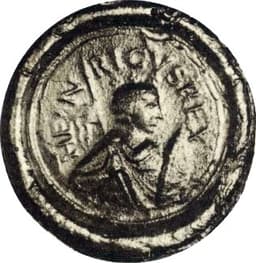
Henry the Fowler
Emperor · Medieval
60.9Total
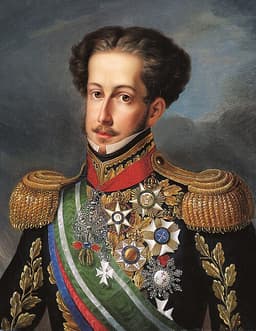
Pedro I of Brazil
Emperor · Modern
54.6Total
Basic Information
Born
876
1798
Died
936
1834
Era
Medieval
Modern
Nationality
East Francia
Brazil
Occupation
Emperor
Emperor
Civilization
Western
Western
Score Comparison
Military (10%)
70.0
55.0
Political (20%)
59.3
62.7
Influence (20%)
55.0
59.0
Legacy (20%)
52.0
50.0
Leadership (15%)
85.0
53.2
Strategy (15%)
55.0
45.0
TOTAL
60.9
54.6
Henry the Fowler — Complete Timeline
919 AD
Election as King of East FranciaPolitical Action
Henry the Fowler was elected King of East Francia by the Saxon and Frankish nobles at Fritzlar on May 6, 919. He was the first Saxon king, marking the transition from Carolingian to Ottonian rule. His election was contested by other dukes but he prevailed.
ElectionAccessionOttonian Dynasty
Impact: regionalconstructive
921 AD
Treaty of Bonn (921)Political Action◆ Major
Henry the Fowler signed the Treaty of Bonn with Charles the Simple of West Francia, recognizing each other's royal titles and establishing peaceful relations. This treaty ended Carolingian claims over East Francia and solidified Henry's legitimacy as an independent king.
TreatyRecognitionDiplomacy
Impact: regionalconstructive
924 AD
Nine-Year Truce with the MagyarsPolitical Action◆ Major
Henry the Fowler negotiated a nine-year truce with the Magyars, agreeing to pay tribute in exchange for a halt to their raids. He used this period to fortify towns, reorganize the army, and train cavalry. This strategic pause was crucial for his later military reforms.
TruceMagyarsMilitary Reform
Impact: regionalconstructive
929 AD
Battle of Lenzen (929)War◆ Major
Henry the Fowler's forces defeated a Slavic army at the Battle of Lenzen, securing the eastern frontier of East Francia. This victory allowed Henry to consolidate control over the Elbe region and establish the March of Brandenburg, a key step in German eastward expansion.
BattleSlavic WarsEastern Expansion
Impact: regionalconstructive
933 AD
Battle of Riade (933)War
After the truce with the Magyars expired, Henry the Fowler led a German army to victory at the Battle of Riade (near Merseburg). The defeat of the Magyar cavalry ended their raids into East Francia for a generation and established Henry's reputation as a defender of Christendom.
BattleMagyarsVictory
Impact: regionalconstructive
936 AD
Death of Henry the FowlerOther◆ Major
Henry the Fowler died on July 2, 936, at Memleben. He was succeeded by his son, Otto I, who would become Holy Roman Emperor. Henry's reign laid the foundations for the Ottonian dynasty and the medieval German kingdom.
DeathSuccessionOttonian
Impact: regional
Pedro I of Brazil — Complete Timeline
1822 AD
Declaration of Independence of BrazilPolitical Action
Pedro I declared Brazil's independence from Portugal on September 7, 1822, at the Ipiranga River in S
Impact: globalprogressive
Coronation as Emperor of BrazilPolitical Action◆ Major
Pedro I was crowned Emperor of Brazil on December 1, 1822, in Rio de Janeiro. The coronation formalized the new imperial government, with Pedro I as constitutional monarch, though he retained significant executive powers.
Impact: nationalconstructive
1823 AD
War of Independence of BrazilWar◆ Major
Pedro I led Brazilian forces against Portuguese loyalists in the War of Independence. Key battles occurred in Bahia, Maranh
Impact: national
Dissolution of the Constituent AssemblyPolitical Action◆ Major
Pedro I dissolved the Constituent Assembly after conflicts over the constitution's limits on imperial power. He then imposed the 1824 Constitution, which granted the emperor extensive powers, including the Moderating Power, centralizing authority.
Impact: nationaldestructive
1831 AD
Abdication of the Brazilian ThronePolitical Action
Pedro I abdicated the Brazilian throne in favor of his five-year-old son Pedro II on April 7, 1831. He returned to Portugal to claim the Portuguese throne, leaving Brazil under a regency until his son came of age.
Impact: national
Expert Analysis
Henry the Fowler vs Pedro I of Brazil
# The Emperor and the King: Two Founders, Two Worlds
On a September morning in 1822, a young prince stood beside the Ipiranga River in São Paulo, tore the Portuguese insignia from his uniform, and shouted words that would echo through Latin American history: "Independence or Death!" Nine centuries earlier, in a wooden hall at Fritzlar, a Saxon duke accepted a crown he had not sought, knelt before his nobles, and began the quiet work of building a kingdom from the ruins of an empire. Pedro I of Brazil and Henry the Fowler of East Francia never met, could not have understood each other's worlds, yet both were founders. One created a nation in a single dramatic gesture; the other pieced one together through decades of patient negotiation. Their stories reveal how character, circumstance, and timing shape not only leaders but the very nations they leave behind.
Origins
Henry the Fowler was born in 876 into a world of fragments. Charlemagne's empire had splintered, and the eastern portion—East Francia—was a collection of duchies ruled by proud, warlike nobles who acknowledged no master. Henry's father, Otto the Illustrious, was Duke of Saxony, a region of forests and marshes on the frontier of Christendom. The Saxons were a tough people, hardened by centuries of resistance against both Franks and pagan Slavs. Henry grew up learning to hunt, fight, and negotiate with chieftains who respected only strength and cunning. His nickname, "the Fowler," came from his supposed love of bird-hunting—a pastime that suggests a man who knew how to wait, watch, and strike at the right moment.
Pedro I was born into a different kind of chaos. The year was 1798, and Europe was convulsed by the Napoleonic Wars. His family, the Portuguese Braganzas, had fled to Brazil in 1807 to escape Napoleon's armies, transforming Rio de Janeiro into the capital of a transatlantic empire. Pedro grew up not in the cramped palaces of Lisbon but in the tropical splendor of the New World, surrounded by Brazilian-born advisors who whispered that his future lay not in Europe but in the Americas. He was impulsive, passionate, and fiercely proud—a man who acted first and thought later. His education was haphazard, but he possessed a natural charisma that drew people to him.
Rise to Power
Henry's path to kingship was anything but direct. When the last Carolingian king of East Francia died in 911, the duchies elected Conrad I, a Frankish nobleman. Conrad spent his reign fighting rebellious dukes, including Henry himself. On his deathbed in 918, Conrad reportedly told his brother: "Henry is the most worthy of the crown. Let peace be given to the Franks and Saxons." It was a stunning reversal—an enemy acknowledging that the times demanded a different kind of leader. In May 919, at Fritzlar, the Saxon and Frankish nobles elected Henry as king. But he refused to be anointed by the Church. He would be a king of warriors, not of priests.
Pedro's rise was swifter and more theatrical. In 1821, when his father King João VI returned to Portugal, he left Pedro as regent of Brazil. The Portuguese parliament, the Cortes, tried to reduce Brazil to colonial status, demanding Pedro return to Europe. On January 9, 1822, he famously declared "I will stay"—the Dia do Fico. Eight months later came the cry at Ipiranga. Pedro was crowned emperor on December 1, 1822, at age 24. He had not waited for consensus; he had seized the moment.
Leadership & Governance
Henry's leadership was a masterclass in patience. Facing Magyar raiders who had terrorized Europe for decades, he did not immediately attack. Instead, he negotiated a nine-year truce in 924, paying tribute to buy time. He used those years to build fortified towns, train heavy cavalry, and forge alliances with the other German duchies. When the truce expired in 933, he was ready. At the Battle of Riade, his new army crushed the Magyars, ending their threat to East Francia. Henry also secured his eastern frontier by defeating Slavic forces at Lenzen in 929. But his greatest achievement was political: he convinced the proud dukes of Swabia, Bavaria, and Franconia to recognize his authority without war, through marriages, treaties, and the careful distribution of honors.
Pedro governed in a different key—dramatic, authoritarian, and ultimately self-destructive. He dissolved the Constituent Assembly in 1823 when it tried to limit his powers, then imposed his own constitution. He fought and won the War of Independence against Portuguese loyalists, securing Brazil's territory. But he could not adapt to the realities of constitutional monarchy. His Portuguese-born advisors clashed with Brazilian nationalists; his mistress scandalized the court; his autocratic style alienated the very elites who had supported him. By 1831, facing rebellion and humiliation, he abdicated in favor of his five-year-old son and sailed back to Portugal, leaving behind a nation still uncertain of its future.
Triumph & Tragedy
Henry's greatest triumph was not a single battle but the structure he built. When he died in 936 at Memleben, he left a kingdom that was stable, defensible, and ready for greatness. His son Otto I would be crowned Holy Roman Emperor, inheriting a realm that Henry had forged from chaos. The tragedy of Henry's life is that he never saw the full flowering of his work—he was the seed, not the tree.
Pedro's triumph was Brazil itself. He had declared independence, won it, and preserved the unity of a territory larger than Europe. His tragedy was that he could not govern what he had created. His abdication in 1831 was a confession of failure, and his return to Portugal led to a brief, bitter war against his own brother. He died in 1834 at age 35, exhausted and embittered, a founder who had outlived his own usefulness.
Character & Destiny
Henry the Fowler was a man who understood limits. He knew that kingship required consent, that power had to be earned, and that time was a weapon. He built slowly, trusted cautiously, and struck decisively only when the moment was right. His personality—patient, calculating, humble enough to learn from enemies—shaped a kingdom that would endure for centuries.
Pedro I was a man who understood only the present. He could inspire, fight, and dare, but he could not compromise, delegate, or endure criticism. His impulsiveness won Brazil its independence but lost him his throne. He was a revolutionary who had no patience for revolution's messy aftermath.
Legacy
Henry's legacy is the Ottonian dynasty, the Holy Roman Empire, and the foundation of Germany itself. He is remembered not with statues and holidays but as the quiet architect of a nation that would not fully emerge for another thousand years. His score of 68.2 reflects a leader who was effective rather than brilliant, solid rather than spectacular.
Pedro's legacy is Brazil—a nation that remains the largest Portuguese-speaking country in the world, a tropical empire that chose monarchy over fragmentation. His score of 65.7 captures both his achievements and his failures. He is remembered as the Liberator, but also as the Emperor who abandoned his throne.
Conclusion
Standing on the banks of the Ipiranga River, Pedro shouted for independence. Standing in a wooden hall at Fritzlar, Henry accepted a crown in silence. One acted, the other waited. One created a nation in a moment, the other built one over a lifetime. Both succeeded; both failed. Their stories remind us that history judges leaders not by their intentions but by what endures. Henry's kingdom became the Holy Roman Empire; Pedro's empire became modern Brazil. In the end, both men gave their nations the greatest gift a founder can give: the chance to survive.
Rankings
🥇
Henry the FowlerLeader
Mil: 70.0Pol: 59.3Inf: 55.0
60.9
🥈
Pedro I of Brazil
Mil: 55.0Pol: 62.7Inf: 59.0
54.6
+6.3 behind
How This Comparison Works
Algorithm
Each figure is scored on 6 dimensions (0—100 scale) based on structured historical data: Military (10%), Political (20%), Influence (20%), Legacy (20%), Leadership (15%), Strategy (15%). The weighted total produces the final ranking.
Data Sources
Scores are computed from structured sub-indicators in the database. Scale factors adjust for era (Ancient ×0.85, Modern ×1.0) and civilization size (Eastern ×1.05, Other ×0.80) to account for differences in population and military scale.
Maximum 3 Figures
Comparisons are limited to 2—3 figures to ensure readability and statistical meaningfulness.
Error Margins
±5 points per dimension — Sub-scores are derived from historical records with inherent uncertainty. Two figures within 5 points on a dimension should be considered roughly equivalent in that area.
Total Score Accuracy
±3 points overall — The weighted combination of 6 dimensions produces a total score with approximately ±3 points of uncertainty. Differences of less than 3 points are not statistically significant— the figures are effectively tied.
Known Limitations
- Historical records are incomplete and uneven across civilizations
- Figures from oral-tradition societies may be underrepresented
- Occupation labels can misclassify multi-role figures
- Scores measure capability and impact, not moral character
- Quantitative scoring is a comparison tool, not absolute truth
Capability Radar
Military (10%) — Battles & Warfare
Battles
55
35
Win Rate
60
40
Expansion
60
30
Political (20%) — Governance & Reform
Reform
75
45
Diplomacy
70
50
Economy
65
30
Influence (20%) — Cultural & Global Reach
Cultural
55
40
Global
40
45
Legacy (20%) — Historical Impact
Historical
65
55
Longevity
60
50
Leadership (15%) — Power & Stability
Tenure
70
55
Stability
70
25
Strategy (15%) — Tactics & Innovation
Strategy
65
35
Tactics
50
30
Reform
70
20
Similar Comparisons
Comments & Discussion
Kingmaker's Quill6/16/2026
Pedro's "Independence or Death!" is pure theater, while Henry's 919 election at Fritzlar was real statecraft. Pedro had an empire handed to him on a silver platter by his father's flight; Henry inherited a fractured duchy and rebuilt from scratch. Show me one treaty Pedro negotiated that lasted a decade. Henry's truce with the Magyars bought nine years of peace—enough time to build fortresses and train cavalry. One man shouted; the other schemed. History remembers builders, not shouters.
墨水剑客6/16/2026
比较毫无意义。佩德罗一世是个浪漫的戏剧家,亨利一世是个务实的泥瓦匠。1822年巴西独立是一出独角戏:佩德罗撕下葡国徽章时,只有几个随从在场;亨利在弗里茨拉尔接受王冠时,面对的是萨克森、巴伐利亚、士瓦本和法兰克尼亚四大公爵的合谋。一个靠冲动建国,一个靠联盟治国。如果让佩德罗打十年仗,他早就被贵族绞死了。
Skeptical_Scrivener6/16/2026
The so-called "comparison" ignores obvious structural differences. Pedro inherited a coherent colonial administration with 3 million subjects; Henry ruled over 500,000 Saxons and had to bribe, fight, and marry his way into controlling Bavaria and Swabia. You're comparing a man who won a lottery (Portuguese crown fleeing to Brazil) with a man who dug a well. Check the fiscal records: Pedro's Brazil had gold mines and sugar plantations generating steady revenue; Henry's East Francia had mud, timbe
春秋笔6/16/2026
军事史家的盲点:亨利赢得关键战役是928年对斯拉夫人的伦岑战役,但真正让他立国的是防御体系——他建了无数城堡,把骑兵变成步兵的噩梦。佩德罗呢?他的军事成就是1823年镇压巴伊亚的葡萄牙抵抗,只用了几个月。九世纪和十九世纪的战争完全不是一回事。亨利面对的是马扎尔骑射和北欧海盗,佩德罗对付的是散兵游勇。论军事创新,亨利十比零胜出。
Romantic_Realist6/16/2026
You're all missing the emotional core. Pedro's cry at Ipiranga wasn't theater—it was existential. He risked everything, including his relationship with his father King João VI, to break with Portugal. Henry played it safe, accepting a crown he never wanted. One created a nation through raw passion; the other through cold calculation. Brazil needed a symbolic rupture; East Francia needed slow consolidation. Different tools for different jobs. But I'd rather follow a man who screams for freedom th