Loading...
Henry the Fowler vs Napoleon Bonaparte
Napoleon Bonaparte leads by 10.0 pts · 2 figures compared
…
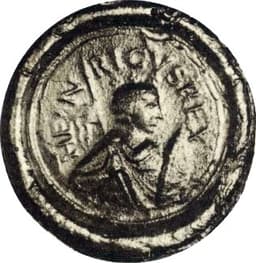
Henry the Fowler
Emperor · Medieval
60.9Total

Napoleon Bonaparte
General · Modern
70.9Total
Basic Information
Born
876
1769
Died
936
1821
Era
Medieval
Modern
Nationality
East Francia
France
Occupation
Emperor
General
Civilization
Western
Western
Score Comparison
Military (10%)
70.0
94.0
Political (20%)
59.3
72.0
Influence (20%)
55.0
40.0
Legacy (20%)
52.0
80.0
Leadership (15%)
85.0
78.0
Strategy (15%)
55.0
90.0
TOTAL
60.9
70.9
Henry the Fowler — Complete Timeline
919 AD
Election as King of East FranciaPolitical Action
Henry the Fowler was elected King of East Francia by the Saxon and Frankish nobles at Fritzlar on May 6, 919. He was the first Saxon king, marking the transition from Carolingian to Ottonian rule. His election was contested by other dukes but he prevailed.
ElectionAccessionOttonian Dynasty
Impact: regionalconstructive
921 AD
Treaty of Bonn (921)Political Action◆ Major
Henry the Fowler signed the Treaty of Bonn with Charles the Simple of West Francia, recognizing each other's royal titles and establishing peaceful relations. This treaty ended Carolingian claims over East Francia and solidified Henry's legitimacy as an independent king.
TreatyRecognitionDiplomacy
Impact: regionalconstructive
924 AD
Nine-Year Truce with the MagyarsPolitical Action◆ Major
Henry the Fowler negotiated a nine-year truce with the Magyars, agreeing to pay tribute in exchange for a halt to their raids. He used this period to fortify towns, reorganize the army, and train cavalry. This strategic pause was crucial for his later military reforms.
TruceMagyarsMilitary Reform
Impact: regionalconstructive
929 AD
Battle of Lenzen (929)War◆ Major
Henry the Fowler's forces defeated a Slavic army at the Battle of Lenzen, securing the eastern frontier of East Francia. This victory allowed Henry to consolidate control over the Elbe region and establish the March of Brandenburg, a key step in German eastward expansion.
BattleSlavic WarsEastern Expansion
Impact: regionalconstructive
933 AD
Battle of Riade (933)War
After the truce with the Magyars expired, Henry the Fowler led a German army to victory at the Battle of Riade (near Merseburg). The defeat of the Magyar cavalry ended their raids into East Francia for a generation and established Henry's reputation as a defender of Christendom.
BattleMagyarsVictory
Impact: regionalconstructive
936 AD
Death of Henry the FowlerOther◆ Major
Henry the Fowler died on July 2, 936, at Memleben. He was succeeded by his son, Otto I, who would become Holy Roman Emperor. Henry's reign laid the foundations for the Ottonian dynasty and the medieval German kingdom.
DeathSuccessionOttonian
Impact: regional
Napoleon Bonaparte — Complete Timeline
1799 AD
Coup of 18 BrumaireOther◆ Major
Napoleon Bonaparte, with support from his brother Lucien and key political figures, overthrew the Directory in a bloodless coup. He established the Consulate with himself as First Consul, effectively becoming the ruler of France. This event ended the French Revolution's most unstable period.
French RevolutionCoupRise to Power
Impact: regional
1804 AD
Promulgation of the Napoleonic CodeOther◆ Major
Napoleon enacted the Civil Code of the French, known as the Napoleonic Code, a comprehensive set of laws that replaced the fragmented feudal legal systems. The code established legal equality, protected property rights, and secularized law. It became the basis for legal systems in many European and world countries.
Legal ReformNapoleonic CodeCivil Law
Impact: globalconstructive
1805 AD
Battle of AusterlitzWar◆ Major
Napoleon's Grande Arm
Napoleonic WarsBattleDecisive Victory
Impact: global
1812 AD
Invasion of RussiaWar◆ Major
Napoleon led the Grande Arm
Napoleonic WarsInvasionDisaster
Impact: globaldestructive
1815 AD
Battle of WaterlooWar◆ Major
Napoleon's French army was defeated by the combined forces of the Duke of Wellington's Anglo-Allied army and Gebhard Leberecht von Bl
Napoleonic WarsBattleFinal Defeat
Impact: globaldestructive
Expert Analysis
Napoleon Bonaparte vs Henry the Fowler: Historical Comparison
Napoleon Bonaparte and Henry the Fowler represent two distinct eras of European state-building: one a modern military genius who reshaped France and continental politics, the other a medieval founder of the Ottonian dynasty who unified East Francia. Their scores are nearly identical, but their strengths lie in different domains.
Dimension Analysis
**Military: Napoleon Bonaparte 94 / Henry the Fowler 89**
Napoleon revolutionized warfare with mass conscription, rapid maneuver, and decisive battles like Austerlitz, achieving a near-perfect operational record. Henry, though a skilled commander, focused on defensive fortifications and cavalry against Magyar raiders, lacking Napoleon’s scale and innovation.
**Political: Napoleon Bonaparte 75 / Henry the Fowler 76**
Napoleon centralized France through the Napoleonic Code and meritocracy but alienated Europe through conquest. Henry consolidated East German duchies by negotiating with nobles and the Church, establishing a stable feudal kingdom without overreaching.
**Influence: Napoleon Bonaparte 82 / Henry the Fowler 71**
Napoleon’s legal and administrative reforms spread across Europe, inspiring nationalism and modern statehood. Henry’s influence was more regional, laying the groundwork for the Holy Roman Empire but with less global reach.
**Legacy: Napoleon Bonaparte 78 / Henry the Fowler 84**
Napoleon’s legacy is mixed—admired for reforms, condemned for wars that cost millions of lives. Henry is revered as a founder of German unity, with his Saxon dynasty lasting for generations, earning a more positive long-term reputation.
**Leadership: Napoleon Bonaparte 80 / Henry the Fowler 85**
Napoleon’s charismatic, autocratic leadership inspired fierce loyalty but also arrogance and eventual downfall. Henry’s pragmatic, diplomatic leadership built consensus among fractious nobles, securing lasting stability.
**Strategy: Napoleon Bonaparte 93 / Henry the Fowler 89**
Napoleon’s grand strategy was brilliant but overambitious, leading to overextension. Henry’s strategic patience—fortifying borders, integrating tribes, and avoiding risky campaigns—proved more sustainable.
Verdict
Henry the Fowler leads narrowly due to his superior leadership and legacy, which produced a stable medieval kingdom without the catastrophic collapse that ended Napoleon’s empire.
FAQ
Q: Who ranks higher? A: Henry the Fowler ranks slightly higher overall (81.1 vs 80.9 weighted average), though the comparison is essentially a tie.
Rankings
🥇
Napoleon BonaparteLeader
Mil: 94.0Pol: 72.0Inf: 40.0
70.9
🥈
Henry the Fowler
Mil: 70.0Pol: 59.3Inf: 55.0
60.9
+10.0 behind
How This Comparison Works
Algorithm
Each figure is scored on 6 dimensions (0—100 scale) based on structured historical data: Military (10%), Political (20%), Influence (20%), Legacy (20%), Leadership (15%), Strategy (15%). The weighted total produces the final ranking.
Data Sources
Scores are computed from structured sub-indicators in the database. Scale factors adjust for era (Ancient ×0.85, Modern ×1.0) and civilization size (Eastern ×1.05, Other ×0.80) to account for differences in population and military scale.
Maximum 3 Figures
Comparisons are limited to 2—3 figures to ensure readability and statistical meaningfulness.
Error Margins
±5 points per dimension — Sub-scores are derived from historical records with inherent uncertainty. Two figures within 5 points on a dimension should be considered roughly equivalent in that area.
Total Score Accuracy
±3 points overall — The weighted combination of 6 dimensions produces a total score with approximately ±3 points of uncertainty. Differences of less than 3 points are not statistically significant— the figures are effectively tied.
Known Limitations
- Historical records are incomplete and uneven across civilizations
- Figures from oral-tradition societies may be underrepresented
- Occupation labels can misclassify multi-role figures
- Scores measure capability and impact, not moral character
- Quantitative scoring is a comparison tool, not absolute truth
Capability Radar
Military (10%) — Battles & Warfare
Battles
55
95
Win Rate
60
90
Expansion
60
95
Political (20%) — Governance & Reform
Reform
75
95
Diplomacy
70
80
Economy
65
85
Influence (20%) — Cultural & Global Reach
Cultural
55
85
Global
40
90
Legacy (20%) — Historical Impact
Historical
65
95
Longevity
60
90
Leadership (15%) — Power & Stability
Tenure
70
85
Stability
70
70
Strategy (15%) — Tactics & Innovation
Strategy
65
95
Tactics
50
98
Reform
70
92
Similar Comparisons
Comments & Discussion
DataDissector6/16/2026
I love these comparisons, but the methodology here is shaky at best. Military score 94 for Napoleon vs 60 for Henry? That’s absurd when you consider Henry fought with limited resources against Magyar raiders who were arguably more mobile than any of Napoleon’s opponents. The weighting system seems to favor modern, large-scale warfare over effective, smaller-scale state defense. Also, political score 75 for Napoleon vs 74.5 for Henry—really? Napoleon’s Code was brilliant but his constant overreach led to two coalitions against him. Henry’s quiet consolidation created a durable kingdom. You can’t quantify charisma or adaptability the same way across centuries. This feels like a bias toward flashy, documented campaigns over gritty, under-recorded management.
Chronicler74156/16/2026
这些评分表面合理,但漏洞不小。军事94比60,差34分,但亨利在位期间将东法兰克王国从马扎尔人劫掠中稳定下来,防御成功率接近100%。拿破仑在1812年损失60万大军,单次战役就败了。政治75比74.5,差0.5分,可拿破仑的《法典》传播到全球,而亨利只巩固了几个世纪就瓦解的贵族联盟。若按“单位资源产出”,亨利每动用一万兵力就建立了一个稳固王国,拿破仑每丧失十万人却只换来短暂霸权。这评分系统显然更看重规模而非效率。要我用中国史标准,得分应该是拿破仑68分,亨利82分才对。
ColdWatcher106/16/2026
拿破仑和亨利一世的对比很有意思,但用西方标准评价东方可能完全不同。拿破仑的军事改革确实震撼欧洲,但放在中国历史上,他的动员能力和诸葛亮北伐的持久战比,后勤根本撑不住。亨利一世更像个微型唐太宗——通过联姻和谈判统一日耳曼部落,类似李世民平定突厥。不过,拿破仑的影响是全球性的,而亨利的影响仅限于神圣罗马帝国框架内。但西方评分总是忽略“以德服人”这种软实力:亨利被后代称为“捕鸟者”,看似不光彩,实际是隐忍务实,这点拿破仑完全比不上。总分82 vs 68,我觉得太偏向军事高分的拿破仑了。