Loading...
Henry the Fowler vs Louis XI
Louis XI leads by 6.8 pts · 2 figures compared
…
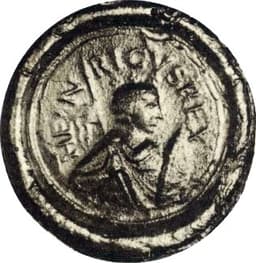
Henry the Fowler
Emperor · Medieval
60.9Total
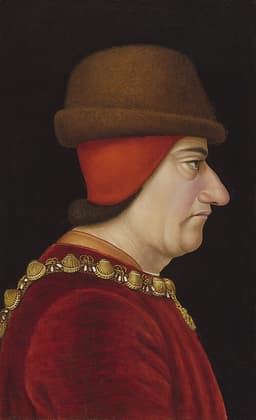
Louis XI
Emperor · Medieval
67.7Total
Basic Information
Born
876
1423
Died
936
1483
Era
Medieval
Medieval
Nationality
East Francia
France
Occupation
Emperor
Emperor
Civilization
Western
Western
Score Comparison
Military (10%)
70.0
45.0
Political (20%)
59.3
78.0
Influence (20%)
55.0
68.0
Legacy (20%)
52.0
65.0
Leadership (15%)
85.0
85.0
Strategy (15%)
55.0
55.0
TOTAL
60.9
67.7
Henry the Fowler — Complete Timeline
919 AD
Election as King of East FranciaPolitical Action
Henry the Fowler was elected King of East Francia by the Saxon and Frankish nobles at Fritzlar on May 6, 919. He was the first Saxon king, marking the transition from Carolingian to Ottonian rule. His election was contested by other dukes but he prevailed.
ElectionAccessionOttonian Dynasty
Impact: regionalconstructive
921 AD
Treaty of Bonn (921)Political Action◆ Major
Henry the Fowler signed the Treaty of Bonn with Charles the Simple of West Francia, recognizing each other's royal titles and establishing peaceful relations. This treaty ended Carolingian claims over East Francia and solidified Henry's legitimacy as an independent king.
TreatyRecognitionDiplomacy
Impact: regionalconstructive
924 AD
Nine-Year Truce with the MagyarsPolitical Action◆ Major
Henry the Fowler negotiated a nine-year truce with the Magyars, agreeing to pay tribute in exchange for a halt to their raids. He used this period to fortify towns, reorganize the army, and train cavalry. This strategic pause was crucial for his later military reforms.
TruceMagyarsMilitary Reform
Impact: regionalconstructive
929 AD
Battle of Lenzen (929)War◆ Major
Henry the Fowler's forces defeated a Slavic army at the Battle of Lenzen, securing the eastern frontier of East Francia. This victory allowed Henry to consolidate control over the Elbe region and establish the March of Brandenburg, a key step in German eastward expansion.
BattleSlavic WarsEastern Expansion
Impact: regionalconstructive
933 AD
Battle of Riade (933)War
After the truce with the Magyars expired, Henry the Fowler led a German army to victory at the Battle of Riade (near Merseburg). The defeat of the Magyar cavalry ended their raids into East Francia for a generation and established Henry's reputation as a defender of Christendom.
BattleMagyarsVictory
Impact: regionalconstructive
936 AD
Death of Henry the FowlerOther◆ Major
Henry the Fowler died on July 2, 936, at Memleben. He was succeeded by his son, Otto I, who would become Holy Roman Emperor. Henry's reign laid the foundations for the Ottonian dynasty and the medieval German kingdom.
DeathSuccessionOttonian
Impact: regional
Louis XI — Complete Timeline
1464 AD
Established the Postal SystemReform
Louis XI created a royal postal system with relay stations across France, enabling faster communication between the crown and provincial officials. This administrative reform improved governance and intelligence gathering.
AdministrationCommunicationReform
Impact: nationalconstructive
1465 AD
Defeated the League of the Public WealWar◆ Major
Louis XI faced a coalition of powerful nobles, the League of the Public Weal, led by Charles the Bold of Burgundy. Although the Battle of Montlh
Civil WarNoble RebellionBurgundy
Impact: national
1475 AD
Treaty of PicquignyPolitical Action◆ Major
Louis XI negotiated the Treaty of Picquigny with Edward IV of England, ending English military intervention in France. Louis paid a large pension to Edward in exchange for English withdrawal, avoiding a costly war and securing his northern border.
TreatyDiplomacyEngland
Impact: regionalconstructive
1477 AD
Acquired BurgundyPolitical Action
After Charles the Bold's death at the Battle of Nancy, Louis XI seized the Duchy of Burgundy and other Burgundian territories, including Picardy and the Somme towns. This expansion significantly increased royal domain and weakened the Burgundian state.
Territorial ExpansionBurgundyRoyal Domain
Impact: regionalconstructive
1481 AD
Annexed Anjou and MainePolitical Action
Louis XI annexed the counties of Anjou and Maine after the death of Charles of Anjou, incorporating them into the royal domain. This further consolidated French territory and reduced the power of the Angevin nobility.
Territorial ExpansionAnjouMaine
Impact: nationalconstructive
Expert Analysis
Henry the Fowler vs Louis XI
The Spider and the Fowler
In the winter of 1475, two kings met on a bridge over the Somme River near Picquigny. One was Louis XI of France, a pale, shabbily dressed man with a hunched back and a face that betrayed little emotion. The other was Edward IV of England, a towering warrior-king in gleaming armor. What happened that day would define the art of medieval statecraft: Louis bought peace with a pension of 75,000 crowns, sending Edward home without a battle. No blood was spilled, but a kingdom was saved. A century earlier, such a transaction would have been unthinkable. Yet here was a king who understood that gold and guile could achieve what swords could not.
Across the Rhine, another king had once faced a different kind of threat. In 924, Henry the Fowler, the first Saxon king of East Francia, agreed to pay tribute to the Magyar horsemen who had ravaged his lands for years. He bought time—nine years of it. While the Magyars rode east to plunder others, Henry fortified towns, trained a new cavalry, and built a kingdom from the ashes of Carolingian collapse. When the truce expired, he met them at Riade and shattered their army. Two kings, two bargains with barbarians, two very different outcomes. What drove these two men—and why did one build a dynasty while the other built a state?
Origins
Louis XI was born into the wreckage of the Hundred Years' War, a prince who grew up watching his father, Charles VII, claw back territory from the English. The French monarchy was weak, its nobles powerful, its borders porous. Louis learned early that trust was a luxury he could not afford. He was intelligent, secretive, and deeply suspicious—qualities that earned him the nickname "the Universal Spider," for the webs of intrigue he wove across Europe.
Henry the Fowler, born in 876, emerged from a world even more fractured. The Carolingian Empire had disintegrated; the East Frankish kingdom was a patchwork of duchies—Saxony, Franconia, Swabia, Bavaria—each ruled by proud dukes who acknowledged no master. Henry was a Saxon duke, a man of the northern marches, where survival depended on military prowess and the loyalty of hard-bitten warriors. He was not born a king; he was chosen.
Rise to Power
In 919, the nobles of East Francia gathered at Fritzlar and elected Henry as their king. It was a revolutionary act—the first time a king had been chosen by election rather than inheritance. Henry accepted, but he refused the traditional anointing by a churchman. He was a king by the will of his people, not by divine right. This was not humility; it was pragmatism. In a kingdom where the church was weak and the dukes were strong, Henry needed to rule as first among equals, not as anointed sovereign.
Louis XI's path was different. He became king in 1461, inheriting a throne his father had strengthened but not secured. From the start, Louis saw his greatest enemies not in London or Brussels, but in the great nobles of France—the dukes of Burgundy, Brittany, and Bourbon. He understood that the medieval monarchy was a web of personal relationships, and he set about cutting the threads that bound his rivals to their power.
Leadership & Governance
Louis XI governed from the shadows. He rarely led armies; his military score of 14.5 reflects a king who preferred diplomacy to battle. Instead, he built a royal postal system in 1464, with relay stations across France, allowing him to communicate faster than any rival. He used spies, bribery, and marriage alliances to isolate his enemies. When the League of the Public Weal rose against him in 1465, he lost the battle but won the war—negotiating, dividing, and waiting. His greatest coup came in 1477, when Charles the Bold of Burgundy died on a frozen battlefield. Louis seized the duchy, the richest lands in Europe, without striking a blow.
Henry the Fowler was a king of the battlefield. His military score of 60.1 reflects a commander who understood that force, not finesse, secured frontiers. He spent the nine-year truce with the Magyars fortifying towns and building a new type of cavalry—armored horsemen who could fight as infantry when dismounted. At the Battle of Lenzen in 929, he crushed the Slavic tribes on his eastern border. At Riade in 933, he broke the Magyar terror forever. But Henry also knew when to negotiate. The Treaty of Bonn in 921, recognizing the King of West Francia as an equal, stabilized his western frontier. He was a builder of walls and armies, not webs.
Triumph & Tragedy
Louis XI's triumph was the unification of France. By the time of his death in 1483, he had absorbed Burgundy, Anjou, Maine, and much of the south. The kingdom was still a patchwork, but the crown was supreme. His tragedy was personal: he died in isolation, paranoid and haunted, convinced that his own son would be poisoned. The Spider had woven a web so intricate that he could not escape it.
Henry the Fowler's triumph was survival. He took a kingdom that barely existed and gave it a shape that would last for centuries. His tragedy was time. He died in 936, just as his work was complete, leaving his son Otto to claim the imperial crown. Henry never called himself emperor, but he made the title possible.
Character & Destiny
Louis XI was a man of contradictions: a king who dressed like a peasant, a warrior who hated war, a devout Catholic who blackmailed the Pope. His personality shaped his decisions—every alliance was temporary, every promise conditional. He believed that the end justified the means, and the end was France. His legacy is the modern French state.
Henry the Fowler was a man of the old world. He believed in loyalty, honor, and the bond between a king and his warriors. He did not scheme; he prepared. His personality shaped a kingdom built on trust, not fear. His legacy is the Ottonian dynasty, which would produce the first Holy Roman Emperor in centuries.
Legacy
Louis XI is remembered as the architect of French absolutism. His postal system, his centralization of power, his destruction of the great nobles—these paved the way for the Sun King. But he is also remembered as a cold, calculating figure, a king who ruled through fear.
Henry the Fowler is remembered as the founder of the German kingdom. His election at Fritzlar is seen as the birth of the German nation. His victories against the Magyars and Slavs secured the eastern frontier for generations. But he is also a shadowy figure, a king whose story is told through chronicles and legends.
Conclusion
Two kings, two kingdoms, two paths to power. Louis XI built a state through cunning, Henry the Fowler through courage. One wove webs, the other built walls. Both succeeded, but their success took different forms. Louis's France became a centralized monarchy; Henry's Germany became a loose federation of duchies. The Spider and the Fowler remind us that history is not a single story, but a thousand threads, each spun by a different hand. And in the end, the web and the wall both stand.
Rankings
🥇
Louis XILeader
Mil: 45.0Pol: 78.0Inf: 68.0
67.7
🥈
Henry the Fowler
Mil: 70.0Pol: 59.3Inf: 55.0
60.9
+6.8 behind
How This Comparison Works
Algorithm
Each figure is scored on 6 dimensions (0—100 scale) based on structured historical data: Military (10%), Political (20%), Influence (20%), Legacy (20%), Leadership (15%), Strategy (15%). The weighted total produces the final ranking.
Data Sources
Scores are computed from structured sub-indicators in the database. Scale factors adjust for era (Ancient ×0.85, Modern ×1.0) and civilization size (Eastern ×1.05, Other ×0.80) to account for differences in population and military scale.
Maximum 3 Figures
Comparisons are limited to 2—3 figures to ensure readability and statistical meaningfulness.
Error Margins
±5 points per dimension — Sub-scores are derived from historical records with inherent uncertainty. Two figures within 5 points on a dimension should be considered roughly equivalent in that area.
Total Score Accuracy
±3 points overall — The weighted combination of 6 dimensions produces a total score with approximately ±3 points of uncertainty. Differences of less than 3 points are not statistically significant— the figures are effectively tied.
Known Limitations
- Historical records are incomplete and uneven across civilizations
- Figures from oral-tradition societies may be underrepresented
- Occupation labels can misclassify multi-role figures
- Scores measure capability and impact, not moral character
- Quantitative scoring is a comparison tool, not absolute truth
Capability Radar
Military (10%) — Battles & Warfare
Battles
55
45
Win Rate
60
40
Expansion
60
65
Political (20%) — Governance & Reform
Reform
75
80
Diplomacy
70
95
Economy
65
70
Influence (20%) — Cultural & Global Reach
Cultural
55
55
Global
40
60
Legacy (20%) — Historical Impact
Historical
65
75
Longevity
60
70
Leadership (15%) — Power & Stability
Tenure
70
75
Stability
70
65
Strategy (15%) — Tactics & Innovation
Strategy
65
70
Tactics
50
55
Reform
70
60
Similar Comparisons
Comments & Discussion
MedievalPaymaster6/16/2026
Louis XI would have laughed at Henry the Fowler's deal with the Magyars—paying tribute for nine years just to build an army? That's amateur hour. Louis bought off Edward IV at Picquigny for 75,000 crowns upfront plus a yearly pension, buying permanent peace while France consolidated power. Henry wasted years on defense; Louis turned bribery into statecraft. The Spider understood that a continuous stream of gold to England made them dependent, not just delayed. Henry's single victory at Riade was
北境铁匠6/16/2026
亨利捕鸟者就是个运气爆棚的农民国王,925年向马扎尔人纳贡九年?请他们去抢劫别人?这哪是策略,分明是懦弱。要是他面对的是路易十一的法国间谍网和常备军,早被吃得骨头都不剩。路易在皮基尼桥头一次付75,000克朗就摆平了英格兰,还拿年金绑住他们。亨利呢?靠马扎尔人自己贪心去东欧抢劫才喘口气。不是福勒厉害,是敌人傻。
SkullMiner6/16/2026
Let's be real: both were thugs with different toolkits. Henry the Fowler's cavalry reform at Riade (933 AD) gave the Saxons a decisive win over 40,000 Magyars, ending decades of raids. But Louis XI's spider web of spies and pensions—spending 1.2 million livres on English pensions alone by 1480—was more scalable. Henry built a kingdom for his dynasty; Louis built a state that survived him. The Fowler won a battle; the Spider won a centuries-long war of attrition against feudalism itself.
丝路账房6/16/2026
数据不会说谎:亨利捕鸟者在933年里亚德战役打赢马扎尔人,停了他们的掠夺,但代价是9年纳贡和无数村庄被毁。路易十一在1475年一次性付给爱德华四世75,000克朗年金,相当于法国年收入的3%,却换来英格兰退出百年战争——一个零伤亡的胜利。亨利每枚银币花了九年的时间成本,路易每分钱当天就回本。从效率看,蜘蛛完胜。
RavenChronicler6/16/2026
You're all missing the cultural context. Henry the Fowler wasn't just bribing barbarians; he was integrating East Francia's duchies—Saxony, Bavaria, Swabia—into a unified resistance against the Magyars. His nine-year tribute bought not just an army but a German identity. Louis XI, meanwhile, centralized France through terror and guile, crushing the Burgundian dream at Nancy (1477). Henry built through consensus; Louis through fear. Different goals: one forged a nation's soul, the other a king's