Loading...
Henry I of England vs Magnus the Good
Magnus the Good leads by 1.8 pts · 2 figures compared
…
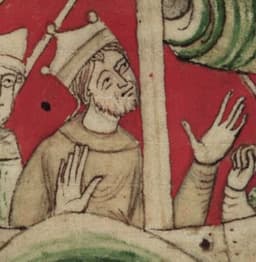
Henry I of England
Emperor · Medieval
55.9Total
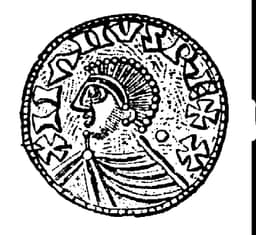
Magnus the Good
Emperor · Medieval
57.7Total
Basic Information
Born
1068
1024
Died
1135
1047
Era
Medieval
Medieval
Nationality
England
Norway
Occupation
Emperor
Emperor
Civilization
Western
Western
Score Comparison
Military (10%)
10.0
70.0
Political (20%)
72.0
54.7
Influence (20%)
56.4
54.9
Legacy (20%)
54.0
46.7
Leadership (15%)
72.0
74.0
Strategy (15%)
57.5
60.0
TOTAL
55.9
57.7
Henry I of England — Complete Timeline
1100 AD
Coronation of Henry IPolitical Action◆ Major
Henry was crowned king of England on August 5, 1100, just three days after his brother William II's death. He issued the Charter of Liberties, promising to curb royal abuses.
CoronationCharter of LibertiesReform
Impact: nationalconstructive
1106 AD
Battle of TinchebrayWar◆ Major
Henry defeated his brother Robert Curthose at Tinchebray in Normandy. Robert was captured and imprisoned for life, and Henry reunited England and Normandy under his rule.
BattleVictoryNormandy
Impact: regional
1110 AD
Administrative ReformsReform◆ Major
Henry established the Exchequer as a central financial department, standardizing tax collection and accounting. He also issued the Leges Henrici Primi, a legal code that systematized English law.
ExchequerLegal ReformAdministration
Impact: nationalconstructive
1120 AD
White Ship DisasterOther◆ Major
Henry's only legitimate son, William Adelin, drowned in the White Ship disaster off the coast of Normandy. This tragedy left Henry without a male heir, leading to a succession crisis after his death.
DisasterSuccession CrisisHeir
Impact: nationaltragic
1135 AD
Death of Henry IPolitical Action◆ Major
Henry died on December 1, 1135, at Lyons-la-For
DeathSuccession CrisisAnarchy
Impact: nationaltragic
Magnus the Good — Complete Timeline
1035 AD
Became King of NorwayPolitical Action◆ Major
Magnus the Good became King of Norway at age 11 after his father, Olaf II, was killed in battle. He was proclaimed king by the Norwegian nobility who had opposed Cnut the Great's rule, restoring the native dynasty after a period of Danish domination.
SuccessionNorwayRestoration
Impact: regionalconstructive
1042 AD
Became King of DenmarkPolitical Action◆ Major
Upon the death of Harthacnut, Magnus the Good inherited the Danish throne, becoming king of both Norway and Denmark. This union was based on a prior agreement between Magnus and Harthacnut, creating a personal union of the two Scandinavian kingdoms.
UnionDenmarkNorway
Impact: regionalconstructive
1043 AD
Defeated the Wends at the Battle of Lyrskov HeathWar
Magnus the Good led a Danish army to victory against the Wends (Slavic tribes) at Lyrskov Heath in present-day Germany. The battle secured Danish control over the southern Baltic coast and enhanced Magnus's reputation as a military leader.
BattleWendsBaltic
Impact: regional
Fought against Sweyn Estridsson for DenmarkWar◆ Major
Magnus the Good faced a rebellion from Sweyn Estridsson, a Danish nobleman who claimed the Danish throne. Magnus defeated Sweyn in several battles, forcing him into exile, but the conflict weakened Magnus's hold on Denmark and drained resources.
Civil WarDenmarkRebellion
Impact: regional
1047 AD
Died suddenly in DenmarkOther◆ Major
Magnus the Good died suddenly in Denmark at age 23, possibly from illness or an accident. His death ended the personal union of Norway and Denmark, as he had no heirs, leading to the division of his kingdoms between Harald Hardrada and Sweyn Estridsson.
DeathSuccession CrisisScandinavia
Impact: regionaltragic
Expert Analysis
Origins
Henry I of England was born in 1068 or 1069, the youngest son of William the Conqueror and Matilda of Flanders. As a fourth son, he was not expected to inherit, receiving only a substantial sum of silver instead of land. He received a strong education, learning Latin, law, and administration, which later proved crucial. His early years were spent under his father's supervision, but after William's death in 1087, Henry acquired land in Normandy and later bought the Cotentin from his brother Robert.
Magnus the Good was born in 1024 in Norway, the illegitimate son of King Olaf II Haraldsson (later Saint Olaf) and his concubine Alvhild. After Olaf's death at the Battle of Stiklestad in 1030, Magnus was taken to the court of Yaroslav the Wise in Novgorod for safety. He grew up in exile, receiving military training and learning the complexities of Norse politics.
Rise to Power
Henry's rise began with the death of his brother William II Rufus on August 2, 1100. Henry was hunting with Rufus when an arrow killed the king. Henry immediately rode to Winchester, secured the treasury, and was crowned king on August 5, just three days later. To legitimize his rule, he issued the Charter of Liberties, promising to correct abuses of his brother. He then married Matilda of Scotland, daughter of Malcolm III, uniting Norman and Anglo-Saxon lines.
Magnus became King of Norway at age 11 in 1035, after the death of Canute the Great, who had ruled Norway. The Norwegian nobles, tired of Danish rule, recalled Magnus from exile. He was proclaimed king and quickly consolidated power. In 1042, upon the death of Harthacnut, Magnus inherited the Danish throne based on a prior agreement between Harthacnut and Magnus's father. This made him ruler of both Norway and Denmark.
Leadership & Governance
Henry I was a master administrator. He established the Exchequer as a central financial department, standardizing tax collection and accounting. The Leges Henrici Primi codified laws, blending Anglo-Saxon and Norman customs. He controlled the nobility through a system of patronage and punishment, often using fines and confiscations. His reign saw relative peace and stability, with the royal court becoming a center of learning and culture.
Magnus led primarily through military prowess. He faced rebellions from Sweyn Estridsson, a Danish claimant, and defeated him in several battles. He also led campaigns against the Wends, securing Danish borders. His governance was less administrative; he relied on the traditional Norse system of local assemblies and jarls. He was known for his fairness, earning the epithet 'the Good', but his reign was too short for deep institutional reforms.
Triumph & Tragedy
Henry's greatest success was the Battle of Tinchebray in 1106, where he captured his brother Robert Curthose and reunited England and Normandy. His administrative reforms created a stable financial system that lasted centuries. However, his greatest tragedy was the White Ship disaster on November 25, 1120, where his only legitimate son, William Adelin, drowned. This left Henry without a male heir, leading to a succession crisis and civil war after his death.
Magnus's triumphs include uniting Norway and Denmark at age 18 and defeating the Wends at Lyrskov Heath in 1043. However, his sudden death in 1047 at age 23 ended the union, and his rule was too brief to solidify his achievements. His failure to produce a legitimate heir also contributed to instability.
Character & Destiny
Henry was calculating, shrewd, and ruthless when necessary. He imprisoned his brother for life and dealt harshly with rebellious nobles. His administrative mind shaped his reign, but his inability to secure the succession undid his work. Magnus was described as generous and just, but his early death cut short his potential. He scored 74.0 in Leadership, reflecting his ability to command loyalty, but his Political score of 54.7 shows he lacked the long-term statecraft of Henry (72.0).
Legacy
Henry's legacy is the Exchequer system, which influenced English governance for centuries. His reforms strengthened the monarchy and legal system. Magnus's legacy is more symbolic: he briefly united two Scandinavian kingdoms and defended against Slavic incursions. However, his impact faded quickly after his death. In terms of lasting influence, Henry's administrative innovations (Political 72.0, Legacy 54.0) outweigh Magnus's military achievements (Military 70.0, Legacy 46.7).
Conclusion
While Magnus the Good scored slightly higher overall (57.7 vs 55.9), Henry I's impact on governance and law was more enduring. Henry's establishment of the Exchequer and legal reforms shaped English administration for centuries, whereas Magnus's union of Norway and Denmark was ephemeral. Henry's political acumen (72.0) and strategic statecraft (57.5) created a framework that outlasted his reign, despite the succession crisis. Magnus's military victories (70.0) and leadership (74.0) were impressive but lacked lasting structural change. Therefore, Henry I had a greater historical impact, as his administrative reforms provided a foundation for medieval English government.
Rankings
🥇
Magnus the GoodLeader
Mil: 70.0Pol: 54.7Inf: 54.9
57.7
🥈
Henry I of England
Mil: 10.0Pol: 72.0Inf: 56.4
55.9
+1.8 behind
How This Comparison Works
Algorithm
Each figure is scored on 6 dimensions (0—100 scale) based on structured historical data: Military (10%), Political (20%), Influence (20%), Legacy (20%), Leadership (15%), Strategy (15%). The weighted total produces the final ranking.
Data Sources
Scores are computed from structured sub-indicators in the database. Scale factors adjust for era (Ancient ×0.85, Modern ×1.0) and civilization size (Eastern ×1.05, Other ×0.80) to account for differences in population and military scale.
Maximum 3 Figures
Comparisons are limited to 2—3 figures to ensure readability and statistical meaningfulness.
Error Margins
±5 points per dimension — Sub-scores are derived from historical records with inherent uncertainty. Two figures within 5 points on a dimension should be considered roughly equivalent in that area.
Total Score Accuracy
±3 points overall — The weighted combination of 6 dimensions produces a total score with approximately ±3 points of uncertainty. Differences of less than 3 points are not statistically significant— the figures are effectively tied.
Known Limitations
- Historical records are incomplete and uneven across civilizations
- Figures from oral-tradition societies may be underrepresented
- Occupation labels can misclassify multi-role figures
- Scores measure capability and impact, not moral character
- Quantitative scoring is a comparison tool, not absolute truth
Capability Radar
Military (10%) — Battles & Warfare
Battles
30
55
Win Rate
55
60
Expansion
35
60
Political (20%) — Governance & Reform
Reform
85
45
Diplomacy
75
55
Economy
80
40
Influence (20%) — Cultural & Global Reach
Cultural
40
40
Global
30
30
Legacy (20%) — Historical Impact
Historical
60
45
Longevity
55
35
Leadership (15%) — Power & Stability
Tenure
70
60
Stability
70
50
Strategy (15%) — Tactics & Innovation
Strategy
45
55
Tactics
40
50
Reform
60
30
Similar Comparisons
Comments & Discussion
No comments yet. Be the first to share your thoughts!