Loading...
Ghazan Khan vs Henry I of England
Ghazan Khan leads by 7.3 pts · 2 figures compared
…
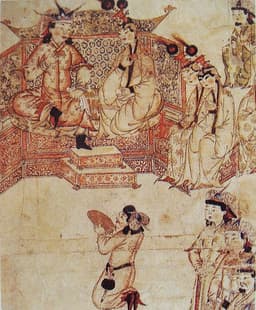
Ghazan Khan
Emperor · Medieval
63.2Total
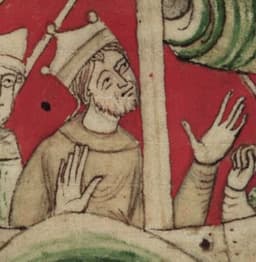
Henry I of England
Emperor · Medieval
55.9Total
Basic Information
Born
1271
1068
Died
1304
1135
Era
Medieval
Medieval
Nationality
Ilkhanate
England
Occupation
Emperor
Emperor
Civilization
Middle Eastern
Western
Score Comparison
Military (10%)
50.0
10.0
Political (20%)
70.0
72.0
Influence (20%)
72.0
56.4
Legacy (20%)
58.0
54.0
Leadership (15%)
68.0
72.0
Strategy (15%)
50.0
57.5
TOTAL
63.2
55.9
Ghazan Khan — Complete Timeline
1295 AD
Reforms of the Ilkhanate (Ghazan's Reforms)Reform◆ Major
Ghazan implemented a comprehensive reform program including tax reform, standardization of weights and measures, land redistribution, and the establishment of a new legal code. He also reformed the military and postal system, stabilizing the Ilkhanate after decades of instability.
ReformIlkhanateAdministration
Impact: regionalconstructive
Conversion to IslamCultural
Ghazan converted to Islam upon ascending the throne, becoming the first Ilkhan to adopt the faith. He publicly declared Islam the state religion, ordered the destruction of Buddhist temples and churches, and adopted the name Mahmud. This transformed the Ilkhanate's identity.
ReligionIlkhanateIslam
Impact: regionalconstructive
1297 AD
Patronage of Science and CultureCultural
Ghazan patronized scholars, historians, and scientists, including the vizier Rashid al-Din, who wrote the Jami' al-tawarikh, a world history. Ghazan also built observatories, hospitals, and mosques, contributing to the cultural flowering of the Ilkhanate.
CulturePatronageIlkhanate
Impact: regionalconstructive
1299 AD
Campaigns against the MamluksWar◆ Major
Ghazan led three major invasions of Mamluk Syria, capturing Damascus and Aleppo in 1299
Mongol InvasionSyriaMamluk Sultanate
Impact: regional
Battle of Wadi al-KhaznadarWar
Ghazan's Mongol army defeated the Mamluks under Sultan Al-Nasir Muhammad at Wadi al-Khaznadar near Homs. The victory allowed the Mongols to occupy Damascus and Aleppo, but they withdrew after a few months due to logistical problems and the need to return to Persia.
BattleMongol VictorySyria
Impact: regional
Henry I of England — Complete Timeline
1100 AD
Coronation of Henry IPolitical Action◆ Major
Henry was crowned king of England on August 5, 1100, just three days after his brother William II's death. He issued the Charter of Liberties, promising to curb royal abuses.
CoronationCharter of LibertiesReform
Impact: nationalconstructive
1106 AD
Battle of TinchebrayWar◆ Major
Henry defeated his brother Robert Curthose at Tinchebray in Normandy. Robert was captured and imprisoned for life, and Henry reunited England and Normandy under his rule.
BattleVictoryNormandy
Impact: regional
1110 AD
Administrative ReformsReform◆ Major
Henry established the Exchequer as a central financial department, standardizing tax collection and accounting. He also issued the Leges Henrici Primi, a legal code that systematized English law.
ExchequerLegal ReformAdministration
Impact: nationalconstructive
1120 AD
White Ship DisasterOther◆ Major
Henry's only legitimate son, William Adelin, drowned in the White Ship disaster off the coast of Normandy. This tragedy left Henry without a male heir, leading to a succession crisis after his death.
DisasterSuccession CrisisHeir
Impact: nationaltragic
1135 AD
Death of Henry IPolitical Action◆ Major
Henry died on December 1, 1135, at Lyons-la-For
DeathSuccession CrisisAnarchy
Impact: nationaltragic
Expert Analysis
Origins
Ghazan Khan was born in 1271 in the Ilkhanate, a Mongol khanate in Persia. He was the son of Arghun Khan and a Buddhist mother. Raised in the Mongol tradition, he was exposed to various religions, including Buddhism, Christianity, and Islam. His early life was marked by political intrigue; his father died when he was young, and his uncle Gaykhatu seized power. Ghazan spent years in the eastern provinces, honing his military skills and building a loyal following.
Henry I of England was born in 1068/1069, the youngest son of William the Conqueror and Matilda of Flanders. Unlike his older brothers, William Rufus and Robert Curthose, Henry received a relatively modest inheritance but was well-educated, earning the nickname 'Beauclerc' for his scholarly interests. His early life was overshadowed by the rivalries among his brothers, which shaped his pragmatic and calculating nature.
Rise to Power
Ghazan's path to power began after the death of his uncle Gaykhatu in 1295. With the support of the Mongol general Nawruz, Ghazan overthrew the short-lived ruler Baydu and claimed the Ilkhanate throne. His conversion to Islam upon ascending the throne was a strategic move to gain legitimacy among the Muslim majority. He publicly declared Islam the state religion, ordered the destruction of Buddhist and Christian places of worship, and adopted the Muslim name Mahmud. This act solidified his rule and aligned the Ilkhanate with the Islamic world.
Henry I's rise was swift and opportunistic. On August 5, 1100, his brother King William II was killed in a hunting accident. Henry, who was present, immediately rode to London and secured the royal treasury. He was crowned king just three days later, before his elder brother Robert Curthose could return from the First Crusade. To win support, Henry issued the Charter of Liberties, promising to correct abuses of his predecessor and restore the laws of Edward the Confessor. This charter was a precursor to the Magna Carta. He then married Edith of Scotland, linking his line to the Anglo-Saxon royal house.
Leadership & Governance
Ghazan Khan implemented comprehensive reforms known as Ghazan's Reforms. He standardized weights and measures, reformed taxation by replacing arbitrary levies with fixed rates, and redistributed land to curb the power of Mongol nobles. He established a postal relay system and patronized the arts and sciences. His vizier Rashid al-Din compiled the Jami' al-tawarikh, a world history that remains a key source. Ghazan's leadership style was autocratic but reformist; he sought to centralize the state and integrate Mongol and Persian administrative traditions. He scored 68.0 in leadership and 70.0 in political acumen.
Henry I of England is renowned for his administrative reforms. He established the Exchequer as a central financial department, standardizing tax collection and accounting through the pipe rolls. He issued the Leges Henrici Primi, a legal code that systematized English law. Henry also curbed the power of barons by appointing loyal administrators and using royal justice to undermine feudal courts. His leadership was methodical and bureaucratic; he earned the nickname 'Lion of Justice' for his legal reforms. He scored 72.0 in both political and leadership categories, reflecting his administrative focus.
Triumph & Tragedy
Ghazan's greatest triumph was his military campaign against the Mamluks. At the Battle of Wadi al-Khaznadar in 1299, his Mongol army defeated the Mamluks under Sultan Al-Nasir Muhammad, allowing him to capture Damascus and Aleppo. However, he could not hold these territories due to supply issues and a lack of reinforcements. His greatest failure was his inability to secure lasting conquests in Syria; after his withdrawal, the Mamluks reasserted control. Ghazan also faced internal revolts and the challenge of integrating Mongols with Persian society. He died in 1304 at age 33, likely from illness.
Henry I's greatest triumph was the Battle of Tinchebray in 1106, where he defeated and captured his brother Robert Curthose, reuniting England and Normandy. This victory secured his realm and allowed him to focus on governance. His greatest tragedy was the White Ship disaster of 1120, in which his only legitimate son, William Adelin, drowned. This left Henry without a male heir, triggering a succession crisis. Despite his efforts to secure the throne for his daughter Matilda, his death in 1135 led to a civil war known as the Anarchy. His political score of 72.0 reflects his skill, but the succession failure marred his legacy.
Character & Destiny
Ghazan was pragmatic and adaptable. His conversion to Islam was a calculated move to consolidate power, but he also genuinely engaged with Islamic culture. He was energetic and reform-minded, but his early death cut short his ambitions. Historians like Rashid al-Din praise his reforms, but note that his military campaigns were ultimately inconclusive. His character combined Mongol martial traditions with Persian administrative sophistication, but he lacked the time to fully realize his vision.
Henry I was shrewd, ruthless, and meticulous. He was known for his cunning and ability to outmaneuver rivals. He maintained control by playing factions against each other and never forgiving a slight. His administrative reforms created a stable government, but his paranoia and harshness alienated many. The White Ship disaster was a cruel twist of fate that undid his life's work. He died at 67, having outlived his heir, and his dynasty collapsed into chaos.
Legacy
Ghazan Khan's legacy is mixed. He is remembered as the first Ilkhan to convert to Islam and for his reforms that stabilized the Ilkhanate and promoted cultural exchange. His patronage of Rashid al-Din produced a seminal historical work. However, his military gains were temporary, and the Ilkhanate declined after his death. His influence score of 72.0 reflects his impact on Persian history and Islamic culture. He is a figure of integration between Mongol and Persian civilizations.
Henry I's legacy is more enduring. His administrative innovations, particularly the Exchequer and legal reforms, laid the groundwork for English governance. The Charter of Liberties influenced later constitutional documents. However, his failure to secure the succession led to the Anarchy, a period of instability. His legacy score of 54.0 is moderate because his achievements were institutional but overshadowed by the civil war. He is often seen as a capable but unlucky king.
Conclusion
Ghazan Khan scores 63.2 overall, while Henry I scores 55.9. Ghazan had a higher impact due to his transformative reforms and cultural patronage that shaped the Islamic world. Henry's administrative reforms were significant but confined to England and undermined by the succession crisis. Ghazan's vision integrated Mongol and Persian systems, leaving a lasting legacy in governance and historiography. Henry's legacy is important but more localized. Therefore, Ghazan Khan had a greater impact on history.
Rankings
🥇
Ghazan KhanLeader
Mil: 50.0Pol: 70.0Inf: 72.0
63.2
🥈
Henry I of England
Mil: 10.0Pol: 72.0Inf: 56.4
55.9
+7.3 behind
How This Comparison Works
Algorithm
Each figure is scored on 6 dimensions (0—100 scale) based on structured historical data: Military (10%), Political (20%), Influence (20%), Legacy (20%), Leadership (15%), Strategy (15%). The weighted total produces the final ranking.
Data Sources
Scores are computed from structured sub-indicators in the database. Scale factors adjust for era (Ancient ×0.85, Modern ×1.0) and civilization size (Eastern ×1.05, Other ×0.80) to account for differences in population and military scale.
Maximum 3 Figures
Comparisons are limited to 2—3 figures to ensure readability and statistical meaningfulness.
Error Margins
±5 points per dimension — Sub-scores are derived from historical records with inherent uncertainty. Two figures within 5 points on a dimension should be considered roughly equivalent in that area.
Total Score Accuracy
±3 points overall — The weighted combination of 6 dimensions produces a total score with approximately ±3 points of uncertainty. Differences of less than 3 points are not statistically significant— the figures are effectively tied.
Known Limitations
- Historical records are incomplete and uneven across civilizations
- Figures from oral-tradition societies may be underrepresented
- Occupation labels can misclassify multi-role figures
- Scores measure capability and impact, not moral character
- Quantitative scoring is a comparison tool, not absolute truth
Capability Radar
Military (10%) — Battles & Warfare
Battles
55
30
Win Rate
60
55
Expansion
45
35
Political (20%) — Governance & Reform
Reform
85
85
Diplomacy
70
75
Economy
75
80
Influence (20%) — Cultural & Global Reach
Cultural
70
40
Global
55
30
Legacy (20%) — Historical Impact
Historical
65
60
Longevity
60
55
Leadership (15%) — Power & Stability
Tenure
60
70
Stability
65
70
Strategy (15%) — Tactics & Innovation
Strategy
55
45
Tactics
50
40
Reform
65
60
Similar Comparisons
Comments & Discussion
No comments yet. Be the first to share your thoughts!