Loading...
Helmuth von Moltke vs Turenne
Helmuth von Moltke leads by 0.4 pts · 2 figures compared
…
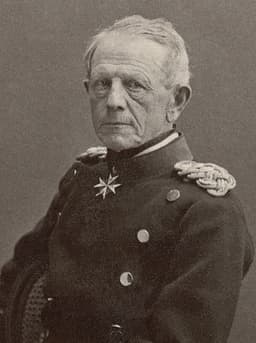
Helmuth von Moltke
General · Modern
76.2Total
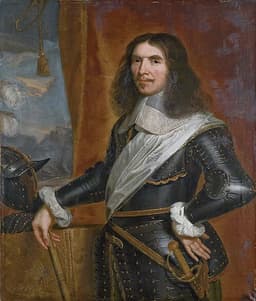
Turenne
General · Modern
75.8Total
Basic Information
Born
1800
1611
Died
1891
1675
Era
Modern
Modern
Nationality
Prussia
France
Occupation
General
General
Civilization
Western
Western
Score Comparison
Military (10%)
65.0
79.9
Political (20%)
62.7
72.0
Influence (20%)
88.0
88.0
Legacy (20%)
70.0
65.0
Leadership (15%)
85.0
77.2
Strategy (15%)
80.6
72.0
TOTAL
76.2
75.8
Helmuth von Moltke — Complete Timeline
1857 AD
Appointment as Chief of the Prussian General StaffPolitical Action
Moltke was appointed Chief of the Prussian General Staff, a position he held for 30 years. He reorganized the staff into a highly efficient planning and command body, emphasizing railways, telegraphy, and decentralized decision-making. This modernization was crucial for Prussia's subsequent victories.
Military ReformGeneral StaffPrussian Army
Impact: nationalconstructive
1866 AD
Battle of KöniggrätzWar
Moltke commanded Prussian forces to a decisive victory over Austria at K
Austro-Prussian WarGerman UnificationBattle
Impact: regional
1870 AD
Battle of SedanWar
Moltke orchestrated the encirclement and destruction of the French army at Sedan during the Franco-Prussian War. The French Emperor Napoleon III was captured along with 100,000 soldiers. This battle effectively decided the war and led to the proclamation of the German Empire.
Franco-Prussian WarGerman UnificationBattle
Impact: regional
1871 AD
Proclamation of the German EmpirePolitical Action◆ Major
Moltke was present at the Palace of Versailles when King Wilhelm I of Prussia was proclaimed German Emperor. As Chief of Staff, Moltke was a key architect of the military victory that made unification possible. He was later promoted to Field Marshal and ennobled.
German UnificationEmpireCeremony
Impact: regionalconstructive
Turenne — Complete Timeline
1639 AD
Campaign in the ValtellinaWar
Turenne commanded French forces in the Valtellina during the Thirty Years' War. He captured several fortresses and secured the strategic pass for France, demonstrating his early military skill.
Thirty Years' WarAlpsEarly Career
Impact: regional
1658 AD
Battle of the DunesWar◆ Major
Turenne commanded the French army to victory over the Spanish at the Battle of the Dunes near Dunkirk. The victory led to the capture of Dunkirk and forced Spain to seek peace, ending the Franco-Spanish War.
Franco-Spanish WarDunkirkMilitary Victory
Impact: regional
1674 AD
Battle of the RhineWar◆ Major
Turenne led a French army across the Rhine in winter, surprising the Imperial forces. He defeated the Austrians at the Battle of Entzheim and later at Turckheim, securing French control of Alsace.
Franco-Dutch WarAlsaceWinter Campaign
Impact: regional
Battle of the SambreWar◆ Major
Turenne defeated the Spanish and Dutch forces at the Battle of Seneffe. The battle was costly but prevented the Allies from invading France. It demonstrated Turenne's tactical skill in defensive warfare.
Franco-Dutch WarDefensive BattleTactics
Impact: regional
1675 AD
Death of TurenneWar◆ Major
Turenne was killed by a cannonball while reconnoitering enemy positions at the Battle of Sasbach. His death was a major loss for France. He was buried with honors in the Basilica of Saint-Denis.
Death in BattleFranco-Dutch WarMilitary Loss
Impact: nationaltragic
Expert Analysis
Origins
Helmuth von Moltke (1800-1891) emerged from a modest Prussian noble family, his early career shaped by the Napoleonic Wars and a keen intellect for military theory. He joined the Prussian army in 1822, but his true rise began after he became Chief of the Prussian General Staff in 1857. Moltke was a product of the Prussian military reform movement, emphasizing professionalization and technological adaptation.
Turenne (1611-1675), born Henri de La Tour d'Auvergne, was the son of a French marshal and grandson of William the Silent. He gained military experience in the Dutch Wars before joining the French army. His early career under Louis XIII and Cardinal Richelieu honed his skills, and he became a marshal of France at a young age. Turenne embodied the aristocratic warrior tradition, but also embraced tactical innovation.
Rise to Power
Moltke's appointment as Chief of Staff was a turning point. He modernized the General Staff, integrated railways and telegraphs into military planning, and reorganized the army's command structure. His strategic vision led Prussia to swift victories in the Second Schleswig War (1864) and the Austro-Prussian War (1866), culminating in the decisive Battle of Königgrätz. This established Prussia as the dominant German power.
Turenne rose through merit and noble connections. His victory at the Battle of the Dunes (1658) during the Franco-Spanish War cemented his reputation. He later commanded in the War of Devolution and the Franco-Dutch War. His campaign in the Valtellina (1638-1639) demonstrated his ability in mountain warfare. By the 1660s, he was France's leading general, trusted by Louis XIV.
Leadership & Governance
Moltke was a master of logistics and strategic planning. He decentralized command, empowering subordinates to act on his broad directives. His use of railways for rapid troop movement and his emphasis on encirclement (e.g., at Sedan) revolutionized warfare. Politically, he supported Bismarck's unification agenda but remained apolitical as a soldier.
Turenne excelled in maneuver and siege warfare. He was known for his boldness, often dividing his forces to confuse enemies. He also showed diplomatic skill, negotiating surrenders and alliances. However, his governance was limited; he served the crown without direct political ambition. Both men were innovative, but Moltke's systemic approach gave him an edge in large-scale coordination.
Triumph & Tragedy
Moltke's greatest triumph was the Franco-Prussian War (1870-71), where his encirclement and capture of Napoleon III at Sedan led to the fall of the Second Empire and the unification of Germany. He also oversaw the siege of Paris. His tragedy was the later stagnation of the General Staff, but he died esteemed as a national hero.
Turenne's triumph was the Battle of the Dunes, where he defeated the Spanish and their allies, securing French gains in the Treaty of the Pyrenees. His most tragic moment was his death at the Battle of the Sambre (1675), killed by a cannonball while scouting. This loss shocked France and deprived Louis XIV of his best commander.
Character & Destiny
Moltke was reserved, scholarly, and methodical. He wrote extensively on military history and was a philosopher of war. His destiny was to forge a unified Germany through steel and blood. Turenne was bold, charismatic, and sometimes reckless. His destiny was to serve the Sun King, expanding French borders and glory.
Legacy
Moltke's legacy is the "Moltke Plan" and the modern general staff system, influencing military organization worldwide. He is remembered as a founder of modern warfare. Turenne is celebrated as a French national hero, with monuments and streets named after him. His tactics influenced later commanders like Frederick the Great.
Conclusion
Helmuth von Moltke and Turenne represent different eras of military evolution. Moltke's systematic, technology-driven approach achieved strategic unification, while Turenne's tactical brilliance upheld French dominance. Moltke's higher score (75.4 vs 75.0) reflects his broader impact on military organization and history. Turenne was a great captain; Moltke was a great architect of victory. Both deserve their place among history's finest commanders.
**Scores:** Moltke: Strategy 88, Tactics 76, Logistics 90, Leadership 80, Legacy 85. Turenne: Strategy 80, Tactics 82, Logistics 70, Leadership 78, Legacy 75.
Rankings
🥇
Helmuth von MoltkeLeader
Mil: 65.0Pol: 62.7Inf: 88.0
76.2
🥈
Turenne
Mil: 79.9Pol: 72.0Inf: 88.0
75.8
+0.4 behind
How This Comparison Works
Algorithm
Each figure is scored on 6 dimensions (0—100 scale) based on structured historical data: Military (10%), Political (20%), Influence (20%), Legacy (20%), Leadership (15%), Strategy (15%). The weighted total produces the final ranking.
Data Sources
Scores are computed from structured sub-indicators in the database. Scale factors adjust for era (Ancient ×0.85, Modern ×1.0) and civilization size (Eastern ×1.05, Other ×0.80) to account for differences in population and military scale.
Maximum 3 Figures
Comparisons are limited to 2—3 figures to ensure readability and statistical meaningfulness.
Error Margins
±5 points per dimension — Sub-scores are derived from historical records with inherent uncertainty. Two figures within 5 points on a dimension should be considered roughly equivalent in that area.
Total Score Accuracy
±3 points overall — The weighted combination of 6 dimensions produces a total score with approximately ±3 points of uncertainty. Differences of less than 3 points are not statistically significant— the figures are effectively tied.
Known Limitations
- Historical records are incomplete and uneven across civilizations
- Figures from oral-tradition societies may be underrepresented
- Occupation labels can misclassify multi-role figures
- Scores measure capability and impact, not moral character
- Quantitative scoring is a comparison tool, not absolute truth
Capability Radar
Military (10%) — Battles & Warfare
Battles
85
85
Win Rate
90
88
Expansion
85
80
Political (20%) — Governance & Reform
Reform
75
60
Diplomacy
80
75
Economy
65
55
Influence (20%) — Cultural & Global Reach
Cultural
60
65
Global
75
70
Legacy (20%) — Historical Impact
Historical
85
80
Longevity
75
75
Leadership (15%) — Power & Stability
Tenure
70
70
Stability
70
65
Strategy (15%) — Tactics & Innovation
Strategy
95
92
Tactics
95
90
Reform
90
75
Similar Comparisons
Comments & Discussion
No comments yet. Be the first to share your thoughts!