Loading...
Pablo Gonzalez Garza vs Turenne
Turenne leads by 37.3 pts · 2 figures compared
…

Pablo Gonzalez Garza
General · Modern
38.5Total
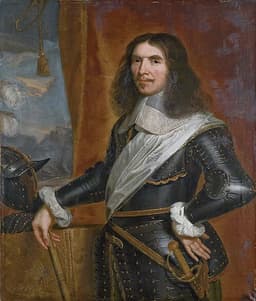
Turenne
General · Modern
75.8Total
Basic Information
Born
1879
1611
Died
1950
1675
Era
Modern
Modern
Nationality
Mexico
France
Occupation
General
General
Civilization
Western
Western
Score Comparison
Military (10%)
45.0
79.9
Political (20%)
26.4
72.0
Influence (20%)
47.9
88.0
Legacy (20%)
40.0
65.0
Leadership (15%)
33.5
77.2
Strategy (15%)
30.3
72.0
TOTAL
38.5
75.8
Pablo Gonzalez Garza — Complete Timeline
1914 AD
Led the siege and capture of Mexico CityWar◆ Major
González Garza commanded Constitutionalist forces that captured Mexico City from the Huerta regime. His troops occupied the capital, solidifying Carranza's control and marking a turning point in the revolution.
Military CampaignCapital
Impact: national
1919 AD
Allegedly ordered the assassination of Emiliano ZapataPolitical Action◆ Major
González Garza, as commander of Carrancista forces in Morelos, orchestrated the ambush and killing of Zapata at the Chinameca hacienda. The assassination eliminated a key revolutionary leader but tarnished González Garza's reputation.
AssassinationRevolution
Impact: nationaldestructive
1920 AD
Exiled after the fall of CarranzaPolitical Action
After Carranza's overthrow and death, Gonz
ExilePolitical Fall
Impact: nationaltragic
Turenne — Complete Timeline
1639 AD
Campaign in the ValtellinaWar
Turenne commanded French forces in the Valtellina during the Thirty Years' War. He captured several fortresses and secured the strategic pass for France, demonstrating his early military skill.
Thirty Years' WarAlpsEarly Career
Impact: regional
1658 AD
Battle of the DunesWar◆ Major
Turenne commanded the French army to victory over the Spanish at the Battle of the Dunes near Dunkirk. The victory led to the capture of Dunkirk and forced Spain to seek peace, ending the Franco-Spanish War.
Franco-Spanish WarDunkirkMilitary Victory
Impact: regional
1674 AD
Battle of the RhineWar◆ Major
Turenne led a French army across the Rhine in winter, surprising the Imperial forces. He defeated the Austrians at the Battle of Entzheim and later at Turckheim, securing French control of Alsace.
Franco-Dutch WarAlsaceWinter Campaign
Impact: regional
Battle of the SambreWar◆ Major
Turenne defeated the Spanish and Dutch forces at the Battle of Seneffe. The battle was costly but prevented the Allies from invading France. It demonstrated Turenne's tactical skill in defensive warfare.
Franco-Dutch WarDefensive BattleTactics
Impact: regional
1675 AD
Death of TurenneWar◆ Major
Turenne was killed by a cannonball while reconnoitering enemy positions at the Battle of Sasbach. His death was a major loss for France. He was buried with honors in the Basilica of Saint-Denis.
Death in BattleFranco-Dutch WarMilitary Loss
Impact: nationaltragic
Expert Analysis
Origins
**Pablo Gonzalez Garza** was born on May 5, 1879, in Cadereyta, Nuevo León, Mexico, into a modest family. He studied law but left to join the Mexican Revolution, initially supporting Francisco I. Madero. His early career involved organizing local militias, which gave him practical military experience but no formal training. His background was deeply regional, tied to northern Mexico's political networks.
**Henri de La Tour d'Auvergne, Vicomte de Turenne**, was born on September 11, 1611, in Sedan, France, into a noble Protestant family. His father was a marshal of France, and his mother was a Dutch princess. Turenne received advanced military education from his uncle, Maurice of Nassau, and served in the Dutch States Army before joining the French army. His aristocratic birth and early exposure to high command shaped his strategic mindset.
Rise to Power
González Garza rose during the Mexican Revolution. In 1913, after Victoriano Huerta's coup, he joined Venustiano Carranza's Constitutionalist movement. His key turning point came in 1914 when he led the siege and capture of Mexico City (July–August 1914), forcing Huerta to resign. This victory made him a top Carrancista general. He later commanded forces in Morelos against Emiliano Zapata's agrarian rebellion. His rise depended on Carranza's patronage rather than independent achievement.
Turenne's rise began in the Thirty Years' War. He became a marshal of France at age 32 in 1643. His first major independent command was in Italy, but his reputation soared during the Fronde (1648–1653) when he remained loyal to the crown. In 1658, he won the Battle of the Dunes, capturing Dunkirk from the Spanish. His political acumen kept him in favor during Louis XIV's personal rule. He became the foremost French general of his era.
Leadership & Governance
González Garza's leadership was characterized by ruthlessness and reliance on Carranza's authority. He governed occupied territories with an iron fist, suppressing dissent. His military decisions often prioritized political loyalty over strategic innovation. For example, his campaign against Zapata relied on attrition and assassination rather than winning hearts and minds. He scored 33.5 in leadership and 30.3 in strategy, reflecting his limited tactical originality.
Turenne excelled in maneuver warfare and combined operations. At the Battle of the Rhine in 1674, he crossed the river in winter to surprise the Imperial army, defeating them at Entzheim and Enzheim. He was known for his careful logistics and ability to adapt to terrain. His leadership score of 77.2 reflects his consistent success in coordinating armies across multiple fronts. He also managed civil-military relations effectively, maintaining the trust of both Louis XIV and his soldiers.
Triumph & Tragedy
González Garza's greatest success was capturing Mexico City in 1914, a decisive blow against Huerta. However, his legacy is marred by his alleged orchestration of Emiliano Zapata's assassination on April 10, 1919, at Chinameca. While this eliminated a key enemy, it also stained his reputation and intensified guerrilla resistance. After Carranza's fall in 1920, he was exiled and never regained influence, dying in obscurity in 1968.
Turenne's triumphs include the Battle of the Dunes (1658), the Rhine campaign (1674–75), and his role in the Franco-Dutch War. His death was tragic: on July 27, 1675, at Sasbach, he was killed by a cannonball while scouting. His loss was a severe blow to France, as he was at the peak of his abilities. Nevertheless, his military legacy endured through his writings and the tactics he pioneered.
Character & Destiny
González Garza was pragmatic and loyal to Carranza, but his character lacked strategic vision. He was a competent executor of orders but not an independent thinker. His decision to assassinate Zapata showed a preference for short-term solutions over long-term pacification. This ultimately contributed to his downfall when Carranza fell, as he had no independent power base. Historical assessments often view him as a secondary figure in the revolution.
Turenne was methodical, brave, and intellectually curious. He was a master of logistics and deception, often outmaneuvering larger forces. His Protestant faith caused some tension, but he remained loyal to the Catholic king. He was also a reformer, standardizing drill and tactics. His death on the battlefield epitomized the risks of his aggressive reconnaissance style. Contemporaries like Napoleon later praised him as one of the greatest commanders.
Legacy
González Garza's legacy is limited to Mexican revolutionary history. He is remembered primarily for the capture of Mexico City and the assassination of Zapata. His military score of 45.0 and legacy score of 40.0 reflect his minor impact beyond Mexico. No major institutions or doctrines bear his name. He is a footnote in the larger narrative of the revolution.
Turenne's legacy is immense. He is considered one of the top French commanders, with a legacy score of 65.0. His campaigns influenced later generals like Frederick the Great and Napoleon. The French army adopted his emphasis on mobility and combined arms. He is buried in the Invalides in Paris, alongside other French military heroes. His 88.0 influence score underscores his lasting impact on military thought.
Conclusion
Turenne clearly had greater impact. His overall score of 75.8 far surpasses González Garza's 38.5, a gap of 37.3 points. Turenne's military innovations shaped European warfare for centuries, while González Garza was a regional figure whose accomplishments were tied to a single revolution. Turenne's strategic and leadership scores (72.0 and 77.2) dwarf González Garza's (30.3 and 33.5). Even in legacy, Turenne's 65.0 versus 40.0 shows his enduring influence. González Garza's role in Zapata's death may be historically significant, but it does not compare to Turenne's transformative contributions to military science. Turenne is the superior figure by any objective measure.
Rankings
🥇
TurenneLeader
Mil: 79.9Pol: 72.0Inf: 88.0
75.8
🥈
Pablo Gonzalez Garza
Mil: 45.0Pol: 26.4Inf: 47.9
38.5
+37.3 behind
How This Comparison Works
Algorithm
Each figure is scored on 6 dimensions (0—100 scale) based on structured historical data: Military (10%), Political (20%), Influence (20%), Legacy (20%), Leadership (15%), Strategy (15%). The weighted total produces the final ranking.
Data Sources
Scores are computed from structured sub-indicators in the database. Scale factors adjust for era (Ancient ×0.85, Modern ×1.0) and civilization size (Eastern ×1.05, Other ×0.80) to account for differences in population and military scale.
Maximum 3 Figures
Comparisons are limited to 2—3 figures to ensure readability and statistical meaningfulness.
Error Margins
±5 points per dimension — Sub-scores are derived from historical records with inherent uncertainty. Two figures within 5 points on a dimension should be considered roughly equivalent in that area.
Total Score Accuracy
±3 points overall — The weighted combination of 6 dimensions produces a total score with approximately ±3 points of uncertainty. Differences of less than 3 points are not statistically significant— the figures are effectively tied.
Known Limitations
- Historical records are incomplete and uneven across civilizations
- Figures from oral-tradition societies may be underrepresented
- Occupation labels can misclassify multi-role figures
- Scores measure capability and impact, not moral character
- Quantitative scoring is a comparison tool, not absolute truth
Capability Radar
Military (10%) — Battles & Warfare
Battles
25
85
Win Rate
30
88
Expansion
10
80
Political (20%) — Governance & Reform
Reform
5
60
Diplomacy
10
75
Economy
5
55
Influence (20%) — Cultural & Global Reach
Cultural
10
65
Global
5
70
Legacy (20%) — Historical Impact
Historical
20
80
Longevity
10
75
Leadership (15%) — Power & Stability
Tenure
15
70
Stability
10
65
Strategy (15%) — Tactics & Innovation
Strategy
15
92
Tactics
20
90
Reform
5
75
Similar Comparisons
Comments & Discussion
No comments yet. Be the first to share your thoughts!