Loading...
Helmuth von Moltke vs Napoleon Bonaparte
Helmuth von Moltke leads by 5.3 pts · 2 figures compared
…
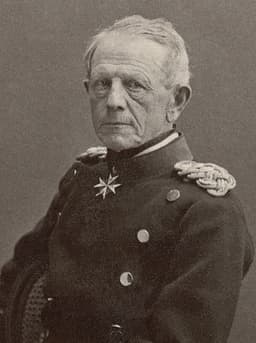
Helmuth von Moltke
General · Modern
76.2Total

Napoleon Bonaparte
General · Modern
70.9Total
Basic Information
Born
1800
1769
Died
1891
1821
Era
Modern
Modern
Nationality
Prussia
France
Occupation
General
General
Civilization
Western
Western
Score Comparison
Military (10%)
65.0
94.0
Political (20%)
62.7
72.0
Influence (20%)
88.0
40.0
Legacy (20%)
70.0
80.0
Leadership (15%)
85.0
78.0
Strategy (15%)
80.6
90.0
TOTAL
76.2
70.9
Helmuth von Moltke — Complete Timeline
1857 AD
Appointment as Chief of the Prussian General StaffPolitical Action
Moltke was appointed Chief of the Prussian General Staff, a position he held for 30 years. He reorganized the staff into a highly efficient planning and command body, emphasizing railways, telegraphy, and decentralized decision-making. This modernization was crucial for Prussia's subsequent victories.
Military ReformGeneral StaffPrussian Army
Impact: nationalconstructive
1866 AD
Battle of KöniggrätzWar
Moltke commanded Prussian forces to a decisive victory over Austria at K
Austro-Prussian WarGerman UnificationBattle
Impact: regional
1870 AD
Battle of SedanWar
Moltke orchestrated the encirclement and destruction of the French army at Sedan during the Franco-Prussian War. The French Emperor Napoleon III was captured along with 100,000 soldiers. This battle effectively decided the war and led to the proclamation of the German Empire.
Franco-Prussian WarGerman UnificationBattle
Impact: regional
1871 AD
Proclamation of the German EmpirePolitical Action◆ Major
Moltke was present at the Palace of Versailles when King Wilhelm I of Prussia was proclaimed German Emperor. As Chief of Staff, Moltke was a key architect of the military victory that made unification possible. He was later promoted to Field Marshal and ennobled.
German UnificationEmpireCeremony
Impact: regionalconstructive
Napoleon Bonaparte — Complete Timeline
1799 AD
Coup of 18 BrumaireOther◆ Major
Napoleon Bonaparte, with support from his brother Lucien and key political figures, overthrew the Directory in a bloodless coup. He established the Consulate with himself as First Consul, effectively becoming the ruler of France. This event ended the French Revolution's most unstable period.
French RevolutionCoupRise to Power
Impact: regional
1804 AD
Promulgation of the Napoleonic CodeOther◆ Major
Napoleon enacted the Civil Code of the French, known as the Napoleonic Code, a comprehensive set of laws that replaced the fragmented feudal legal systems. The code established legal equality, protected property rights, and secularized law. It became the basis for legal systems in many European and world countries.
Legal ReformNapoleonic CodeCivil Law
Impact: globalconstructive
1805 AD
Battle of AusterlitzWar◆ Major
Napoleon's Grande Arm
Napoleonic WarsBattleDecisive Victory
Impact: global
1812 AD
Invasion of RussiaWar◆ Major
Napoleon led the Grande Arm
Napoleonic WarsInvasionDisaster
Impact: globaldestructive
1815 AD
Battle of WaterlooWar◆ Major
Napoleon's French army was defeated by the combined forces of the Duke of Wellington's Anglo-Allied army and Gebhard Leberecht von Bl
Napoleonic WarsBattleFinal Defeat
Impact: globaldestructive
Expert Analysis
helmuth-von-moltke-vs-napoleon-bonaparte
# The Architect and the Executioner
On a rain-soaked June evening in 1815, Napoleon Bonaparte watched his Imperial Guard—the invincible veterans of a hundred battles—break and flee at Waterloo. Less than sixty years later, on a crisp September morning in 1870, Helmuth von Moltke the Elder stood calmly on a hill overlooking Sedan, watching his carefully laid trap snap shut around the army of Emperor Napoleon III. Both men were masters of war, yet their fates could not have been more different. Napoleon, the Corsican firebrand who remade Europe in his image, died a prisoner on a remote Atlantic island. Moltke, the Prussian strategist who unified Germany through steel and calculation, died at ninety-one, honored as the architect of a new empire. What drove these two military geniuses to such divergent ends?
Origins
Napoleon Bonaparte was born in 1769 on Corsica, a rocky island recently annexed by France, into a minor noble family that spoke Italian before French. His childhood was shaped by resentment—resentment of the French conquerors, resentment of the social hierarchies that barred his rise. He devoured history and military theory, but his driving force was ambition, raw and volcanic. The French Revolution had shattered the old order, and for a brilliant young artillery officer, chaos was opportunity.
Helmuth von Moltke, born in 1800 in Mecklenburg, came from an old Prussian Junker family, though one that had fallen on hard times. His father was a minor officer, and young Moltke grew up in a world of discipline, duty, and order. Where Napoleon burned with restless energy, Moltke was methodical, almost cold. He studied military history, engineering, and languages—he spoke seven fluently—but his temperament was that of a scholar who happened to wear a uniform. The Prussia of his youth was a poor, sandy kingdom recovering from Napoleonic humiliation, and its army was a machine waiting for an engineer.
Rise to Power
Napoleon’s ascent was meteoric, a series of explosions. At twenty-four, he crushed a royalist uprising in Paris with a “whiff of grapeshot.” At twenty-six, he commanded the Italian campaign, winning six battles in a month and forcing Austria to the negotiating table. By thirty, he was First Consul of France; by thirty-five, Emperor. Each victory fed the next, and Napoleon rode the wave of revolutionary energy, presenting himself as the man who would bring order to chaos.
Moltke’s rise was glacial, a slow accumulation of trust and competence. He served as a staff officer in the Ottoman Empire, mapped railways in Germany, and wrote quietly influential essays on military organization. In 1857, at age fifty-seven, he was appointed Chief of the Prussian General Staff—a position that, at the time, was considered administrative and unglamorous. But Moltke saw what others missed: the general staff was not a clerical office but the brain of an army. Over the next three decades, he transformed it into the most efficient military instrument the world had ever seen.
Leadership & Governance
Napoleon led from the front. He rode among his troops, shared their rations, and inspired them with speeches about glory and honor. “A soldier will fight long and hard for a bit of colored ribbon,” he once said, and he distributed medals with a showman’s flair. His military genius was tactical and improvisational: he seized the decisive moment, concentrated his forces at the enemy’s weak point, and shattered them with overwhelming violence. But his political wisdom was brittle. He centralized everything in his own hands, trusted no one fully, and treated conquered nations as tributaries to be milked. The Napoleonic Code reformed French law brilliantly, but his empire was a pyramid balanced on his own head.
Moltke led from the map table. He rarely visited the front, preferring to direct operations from a quiet room with telegraphed reports spread before him. His genius was organizational and strategic: he designed railway timetables that moved hundreds of thousands of men with Prussian precision, and he gave his subordinate commanders broad autonomy within a clear overall plan. “No plan survives first contact with the enemy,” he famously said—but he also believed that thorough preparation made adaptation possible. Politically, he was a servant, not a master. He advised Bismarck and served Wilhelm I, never seeking power for himself. Where Napoleon was the sun, Moltke was the clockwork.
Triumph & Tragedy
Napoleon’s greatest moment was Austerlitz in 1805, where he lured the combined Russian and Austrian armies into a trap and destroyed them. It was a masterpiece of deception, timing, and tactical brilliance. His greatest tragedy was the invasion of Russia in 1812. Overconfident and unable to adapt to a war of attrition, he marched 600,000 men into the snow and returned with fewer than 100,000. Waterloo in 1815 was the final act: a battle he might have won had his subordinates been more competent, or had the rain stopped an hour earlier. But by then, Napoleon had burned through his reserves of talent and goodwill.
Moltke’s triumph was Sedan in 1870, where he encircled the French army and captured Napoleon III himself. It was a battle won not by charging cavalry but by logistics, telegraph wires, and meticulous staff work. His tragedy was subtler: the German Empire he helped create became militaristic and aggressive, a force that would drag Europe into two world wars. Moltke lived long enough to see the seeds of future catastrophe planted, and in his final years, he warned against the very nationalism he had helped unleash.
Character & Destiny
Napoleon was a man of immense will, but also immense ego. He believed he was destiny’s chosen instrument, and this faith gave him courage and charisma—but also made him unable to stop. “Power is my mistress,” he said, and he pursued her to the end, even when prudence demanded retreat. His downfall came not from military incompetence but from a character that could not tolerate limits.
Moltke was a man of immense discipline, but also immense detachment. He saw war as a science, not a romance. “Eternal peace is a dream,” he wrote, “and not even a beautiful one.” He served the state without personal ambition, and this allowed him to outlast his enemies and his own mistakes. His success came from knowing that the general who controls his own ego controls the battlefield.
Legacy
Napoleon’s legacy is a paradox. He is remembered as a tyrant who caused millions of deaths and as a reformer who spread legal equality across Europe. The Napoleonic Code still shapes civil law in dozens of countries. His military campaigns are studied at every war college. But his empire crumbled within a decade, and his name is forever linked with hubris and exile.
Moltke’s legacy is quieter but deeper. He did not conquer Europe; he unified Germany. He did not create a cult of personality; he created an institution—the modern general staff system, which every major army later adopted. His methods of railway mobilization, decentralized command, and strategic planning became the template for industrial-age warfare. But his legacy is also shadowed: the Prussian military machine he perfected would eventually serve darker purposes under Hitler.
Conclusion
Napoleon and Moltke represent two faces of military genius: the artist and the engineer, the fire and the steel. Napoleon showed that one man can change the world through sheer force of will—but also that such change is fragile. Moltke showed that institutions, not individuals, build lasting power—but also that such power can become a machine without a soul. In the end, Napoleon died alone on a rock in the South Atlantic, dreaming of his lost empire. Moltke died in his bed at ninety-one, surrounded by family, the most respected man in Germany. Yet both were prisoners of their era: Napoleon of the revolutionary fervor that lifted him up and then consumed him, Moltke of the Prussian discipline that gave him victory but also made him complicit in future catastrophes. Perhaps the deepest lesson is that greatness is not a matter of talent alone, but of knowing what one is willing to sacrifice—and what one is unwilling to become.
Rankings
🥇
Helmuth von MoltkeLeader
Mil: 65.0Pol: 62.7Inf: 88.0
76.2
🥈
Napoleon Bonaparte
Mil: 94.0Pol: 72.0Inf: 40.0
70.9
+5.3 behind
How This Comparison Works
Algorithm
Each figure is scored on 6 dimensions (0—100 scale) based on structured historical data: Military (10%), Political (20%), Influence (20%), Legacy (20%), Leadership (15%), Strategy (15%). The weighted total produces the final ranking.
Data Sources
Scores are computed from structured sub-indicators in the database. Scale factors adjust for era (Ancient ×0.85, Modern ×1.0) and civilization size (Eastern ×1.05, Other ×0.80) to account for differences in population and military scale.
Maximum 3 Figures
Comparisons are limited to 2—3 figures to ensure readability and statistical meaningfulness.
Error Margins
±5 points per dimension — Sub-scores are derived from historical records with inherent uncertainty. Two figures within 5 points on a dimension should be considered roughly equivalent in that area.
Total Score Accuracy
±3 points overall — The weighted combination of 6 dimensions produces a total score with approximately ±3 points of uncertainty. Differences of less than 3 points are not statistically significant— the figures are effectively tied.
Known Limitations
- Historical records are incomplete and uneven across civilizations
- Figures from oral-tradition societies may be underrepresented
- Occupation labels can misclassify multi-role figures
- Scores measure capability and impact, not moral character
- Quantitative scoring is a comparison tool, not absolute truth
Capability Radar
Military (10%) — Battles & Warfare
Battles
85
95
Win Rate
90
90
Expansion
85
95
Political (20%) — Governance & Reform
Reform
75
95
Diplomacy
80
80
Economy
65
85
Influence (20%) — Cultural & Global Reach
Cultural
60
85
Global
75
90
Legacy (20%) — Historical Impact
Historical
85
95
Longevity
75
90
Leadership (15%) — Power & Stability
Tenure
70
85
Stability
70
70
Strategy (15%) — Tactics & Innovation
Strategy
95
95
Tactics
95
98
Reform
90
92
Similar Comparisons
Comments & Discussion
Helmuths Hammer6/17/2026
Moltke didn’t just win battles—he made them inevitable. Napoleon had to be on the field, improvising genius. Moltke sat in a Berlin office and planned wars on paper months in advance. The key difference: railways. Napoleon’s armies marched on their stomachs; Moltke’s moved by train. At Königgrätz, Moltke coordinated three separate armies converging within hours without ever raising a sword. Napoleon would have charged with the Old Guard. Moltke would have checked the timetable.
老参谋的眼睛6/17/2026
把拿破仑和毛奇放在一起比较,就像拿烟花与钟表比。拿破仑靠天才直觉引爆战场,毛奇则靠系统思维掐死对手。一个具体事实:1870年色当战役中,毛奇的铁路调动让20万普鲁士军队在四天内集结完毕,而拿破仑三世还在等援军。这不是谁能更会打仗的问题,而是谁能把战争变成一门科学。毛奇赢了,因为他的对手活在1815年,而他活在1870年。
CorpseCounterKarl6/17/2026
Everyone loves the romantic image of Napoleon’s charge at Austerlitz, but let’s look at the butcher’s bill. Napoleon’s campaigns burned through men like cannon fodder—Russia alone cost 400,000 French lives. Moltke’s wars were surgical. The Franco-Prussian War lasted six months; Napoleonic wars dragged on for years. And Moltke didn’t lose a single battle. Zero. Napoleon lost twice—Leipzig and Waterloo—and both were catastrophic. If we’re measuring efficiency, Moltke outclasses Napoleon by every l
数据驱魔人6/17/2026
你们都被波拿巴的传奇故事骗了。他赢了多少战役?五十场?那又怎样?1813年莱比锡战役后,法国已经彻底完蛋,可拿破仑还在那儿死撑,把整个欧洲变成屠宰场。再看看毛奇:1870年色当一锤定音,干净利落。而且毛奇一辈子没被击败过——这数据骗不了人。如果战争是下棋,拿破仑喜欢设陷阱,毛奇直接掀了棋盘重建规则。谁更聪明?看结局:一个死在孤岛,一个寿终正寝。
LostLegionLeo6/17/2026
You’re all missing the point. Moltke never faced an enemy like the Sixth Coalition—a multi-front, multi-national juggernaut. Napoleon had to fight Austria, Russia, Prussia, Britain, and Spain simultaneously, often with conscripts who’d never seen combat. Moltke fought one war at a time, against an already-weakened France and an outdated Austrian army. Give Napoleon Moltke’s logistics and railways, and he’d have conquered Europe twice over. The real genius is the one who