Loading...
Date Masamune vs Turenne
Turenne leads by 8.7 pts · 2 figures compared
…

Date Masamune
General · Modern
67.1Total
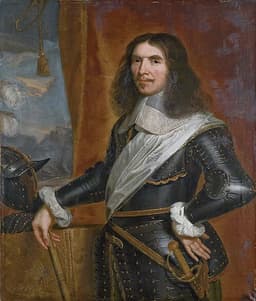
Turenne
General · Modern
75.8Total
Basic Information
Born
1567
1611
Died
1636
1675
Era
Modern
Modern
Nationality
Japan
France
Occupation
General
General
Civilization
Eastern
Western
Score Comparison
Military (10%)
67.3
79.9
Political (20%)
70.0
72.0
Influence (20%)
72.0
88.0
Legacy (20%)
52.0
65.0
Leadership (15%)
85.0
77.2
Strategy (15%)
61.2
72.0
TOTAL
67.1
75.8
Date Masamune — Complete Timeline
1588 AD
Battle of KoriyamaWar
Date Masamune besieged Koriyama Castle in Mutsu Province. The castle fell after a fierce battle, further expanding Masamune's territory and demonstrating his military prowess.
Sengoku PeriodSiegeMutsu
Impact: regionalconstructive
1589 AD
Battle of SuriageharaWar◆ Major
Date Masamune defeated the Ashina clan at Suriagehara in Mutsu Province. This victory allowed Masamune to expand his territory and solidify his control over the southern Tohoku region.
Sengoku PeriodBattleTohoku
Impact: regionalconstructive
1590 AD
Submission to Toyotomi HideyoshiPolitical Action◆ Major
Date Masamune submitted to Toyotomi Hideyoshi after the Siege of Odawara. He was allowed to retain his domain but was forced to cede some territory, marking a shift from independent daimyo to vassal.
Sengoku PeriodSubmissionToyotomi
Impact: national
1601 AD
Founding of SendaiPolitical Action
Date Masamune founded the city of Sendai as his new capital. He built Sendai Castle and developed the surrounding area, establishing a prosperous domain that became a major center in northern Japan.
Sengoku PeriodCity FoundingSendai
Impact: regionalconstructive
Turenne — Complete Timeline
1639 AD
Campaign in the ValtellinaWar
Turenne commanded French forces in the Valtellina during the Thirty Years' War. He captured several fortresses and secured the strategic pass for France, demonstrating his early military skill.
Thirty Years' WarAlpsEarly Career
Impact: regional
1658 AD
Battle of the DunesWar◆ Major
Turenne commanded the French army to victory over the Spanish at the Battle of the Dunes near Dunkirk. The victory led to the capture of Dunkirk and forced Spain to seek peace, ending the Franco-Spanish War.
Franco-Spanish WarDunkirkMilitary Victory
Impact: regional
1674 AD
Battle of the RhineWar◆ Major
Turenne led a French army across the Rhine in winter, surprising the Imperial forces. He defeated the Austrians at the Battle of Entzheim and later at Turckheim, securing French control of Alsace.
Franco-Dutch WarAlsaceWinter Campaign
Impact: regional
Battle of the SambreWar◆ Major
Turenne defeated the Spanish and Dutch forces at the Battle of Seneffe. The battle was costly but prevented the Allies from invading France. It demonstrated Turenne's tactical skill in defensive warfare.
Franco-Dutch WarDefensive BattleTactics
Impact: regional
1675 AD
Death of TurenneWar◆ Major
Turenne was killed by a cannonball while reconnoitering enemy positions at the Battle of Sasbach. His death was a major loss for France. He was buried with honors in the Basilica of Saint-Denis.
Death in BattleFranco-Dutch WarMilitary Loss
Impact: nationaltragic
Expert Analysis
Origins
**Date Masamune** (1567-1636) was born in Yonezawa, the eldest son of Date Terumune, a daimyo of the Date clan in Mutsu Province. His early life was marked by tragedy: at age 15, he lost his right eye to smallpox, earning the nickname "One-Eyed Dragon." His mother initially favored his younger brother, and Masamune had to assert his position through force. He received a rigorous education in military tactics and Confucian classics, shaping his pragmatic yet ambitious worldview.
**Henri de la Tour d'Auvergne, Vicomte de Turenne** (1611-1675) was born in Sedan, the second son of the Duke of Bouillon. As a member of the powerful La Tour d'Auvergne family, he was destined for a military career. He joined the Dutch army under Maurice of Nassau at age 14, gaining early exposure to modern warfare. His father's Protestantism and his own conversion to Catholicism later influenced his political navigation. Turenne's upbringing emphasized discipline and strategy, laying the foundation for his methodical approach.
Rise to Power
Masamune became clan head in 1584 after his father was killed by a vassal. He quickly consolidated power, defeating the Ashina clan at the **Battle of Suriagehara** (1589), which expanded his territory significantly. However, his expansionist ambitions clashed with Toyotomi Hideyoshi's unification efforts. After the Siege of Odawara (1590), Masamune submitted to Hideyoshi, retaining his domain but losing some land. This pragmatic submission preserved his power. Later, he supported Tokugawa Ieyasu at the Battle of Sekigahara (1600), securing his position under the Tokugawa shogunate. He founded Sendai in 1601, building a castle and developing the region into a prosperous domain.
Turenne rose through merit and royal favor. He served under Louis XIII and Cardinal Richelieu, earning a marshal's baton in 1643 at age 32. His breakthrough came during the Thirty Years' War, particularly the **Campaign in the Valtellina** (1639-1641), where he captured key fortresses. During the Fronde (1648-1653), he initially sided with the rebels but switched to the royal side, a decision that solidified his reputation for loyalty to the crown. His greatest rise came under Louis XIV, leading French armies in the War of Devolution (1667-1668) and the Franco-Dutch War (1672-1678).
Leadership & Governance
Masamune ruled as a daimyo with absolute authority over his domain. He was a builder: he founded Sendai, promoted trade, and encouraged foreign relations, even sending an embassy to the Pope (the Hasekura Tsunenaga mission, 1613-1620). His leadership style combined military aggression with diplomatic cunning. He tolerated Christianity initially but later persecuted it to align with shogunate policies. Masamune scored **85.0 in Leadership**, reflecting his ability to command loyalty and manage a domain, but his **Political score of 70.0** shows he often had to submit to higher powers.
Turenne was a commander who emphasized logistics and strategy over brute force. He was known for his careful planning and ability to inspire troops. His **Leadership score of 77.2** is slightly lower than Masamune's, but his **Strategy score of 72.0** is higher than Masamune's 61.2. Turenne's governance was limited to military command, but he influenced French military reforms. He was a master of maneuver, as seen in the **Winter Campaign of 1674-1675** where he crossed the Rhine and defeated the Imperial army at Entzheim. His leadership was more collaborative, working with generals like Condé.
Triumph & Tragedy
Masamune's greatest triumph was founding Sendai and establishing a prosperous domain that lasted centuries. He successfully navigated the turbulent Sengoku period and maintained his clan's power under the Tokugawa shogunate. However, his failure to realize his expansionist dreams—he was forced to submit to Hideyoshi and later Ieyasu—was a personal tragedy. His overseas mission to Rome achieved little tangible benefit. His **Military score of 67.3** reflects mixed battlefield success; he won battles but against lesser opponents.
Turenne's triumphs include the **Battle of the Dunes** (1658), where he defeated the Spanish and captured Dunkirk, and his defense of France during the Franco-Dutch War, notably at the **Battle of Seneffe** (1674) against William of Orange. His greatest tragedy was his death at **Sasbach** (1675) by a cannonball while scouting, cutting short his career. His **Military score of 79.9** and **Influence score of 88.0** reflect his status as a top-tier commander. However, his campaigns were often costly in lives, and he failed to achieve a decisive knockout blow against the Dutch.
Character & Destiny
Masamune was ambitious, ruthless, and pragmatic. His decision to submit to Hideyoshi shows strategic flexibility. He was also a patron of culture, supporting the arts and Christianity initially. His character was shaped by his physical disability and need to prove himself. This drove him to constantly expand his territory, but also to accept limitations when necessary. His destiny was to be a regional power under a centralized state, not a national unifier.
Turenne was methodical, courageous, and loyal. He was known for his modesty and care for soldiers, but also for his relentless pursuit of victory. His conversion to Catholicism helped his career, but he remained respected by Protestants. His caution sometimes led to missed opportunities. His death on the battlefield epitomized a soldier's end, but also prevented him from reaching even greater heights. Historians rate him as one of the greatest French generals, alongside Napoleon and Condé.
Legacy
Masamune's legacy is concrete: Sendai remains a major city, and his clan continued as daimyo until the Meiji Restoration. His diplomatic mission to Europe is a celebrated historical event. However, his **Legacy score of 52.0** is relatively low because his impact was limited to Japan and his domain's autonomy was curtailed by the shogunate. He is remembered as a colorful figure, but his military achievements are overshadowed by other Sengoku lords.
Turenne's legacy is immense in military history. His campaigns are studied for their strategic brilliance. He influenced French military doctrine and set standards for logistics and maneuver. His **Legacy score of 65.0** reflects his enduring reputation. He is buried in the Invalides in Paris, alongside France's greatest soldiers. The French army still honors his name. His impact extended beyond France, as his methods were adopted across Europe.
Conclusion
Turenne has the higher total score (75.8 vs. 67.1) and superior scores in Military, Influence, and Strategy. While Masamune was a capable leader and founder of a city, his scope was regional and his military record less impressive. Turenne's campaigns shaped European warfare and defended France during its rise to dominance. Therefore, Turenne had greater impact on history. Masamune's story is compelling, but Turenne's strategic innovations and battlefield victories place him in a higher tier of historical significance.
Rankings
🥇
TurenneLeader
Mil: 79.9Pol: 72.0Inf: 88.0
75.8
🥈
Date Masamune
Mil: 67.3Pol: 70.0Inf: 72.0
67.1
+8.7 behind
How This Comparison Works
Algorithm
Each figure is scored on 6 dimensions (0—100 scale) based on structured historical data: Military (10%), Political (20%), Influence (20%), Legacy (20%), Leadership (15%), Strategy (15%). The weighted total produces the final ranking.
Data Sources
Scores are computed from structured sub-indicators in the database. Scale factors adjust for era (Ancient ×0.85, Modern ×1.0) and civilization size (Eastern ×1.05, Other ×0.80) to account for differences in population and military scale.
Maximum 3 Figures
Comparisons are limited to 2—3 figures to ensure readability and statistical meaningfulness.
Error Margins
±5 points per dimension — Sub-scores are derived from historical records with inherent uncertainty. Two figures within 5 points on a dimension should be considered roughly equivalent in that area.
Total Score Accuracy
±3 points overall — The weighted combination of 6 dimensions produces a total score with approximately ±3 points of uncertainty. Differences of less than 3 points are not statistically significant— the figures are effectively tied.
Known Limitations
- Historical records are incomplete and uneven across civilizations
- Figures from oral-tradition societies may be underrepresented
- Occupation labels can misclassify multi-role figures
- Scores measure capability and impact, not moral character
- Quantitative scoring is a comparison tool, not absolute truth
Capability Radar
Military (10%) — Battles & Warfare
Battles
68
85
Win Rate
72
88
Expansion
65
80
Political (20%) — Governance & Reform
Reform
65
60
Diplomacy
72
75
Economy
68
55
Influence (20%) — Cultural & Global Reach
Cultural
60
65
Global
45
70
Legacy (20%) — Historical Impact
Historical
65
80
Longevity
55
75
Leadership (15%) — Power & Stability
Tenure
70
70
Stability
70
65
Strategy (15%) — Tactics & Innovation
Strategy
70
92
Tactics
75
90
Reform
60
75
Similar Comparisons
Comments & Discussion
No comments yet. Be the first to share your thoughts!