Loading...
Adolf Heusinger vs Turenne
Turenne leads by 23.5 pts · 2 figures compared
…

Adolf Heusinger
General · Modern
52.3Total
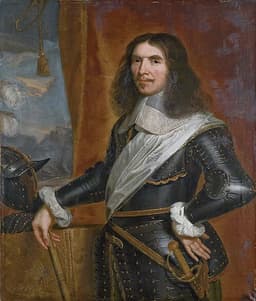
Turenne
General · Modern
75.8Total
Basic Information
Born
1897
1611
Died
1982
1675
Era
Modern
Modern
Nationality
Germany
France
Occupation
General
General
Civilization
Western
Western
Score Comparison
Military (10%)
50.0
79.9
Political (20%)
48.0
72.0
Influence (20%)
51.0
88.0
Legacy (20%)
46.7
65.0
Leadership (15%)
64.5
77.2
Strategy (15%)
60.0
72.0
TOTAL
52.3
75.8
Adolf Heusinger — Complete Timeline
1944 AD
Wounded in the July 20 BombingOther◆ Major
Heusinger was present at the Wolf's Lair briefing on July 20, 1944, when Claus von Stauffenberg's bomb exploded. He sustained injuries including a concussion and ruptured eardrums. He was one of the few senior officers present who survived the blast.
July 20 PlotWolf's LairInjury
Impact: national
1957 AD
Appointed First Inspector of the BundeswehrPolitical Action◆ Major
Heusinger was appointed the first Inspector General of the Bundeswehr, the highest-ranking military officer in West Germany, on June 1, 1957. He served until 1961, overseeing the establishment and integration of the new German armed forces into NATO.
BundeswehrNATOWest GermanyMilitary Rebuilding
Impact: nationalconstructive
1961 AD
Chairman of the NATO Military CommitteePolitical Action◆ Major
Heusinger served as Chairman of the NATO Military Committee from 1961 to 1964. In this role, he was the senior military advisor to the NATO alliance, coordinating defense policy among member states during the Cold War.
NATOCold WarMilitary Alliance
Impact: globalconstructive
Turenne — Complete Timeline
1639 AD
Campaign in the ValtellinaWar
Turenne commanded French forces in the Valtellina during the Thirty Years' War. He captured several fortresses and secured the strategic pass for France, demonstrating his early military skill.
Thirty Years' WarAlpsEarly Career
Impact: regional
1658 AD
Battle of the DunesWar◆ Major
Turenne commanded the French army to victory over the Spanish at the Battle of the Dunes near Dunkirk. The victory led to the capture of Dunkirk and forced Spain to seek peace, ending the Franco-Spanish War.
Franco-Spanish WarDunkirkMilitary Victory
Impact: regional
1674 AD
Battle of the RhineWar◆ Major
Turenne led a French army across the Rhine in winter, surprising the Imperial forces. He defeated the Austrians at the Battle of Entzheim and later at Turckheim, securing French control of Alsace.
Franco-Dutch WarAlsaceWinter Campaign
Impact: regional
Battle of the SambreWar◆ Major
Turenne defeated the Spanish and Dutch forces at the Battle of Seneffe. The battle was costly but prevented the Allies from invading France. It demonstrated Turenne's tactical skill in defensive warfare.
Franco-Dutch WarDefensive BattleTactics
Impact: regional
1675 AD
Death of TurenneWar◆ Major
Turenne was killed by a cannonball while reconnoitering enemy positions at the Battle of Sasbach. His death was a major loss for France. He was buried with honors in the Basilica of Saint-Denis.
Death in BattleFranco-Dutch WarMilitary Loss
Impact: nationaltragic
Expert Analysis
Origins
**Adolf Heusinger** was born on August 4, 1897, in Holzminden, Germany, into a middle-class family. His father was a teacher. He joined the German Army in 1915 as a Fahnenjunker (officer cadet) and served in World War I, earning the Iron Cross 1st Class. After the war, he remained in the Reichswehr, the limited German military allowed by the Treaty of Versailles. He attended the War Academy and by the 1930s served in the Operations Department of the General Staff, gaining expertise in strategic planning.
**Henri de La Tour d'Auvergne, Vicomte de Turenne**, was born on September 11, 1611, in Sedan, France, into a noble Huguenot family. His father was the Duke of Bouillon, a prominent Protestant noble. Turenne received military training from a young age, serving as a soldier in the Dutch army under his uncle, Maurice of Nassau, in 1625. He later joined the French army in 1630, where his family connections and talent accelerated his career.
Rise to Power
Heusinger's rise came through staff work. In 1938, he became the head of the Operations Department in the Army General Staff, a key planning role. During World War II, he was involved in major campaigns including the invasion of Poland (1939), France (1940), and the Soviet Union (1941). He was promoted to Generalmajor in 1942 and served as chief of the Operations Staff of the Army High Command from 1943. His proximity to Hitler at the Wolf's Lair on July 20, 1944, left him wounded in the bomb plot against the Führer. After the war, he was interned but later released. In 1950, he became a key advisor to Konrad Adenauer on rearmament, leading to his appointment as the first Inspector General of the Bundeswehr in 1957.
Turenne's rise began in the Thirty Years' War. He distinguished himself at the Battle of Breitenfeld (1631) and captured several fortresses in the Valtellina in 1636. He became a Marshal of France in 1643 at age 32. During the Fronde (1648–1653), he initially supported the rebels but later returned to the royal side, defeating the Frondeurs and their Spanish allies. This secured his position as Louis XIV's foremost general. His campaign of 1658 culminated in the Battle of the Dunes, where he defeated the Spanish and captured Dunkirk.
Leadership & Governance
Heusinger's leadership was administrative and institution-building. As Inspector General, he shaped the Bundeswehr's structure, emphasizing civilian control, integration into NATO, and a doctrine of defensive deterrence. He scored 64.5 in Leadership and 60.0 in Strategy, reflecting his methodical approach. He served as Chairman of the NATO Military Committee from 1961 to 1964, coordinating alliance strategy. His governance style was consultative and diplomatic, suitable for a democratic framework.
Turenne led by example in battle. He was known for his tactical flexibility, rapid marches, and use of terrain. At the Battle of the Rhine in 1674, he crossed the river in winter to surprise the Imperialists, winning at Entzheim. His leadership score of 77.2 and strategy score of 72.0 reflect his battlefield success. He governed captured territories with a mix of harshness and pragmatism, often requisitioning supplies to sustain his army.
Triumph & Tragedy
Heusinger's greatest success was establishing the Bundeswehr as a professional, democratic military force that became a pillar of NATO. He also contributed to Germany's rehabilitation as a trusted ally. His tragedy was his service under the Nazi regime, which stained his legacy despite his post-war contributions. He was aware of war crimes but did not publicly oppose them, a moral failure.
Turenne's triumphs include the Battle of the Dunes (1658), which ended the Franco-Spanish War, and the 1674–75 winter campaign that saved France from invasion. His tragedy came at Sasbach in 1675, where he was killed by a cannonball while scouting. His death was a severe blow to France, and he was buried with honors. However, his earlier support of the Fronde tarnished his loyalty, though he was later forgiven.
Character & Destiny
Heusinger was a cautious, meticulous staff officer. His survival of the July 20 bomb plot and subsequent career demonstrated resilience and political acumen. He prioritized institutional stability over personal glory. His destiny was to rebuild Germany's military from the ashes of defeat, a task requiring patience and diplomacy.
Turenne was bold, aggressive, and inspirational. He often led from the front, which ultimately cost him his life. His character combined aristocratic confidence with tactical genius. His destiny was to serve Louis XIV's ambitions, achieving great victories but dying in action.
Legacy
Heusinger's legacy is the Bundeswehr and Germany's integration into NATO. He scored 46.7 in Legacy, reflecting his limited fame outside military circles. His institutional impact is lasting: the Bundeswehr remains a key NATO force. However, his Nazi-era service complicates his memory.
Turenne's legacy is as a national hero of France. His military innovations influenced later generals like Napoleon. He scored 65.0 in Legacy, higher but still not among the very top. His name is commemorated in streets, ships, and the French military academy. His tactical doctrines were studied for centuries.
Conclusion
Turenne had greater impact as a military commander, scoring 75.8 total versus Heusinger's 52.3. His battlefield victories shaped European borders and established French dominance. Heusinger's contribution was institutional, building a peacetime army for a democratic state. While Heusinger's work was crucial for post-war Germany, Turenne's direct influence on warfare and history is more significant. Therefore, Turenne is the more impactful figure.
Rankings
🥇
TurenneLeader
Mil: 79.9Pol: 72.0Inf: 88.0
75.8
🥈
Adolf Heusinger
Mil: 50.0Pol: 48.0Inf: 51.0
52.3
+23.5 behind
How This Comparison Works
Algorithm
Each figure is scored on 6 dimensions (0—100 scale) based on structured historical data: Military (10%), Political (20%), Influence (20%), Legacy (20%), Leadership (15%), Strategy (15%). The weighted total produces the final ranking.
Data Sources
Scores are computed from structured sub-indicators in the database. Scale factors adjust for era (Ancient ×0.85, Modern ×1.0) and civilization size (Eastern ×1.05, Other ×0.80) to account for differences in population and military scale.
Maximum 3 Figures
Comparisons are limited to 2—3 figures to ensure readability and statistical meaningfulness.
Error Margins
±5 points per dimension — Sub-scores are derived from historical records with inherent uncertainty. Two figures within 5 points on a dimension should be considered roughly equivalent in that area.
Total Score Accuracy
±3 points overall — The weighted combination of 6 dimensions produces a total score with approximately ±3 points of uncertainty. Differences of less than 3 points are not statistically significant— the figures are effectively tied.
Known Limitations
- Historical records are incomplete and uneven across civilizations
- Figures from oral-tradition societies may be underrepresented
- Occupation labels can misclassify multi-role figures
- Scores measure capability and impact, not moral character
- Quantitative scoring is a comparison tool, not absolute truth
Capability Radar
Military (10%) — Battles & Warfare
Battles
20
85
Win Rate
15
88
Expansion
10
80
Political (20%) — Governance & Reform
Reform
50
60
Diplomacy
35
75
Economy
20
55
Influence (20%) — Cultural & Global Reach
Cultural
15
65
Global
20
70
Legacy (20%) — Historical Impact
Historical
40
80
Longevity
30
75
Leadership (15%) — Power & Stability
Tenure
40
70
Stability
30
65
Strategy (15%) — Tactics & Innovation
Strategy
45
92
Tactics
40
90
Reform
55
75
Similar Comparisons
Comments & Discussion
No comments yet. Be the first to share your thoughts!