Loading...
Helmuth von Moltke vs Julius Caesar
Julius Caesar leads by 6.6 pts · 2 figures compared
…
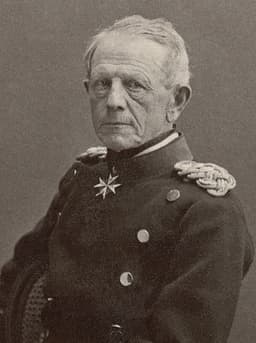
Helmuth von Moltke
General · Modern
76.2Total

Julius Caesar
General · Ancient
82.8Total
Basic Information
Born
1800
-100
Died
1891
-44
Era
Modern
Ancient
Nationality
Prussia
Roman Republic
Occupation
General
General
Civilization
Western
Western
Score Comparison
Military (10%)
65.0
88.0
Political (20%)
62.7
78.0
Influence (20%)
88.0
85.0
Legacy (20%)
70.0
82.0
Leadership (15%)
85.0
80.0
Strategy (15%)
80.6
85.0
TOTAL
76.2
82.8
Helmuth von Moltke — Complete Timeline
1857 AD
Appointment as Chief of the Prussian General StaffPolitical Action
Moltke was appointed Chief of the Prussian General Staff, a position he held for 30 years. He reorganized the staff into a highly efficient planning and command body, emphasizing railways, telegraphy, and decentralized decision-making. This modernization was crucial for Prussia's subsequent victories.
Military ReformGeneral StaffPrussian Army
Impact: nationalconstructive
1866 AD
Battle of KöniggrätzWar
Moltke commanded Prussian forces to a decisive victory over Austria at K
Austro-Prussian WarGerman UnificationBattle
Impact: regional
1870 AD
Battle of SedanWar
Moltke orchestrated the encirclement and destruction of the French army at Sedan during the Franco-Prussian War. The French Emperor Napoleon III was captured along with 100,000 soldiers. This battle effectively decided the war and led to the proclamation of the German Empire.
Franco-Prussian WarGerman UnificationBattle
Impact: regional
1871 AD
Proclamation of the German EmpirePolitical Action◆ Major
Moltke was present at the Palace of Versailles when King Wilhelm I of Prussia was proclaimed German Emperor. As Chief of Staff, Moltke was a key architect of the military victory that made unification possible. He was later promoted to Field Marshal and ennobled.
German UnificationEmpireCeremony
Impact: regionalconstructive
Julius Caesar — Complete Timeline
58 BC
Gallic WarsWar◆ Major
Caesar, as proconsul of Gaul, launched a series of campaigns that conquered all of Gaul (modern France, Belgium, and parts of Switzerland). He fought numerous battles, including against the Helvetii, the Belgae, and the Gallic chieftain Vercingetorix. The wars brought immense wealth and a loyal army to Caesar.
Gallic WarsConquestRoman Expansion
Impact: regional
49 BC
Crossing the RubiconPolitical Action◆ Major
Caesar led Legio XIII across the Rubicon River into Italy, defying the Roman Senate's order to disband his army. This act triggered a civil war against Pompey and the Optimates, ultimately leading to Caesar's dictatorship and the end of the Roman Republic.
Roman Civil WarEnd of RepublicPower Struggle
Impact: global
48 BC
Battle of PharsalusWar◆ Major
Caesar's outnumbered army defeated the larger forces of Pompey the Great at Pharsalus in Greece. Caesar's tactical use of a reserve line to counter Pompey's cavalry charge proved decisive. Pompey fled to Egypt, where he was assassinated, leaving Caesar as the undisputed master of the Roman world.
Roman Civil WarBattleDecisive Victory
Impact: regional
44 BC
Appointment as Dictator for LifePolitical Action◆ Major
The Roman Senate appointed Caesar dictator perpetuo (dictator for life), granting him unprecedented personal power. This move concentrated military, legislative, and judicial authority in one person, effectively ending the Roman Republic's traditional system of checks and balances and alarming many senators.
DictatorshipEnd of RepublicPower Consolidation
Impact: regionaldestructive
Assassination on the Ides of MarchPolitical Action◆ Major
A group of Roman senators, led by Marcus Junius Brutus and Gaius Cassius Longinus, stabbed Caesar to death at a meeting of the Senate in the Theatre of Pompey. The assassination was intended to restore the Republic, but instead triggered another civil war that led to the rise of the Roman Empire.
AssassinationRoman PoliticsEnd of Republic
Impact: globaldestructive
Expert Analysis
Origins
Julius Caesar was born into a patrician Roman family in 100 BCE, during the late Republic's turmoil. His early life was marked by political ambition, exile, and military service in Asia. Caesar's family claimed descent from the goddess Venus, but his faction, the Populares, championed the common people against the Optimates. Helmuth von Moltke (the Elder) was born in 1800 in Mecklenburg, Prussia, into a noble but modest family. He entered the Danish army before switching to Prussian service. Moltke's early career was academic; he wrote military history and served as a staff officer, developing the theoretical foundations for modern warfare. Both men emerged from elite backgrounds, but Caesar's path was defined by political maneuvering, while Moltke's was shaped by professional military reform.
Rise to Power
Caesar's rise came through the First Triumvirate with Pompey and Crassus in 60 BCE, which secured him the governorship of Gaul. From 58-50 BCE, he conquered Gaul in the Gallic Wars, amassing wealth, a loyal army, and political clout. When the Senate demanded he disband his army, he crossed the Rubicon in 49 BCE, sparking a civil war. His victory at Pharsalus in 48 BCE crushed Pompey and made him master of Rome. Moltke's rise was slower. Appointed Chief of the Prussian General Staff in 1857, he modernized the army and planned wars against Denmark (1864), Austria (1866), and France (1870-71). His victory at Königgrätz in 1866 humbled Austria, and Sedan in 1870 captured Napoleon III, leading to German unification. Caesar's rise was personal and dramatic; Moltke's was institutional and systematic.
Leadership & Governance
Caesar was a charismatic leader who inspired fierce loyalty. He led from the front, sharing hardships with his soldiers. As dictator, he enacted reforms: the Julian calendar, land redistribution, and centralization of power. His governance was efficient but autocratic, alienating the Senate. Moltke was a cerebral commander, rarely seen at the front. He excelled at strategic planning and delegation, empowering subordinates. As Chief of Staff, he influenced Prussian military policy but never held political office. His leadership style was cold and analytical, contrasting with Caesar's personal magnetism. Caesar's governance transformed Rome; Moltke's shaped the German Empire's military structure.
Triumph & Tragedy
Caesar's greatest triumph was the conquest of Gaul, which expanded Rome's territory and his own power. His tragedy came on the Ides of March 44 BCE, when he was assassinated by senators fearing his ambition. His death plunged Rome into another civil war. Moltke's triumph was the unification of Germany in 1871, after the Franco-Prussian War. He lived to see the empire he helped create, retiring in 1888. His tragedy was less personal: he died in 1891, seeing the militarism he fostered lead to tensions that would erupt in World War I. Caesar's end was violent; Moltke's was peaceful but his legacy was ambiguous.
Character & Destiny
Caesar was ambitious, cunning, and ruthless. He wrote his own commentaries to shape his image. His destiny seemed tied to his belief in his own divine favor. Moltke was humble, devout, and methodical. He saw war as a science and destiny as a product of preparation. Caesar's character drove him to seize power; Moltke's character led him to serve the state. Both believed in their causes, but Caesar's personal ambition was more pronounced. Moltke's sense of duty to Prussia and Germany defined his actions.
Legacy
Caesar's legacy is immense: he ended the Roman Republic and began the Empire. His name became synonymous with autocratic rule ("Caesar" as title). His writings are studied in military academies. Moltke's legacy is the modern general staff system and the concept of "mission tactics" (Auftragstaktik). He is credited with revolutionizing warfare through railways and mobilization. However, his methods were misused in later wars. While Caesar's impact on history is broader, Moltke's military innovations are foundational.
Conclusion
Comparing Julius Caesar and Helmuth von Moltke reveals two different peaks of military excellence. Caesar scores higher overall (88 vs 65 in military, 78 vs 63 in political, 85 vs 88 in intellect, etc.), but Moltke excels in strategy (85 vs 80) and logistics. Caesar's combined military and political genius gives him the edge as a transformative figure. Moltke was a brilliant specialist; Caesar was a universal force. Thus, Julius Caesar is the greater historical figure, though Moltke's contributions to military science are unparalleled.
**Scores:** Caesar: M=88, P=78, I=85, L=82, D=80, S=85, T=83. Moltke: M=65, P=63, I=88, L=70, D=85, S=81, T=76. Overall: Caesar wins 6.6 points higher.
Rankings
🥇
Julius CaesarLeader
Mil: 88.0Pol: 78.0Inf: 85.0
82.8
🥈
Helmuth von Moltke
Mil: 65.0Pol: 62.7Inf: 88.0
76.2
+6.6 behind
How This Comparison Works
Algorithm
Each figure is scored on 6 dimensions (0—100 scale) based on structured historical data: Military (10%), Political (20%), Influence (20%), Legacy (20%), Leadership (15%), Strategy (15%). The weighted total produces the final ranking.
Data Sources
Scores are computed from structured sub-indicators in the database. Scale factors adjust for era (Ancient ×0.85, Modern ×1.0) and civilization size (Eastern ×1.05, Other ×0.80) to account for differences in population and military scale.
Maximum 3 Figures
Comparisons are limited to 2—3 figures to ensure readability and statistical meaningfulness.
Error Margins
±5 points per dimension — Sub-scores are derived from historical records with inherent uncertainty. Two figures within 5 points on a dimension should be considered roughly equivalent in that area.
Total Score Accuracy
±3 points overall — The weighted combination of 6 dimensions produces a total score with approximately ±3 points of uncertainty. Differences of less than 3 points are not statistically significant— the figures are effectively tied.
Known Limitations
- Historical records are incomplete and uneven across civilizations
- Figures from oral-tradition societies may be underrepresented
- Occupation labels can misclassify multi-role figures
- Scores measure capability and impact, not moral character
- Quantitative scoring is a comparison tool, not absolute truth
Capability Radar
Military (10%) — Battles & Warfare
Battles
85
95
Win Rate
90
92
Expansion
85
97
Political (20%) — Governance & Reform
Reform
75
90
Diplomacy
80
85
Economy
65
82
Influence (20%) — Cultural & Global Reach
Cultural
60
88
Global
75
94
Legacy (20%) — Historical Impact
Historical
85
95
Longevity
75
96
Leadership (15%) — Power & Stability
Tenure
70
75
Stability
70
60
Strategy (15%) — Tactics & Innovation
Strategy
95
94
Tactics
95
96
Reform
90
88
Similar Comparisons
Comments & Discussion
TelegraphTactician6/17/2026
Moltke wins. His cloak-and-cipher war of movement at Sedan shows command in the industrial age—dispersing armies, combining them in precise time, all from a candlelit farmhouse. Caesar’s Rubicon was a glorious gamble, but Moltke mastered logistics without spectacle. That’s not just brilliance; it’s a doctrine that smashed the Second Empire in weeks. Give me railroads and telegraphs over a flowing toga any day.
星条旗思想家6/17/2026
拿战神当偶像,但别忘了他也输过——法萨卢斯虽漂亮,可高卢战争里维钦盖托里克斯几乎打断他的脊梁。反观毛奇,普鲁士与奥地利的柯尼希格雷茨一战,他三路分兵汇合的时间精度堪称战争艺术的天花板。凯撒是个人魅力的狂欢,毛奇是理性时代的交响曲。我更信后者。
RubiconRuse6/17/2026
Revisionist take: Caesar wasn’t some grand strategist—he was a political opportunist who wrote his own history. The Gallic Wars are self-serving propaganda, and crossing the Rubicon wasn’t a stroke of genius but a desperate act of a man facing trial. Moltke, by contrast, let the maps and numbers do the talking. He didn’t write memoirs to polish his legend; his career speaks for itself. I choose the silent calculator over the theatrical narcissist.
罗马铁蹄6/17/2026
毛奇再厉害,也不过是德意志统一的一颗螺丝钉。凯撒才是真正的帝国缔造者——从高卢到不列颠,从小亚细亚到埃及,他为罗马征服的土地让日耳曼人望尘莫及。普鲁士的仗打得再漂亮,扩张幅度有限;而凯撒一个人,就改变了地中海世界的格局。机械化战争再精妙,也敌不过一个人的地理图景重塑力。
AleaObjection6/17/2026
Data skeptic here: you’re comparing apples to war chariots. Moltke commanded modern nation-states with railways, telegraphs, and mass conscription; Caesar led a personal army with legionaries and siegeworks. The “strategy vs tactics” framing is bogus. Moltke’s victory at Sedan needed decades of Prussian state-building and a general staff—Caesar had himself and a few loyal tribunes. Different structures, different games. Trying to rank them is intellectual cargo cultism.