Loading...
Harsha vs Zhao Kuangyin
Zhao Kuangyin leads by 10.5 pts · 2 figures compared
…
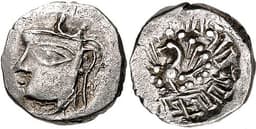
Harsha
Emperor · Medieval
61.0Total
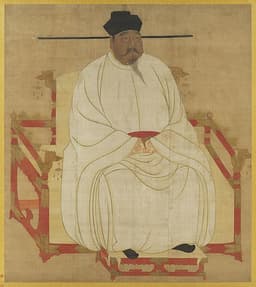
Zhao Kuangyin
Emperor · Medieval
71.5Total
Basic Information
Born
590
927
Died
647
976
Era
Medieval
Medieval
Nationality
India
China
Occupation
Emperor
Emperor
Civilization
Indian
Eastern
Score Comparison
Military (10%)
61.7
78.0
Political (20%)
45.0
84.0
Influence (20%)
68.0
68.0
Legacy (20%)
58.0
65.0
Leadership (15%)
66.0
74.0
Strategy (15%)
66.3
68.0
TOTAL
61.0
71.5
Harsha — Complete Timeline
606 AD
Accession to the Throne of ThanesarPolitical Action
Harsha succeeded his father Prabhakaravardhana as ruler of Thanesar (in present-day Haryana). He was 16 years old and soon faced the challenge of avenging his brother-in-law's death and expanding his kingdom.
ThanesarSuccessionHarsha
Impact: regional
612 AD
Conquest of KannaujWar◆ Major
Harsha captured the city of Kannauj after defeating the Maukhari ruler Grahavarman's enemies. He made Kannauj his capital and established the Vardhana dynasty's control over the Gangetic plain, becoming the dominant power in northern India.
KannaujVardhana DynastyNorthern India
Impact: regional
620 AD
Campaigns in Eastern IndiaWar◆ Major
Harsha led military campaigns into Bengal and Odisha, defeating the Shashanka king of Gauda. He extended his empire eastward to the Bay of Bengal, though his control over these regions was not permanent.
BengalOdishaShashanka
Impact: regional
630 AD
Conflict with the Chalukya King Pulakeshin IIWar◆ Major
Harsha attempted to expand southward but was defeated by the Chalukya king Pulakeshin II on the banks of the Narmada River. This battle halted Harsha's southern expansion and established the Narmada as the boundary between the two empires.
ChalukyaPulakeshin IINarmada
Impact: regional
640 AD
Patronage of Buddhism and the Nalanda UniversityCultural◆ Major
Harsha was a patron of Buddhism and supported the Nalanda University, a major center of Buddhist learning. He convened a grand Buddhist council at Kannauj attended by monks from across Asia, and built monasteries and stupas.
BuddhismNalandaCouncil of Kannauj
Impact: regionalconstructive
643 AD
Visit of the Chinese Pilgrim XuanzangCultural
The Chinese Buddhist monk Xuanzang visited Harsha's court and spent time in the empire. Xuanzang's detailed accounts describe Harsha's administration, military, and religious tolerance, providing a key historical source for the period.
XuanzangChinese PilgrimBuddhism
Impact: regionalconstructive
Zhao Kuangyin — Complete Timeline
960 AD
Founded Song dynastyPolitical Action
Zhao Kuangyin, a general of Later Zhou, was proclaimed emperor by his troops at Chenqiao. He established the Song dynasty, ending the Five Dynasties period and beginning a new era of Chinese history.
Song dynastyFoundingChenqiao
Impact: globalconstructive
961 AD
Removed military power from generalsPolitical Action◆ Major
Zhao Kuangyin invited senior generals to a banquet and persuaded them to retire peacefully. This 'removal of military power over wine' prevented military coups and centralized control.
Song dynastyMilitary reformCentralization
Impact: nationalconstructive
963 AD
Unified southern ChinaWar◆ Major
Zhao Kuangyin launched campaigns to conquer the southern kingdoms, including Jingnan, Later Shu, and Southern Tang. By his death, most of China was reunified under Song rule.
Song unificationConquestSouthern kingdoms
Impact: national
Expert Analysis
Zhao Kuangyin vs Harsha
### The Emperor Who Chose Peace: Harsha and Zhao Kuangyin
On a spring morning in 961, in the imperial palace of Kaifeng, the Emperor Zhao Kuangyin of the newly founded Song dynasty sat at a banquet with his most powerful generals. The wine flowed freely, and laughter echoed through the halls. But beneath the merriment lay a knife's edge. The emperor, a man who had himself been a general, knew that the history of China was written in blood and betrayal. Only a few years earlier, he had been proclaimed emperor by his own troops at Chenqiao, a coup that had toppled the Later Zhou dynasty. Now, he faced the same threat. Across the continent, in the plains of northern India, another emperor had faced a similar dilemma half a millennium earlier. Harsha, crowned at sixteen, had built an empire through relentless war, only to see it crumble within decades of his death. Why did one empire endure for three centuries while the other vanished like morning mist? The answer lies not in the stars, but in the choices of two men who understood power in profoundly different ways.
### Origins
Harsha was born in 590 into the Pushyabhuti dynasty of Thanesar, a minor kingdom in what is now Haryana. His father, Prabhakaravardhana, was a capable ruler, but the family’s world was one of constant warfare. The Gupta Empire had collapsed, and northern India was a patchwork of feuding kingdoms. Harsha grew up in a warrior’s court, where the sword was the final argument. His elder brother, Rajyavardhana, was murdered by the king of Gauda, Shashanka, a trauma that would shape Harsha’s early reign. The boy was thrust onto the throne at sixteen, his mind hardened by loss and ambition.
Zhao Kuangyin, born in 927, came from a different world. His father was a military officer under the Later Tang dynasty, but Zhao’s China was not the fractured battlefield of Harsha’s India. It was a land exhausted by the Five Dynasties and Ten Kingdoms period, a half-century of chaos where warlords rose and fell like waves. Zhao was educated in the Confucian classics, but he was also a soldier. He understood that the endless cycle of rebellion and conquest was destroying the very fabric of civilization. Where Harsha saw a world to be conquered, Zhao saw a world to be stabilized.
### Rise to Power
Harsha’s ascent was a story of vengeance and momentum. In 606, he inherited a throne soaked in his brother’s blood. He immediately marched against Shashanka, but the campaign was less a conquest than a relentless pursuit. By 612, he had captured Kannauj, the richest city in the Ganges basin, and made it his capital. From there, he pushed east into Bengal and Odisha, defeating the Gauda kingdom in 620. Each victory fed the next. Harsha was a whirlwind, but he was also a prisoner of his own success—he had to keep moving, keep fighting, or his fragile coalition of vassals would collapse.
Zhao Kuangyin’s rise was more calculated. In 960, he was a general in the Later Zhou army, sent north to repel a Khitan invasion. At Chenqiao, his troops mutinied and draped a yellow robe over his shoulders, proclaiming him emperor. Unlike Harsha, who accepted his crown as a sacred duty, Zhao initially refused—or so the story goes. He only agreed after his soldiers swore loyalty to the new dynasty. This was no accident. Zhao understood that the legitimacy of a ruler rested not on conquest, but on the consent of the governed, however forced that consent might be.
### Leadership & Governance
Harsha ruled as a traditional Indian monarch—a *chakravartin*, or universal emperor. He was a patron of Buddhism, convening a grand council at Nalanda in 640, and he supported the Chinese pilgrim Xuanzang, who left detailed accounts of his court. Harsha’s administration was decentralized; local kings paid tribute and provided troops, but they retained their thrones. This was the weakness at the heart of his empire. When Harsha died in 647, his vassals simply went home. There was no bureaucracy, no standing army, no enduring state. His empire was a shadow cast by his own charisma.
Zhao Kuangyin, by contrast, was a structural genius. In 961, he invited his top generals to a banquet and, over cups of wine, convinced them to retire peacefully. This “removal of military power” was a masterstroke of political theater. He replaced them with civilian officials, creating a bureaucracy that answered to the throne. He then launched campaigns to unify southern China, conquering Jingnan, Later Shu, and Southern Tang by 963. But Zhao’s wars were not acts of conquest; they were acts of consolidation. He absorbed enemy states into his administrative system, preserving their institutions and co-opting their elites. Where Harsha ruled through personal loyalty, Zhao ruled through law.
### Triumph & Tragedy
Harsha’s greatest moment came in 643, when Xuanzang arrived at his court. The Chinese monk described a grand procession of elephants and banners, a king who distributed alms until his treasury was empty. It was the apotheosis of Buddhist kingship—generous, pious, magnificent. But the tragedy was already written. In 630, Harsha had marched south against the Chalukya king Pulakeshin II and been defeated on the banks of the Narmada River. That defeat was the boundary of his ambition. He could not expand further, and he could not create institutions to hold what he had. His empire was a bubble.
Zhao Kuangyin’s tragedy was more subtle. He unified China, but he did so by weakening the military. His successors would pay the price. The Song dynasty, for all its cultural brilliance, was perpetually vulnerable to northern invaders. In 976, Zhao died suddenly, possibly murdered by his own brother. Yet his creation endured. The Song would rule for three centuries, a testament to the power of civil administration over personal rule.
### Character & Destiny
Harsha was a man of fire. He was brave, generous, and devout, but he could not escape the logic of his time. In India, empire was built on the battlefield, and it dissolved with the emperor’s death. He was a warrior-king in a world that demanded warriors, but his personality was his destiny. He could not delegate, could not institutionalize, could not imagine a state that outlived its founder.
Zhao Kuangyin was a man of ice. He was cautious, calculating, and ruthless when necessary, but he understood that power was a tool, not a prize. He dismantled his own military base because he knew that the state was greater than any general. His personality was his destiny, too—but his destiny was to build a machine that could run without him.
### Legacy
Harsha is remembered today as a patron of Buddhism and a figure of romantic legend. His court was a beacon of culture, but his empire left no lasting institutions. The Chinese pilgrim Xuanzang’s account is our primary source, and it reads like a eulogy for a world that vanished.
Zhao Kuangyin is remembered as the founder of the Song dynasty, a golden age of Chinese civilization. His policies shaped China for centuries. He is the quiet architect of a bureaucratic state that would inspire later dynasties. His legacy is not in the battles he won, but in the wars he prevented.
### Conclusion
Two emperors, two worlds. Harsha built a kingdom of loyalty; Zhao built a kingdom of law. One died and his empire died with him; the other died and his empire lived on. The difference was not in their courage or their vision, but in their understanding of what an empire truly is. Harsha believed an empire was a person—the emperor himself. Zhao believed an empire was an idea—a system of governance that could outlast any individual. Perhaps that is the deepest lesson of history: the greatest rulers are not those who conquer, but those who create institutions that make conquest unnecessary.
Rankings
🥇
Zhao KuangyinLeader
Mil: 78.0Pol: 84.0Inf: 68.0
71.5
🥈
Harsha
Mil: 61.7Pol: 45.0Inf: 68.0
61.0
+10.5 behind
How This Comparison Works
Algorithm
Each figure is scored on 6 dimensions (0—100 scale) based on structured historical data: Military (10%), Political (20%), Influence (20%), Legacy (20%), Leadership (15%), Strategy (15%). The weighted total produces the final ranking.
Data Sources
Scores are computed from structured sub-indicators in the database. Scale factors adjust for era (Ancient ×0.85, Modern ×1.0) and civilization size (Eastern ×1.05, Other ×0.80) to account for differences in population and military scale.
Maximum 3 Figures
Comparisons are limited to 2—3 figures to ensure readability and statistical meaningfulness.
Error Margins
±5 points per dimension — Sub-scores are derived from historical records with inherent uncertainty. Two figures within 5 points on a dimension should be considered roughly equivalent in that area.
Total Score Accuracy
±3 points overall — The weighted combination of 6 dimensions produces a total score with approximately ±3 points of uncertainty. Differences of less than 3 points are not statistically significant— the figures are effectively tied.
Known Limitations
- Historical records are incomplete and uneven across civilizations
- Figures from oral-tradition societies may be underrepresented
- Occupation labels can misclassify multi-role figures
- Scores measure capability and impact, not moral character
- Quantitative scoring is a comparison tool, not absolute truth
Capability Radar
Military (10%) — Battles & Warfare
Battles
65
75
Win Rate
70
85
Expansion
70
75
Political (20%) — Governance & Reform
Reform
60
90
Diplomacy
70
85
Economy
65
80
Influence (20%) — Cultural & Global Reach
Cultural
65
70
Global
50
60
Legacy (20%) — Historical Impact
Historical
60
80
Longevity
55
75
Leadership (15%) — Power & Stability
Tenure
75
65
Stability
60
85
Strategy (15%) — Tactics & Innovation
Strategy
65
80
Tactics
60
70
Reform
50
90
Similar Comparisons
Comments & Discussion
The De-Institutionalist6/16/2026
The comparison misses the forest for the trees. Zhao Kuangyin’s peace came from institutional genius—he stripped military power from generals by centralizing command, not just through charm at a banquet. Harsha’s empire lacked civil service depth, relying on personal loyalty, so it collapsed when he died. One man built a state machine; the other built a personality cult. Zhao didn’t just choose peace—he engineered it.
南朝北望6/16/2026
拿赵匡胤比戒日王,简直是在侮辱宋祖。赵匡胤杯酒释兵权那是政治智慧,宋朝撑了三百年有多重制度原因;戒日王呢?连个稳定的继承体系都没留下,死后帝国瞬间散架,根本不是一个量级。这分析把两人简化为“和平选择者”,却无视赵匡胤面对的是五代十国的军阀乱局,戒日王只需对付松散王国。武德差太远。
The Military Pragmatist6/16/2026
Harsha conquered with cavalry and elephants, but Zhao Kuangyin knew when not to fight. That’s the difference. Harsha spent decades expanding, only for his vassals to rebel within a generation—because he never dismantled their power. Zhao executed a silent coup at a dinner party, forcing his generals into retirement without a drop of blood. Real power isn’t about winning battles; it’s about making command irrelevant.
宋粉不黑6/16/2026
说戒日王和赵匡胤相似的,建议去读读《续资治通鉴》再说话。赵匡胤的“先南后北”战略是实干派,而戒日王晚年沉迷佛教布施行善,把国库掏空。你看宋朝文官治国能持续,戒日王却让商羯罗等地方势力崛起。历史不长眼,但数据说话:一个王朝寿命300年,一个撑不过40年。清醒点吧。